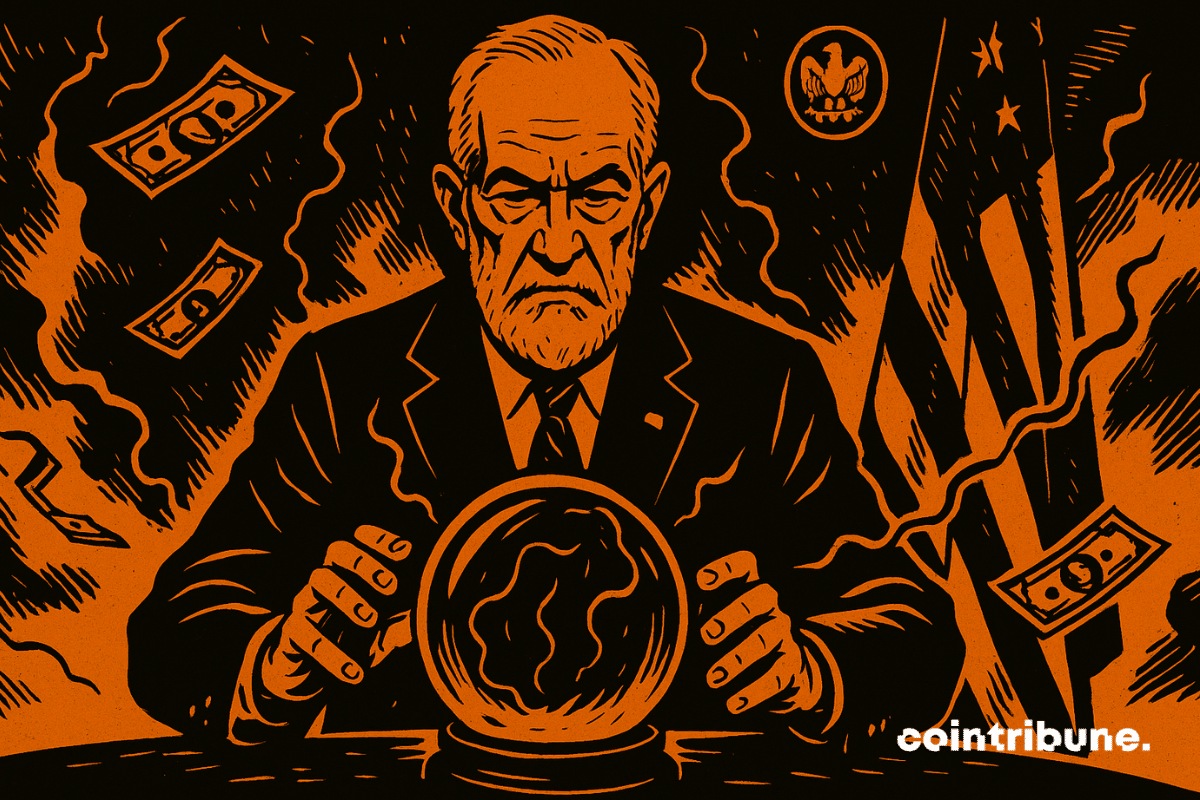
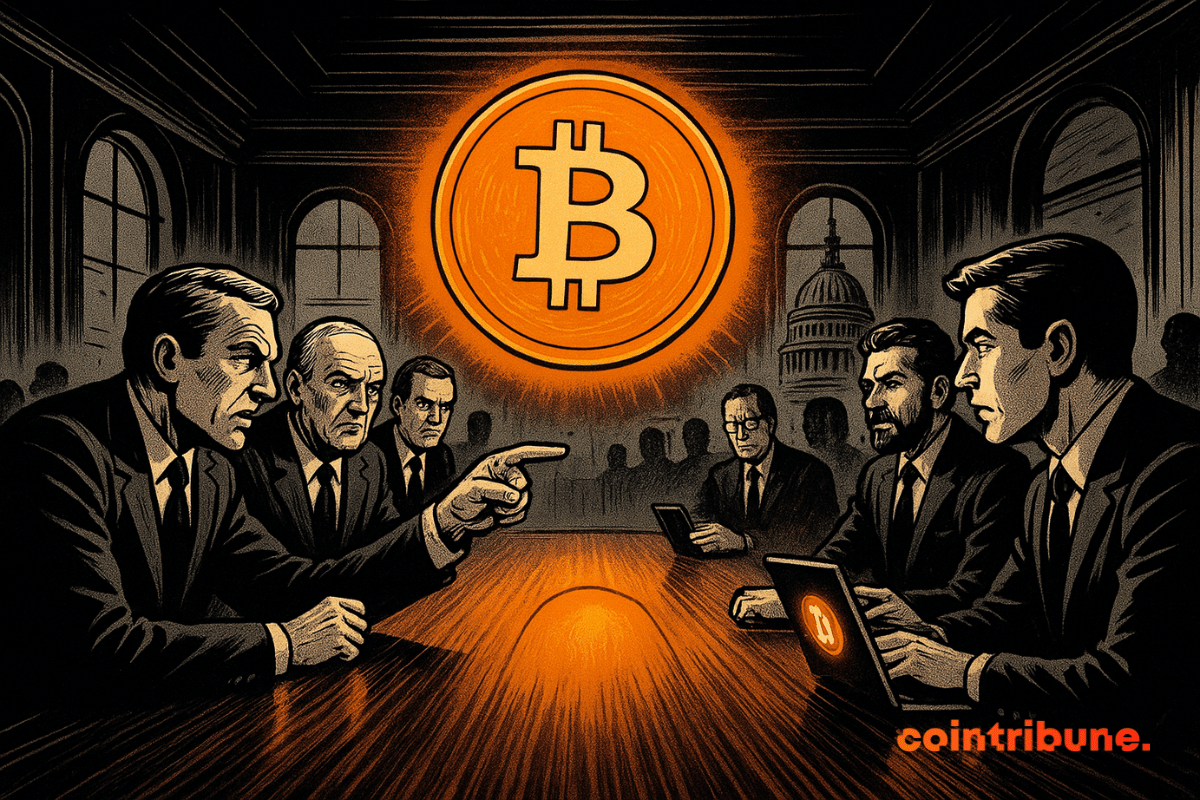
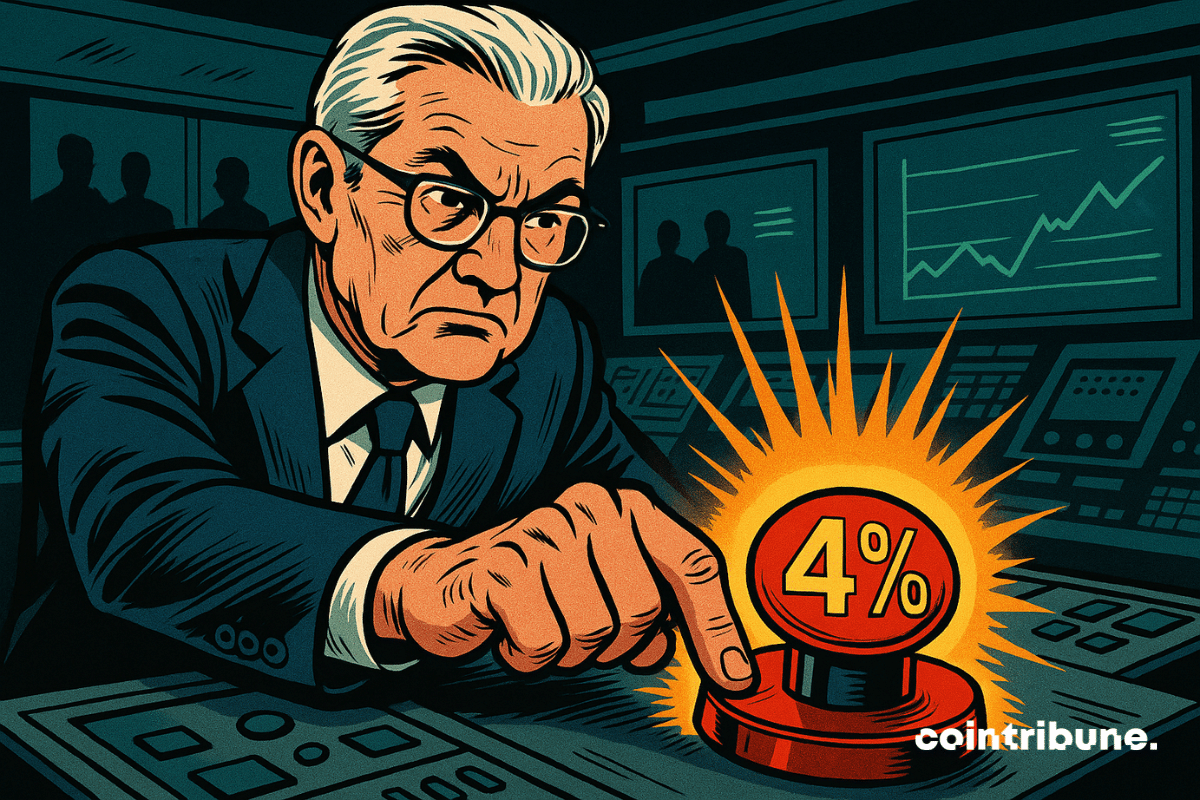
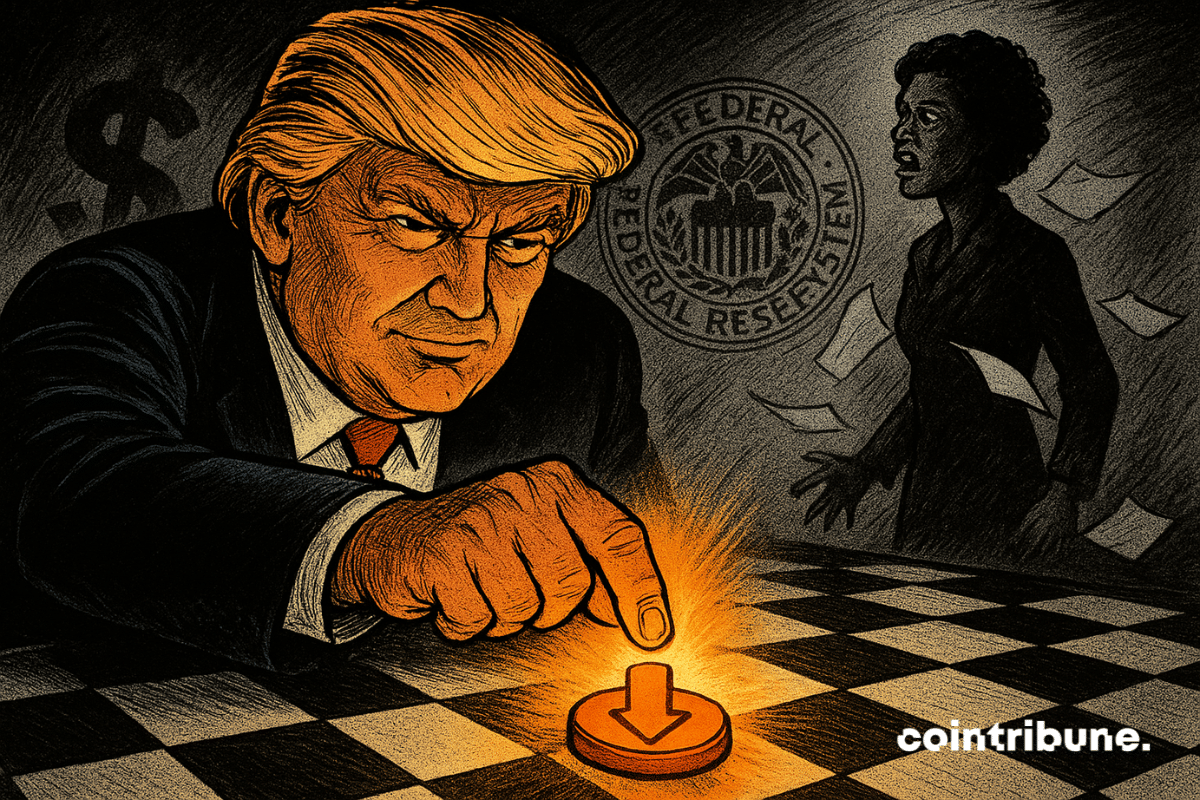
Powell cuts timidly, Trump shouts louder than ever, and crypto cheers. In Washington, the FED lowers its arms, while Bitcoin and stablecoins revise their choreography.
President Donald Trump has renewed his efforts to remove Federal Reserve Governor Lisa Cook just days before the central bank is expected to deliver its first rate cut in nearly a year. The case has turned into a controversial legal battle that is now overlapping with one of the most significant policy decisions in the US economy. As the administration continues with its appeal, new evidence looms to erode its claims and heightens its political and financial stakes.
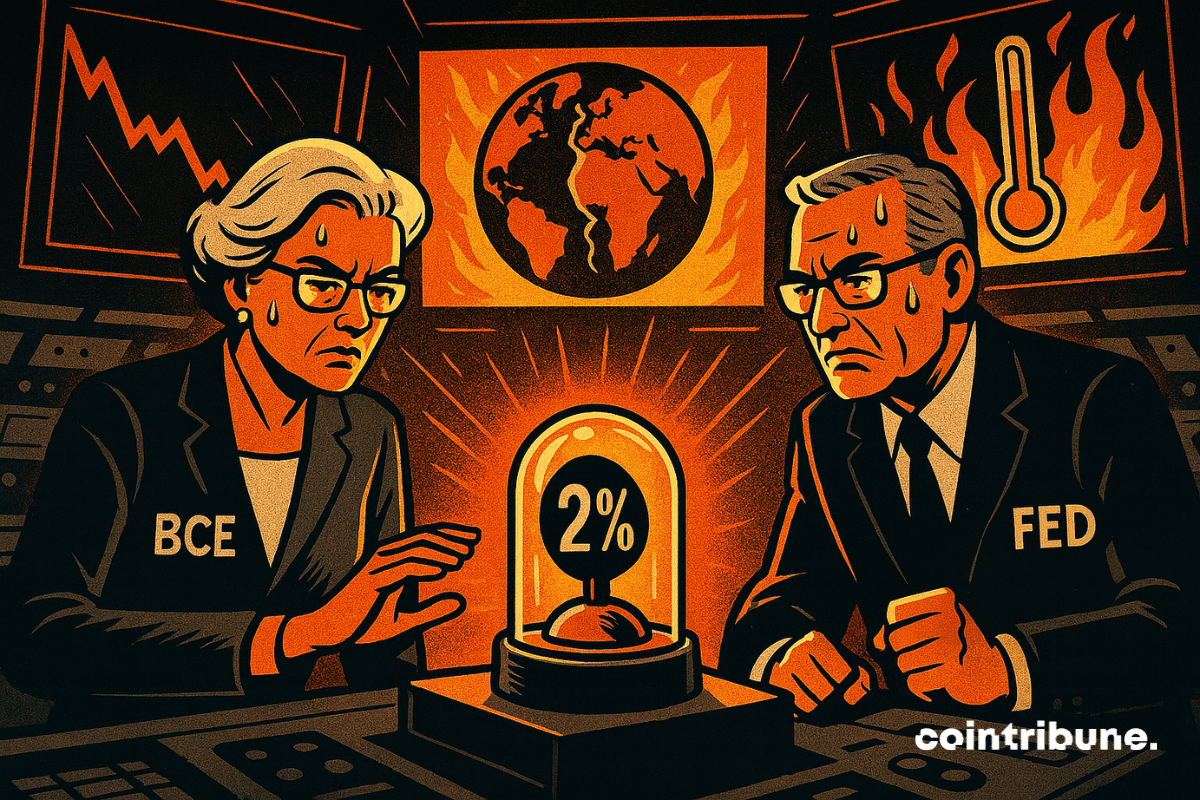
The ECB freezes its rates, the FED is preparing to cut them... What if, in this monetary ping-pong, it was ultimately the real economy that served as the lost ball?
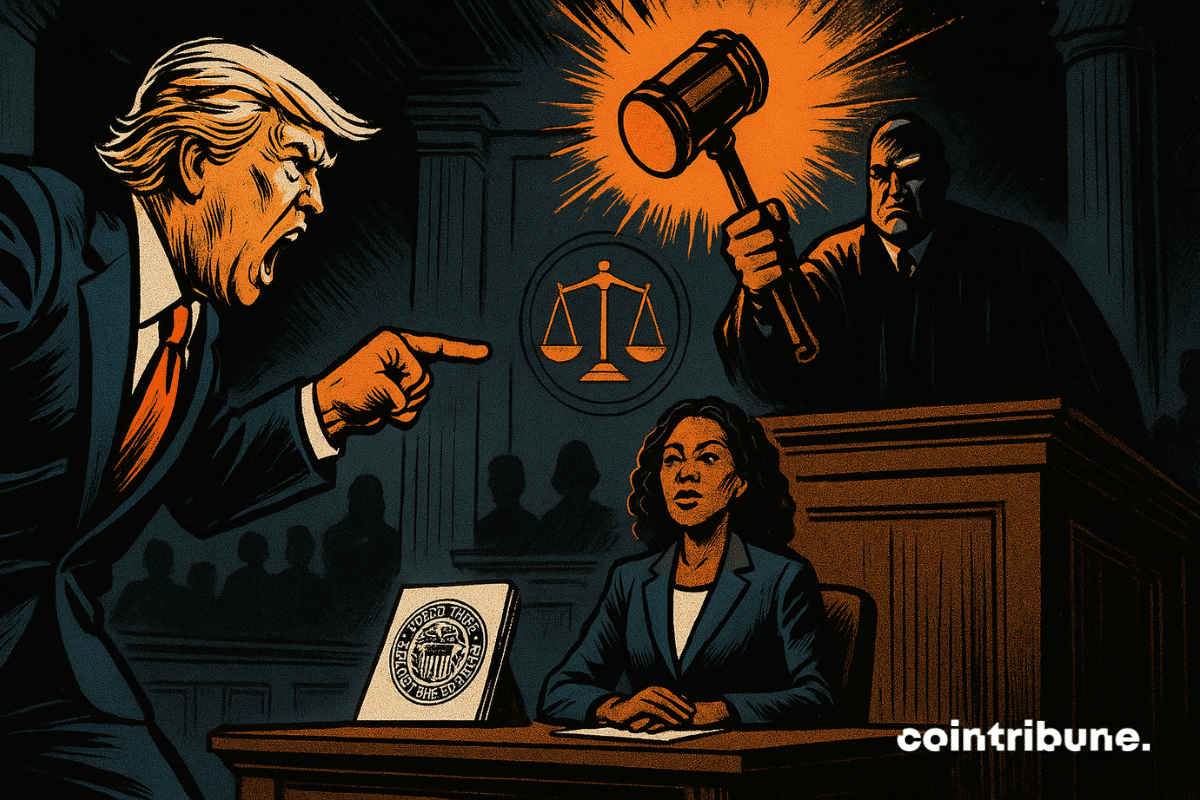
The showdown between Donald Trump and the American Federal Reserve reaches an unprecedented threshold. On September 9, the federal court suspended the dismissal of Lisa Cook, Fed governor, decided by the American president. A rare decision that highlights the major stake of this conflict: the independence of the central bank against political pressures. Ahead of a strategic meeting on rates, this judicial halt revives the debate on the limits of executive power in conducting monetary policy.
At this back-to-school period, major banks are revising their outlook. Faced with a clear slowdown in the American economy, the idea of two to three rate cuts this year is gradually taking hold. Investors, hanging on the Fed’s slightest signals, see in this change of course a potential turning point.
U.S. stocks suffered a blow on August 1, losing $1.1 trillion in value after President Donald Trump reportedly fired the head of the Bureau of Labor Statistics, Erika McEntarfer. The decision came hours after a disappointing July jobs report.
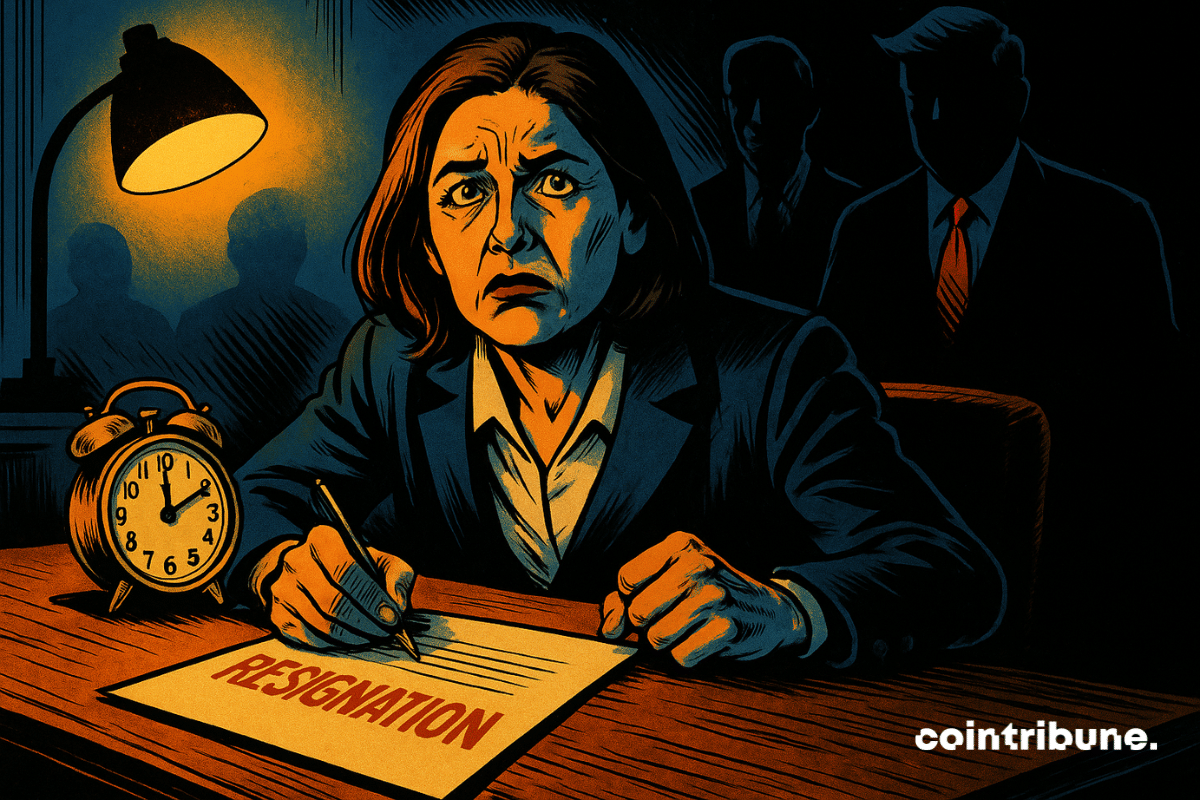
The Federal Reserve Board is confronting fresh turmoil as Adriana D. Kugler resigns during a critical period of political tension. Her departure comes as former President Donald Trump steps up efforts to influence the central bank’s operations.
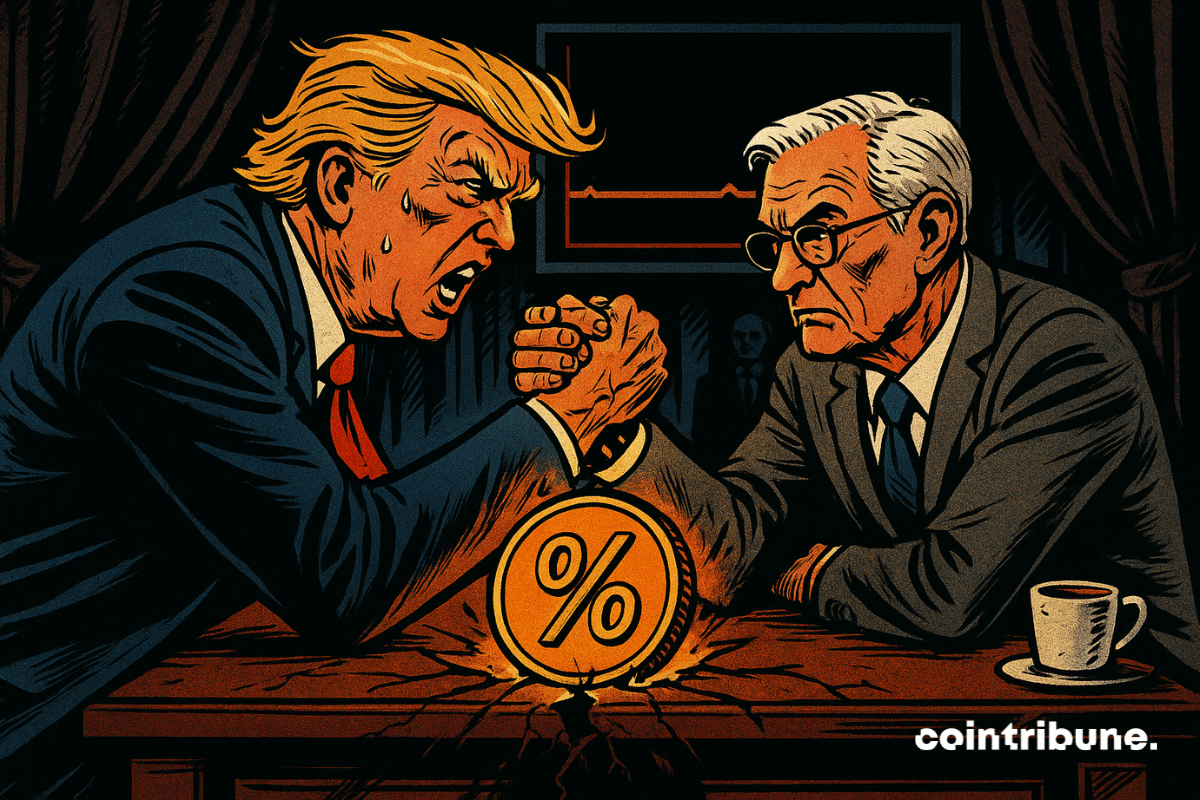
The standoff between Donald Trump and the Federal Reserve is intensifying. The president accuses the institution of sabotaging the economic recovery by refusing to lower interest rates quickly. Ahead of a decisive meeting and amid growing trade tensions, the Fed is under heavy fire. In an increasingly politicized environment, the central bank’s independence is being tested as markets scrutinize its every signal while the U.S. economic trajectory remains uncertain.
Jerome Powell's term will expire in May 2026, and Donald Trump has already announced that he is considering three to four candidates to replace him. This crucial decision could radically transform American monetary policy and create shockwaves in global financial markets.
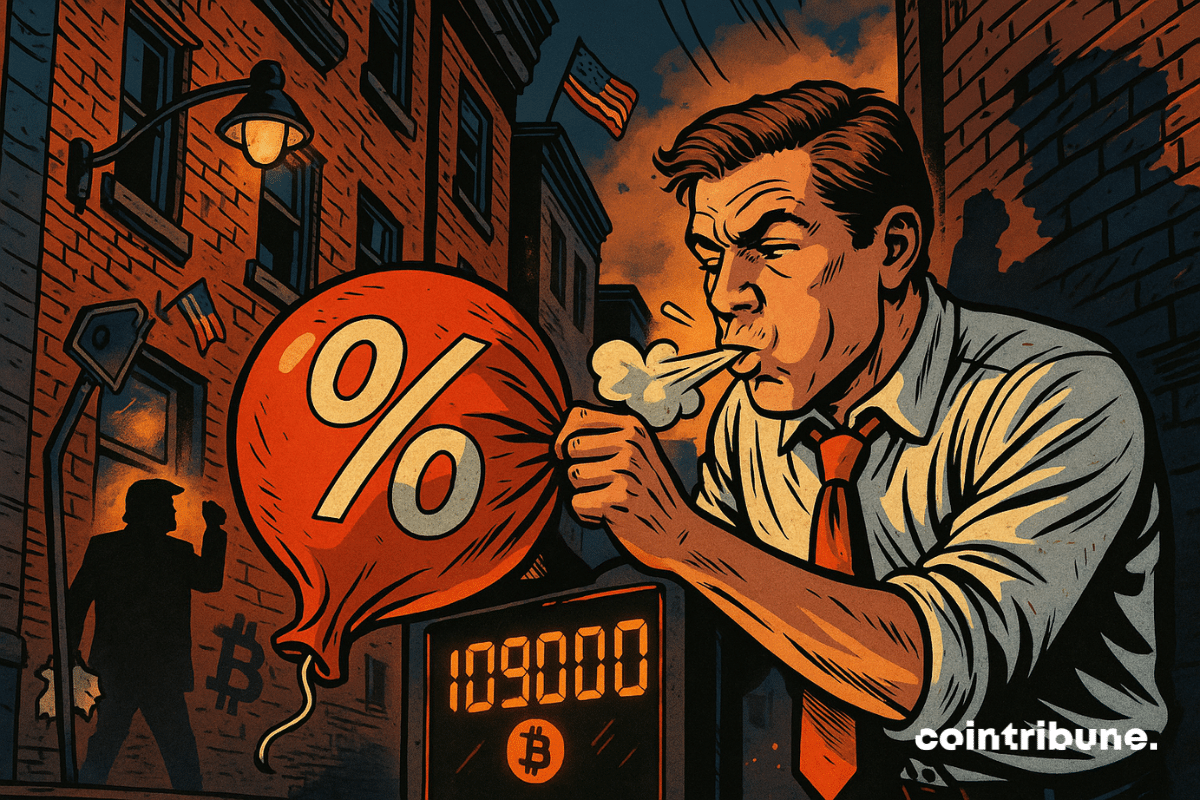
Less fear around inflation: Bitcoin rises to $109,000, supported by calmer economic forecasts. More details here!
The Federal Reserve just made a big change that could make it easier for crypto companies to get bank accounts. On Monday, the Fed said it would no longer use “reputational risk” as part of its official bank supervision process. That vague label was often used to warn banks away from doing business with crypto firms, and many in the industry say it led to years of unfair “debanking.”
When Trump insults, Waller anticipates, Powell temporizes and the economy stalls: who will win this strange dance of rates orchestrated between inflation, unemployment, and a monetary nerve war?
Michael Saylor stays confident in Bitcoin despite the Federal Reserve’s decision to keep rates steady. His company recently added 10,100 BTC, boosting its total holdings to over 590,000 coins, signalling strong belief in Bitcoin’s long-term value amid mixed market reactions.
Will the Fed really keep its rates unchanged in June? Between persistent inflation and a surprising labor market, discover why this decision could disrupt the economy and the markets, including Bitcoin!
The Fed feigns hesitation, but its printer is spewing billions. Meanwhile, Bitcoin is climbing without looking back, immune to Powell's words and Treasury debts.
The Fed turns a page in crypto regulation. By revoking two major directives imposed on banks since 2022 and 2023, the American institution reshuffles the cards of crypto supervision. Its new stance, embodied by letter SR 25-4, abandons the requirement for prior reporting in favor of an autonomous risk management approach. This is a discreet but strategic repositioning in a context where regulatory pressure is intensifying and the fault lines between financial innovation and institutional control are becoming increasingly visible.
Jerome Powell's words have rarely sounded so heavy. Faced with a weakened economy and renewed trade tensions, the Fed chairman warns: new tariffs could plunge the United States into a zone of turbulence. Growth under pressure, inflation lurking, political uncertainties: the Federal Reserve must now contend with increasingly contradictory variables, risking losing control over the country's economic balance.
In response to the turbulence in the financial markets amplified by Donald Trump's trade policies, Susan Collins, president of the Boston FED, announced that the Federal Reserve is preparing to intervene. Among the options considered to stabilize the markets, a reduction in interest rates could become inevitable if the situation deteriorates.
Powell, the guardian of the threshold, shapes the moment. Frozen rates, blurred hopes. The economy wavers, suspended between the fire of inflation and the ice of slowdown. The markets shiver.
While the Fed hesitates between caution and action, inflation runs rampant, and crypto wavers, poised for a week of financial roller coasters.
The impact of the latest U.S. inflation data was immediately felt on the crypto market this Wednesday, February 12, 2025. Bitcoin fell below the $95,000 mark following the announcement of higher-than-expected inflation, while Donald Trump continues to push for a reduction in interest rates.
The tug-of-war between the crypto industry and American banking regulators is reaching a decisive turn. For several years, companies in the sector have denounced restrictions that limit their access to traditional banking services. This phenomenon of "debanking," perceived as an unjustified impediment, hampers their development and fuels a climate of uncertainty. In response to this situation, Coinbase is stepping up. In a letter addressed to the Federal Reserve (Fed), the Federal Deposit Insurance Corporation (FDIC), and the Office of the Comptroller of the Currency (OCC), the platform demands the removal of obstacles that prevent banks from collaborating with crypto players. Coinbase is asking for the cancellation of an OCC directive, as the platform believes it imposes an excessive approval process for new banking activities related to cryptos. The company considers this approach contrary to the law and calls on regulators to officially recognize the right of banks to offer custody and execution services for cryptos. This offensive comes as the debate gains political momentum. Under pressure from Republican lawmakers, Congress is holding two key hearings this week, in the Senate and the House of Representatives, to examine these controversial practices. The outcome of these discussions could redefine the regulatory framework of the crypto industry in the United States.
Bitcoin (BTC) started the last week of January with a significant drop below $100,000, reaching its lowest point in 10 days. Even though the queen of crypto slightly rebounded to $100,000, investors are navigating an environment of increasing tension! Between market volatility and uncertainties from the Federal Reserve... Here are 5 things to know about Bitcoin this week.
The correlation of Bitcoin with the Nasdaq has reached its highest level in two years, exceeding 0.70 according to Bloomberg data. This synchronization occurs at a critical moment as markets hold their breath ahead of the release of the next American Consumer Price Index (CPI) report.
The American Federal Reserve (FED) may slow down its interest rate cut cycle in 2025, according to recent statements from its officials. An announcement that sparked panic on Wall Street, where stock indices fell sharply on Friday, shaken by robust economic data! This reinforces the idea that the FED could curb its monetary easing sooner than expected.
Below $92,000, Bitcoin wavers, and the Fear & Greed index, like a nervous barometer, shifts from vertigo to apathy.
The American Federal Reserve is divided over the potential inflationary consequences of the tariff increases promised by Donald Trump. While some officials downplay the risks, others fear a resurgence of inflation in an already strained economic context.
The year 2025 could very well start with a bang for Bitcoin, thanks to a massive injection of liquidity from the FED, which could propel BTC to a new ATH in March 2025.
Between Trumpian euphoria and the cold mechanics of the Fed, bitcoin swings, a fragile king of a kingdom of uncertainties.
Between a provocative Trump and an inflexible Fed, the economy wobbles. Interest rates rise, prices soar, and nerves fray.