Telegram: Pavel Durov Pushes Back Against Russian Accusations and Condemns Mass Surveillance
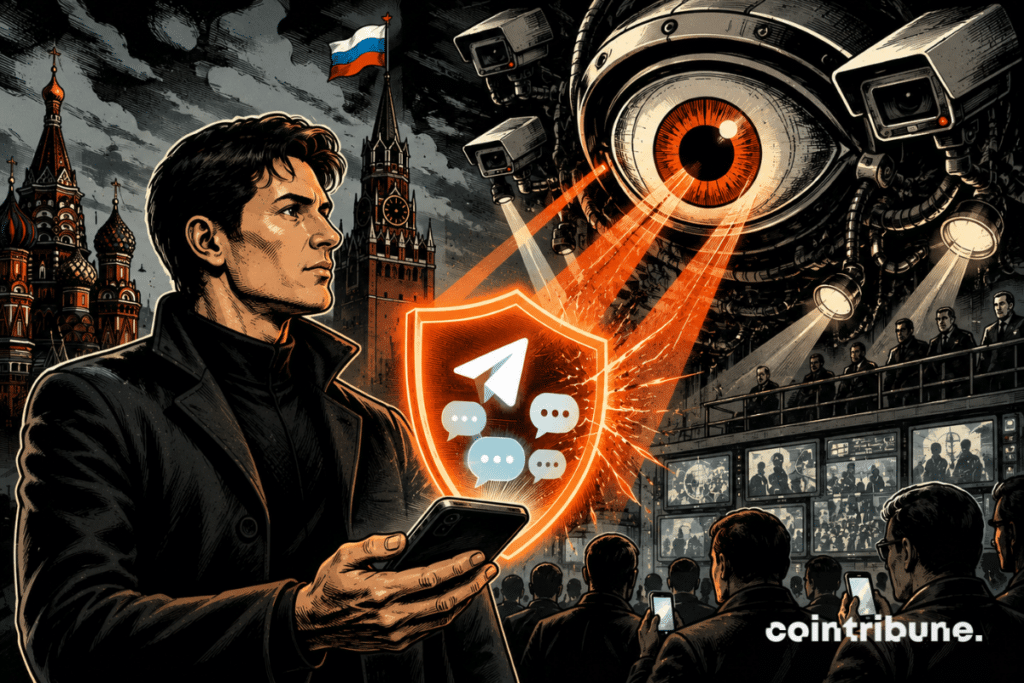
Pavel Durov rejects the “terrorist” label that Russia has just assigned to him. The founder of Telegram states that Moscow is sanctioning him mainly for refusing mass surveillance and censorship on the platform.
In brief
- Russia has listed Pavel Durov on its list of extremists and terrorists.
- The founder of Telegram denounces a sanction related to his refusal of mass surveillance.
- The conflict revives the debate on privacy and state power over messaging apps.
Telegram at the heart of a new showdown with Moscow
Pavel Durov reacted after being listed on the Russian list of extremists and terrorists. This decision continues the legal offensive launched against Telegram. Rosfinmonitoring added his name on July 30, one day after the FSB announced prosecutions for facilitating terrorist activities. Moscow claims that Ukrainian services would have used Telegram to organize attacks in Russia.
The FSB also accuses the messaging app of not removing certain channels, groups, and bots presented as linked to banned organizations. These remain accusations by Russian authorities. They do not constitute facts established by an independent judicial decision.
Durov offers a completely different interpretation. According to him, the “terrorist” label punishes his refusal to hand over Telegram to mass surveillance and political censorship. He also mocks the ban that would be imposed on him to publish online. In his view, Russian authorities confuse the one who can actually ban the other from the Internet.
The matter now goes beyond simple content moderation. It raises a broader question. To what extent must a messaging app cooperate with a state when requests concern private exchanges, user identification, or the removal of political posts? Durov has long defended a firm stance on this point. Telegram had already threatened to leave France rather than give in on encryption.
The platform considers that a backdoor created for authorities could also become a weakness exploitable by hackers or foreign services. This position does not erase criticisms aimed at Telegram. The platform is regularly accused of allowing criminal or extremist content to circulate. But the Russian case adds an obvious political dimension. Moscow restricts access to the service while encouraging the use of state-supported solutions developed in a much more controlled environment.
A Russian paradox difficult to hide
The Kremlin states it has not officially banned Telegram. However, access to the service has been heavily slowed. Many Russian users now have to use a VPN. At the same time, the Russian presidency, the Ministry of Defense, and several senior officials continue to publish daily on the platform.
This dual usage shows why Telegram remains difficult to eliminate. The messaging app claims more than one billion users worldwide. It also holds a central place in Russia, Ukraine, and several countries from the former USSR. It serves private conversations but also political and military information.
The legal pressure against Durov also extends beyond Russia. He remains targeted by an investigation in France after his 2024 arrest. Australia has also initiated a procedure regarding the removal of terrorism-related content. Durov denies the accusations and assures that Telegram already complies with valid legal requests.
This confrontation can also affect the economic ecosystem built around the platform. Telegram is no longer just a messaging app. Its bots, mini-applications, and services linked to TON make it a digital infrastructure hosting payments, communities, and crypto products.
The outcome remains uncertain. But the case confirms that Pavel Durov is becoming a geopolitical actor as much as a tech entrepreneur. As Cointribune already pointed out in its analysis presenting the CEO of Telegram as a geopolitical hostage, every pressure against the platform now goes beyond its founder. It directly concerns privacy, information flow, and the control of the Internet.
Maximize your Cointribune experience with our "Read to Earn" program! For every article you read, earn points and access exclusive rewards. Sign up now and start earning benefits.

Fascinated by Bitcoin since 2017, Evariste has continuously researched the subject. While his initial interest was in trading, he now actively seeks to understand all advances centered on cryptocurrencies. As an editor, he strives to consistently deliver high-quality work that reflects the state of the sector as a whole.
The views, thoughts, and opinions expressed in this article belong solely to the author, and should not be taken as investment advice. Do your own research before taking any investment decisions.