United States: The Vote on the CLARITY Act Postponed to September
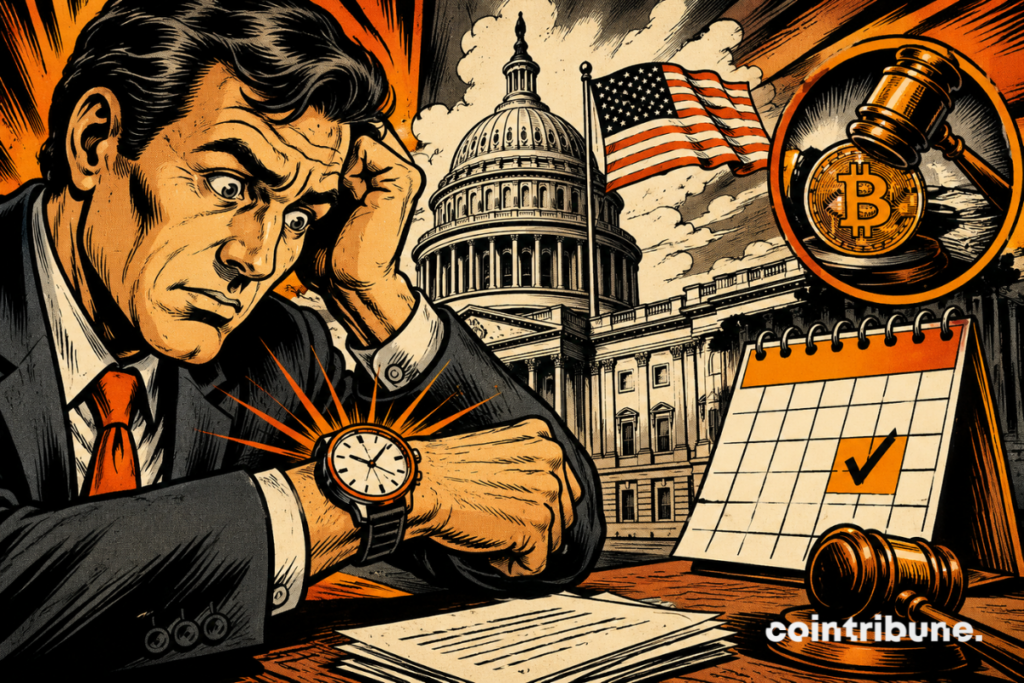
Debates around the regulation of digital assets are experiencing a new slowdown in the United States. While several industry players hoped for rapid progress, the CLARITY Act will ultimately have to wait until the parliamentary return. The postponement of the vote to September results from a persistent disagreement between Republicans and Democrats on several sensitive provisions. This decision extends the uncertainty surrounding this text, regarded as an important step for regulating the cryptocurrency market in the country.
In brief
- The vote on the CLARITY Act was postponed to September after the failure of negotiations in the U.S. Senate.
- Disagreements mainly concern provisions related to ethics and conflicts of interest.
- Several Republican senators also refuse to support the text without changes concerning the banking sector.
- The resumption of debates in September will be crucial for the future of cryptocurrency regulation in the United States.
The CLARITY Act postponed after the Senate deadlock
The legislative schedule evolves again in the United States with the postponement of the CLARITY Act after the congressional summer break, confirming the persistent uncertainties surrounding its vote. Senate Majority Leader John Thune confirmed that the text would return to the agenda in September, according to a POLITICO report.
Democrats insisted that there be no vote on the CLARITY Act. We will place this item at the top of the agenda as soon as we return in September.
John Thune, Senate Majority Leader. Source: POLITICO
He explained to journalists Thursday evening that Democrats had refused to hold a vote, believing several provisions still needed to be reviewed. This decision ends hopes of adoption before the parliamentary holidays.
However, a few days earlier, John Thune still showed his willingness to advance the bill quickly. He indicated that the Senate would continue its work until the main pending dossiers were finalized. Ultimately, negotiations did not yield a sufficient consensus. The United States is therefore entering a new waiting period before the resumption of discussions on the text.
Why the CLARITY Act remains blocked in the United States
The main sticking point concerns the ethics rules integrated into the CLARITY Act. Discussions still pit the White House against several Democratic lawmakers, who want to strengthen certain safeguards before any vote. Negotiations have not brought positions closer. In this context, the United States sees an important reform remain suspended until the next parliamentary exchanges.
Among the proposals examined is a clause targeting certain federal officials. Senators Thom Tillis and Ruben Gallego want to impose the transfer of significant stakes in companies related to digital assets when certain thresholds are exceeded.
This measure particularly targets situations that could create conflicts of interest. At the same time, the role of state attorneys general also continues to fuel discussions, with several lawmakers fearing future legal challenges motivated by political differences.
A majority still difficult to gather
Beyond ethics issues, the CLARITY Act also faces resistance within the Republican camp itself. For a cloture vote to succeed, the text must obtain at least 60 votes in the Senate. However, several lawmakers have already indicated they would not support the project in its current version. This situation further reduces the chances of rapid adoption in the United States.
Senators Jerry Moran and Josh Hawley have notably announced they would vote against the text without modifications addressing the concerns of the banking sector. Their position further complicates the majority’s calculations. The CLARITY Act will therefore require new negotiations before returning to the senators. The United States is now approaching the parliamentary return with an open file, whose outcome will depend on the ability of the different parties to find an acceptable compromise.
When work resumes in September, discussions should resume on the contested provisions to seek a broader agreement. The next sessions will make it possible to assess whether the proposed adjustments suffice to gather the necessary votes or if the legislative process will experience another delay in the United States. The outcome of these negotiations will be decisive for the evolution of crypto regulation and the legal framework applicable to digital assets in the country.
Maximize your Cointribune experience with our "Read to Earn" program! For every article you read, earn points and access exclusive rewards. Sign up now and start earning benefits.

Journaliste et rédacteur web passionné par l’univers des cryptomonnaies et des technologies Web3. J’y traite les dernières tendances et actualités afin de proposer un contenu de haute qualité à un large public du secteur.
The views, thoughts, and opinions expressed in this article belong solely to the author, and should not be taken as investment advice. Do your own research before taking any investment decisions.