Wed 11 Nov 2026 ▪
4 min read
▪
by
Starting November 22, 2026, Bitcoin trading officially becomes legal in Russia for the general public. Meanwhile, Deutsche Bank launches its BTC custody service.
Starting November 22, 2026, Bitcoin trading officially becomes legal in Russia for the general public. Meanwhile, Deutsche Bank launches its BTC custody service.
The Clarity Act risks being blocked after the Democrats' victory in the U.S. elections on November 3, 2026. The party won both chambers of Congress, changing the outlook for crypto regulation in the United States. In an analysis published November 6, Galaxy Digital expects little progress on major sector reforms. Elizabeth Warren and Maxine Waters could notably retake leadership of strategic financial committees.

Barely the reopening of withdrawals on Binance after the crypto hack, over 4 billion $ evaporate in a few hours. Meanwhile, the FBI issues an international wanted notice against a suspect.

Ottawa opens a 60-day consultation on stablecoins issued by non-financial actors. The project notably provides for reimbursement within three business days, caps redemption fees at 1%, and prohibits returns related to holding. To develop its framework, Canada relies on several foreign models, including that of the United States.

Tether is accused of having paid $6.3 million to a senior White House adviser to shape stablecoin laws to its advantage. The US Senate has just launched an official investigation.
The OCC has just published the final rule implementing the GENIUS Act. By January 18, 2027, stablecoin issuers must strictly comply with US banking standards and fully back their crypto tokens, under penalty of a total ban on operations in the United States.

The European crypto-asset framework takes a step forward with a deadline for platforms. ESMA asks cryptocurrency companies in the European Union to address their exposures to stablecoins that do not comply with MiCA. National regulators will therefore need to oversee this transition within a timeframe, while providers will have to review several services offered to European clients. This measure specifically concerns custody, transfers, and operations still allowing holding certain tokens that do not comply with European rules.

On October 1, 2026, the SEC proposed conditional self-custody and the use of state trust companies for the crypto custody of advisers and funds. Cointribune compares this to the 2025 SEC services letter, which already provided a path, without legal force.

Many European regulators demand explanations from the Binance exchange regarding the continuation of its services within the European Union without MiCA authorization. "Reverse solicitation" is among the questions raised. It is an exemption that the platform would invoke to serve certain European clients from a structure located outside the EU.

Greece registers four crypto providers in the ESMA MiCA register on September 24, 2026. The crypto exchange Binance withdrew its Greek application six days before the first approval.

MiCA has been fully applicable since July 1, 2026: any crypto platform serving European clients must be licensed under penalty of illegality. But the regulation stops at the door of decentralized finance (DeFi). A user of Uniswap or Aave is not protected by any of its rules and does not always know it. The European framework is now the only one in force. But MiCA does not regulate decentralized finance (DeFi), and this boundary was intentionally drawn by the regulation.

The European cryptocurrency framework enters a new phase. After the work dedicated to rules, authorities now focus on their application and monitoring. ESMA wants to strengthen coordination among national supervisors as the obligations of actors become more structured. In this context, MiCA occupies a central place in the 2027 work program of the European regulator. Verena Ross confirms this shift in approach, which is oriented towards supervision, convergence, and the monitoring of European risks.

Bitcoin Cash jumps 28%, Zcash 9%, and bitcoin falls back below 86,000 dollars. On paper, it looks like a capital flight. Except that while the market looks elsewhere, BlackRock continues to accumulate. Here is what the on-chain data doesn't tell you about BTC.
On Monday, US Bitcoin ETFs experienced their best day of 2026 with nearly 1 billion dollars collected in one session, a record not seen since October 2025. IBIT, ARKB, and FBTC led the charge while bitcoin flirted with 87,200 dollars. But one figure spoils the mood.

While Washington is bogged down in its crypto regulatory framework and American bitcoin ETFs lose hundreds of millions, Deutsche Bank is moving forward. The German bank announces a crypto custody service for its institutional clients, planned by the end of 2026. Bitcoin, ether, stablecoins, Europe is banking cryptocurrency.
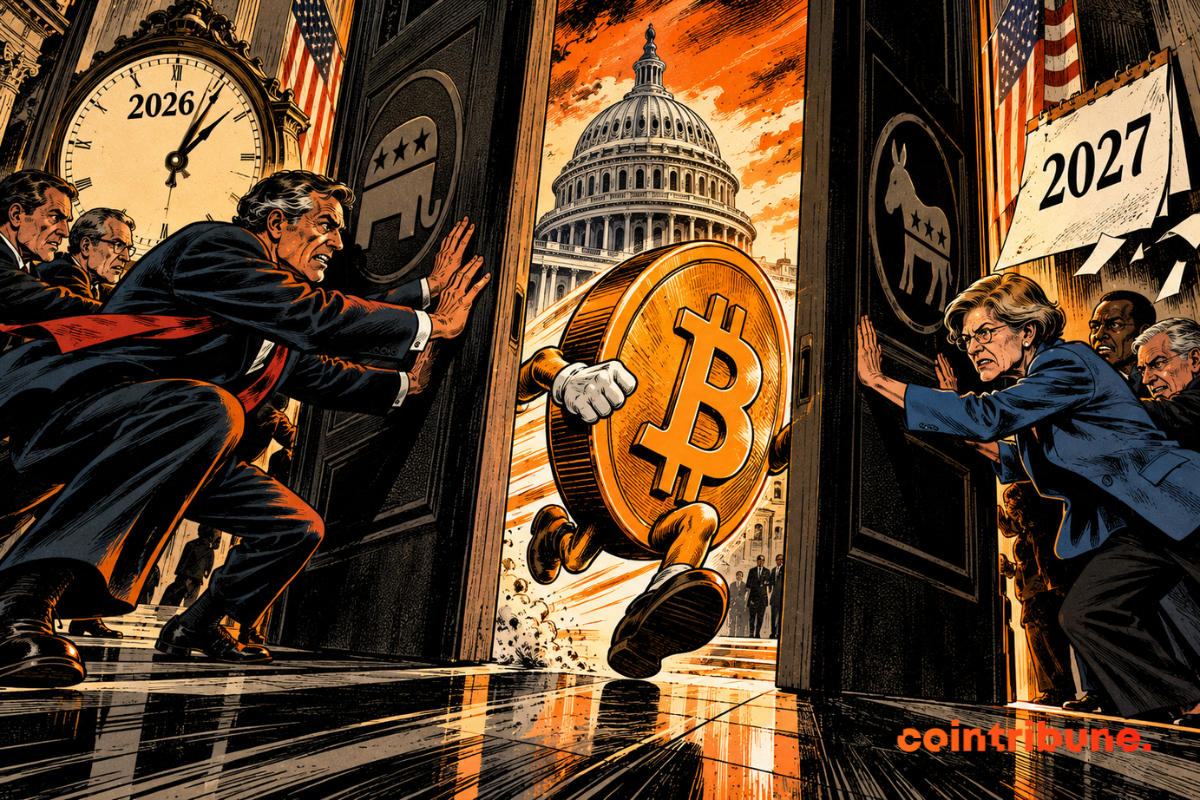
The CLARITY Act fails in the Senate 49-50, far from the 60 votes required. Despite 126 concessions, US crypto regulation remains blocked, between possible revival and total reset in 2027.
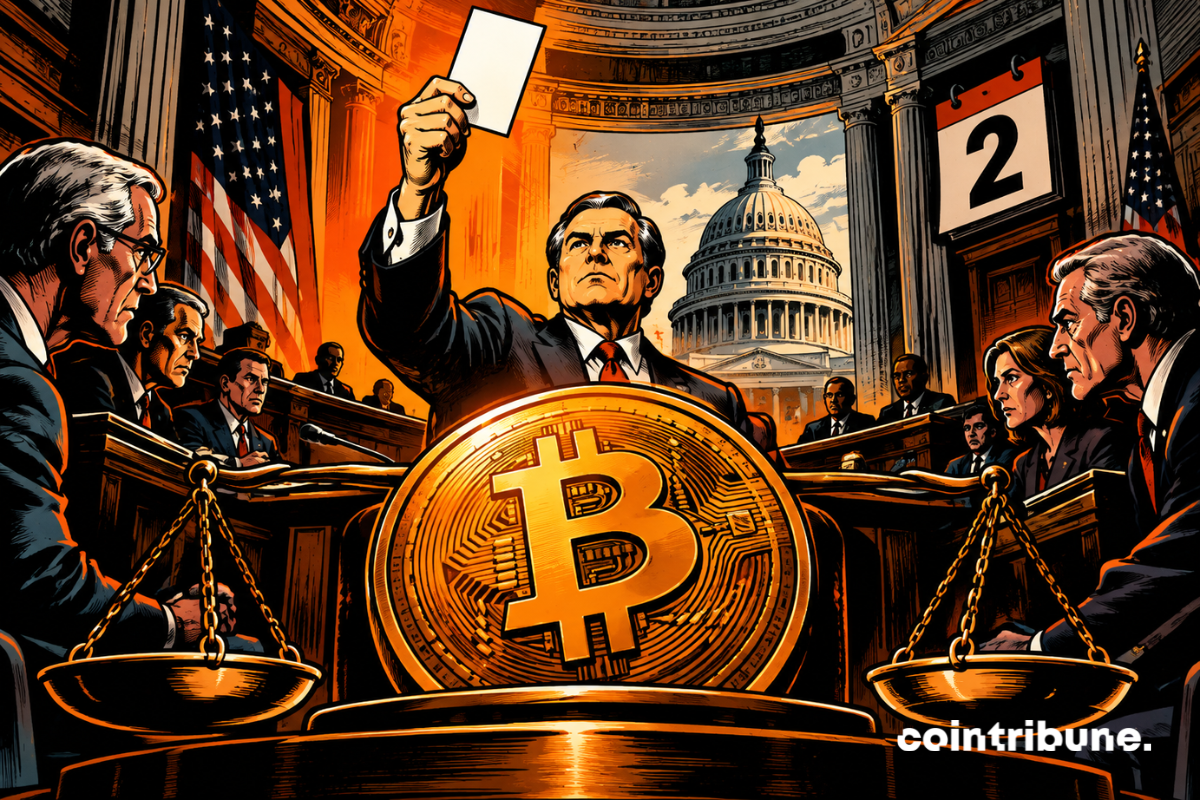
The US Senate is set to vote this Tuesday, September 15 at 2:15 PM Washington time, or 8:15 PM in Paris, on the progress of the CLARITY Act, presented as a major text aimed at establishing a comprehensive framework for crypto markets in the United States. This procedural vote requires 60 votes to allow the bill to continue its legislative journey. Republicans, who hold 53 seats in the Senate, will therefore need to gain support from several Democrats or independents. A failure would strongly compromise the adoption of the bill before the end of 2026.
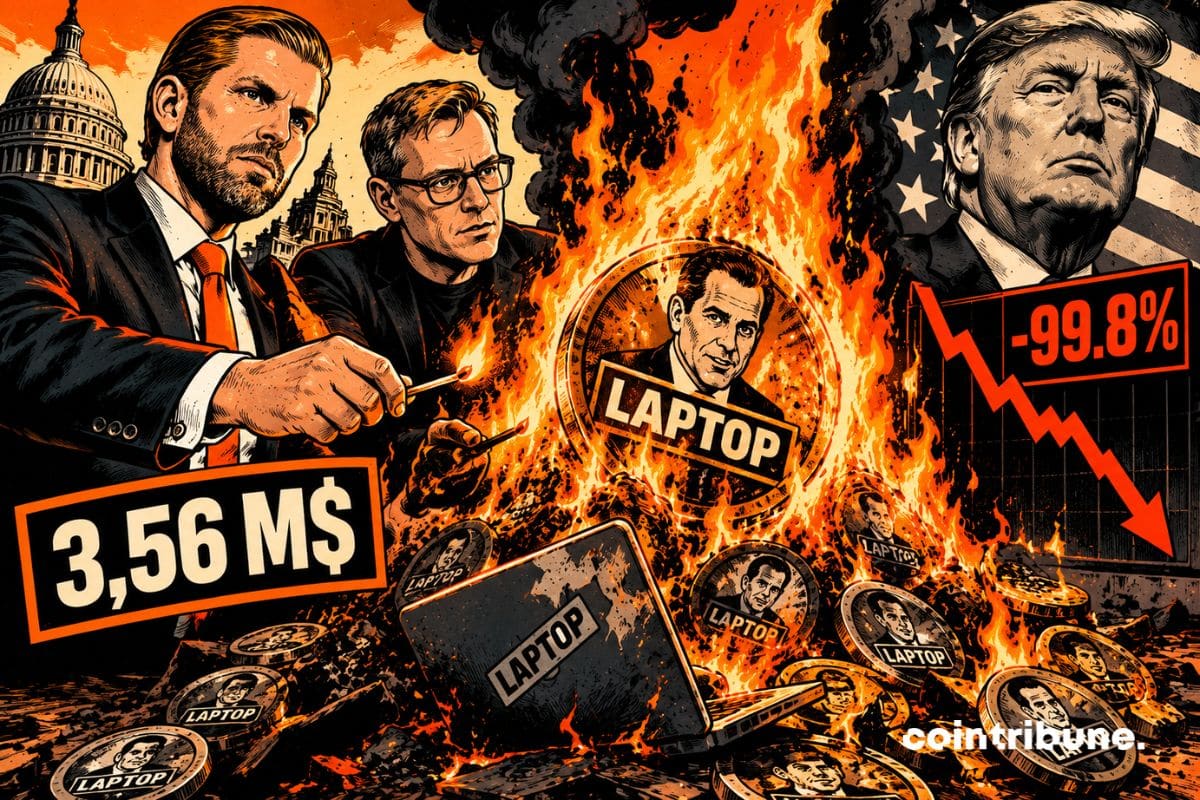
3.56 million dollars worth of LAPTOP have just gone up in smoke. Two mentions, those of Eric Trump and Beeple, were enough to validate the first two political bets of Hunter Biden's anti-Trump memecoin, burning 10 million tokens while the crypto token already collapses 99.8% since its launch.

The links between crypto and traditional finance are becoming significant enough to attract more attention from the European regulator. In its risk monitoring report published on September 10, ESMA calls for close monitoring of this interconnection. Tokenized stocks, DeFi and prediction markets are directly cited. The regulator does not yet speak of an established systemic risk, but rather new channels capable of transmitting a crypto shock to the rest of the financial markets.

On September 9, 2026, Solana issued 263,000 tokens in 24 hours, an absolute record. Yet, it is not this figure that impresses the most. With 5.09 million dollars in daily revenues, Solana outpaces all competing blockchains. Between memecoins and regulated markets, discover how the crypto network combines volume and economic solidity.

Solana strengthens its crypto transaction ceiling to catch up with Ethereum on complexity, during the same week Ethereum, on its side, is preparing the end of the obligation to hold ETH to transact. Two competing networks, two opposite strategic projects, and a shifting balance of power quietly taking shape behind the scenes.

Fomo surpasses Pump.fun in one day with 1.76 million dollars. But the PUMP token itself soars by 7.8%. Is the crypto market right to snub major press headlines?

The Polish parliament failed on Friday, September 5 to overturn the third presidential veto on the crypto-asset markets law. The Sejm only gathered 241 votes of the 266 required, despite pressure from Prime Minister Donald Tusk amid the Zondacrypto scandal, an exchange accused of embezzling 94 million dollars of client funds.

Kalshi's US traffic soared by 1,520% in one year, driven by sports betting which accounts for 83% of its volume. At the same time, the platform launches leveraged crypto perpetuals on BTC, ETH, BNB and 14 other assets, while its regulatory status is being decided before the Supreme Court.
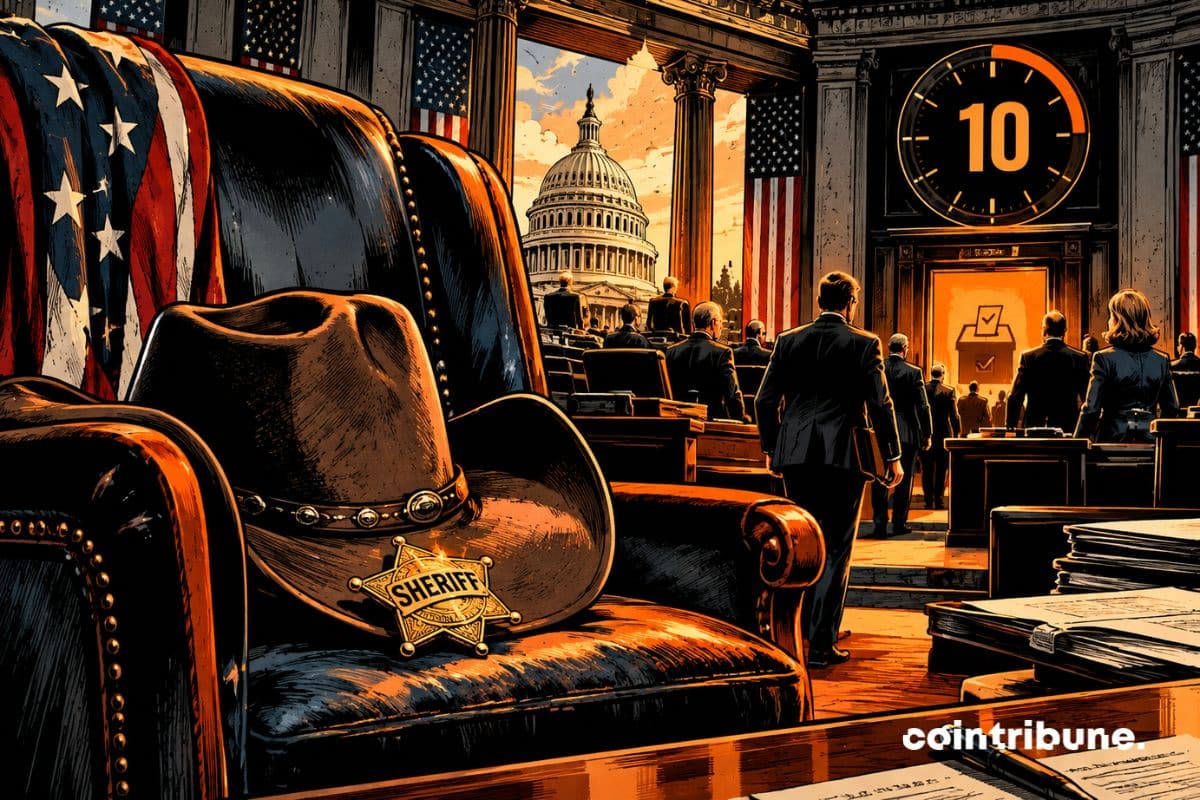
The National Sheriffs' Association (NSA) has just eased up on the CLARITY Act, a few days before a tight vote in the Senate. A turnaround that changes the game for hesitant Democrats. But on the crypto market side, an expert warns that regulatory clarity could well turn into a "sell the news" trap.

Donald Trump pressures the American Senate. This Wednesday, the president gathered several major figures from the crypto industry at the White House to try to unblock the CLARITY Act. The text, stuck in Congress, now crystallizes a confrontation that goes beyond the mere regulation of cryptos. Washington is also playing its ability to maintain its technological lead over China, against a backdrop of political tensions and disagreements over the sector's framework.
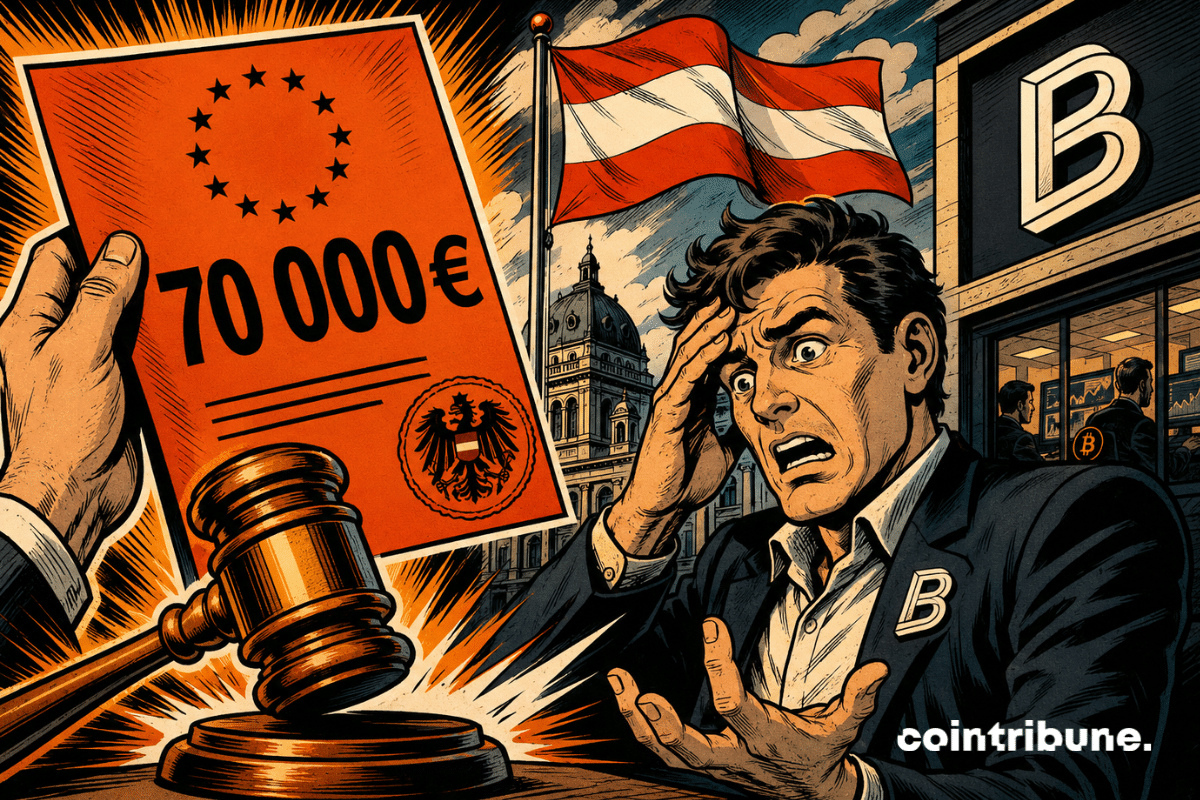
The European cryptocurrency framework enters a new phase with an official sanction. Bitpanda is fined 70,000 euros in Austria for several breaches of MiCA rules. The FMA notably reproaches the platform for errors in the transmission and communication of certain documents. This legally final decision marks an important step in the concrete application of the new European regulation. It also shows that transparency obligations become a central issue for European crypto actors.

The crypto derivatives market could cross a new regulatory milestone. Nasdaq has submitted to the Securities and Exchange Commission a proposal aimed at simplifying the listing of options linked to crypto ETFs. The text mainly seeks to set common criteria for funds exposed to digital commodities. This approach comes as U.S. regulations remain in flux. This approach comes as U.S. regulations remain in full development.

The government of Monaco presented bill no. 1131 to the National Council on August 6. This reform aims to replace the framework adopted in 2022 and bring the Principality closer to European standards. At the heart of the text, MiCA accompanies a revision of the obligations imposed on crypto-asset service providers. The project also strengthens controls and compliance requirements in response to the expectations of the FATF and the European Commission.

Russia takes a step in its approach to crypto. The central bank has just proposed a framework allowing individuals to access three cryptocurrencies on public markets. The project targets Bitcoin, Ethereum, and USDT, with an annual limit for non-qualified investors. This development marks a regulated crypto market opening, while the authorities want to limit exposure to price fluctuations. The system includes conditions for intermediaries and investors before any operation.