Crypto: Russia Opens the Door to Bitcoin, Ether, and USDT
Russia takes a step in its approach to crypto. The Central Bank has just proposed a framework allowing individuals to access three cryptocurrencies on public markets. The project targets Bitcoin, Ethereum, and USDT, with an annual limit for non-qualified investors. This development marks a regulated crypto market opening, while the authorities want to limit exposure to price fluctuations. The system includes conditions for intermediaries and investors before any operation.
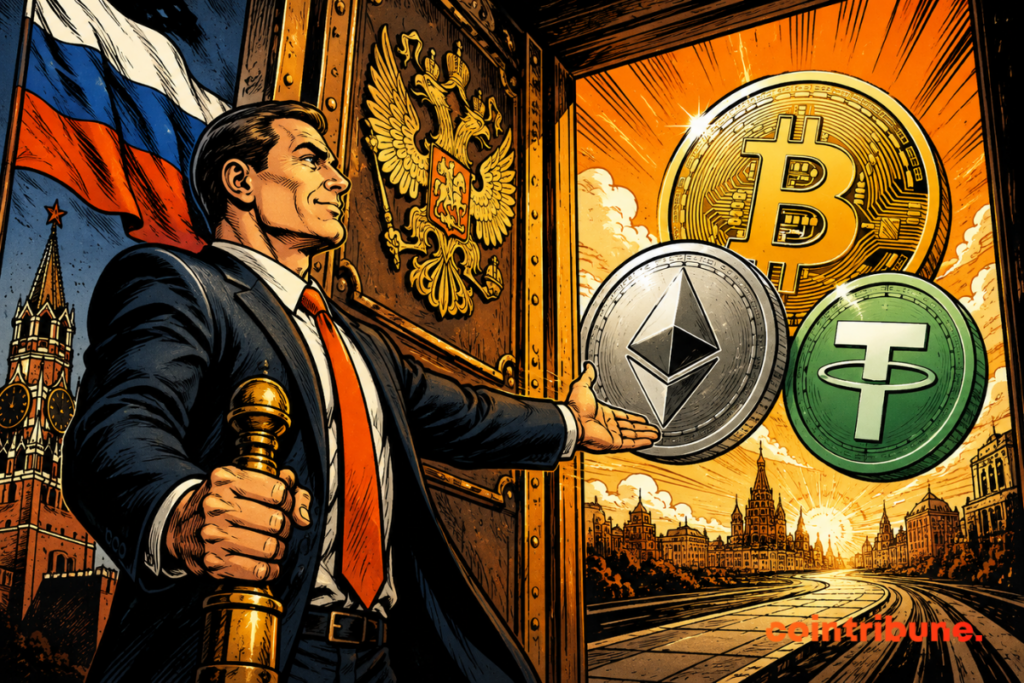
In Brief
- The Bank of Russia proposes allowing individuals to buy three cryptocurrencies on public markets.
- Bitcoin, Ethereum, and USDT would be accessible to non-qualified investors under certain conditions.
- The annual ceiling would reach 300,000 rubles per intermediary for affected investors.
- Qualified investors could negotiate all available cryptocurrencies without restriction.
Russia Regulates Access to the Public Market
After the official adoption of the framework legalizing the digital assets market in Russia, the Central Bank published on August 11 a draft directive dedicated to non-qualified investors. These individuals could buy digital assets via brokers, exchanges, or managers. However, the central bank indicated in a separate statement that crypto would remain subject to an annual ceiling set at 300,000 rubles per intermediary. Thus, each broker, platform, or manager could separately apply this limit to purchases made by the same investor.
The text also specifies the role of various intermediaries in this system. Purchases may go through several authorized actors, but the ceiling will still be calculated for each intermediary. This organization allows distinguishing the access channels used by non-qualified investors. It also gives platforms a clear framework to apply the new rules in their daily operations. For individuals, this framework combines limited access, mandatory testing, and asset selection. Therefore, crypto remains accessible but under precise conditions regulating operations.
The new framework also now provides a mandatory step before any transaction. All investors must pass a test and become aware of the risks associated with crypto-assets. This requirement therefore also concerns qualified investors, despite their broader access to the market. Consequently, Russia seeks to gradually open operations while maintaining a protection framework for individuals.
Bitcoin, Ethereum, and USDT at the Heart of the System
The project identifies three assets that public exchange platforms could admit: Bitcoin, Ethereum, and Tether’s USDT. The selection mainly relies on liquidity, capitalization, and price history. To be accessible to non-qualified investors, an asset must notably have at least five years of price history on foreign platforms. Its average daily volume is also among the criteria considered by authorities.
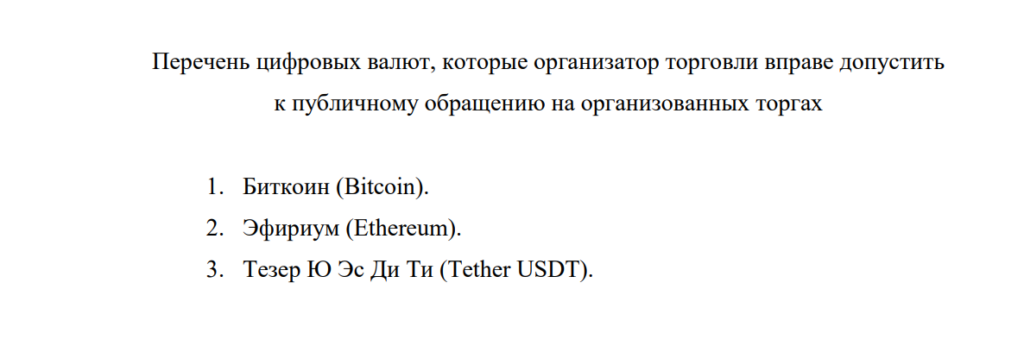
The selected crypto must therefore demonstrate sufficient liquidity to limit sudden and unpredictable price movements. The project currently excludes XRP from this list, despite its existence since 2012. The Bank of Russia links its choice to criteria provided by the new federal law on cryptocurrencies. This method thus favors assets with an established market and sufficiently extensive price data.
Different Rules Depending on Investors
Qualified investors benefit from a significantly broader regime in the project presented by authorities. They could acquire all cryptocurrencies traded on stock and over-the-counter markets, without ceiling. This difference creates two access levels depending on the investor’s status. Thus, crypto becomes accessible to the public but under much stricter conditions for non-qualified individuals.
The system implements several measures to expand access to digital assets for wealthy investors. It also comes as Tether is under close scrutiny regarding some USDT linked to sanctioned Russian platforms. The Bank of Russia now opens a consultation period until August 24. After official publication and signature by Elvira Nabiullina, the directive should come into force ten days later.
Crypto could thus gain a more structured place on Russian public markets, without abandoning limits set for individuals. Russia will still need to finalize the text after the commentary period. The future regulatory framework will depend on the adjustments made before its entry into force. For now, the project mainly confirms a gradual opening centered on three assets and accompanied by precise rules.
Maximize your Cointribune experience with our "Read to Earn" program! For every article you read, earn points and access exclusive rewards. Sign up now and start earning benefits.

Journaliste et rédacteur web passionné par l’univers des cryptomonnaies et des technologies Web3. J’y traite les dernières tendances et actualités afin de proposer un contenu de haute qualité à un large public du secteur.
The views, thoughts, and opinions expressed in this article belong solely to the author, and should not be taken as investment advice. Do your own research before taking any investment decisions.