Coinbase is forming an expert panel to tackle future quantum threats and strengthen blockchain security before the technology becomes a real risk.
The security of crypto data falters once again. The French platform Waltio, specializing in tax declarations, was the victim of a massive leak of sensitive information. In response, an investigation was opened by the French authorities, mobilizing the National Gendarmerie. This incident rekindles concerns about the vulnerability of services related to cryptos, including those outside the blockchain. As the use of tax tools becomes widespread, users' trust is severely tested.
The crypto ETF dance does not slow down. It changes tune. After Bitcoin and Ethereum, now the market attacks more "political" tokens, more linked to ecosystems, thus more sensitive to regulators' scrutiny. And Grayscale, true to its style, does not timidly knock on the door: it files a dossier and forces the conversation.
In a context of persistent tensions between the crypto ecosystem and U.S. regulation, the SEC has just taken an unexpected step. The agency has definitively dropped its civil action against Gemini Trust, marking the end of the Gemini Earn case. This decision, legally qualified as "dismissal with prejudice," raises questions about the regulator's strategic shift regarding crypto yield products, and what this might imply for future relations between platforms and authorities.
A public reserve in Bitcoin without tax or debt? Kansas proposes a shock law that disrupts traditional financial codes.
Binance, the crypto giant, trades its wild escapades for the toga of Athens: Greek regulation, European ambition... and a well-timed snub to its old demons.
In 2025, bitcoin was not content to be just a store of value. It established itself as a central tool in digital payments. According to a Coingate report, it dominates the market again with 22.1% of transactions, driven by increasing adoption by businesses. This renewed interest marks a strategic turning point. Crypto is no longer on the sidelines, it is now integrated into real economic flows.
Nasdaq has just pushed open a door that many still found "locked": that of position limits on options linked to spot Bitcoin and Ether ETFs. Behind the jargon, there is a simple idea: to stop treating crypto products as tolerated guests, and to bring them in through the main door of "classic" derivatives.
At the Devconnect conference in Buenos Aires, Ethereum's co-founder issued an unprecedented warning: the elliptic curves securing Bitcoin and Ethereum 'are going to die.' With a 20% probability that quantum computers could break current cryptography before 2030, the crypto industry has less than four years to migrate to quantum-resistant systems.
While gold breaks records and nears $5,000 an ounce, a part of the Bitcoin camp keeps hammering the same idea. The BTC market hasn’t really started yet.
Bankers were pretending to ignore crypto; now they dive in completely, renaming stablecoins as "infrastructures." PwC rejoices: the future is already tokenized.
At Davos 2026, AI establishes itself as the new playground for private equity giants. OpenAI and Anthropic show record valuations, fueled by investors' FOMO. But could this frenzy overshadow interest in crypto and bitcoin?
Saga, a Layer-1 blockchain protocol, has paused its Ethereum-compatible SagaEVM chainlet after a $7 million exploit triggered unauthorized fund transfers. The attack involved assets being bridged out of the network and swapped into Ether. Although the affected chainlet remains offline, Saga says the broader network continues to operate normally.
Ethereum may have chained updates, but doubt persists about its ability to generate sustainable activity. In a report published this Wednesday, JPMorgan analysts question the real effects of the Fusaka update, which nevertheless caused an immediate surge on the network. Behind the technical gains, the question of economic viability remains unresolved. The blockchain co-founded by Vitalik Buterin faces limits that even its latest advances do not seem able to correct.
The crypto A7A5, Moscow’s digital weapon? This token allowed Russia to move billions despite the Western embargo.
Donald Trump accuses JPMorgan of having closed his accounts for political reasons and demands 5 billion dollars before the Florida courts. By directly targeting CEO Jamie Dimon, the president reignites the explosive debate on "debanking," a practice that fuels tensions between the political and financial spheres. This case questions the neutrality of major American banks. While Trump denounces ideological exclusion, JPMorgan, on its side, rejects any accusation of discrimination.
In Davos, the head of Circle promises that stablecoins will not blow up banks. What if crypto became the secret weapon... of AI? Allaire swears no, or almost.
Davos 2026: Ripple and Trump unite to transform the United States into a crypto empire. All the details in this article.
Faced with rising tensions around information control, Vitalik Buterin takes a stand. The Ethereum co-founder makes decentralized social networks his priority for 2026, calling for an open, interoperable model free from commercial logics. This choice marks a strategic and ideological turning point, supported by concrete actions and a frontal critique of dominant platforms. Buterin no longer just codes the Web's infrastructure but now wants to rethink how we exchange, debate, and share online.
On January 6, 2026, Kraken formalized a major partnership with Ethena Labs. The American exchange becomes one of the institutional custodians of assets backed by USDe, the synthetic dollar that rose to be among the three largest stablecoins in the world. This selection, validated by the Ethena Risk Committee (ERC), marks a decisive step in the institutionalization strategy of the DeFi protocol.
For years, the narrative has been well-oiled: Bitcoin as the ultimate reserve, the rest of the market playing more or less exotic satellites. Yet, some lines are starting to crack. According to crypto analyst and YouTuber FireHustle, the next wave of institutional adoption could well be built elsewhere. More precisely around Solana. A bold hypothesis, almost uncomfortable for maximalists, but deserving more than a shrug.
The crypto market evolves at a crazy pace, and Binance Wallet has just changed the game with three new AI tools: Topic Rush, Social Hype, and AI Assistant. Discover how these innovations help you anticipate crypto market movements and make informed decisions without wasting time.
Rapid progress in artificial intelligence is forcing governments and institutions to confront a much shorter path toward human-level systems than previously expected. Industry leaders now say the gap between today’s tools and artificial general intelligence is narrowing quickly. As development accelerates, concerns around jobs, governance, and economic stability are moving to the center of the debate.
Billionaire investor Tim Draper predicts Bitcoin could reach 250K USD within six months, citing rising adoption and supportive policies.
According to ARK Invest's projections, the value of tokenized assets could climb to 11 trillion dollars by 2030, compared to a current market estimated around 22 billion. In other words, ARK is not talking about a gadget, but about a plumbing change for finance.
The boundary between traditional banks and crypto could soon disappear. In Davos, David Sacks, White House crypto advisor, stated that these two worlds will soon form just one. Indeed, the CLARITY Act, a decisive bill for the future of the sector in the United States, is at stake. Behind the debates on stablecoin yields, a complete reconfiguration of the financial industry is emerging amid political tensions, power struggles, and strategic ambitions.
Caroline Ellison released from prison. FTX returns to the heart of debates in the crypto ecosystem. All the details in this article!
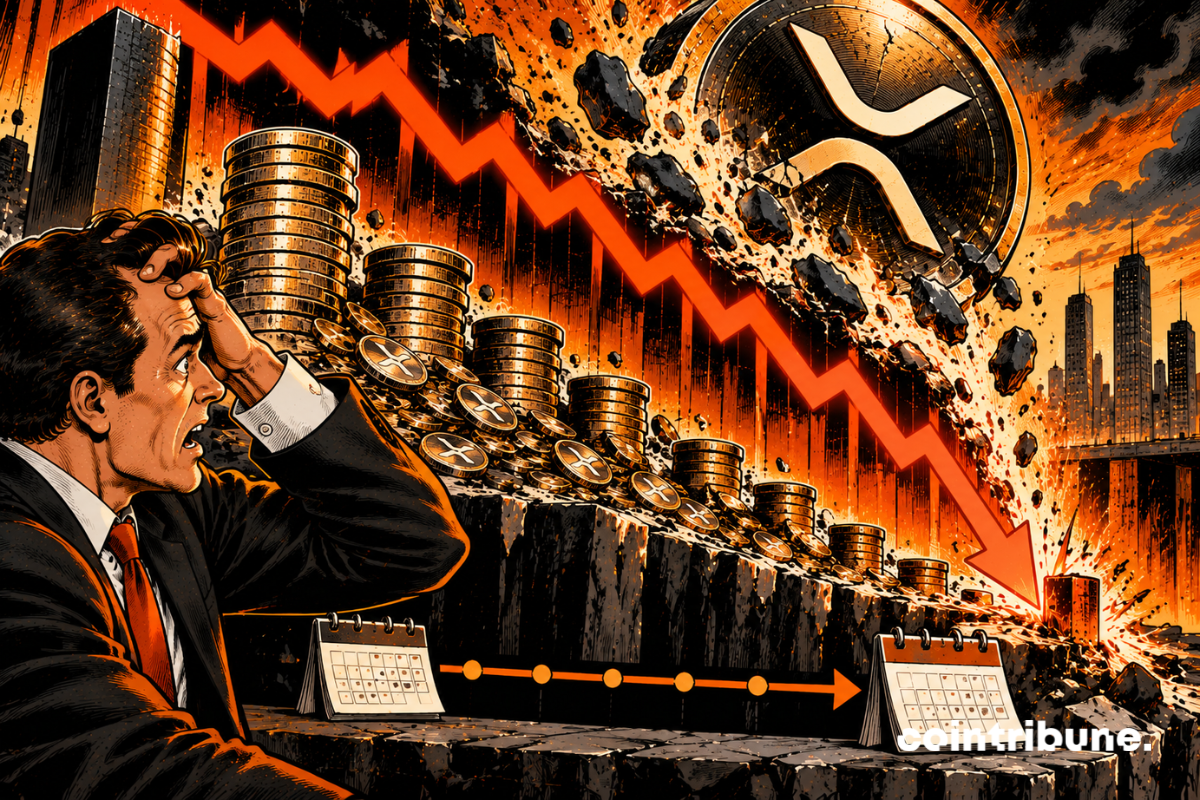
XRP is once again worrying analysts. A rare technical signal, identical to the one that preceded a 68% drop in 2022, has reappeared. As tensions return to the crypto market, this alert strengthens fears of a major pullback. At the same time, massive XRP ETF outflows increase the pressure on Ripple's crypto. Is history repeating itself?
“To the moon,” that’s what bitcoin fans have wanted recently. But for now, the stars belong to another celestial body: gold. The yellow metal is flying over the markets, leaving the crypto-sphere waiting. While crypto traders watch for a signal, traditional investors turn to the ultimate safe haven. Gold shines,…
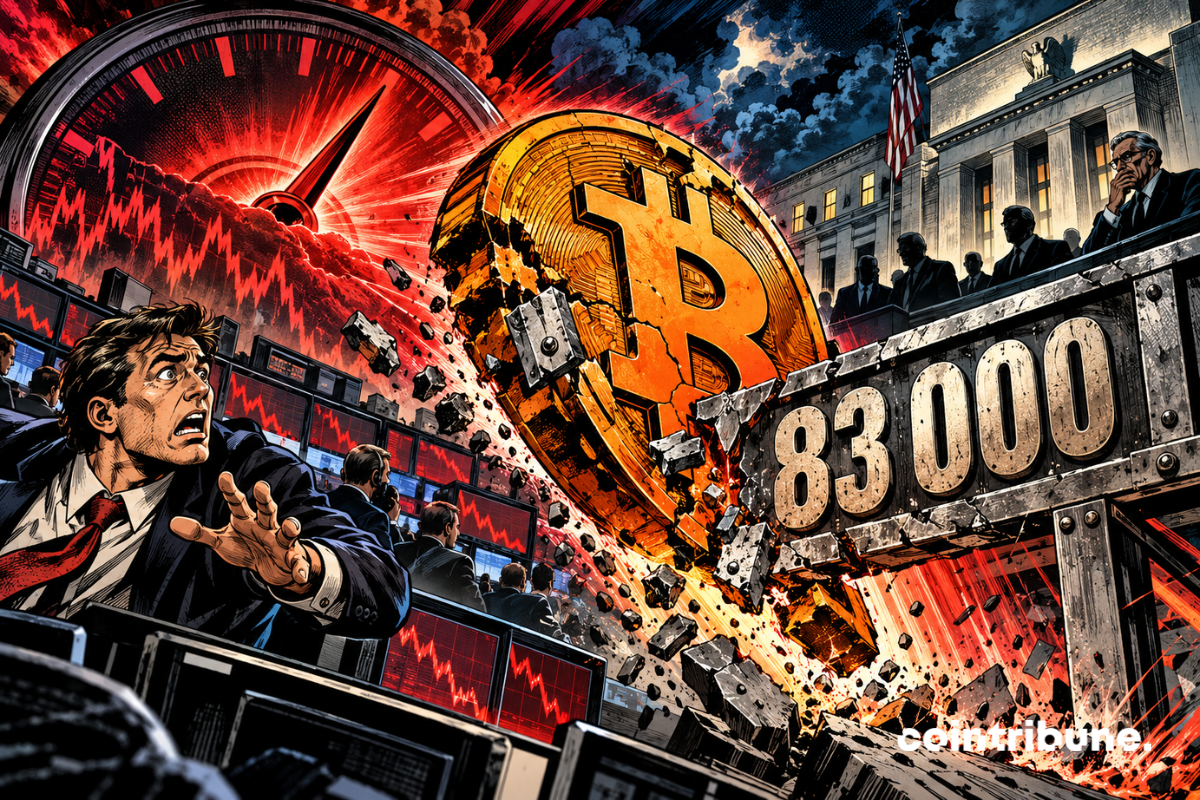
Bitcoin just broke a key threshold below $90,000, reigniting doubts about the market's strength. Between massive profit-taking by long-term holders and liquidity inflows from whales, selling pressure intensifies. Buyers struggle to contain the drop amid this shock. The balance is fragile, as speculative appetite faces increasingly vulnerable technical supports.