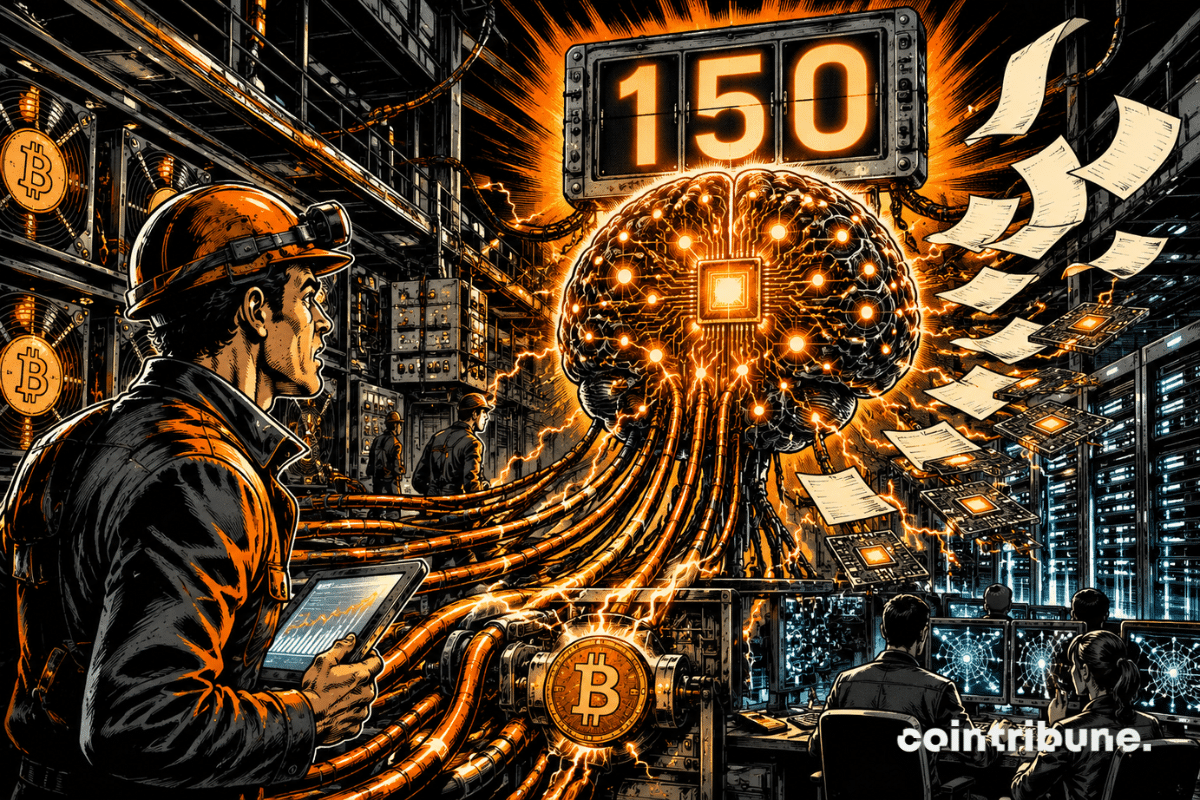
A tiny $150 box just turned into $200,000 for its owner. Proof that bitcoin mining remains a lottery where anyone can hit the jackpot.
The Bitcoin protocol has just activated one of the most powerful self-regulation mechanisms in its recent history, profoundly changing the financial balances of mining operators. While the sector has been continuously eroding its margins since the beginning of the year, this algorithm update comes at a critical time when the economic survival of mining facilities depends on the smallest fraction of a dollar.
Bitcoin miners are racing into AI, but insider sales, governance questions and a $50 billion financing gap raise fresh concerns. Decode.
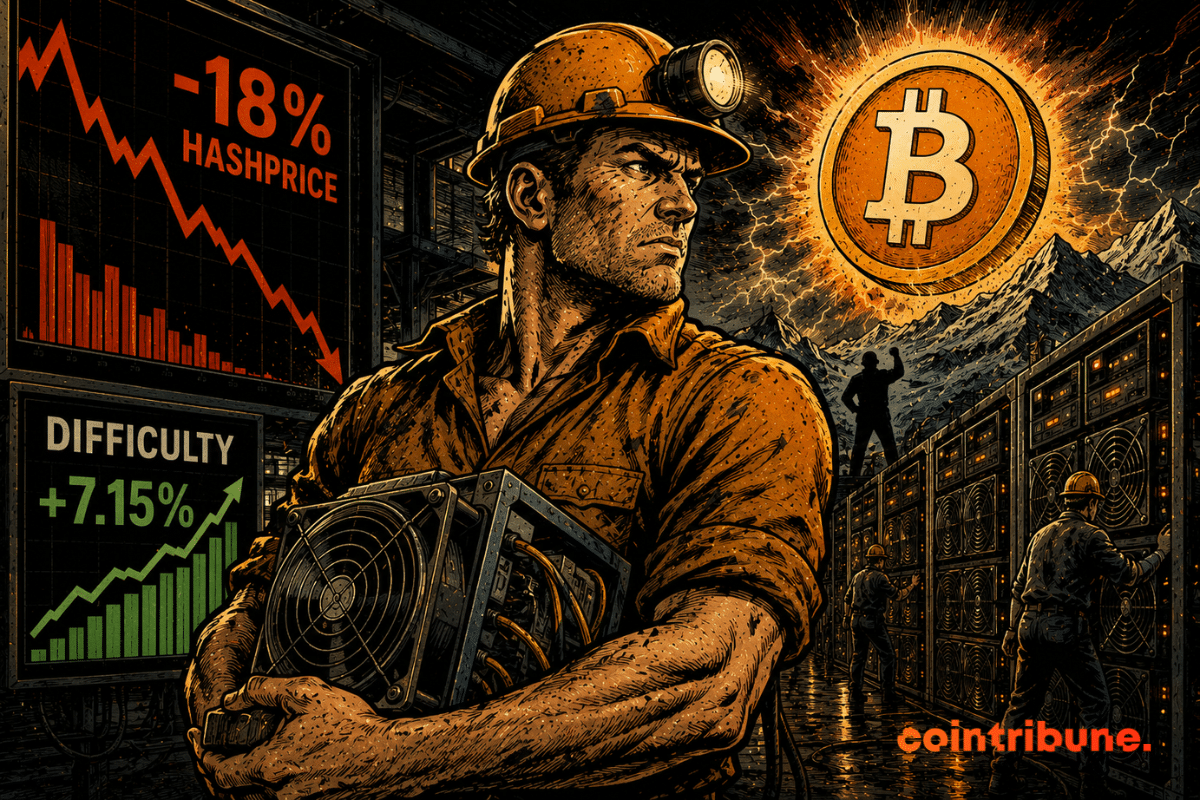
Bitcoin miners watch their hashprice plummet like a failed soufflé, while difficulty spikes without mercy. What a contradiction—and yet, they hold their ground.
Alert on the Bitcoin network! According to a JPMorgan report, 20% of miners are currently operating at a loss. With an average production cost estimated at $78,000 and a pressured price, has capitulation started? Here is an update.
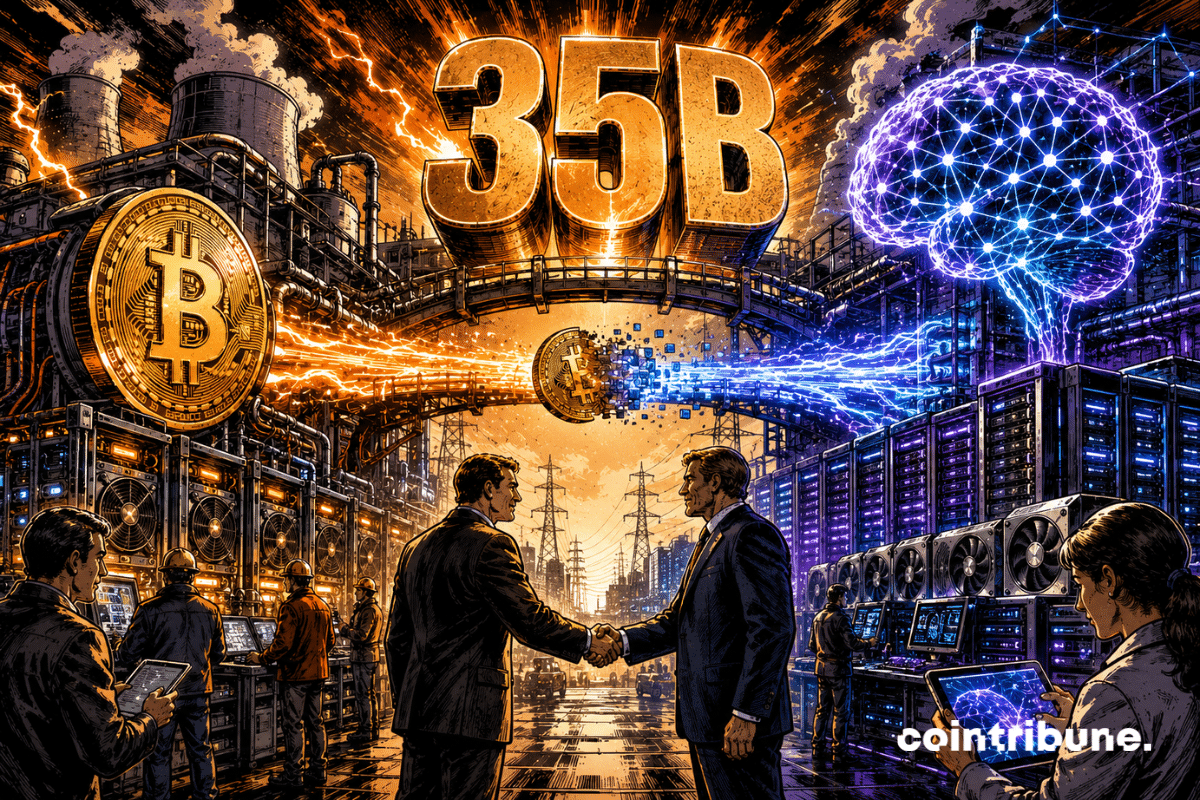
The intersection of traditional finance, artificial intelligence, and blockchain technology has just reached a historic milestone, thereby definitively redefining the contours of the global computer industry. While financial markets closely scrutinize the allocation of technological capital, it is now the cash flows of silicon giants that play the main role of catalyst in the diversification strategies of actors in the crypto sphere. Today this dynamic is propelled to the forefront of economic news by a financial operation of unprecedented scale by the undisputed leader of graphics chips Nvidia. The company's decision to raise massive funds to expand its infrastructure spectacularly validates the operational shift initiated by the largest crypto mining farm operators.
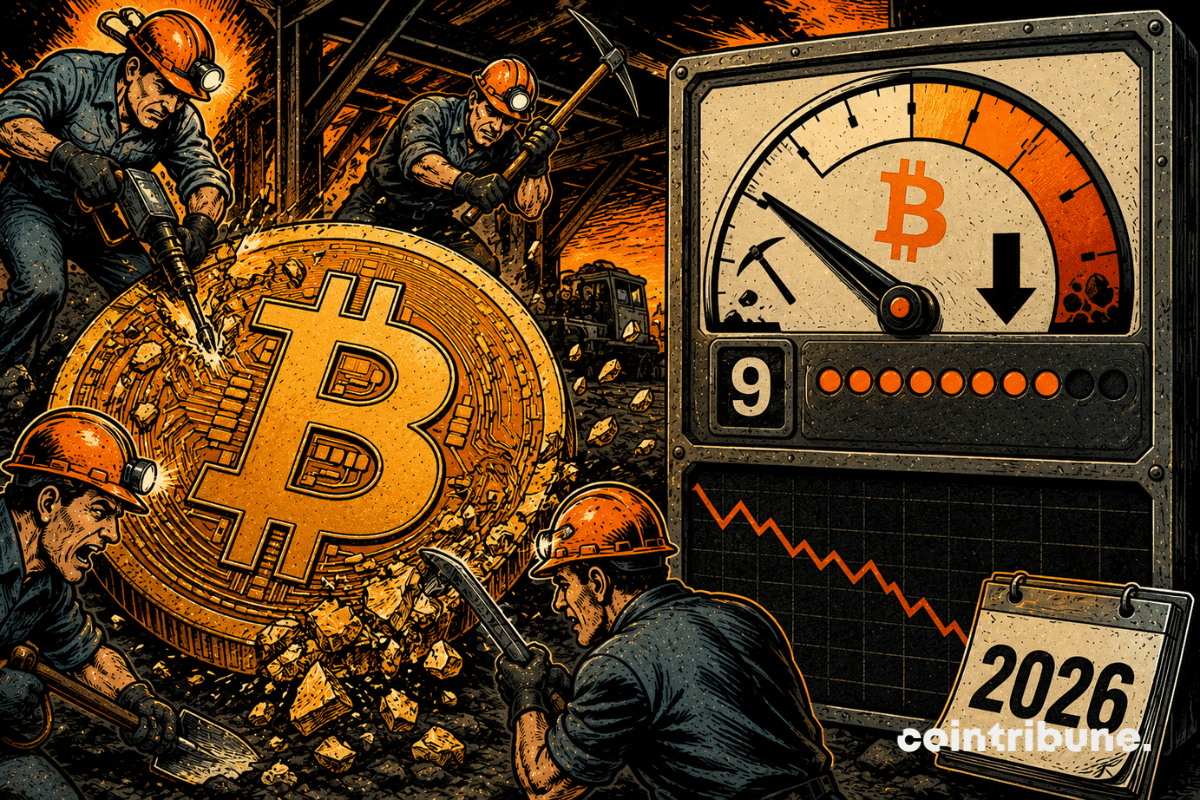
The most significant movements in the Bitcoin network are not always visible on price charts. Some are directly part of the mechanisms that ensure its daily operation. This is what we observe with the difficulty adjustment expected in the coming hours, a rare event that reflects the tensions currently affecting the mining industry. While operators see their profitability degrade with the drop in bitcoin, the protocol is about to experience one of the largest difficulty corrections in recent years.
While bitcoin is still on a rollercoaster, miners quietly open a new vault. Behind the servers and megawatts, AI giants now come to claim their loot.
Bitcoin miners' stocks are rising because the market no longer sees them only as BTC producers. It now values them as holders of electricity, land, data centers, and capacities useful to artificial intelligence. This change explains the recent interest around TeraWulf, Hut 8, IREN, or Riot Platforms, in a context where Wall Street remains driven by AI and semiconductors.
While Nvidia builds cathedrals for artificial intelligence, bitcoin miners bring out their secret plans. Wall Street applauds weakly, then discreetly recounts the cracks under the global digital foundations.
While bitcoin plunges down the mountain like an old tired gondola, Marathon quietly sells its digital treasure to fuel its artificial intelligence dreams and avoid a nasty industrial slide now visible everywhere.
Bitcoin ralentit légèrement, mais le réseau ne casse pas. Le 1er mai 2026, sa difficulté de minage a reculé de 2,3 %, pendant que le hashrate repassait sous le seuil symbolique de 1 zettahash par seconde.
Long associated with stablecoins, Tether is now moving into mining infrastructure. The company has unveiled a modular architecture for Bitcoin mining and partnered with Canaan and ACME Swisstech to develop customizable and scalable platforms. The initiative aims to give operators greater control over hardware, energy, and cooling in a sector where efficiency has become a key challenge.
The Bitcoin network sends an ambiguous signal. While mining difficulty has just dropped, suggesting a respite for companies in the sector, indicators already point to an imminent rebound. Behind this technical adjustment lies a brutal reality: a weakened sector facing growing economic constraints. Between algorithmic mechanics and profitability tensions, the mining industry is going through a pivotal phase whose implications could soon be felt.
Bitcoin under pressure: the most vulnerable miners are massively liquidating their reserves. A worrying dynamic for the crypto market.
Bitcoin crosses the $74,000 mark again, supported by renewed investor interest. Behind this movement, the market is crossed by opposing forces. Institutional demand supports prices, while persistent sales limit the extent of the rise. This return to a key level comes in a context of tension, where the balance between buyers and sellers remains uncertain.
The countdown to the 2028 halving has already begun… and it exposes a reality that few investors anticipate. At the midpoint, the mining ecosystem enters an unprecedented tension zone, far from the balances observed during the previous cycle. Rising costs, increased competition, and structural changes reshape the rules of the game. This halfway point is not trivial, as it marks the beginning of a decisive turning point for companies in the sector as well as for the entire Bitcoin market.
He had a one in 300 years chance to succeed. Yet, this solo bitcoin miner just pocketed $225,000. All details in this article!
A solo miner wins an exceptional bitcoin block, reminding us that this lottery survives despite the brutal industrialization of current global mining.
Can bitcoin falter under the effect of an armed conflict? The recent drop in hashrate provides a concrete example. In a few weeks, a military operation in the Middle East disrupted the network's balance, highlighting its dependence on certain mining areas. At the same time, the rise in U.S. yields and the slowdown of crypto platforms reflect a gradual disengagement of investors. Between geopolitical tensions and macroeconomic pressure, the market reveals vulnerabilities rarely seen on this scale.
US spot Bitcoin ETFs have broken their positive momentum. For the week ending Friday, March 27, 2026, they finished with net outflows of around 296 million dollars. After four consecutive weeks of inflows, the signal counts. But it mainly tells the story of a freezing market, not a collapsing market.
Bitcoin mining is in crisis: difficulty drops by 7.7%, but a much greater threat looms. Artificial intelligence (AI) is siphoning resources, forcing giants like Core Scientific to pivot. Can the sector survive this revolution?
The SEC throws in the towel. No more witch hunts. Mining, staking, airdrops breathe freely. Only "digital securities" remain in its sights. Wall Street applauds, the old guard cries scandal.
The Bitcoin market is changing its face. This time, the driving force does not come from a simple speculative rally, but from the rising power of publicly traded companies accumulating BTC in their treasury. According to Adam Back, this group could soon absorb up to ten times the newly mined daily supply. The idea may seem extreme. However, it is based on a mechanism already visible in the market.
While AI is desperately looking for energy solutions, Bitcoin mining has already found its own: nuclear. As early as 2021, miners secured partnerships with power plants, creating a model that AI is now trying to replicate.
The bitcoin mining industry is entering a pivotal phase. For years, holding the mined BTC was enough to ensure the profitability of operations. This logic is now reaching its limits. Margins under pressure, more uncertain revenues, and a changing market dynamic are pushing industry players to rethink their strategies. According to an analysis by Wintermute, mining companies may soon have to transform their bitcoin reserves into productive assets. This evolution could reshuffle the cards of the sector's economy.
Bitcoin mining leaves the realm of mere science fiction. Starcloud, an American startup supported by Nvidia, claims it will carry mining ASICs on its second spacecraft later in 2026. If the trial succeeds, the company would become the first to mine bitcoin from Earth orbit. In…
The rise in bitcoin does not solve the economic equation of mining. At Riot Platforms, the increase in prices covers the electricity bill, without absorbing all charges or depreciation. This gap brings the debate back to a more demanding question: from what price does a mining company actually become profitable again? The analysis distinguishes three thresholds, from energy cost to accounting result.
Mining bitcoin costs $87,000, it sells for $69,000. So miners sell their machines and retrain in AI. Gotta eat, even in crypto.
MARA holds 53,822 BTC on the balance sheet, but bitcoin drives Q4 loss explosion. We give you all the details in this article.