For the first time in six weeks, institutional bitcoin purchases surpassed the supply coming from mining. This subtle reversal, revealed by CryptoQuant data, occurs in a market undergoing consolidation, marked by a retreat of retail investors.
As the Bitcoin network crosses the zetahash threshold, the profitability of mining companies collapses. The hash price has fallen below 40 dollars per PH/s/day, a critical level that threatens the viability of many players. Faced with this paradox, companies in the sector are redirecting their strategies towards renewable energies. However, behind the ecological argument, it is an economic survival logic that dominates, revealing a profound transformation of the mining energy model.
Bitcoin has just crossed $91,000, but the euphoria is not spreading to all market segments. Mining company stocks fell 1.8% over the week, while trading volumes dropped 25%. This decline reflects less a simple technical pause than a deeper malaise in a sector weakened by rising production costs.
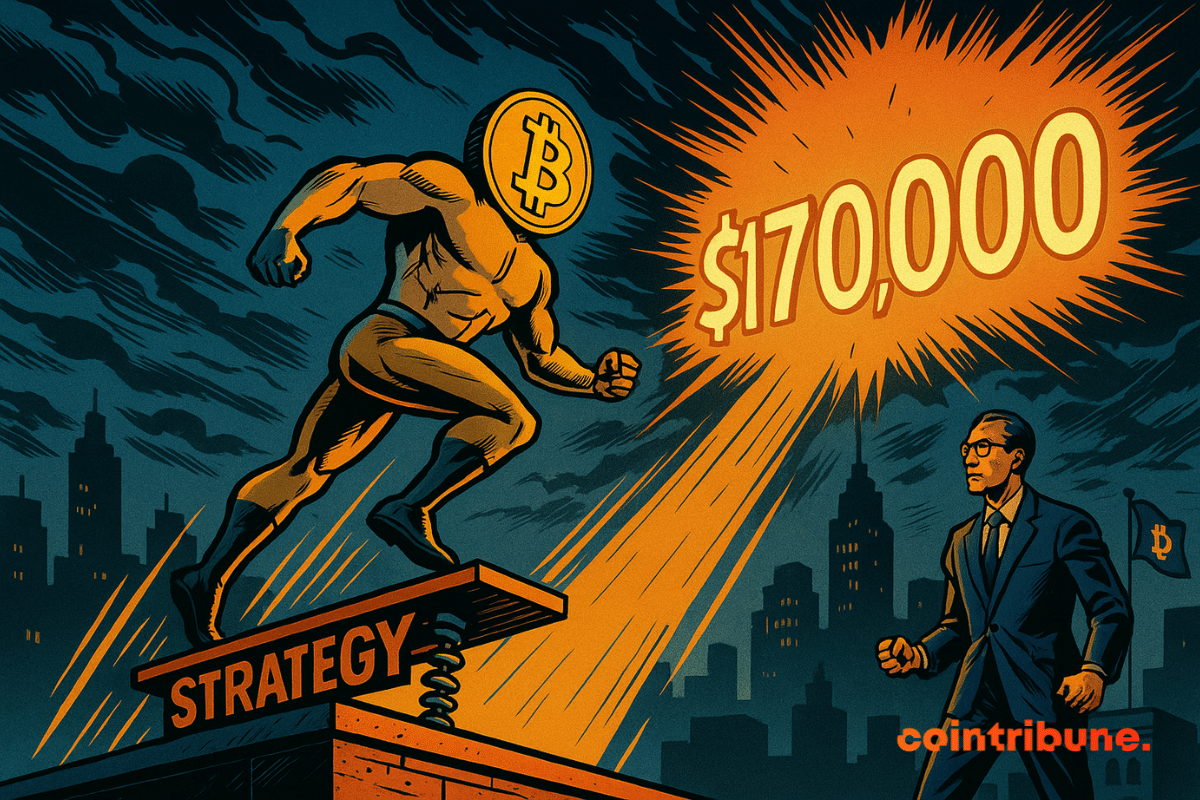
When a company named Strategy becomes the compass of bitcoin, even JPMorgan takes out its calculator. Bull run or crash? The answer lies between MSCI, reserves, and a few well-placed billions.
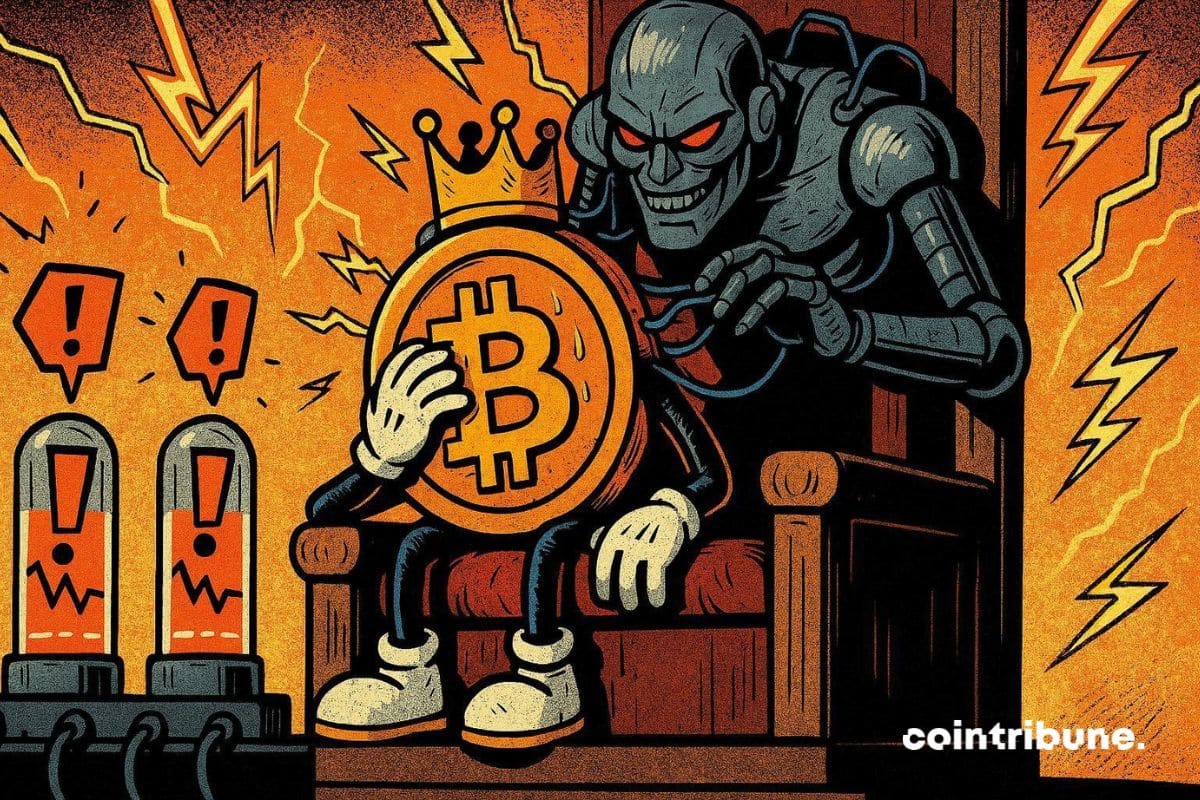
Bitcoin is collapsing, miners are coughing, and some flee to AI: when digital gold turns into an electric burden under maximum stress!
Bitcoin tumbles, miners migrate to AI. Microsoft pays, stocks rise… But their profits? Still striking. The future is now written between cloud and a gamble.
Banned but coveted, China plays it cool and reconnects its bitcoin machines. Silence in Beijing, but business is booming in provinces where electricity costs nothing.
A solo Bitcoin miner defied the odds to secure a rare block, earning 3.146 BTC worth around $266,000.
Bitmain, Chinese giant of Bitcoin mining, raises concerns in Washington. A secret investigation reveals fears of espionage and sabotage via these ultra-dominant machines. At stake: American security, the interests of the Trump family, and the future of crypto-mining.
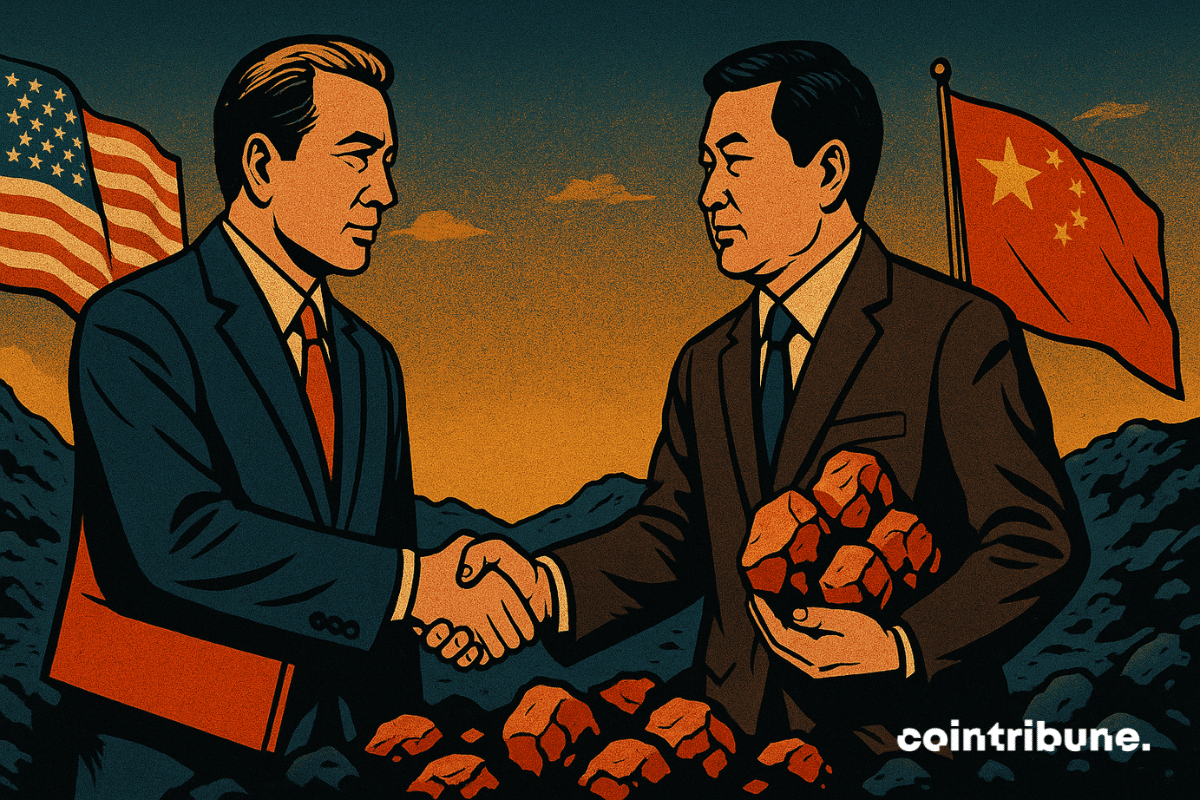
A few days before Thanksgiving, Washington and Beijing are preparing to conclude a decisive agreement on rare earths, these vital materials for the technology industry, defense, and crypto mining. In a tense geopolitical climate, this compromise could defuse a crisis with heavy consequences for global supply chains. Faced with the threat of US customs sanctions and Chinese export restrictions, this agreement marks a strategic turning point, but nothing is decided yet.
As states tighten their control over cryptos, an old bitcoin theft resurfaces amid a geopolitical rivalry. LuBian, a Chinese mining pool, reportedly lost more than 127,000 BTC in 2020. Remaining discreet for years, the case suddenly resurfaces as Beijing now accuses the United States of having seized these funds, now valued at over 14 billion dollars, through an intelligence operation. The suspicion of a state confiscation reignites tensions between two superpowers.
Germany’s Deutsche Telekom has joined Theta Network as an enterprise validator, marking a major expansion of its involvement in blockchain and decentralized computing. By taking on this role, the telecom leader becomes part of Theta’s growing group of corporate validators.
A record $38 billion contract just changed everything. Oracle is betting on AI, and crypto miners are already benefiting. Discover how this mega-deal is revolutionizing markets, boosting stocks, and opening a new era for crypto.
Bitcoin miners are taking on record levels of debt to finance new equipment and expand operations into artificial intelligence (AI) and high-performance computing (HPC). As competition for hashrate intensifies and post-halving profits shrink, miners are increasingly turning to debt markets to maintain an edge in both Bitcoin production and data infrastructure growth.
American Bitcoin Corp. (ABTC)—co-founded by Eric Trump—has released its October 2025 investor presentation, marking a major milestone in its evolution from a pure Bitcoin miner to a full-scale digital-asset ecosystem. The strategy focuses on building a U.S.-based Bitcoin powerhouse to reinforce America’s leadership in the global Bitcoin market.
Bitcoin mining difficulty fell 2.7% while the network’s hashrate reached a record high, keeping competition fierce for miners.
Bitcoin miners are getting a brief reprieve after months of mounting pressure. At block height 919,296, the Bitcoin network recorded its first difficulty drop since June—a 2.73% decrease to 146.72 trillion. The adjustment offers temporary relief after a prolonged period of rising computational demand that pushed many miners to the brink.
Donald Trump declared that the United States is in a trade war with China. This statement, made in Washington, marks an escalation of economic tensions. In the aftermath, the markets wavered. Bitcoin, particularly sensitive to geopolitical shocks, plunged. This declaration comes as the administration targets Chinese technological imports, directly threatening the mining industry. The American trade offensive now takes a strategic turn with immediate repercussions on the crypto ecosystem.
Galaxy Digital secured $460M to develop its former Bitcoin mining site in Texas into a large-scale AI and high-performance computing data center.
When Washington hastily drafts a law, AI becomes a matter of state, crypto miners suffer, and exporters bite their nails. All this, just to stay first.
France is preparing to give up its surplus nuclear energy to an American bitcoin miner instead of favoring the French solution.
The Bitcoin network has never been stronger. Its mining difficulty has just reached an all-time high at 142.3 trillion, up 29.6% since January. This figure reflects both the rise in hashrate power and the growing pressure on mining companies. While the blockchain strengthens against potential attacks, technical and economic requirements impose an increasingly tough selection among sector players.
On CNBC, Eric Trump stated that Bitcoin has "taken the role of gold in today’s world," elevating crypto to the status of a strategic safe haven asset. This media appearance coincides with the launch of American Bitcoin, a mining and BTC holding company he is close to. Far from a mere announcement, this statement fits within a dynamic where publicly traded companies are beginning to integrate bitcoin at the heart of their reserve strategy.
Bitcoin mining difficulty touched a new all-time high as the crypto market descended into volatility following the latest US job data. After hitting an all-time high (ATH) in August, market commentators projected that the difficulty of Bitcoin mining would decrease. However, the mining difficulty has steadily increased as the month progressed, with large players dominating the space.
In August, bitcoin miners generated revenues close to 1.65 billion dollars, a level almost identical to that of July. This maintenance reflects an impressive resilience of the sector, despite a context marked by rising costs and energy pressure. But behind this apparent stability lie structural vulnerabilities that raise questions: can the current mining model really hold in the long term?
Behind Bitcoin's apparent stability, an imbalance threatens the network's sustainability. Since April, transaction fees have dropped by more than 80%, shaking the remuneration model of mining companies. Amid the rise of ETFs and after a demanding halving, it is Bitcoin's internal economy that is faltering. Lower fees, fewer incentives, more risks to protocol security, the crisis is here, structural, and raises a question the ecosystem can no longer ignore.
The United States and the presidential circle are all-in on bitcoin while Europe continues to fall behind.
An exceptional technical show of force is currently shaking the crypto ecosystem. Qubic now controls 58% of Monero's (XMR) total hashrate during its marathon periods, setting a new record of computational power while simultaneously proving that technical innovation and responsibility can coexist. This remarkable performance illustrates the unique capabilities of the Qubic network and its revolutionary vision of Useful Proof of Work.
A solo Bitcoin mining success earned an independent miner $365,000 from block number 910,440.
While mining profitability erodes and hashprice declines, the Bitcoin network records an unprecedented power rebound. On August 18, the hashrate climbed to 966 EH/s, nearing a historic peak, despite nearly zero transaction fees and growing economic pressure on mining companies. This striking contrast between economic tension and technical robustness raises questions: how does the mining ecosystem manage to maintain, or even strengthen, its security in such an unfavorable context?