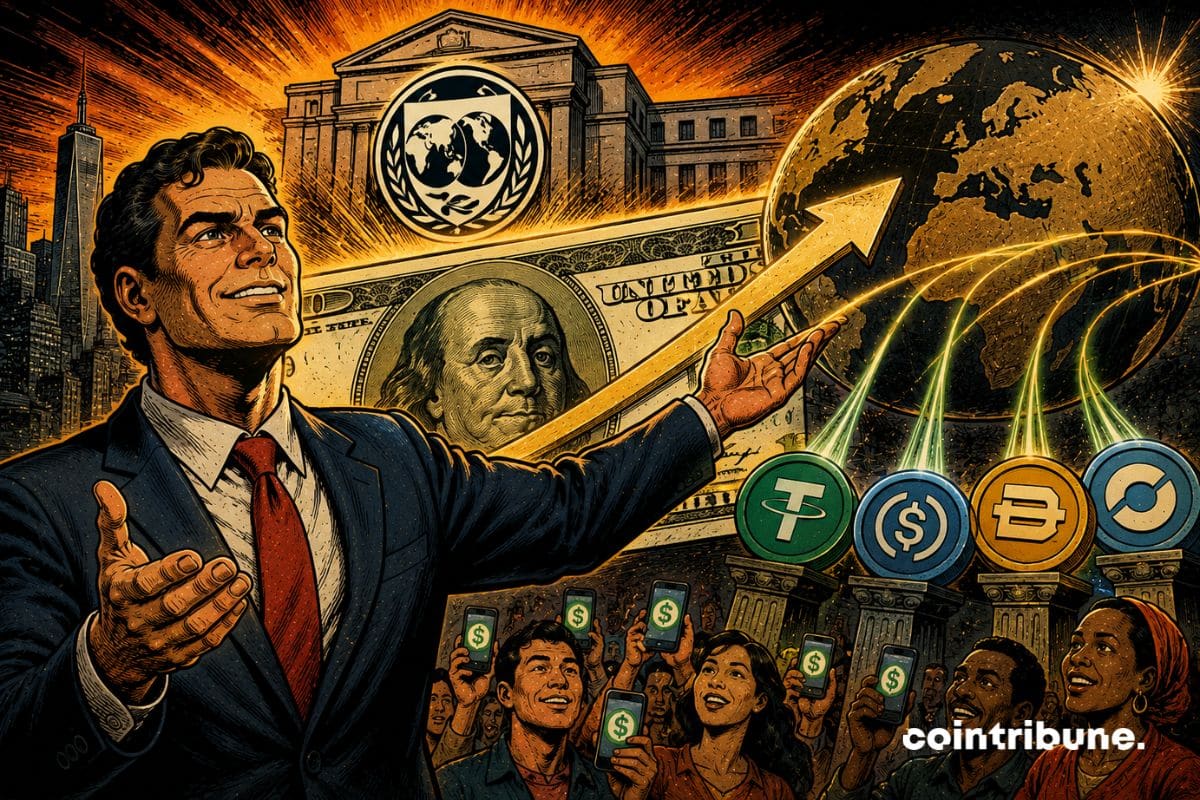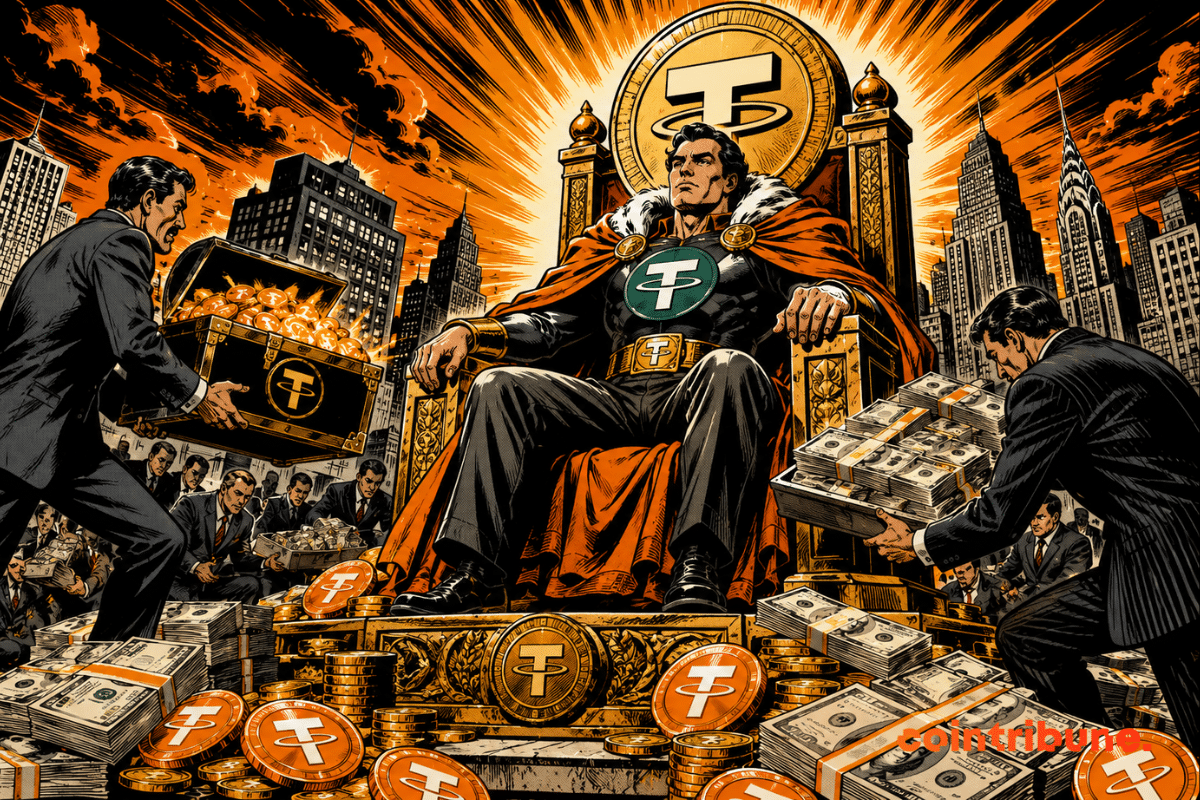
Stripe, Visa and Mastercard unite to launch a stablecoin platform. Circle collapses by 11%, Tether trembles. Who will dominate the $319 billion market? The war is declared, and the stakes are huge.
Gold joins your wallet! Tether and Fasset have just launched the very first gold-backed Visa card (XAUt). Revolution or gimmick? We explain everything to you.
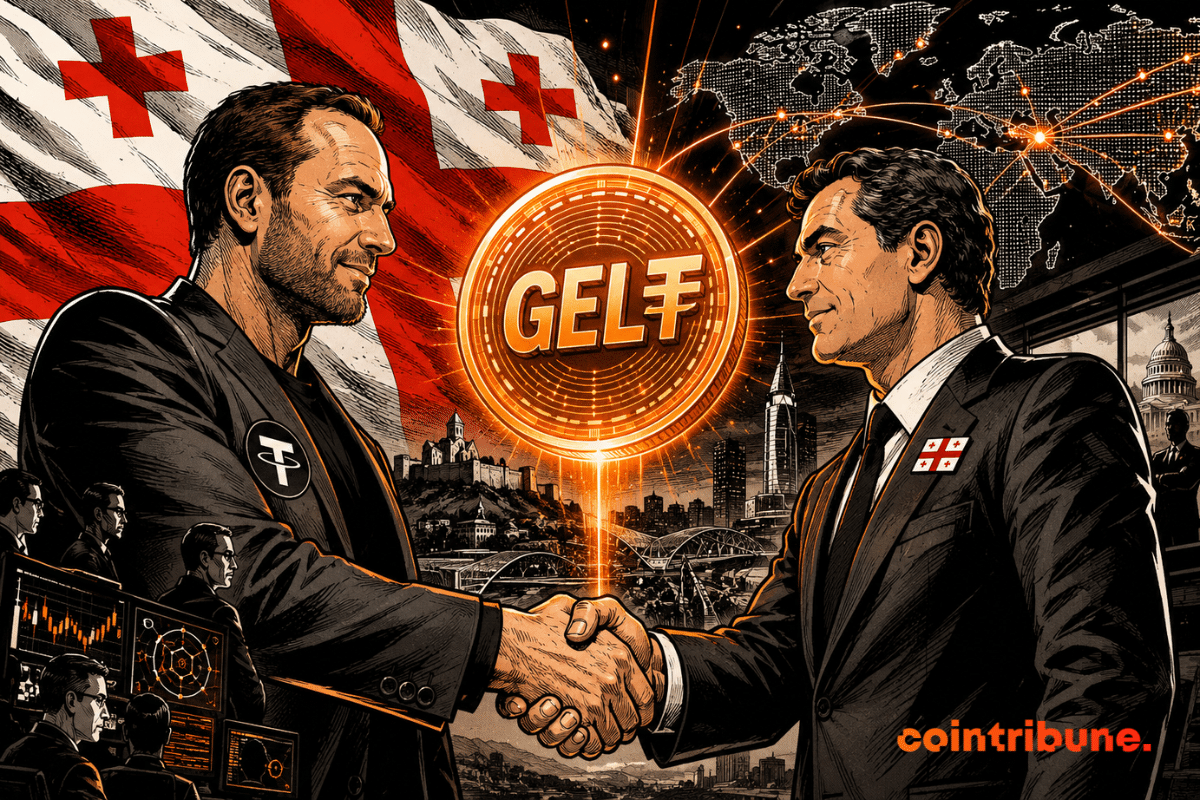
It's no longer a project, it's official: Tether is partnering directly with the government of Georgia to launch GELT, a state crypto stablecoin backed by the Lari. Failure or stroke of genius? Details here!
Artificial intelligence no longer just responds, writes, or analyzes. It also starts to pay. And in this new economy driven by autonomous agents, crypto establishes itself as an almost natural infrastructure. According to Keyrock, these agents settled over 73 million dollars on 176 million transactions between May 2025 and April 2026. A signal still discreet, but impossible to ignore.
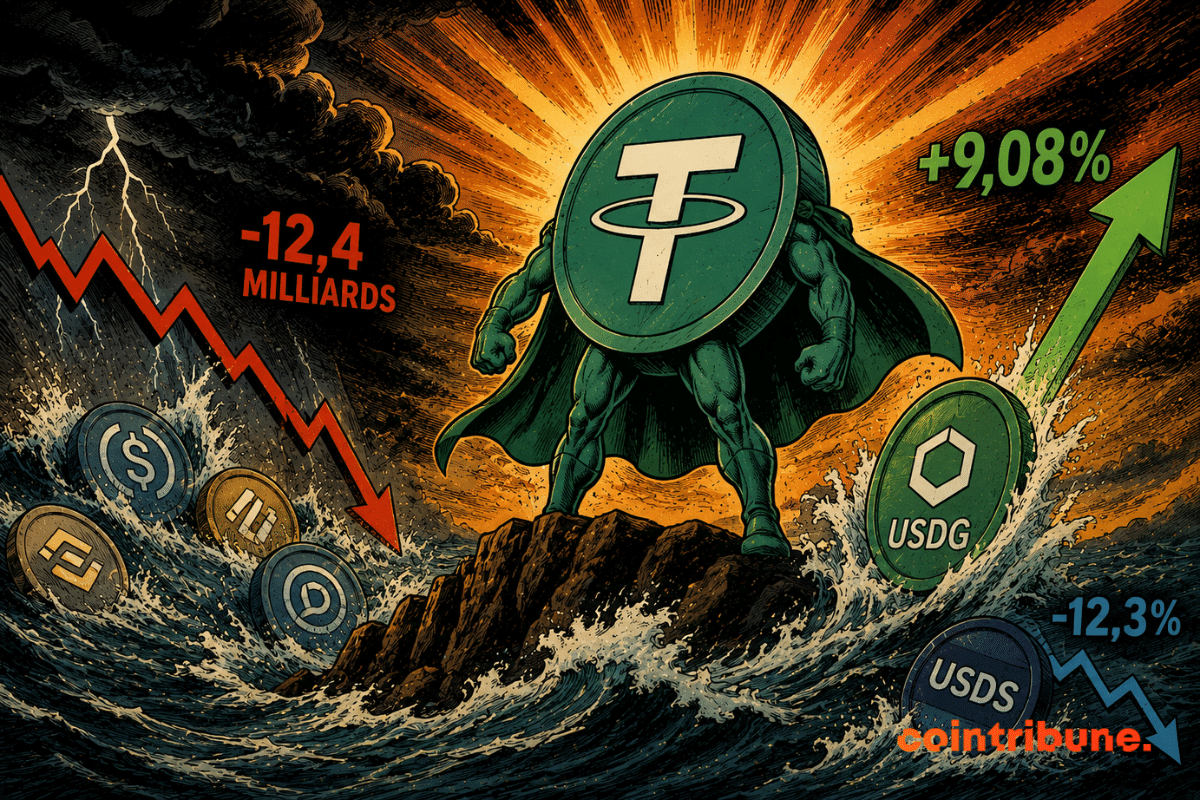
The stablecoin market enters a phase of brutal concentration. Tether absorbs almost all new flows, while its rivals take a hit. Between regulatory uncertainties and crypto market nervousness, investors now favor liquidity, size, and perceived security.
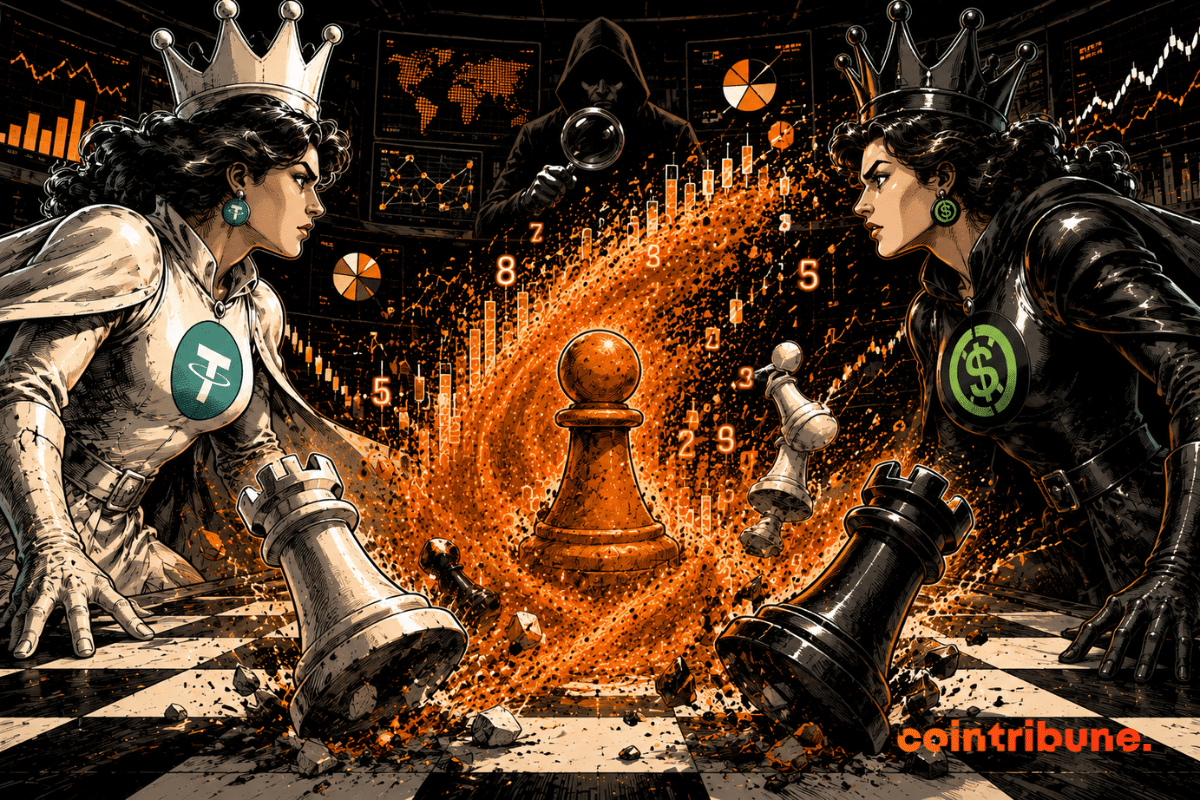
While Brussels is still polishing its regulatory chessboard, American stablecoins are already taking the global digital pot. Tether moves like an uncontrollable queen, BlackRock quietly places its rooks, and the euro watches the game from the edge of the board, a few moves behind.
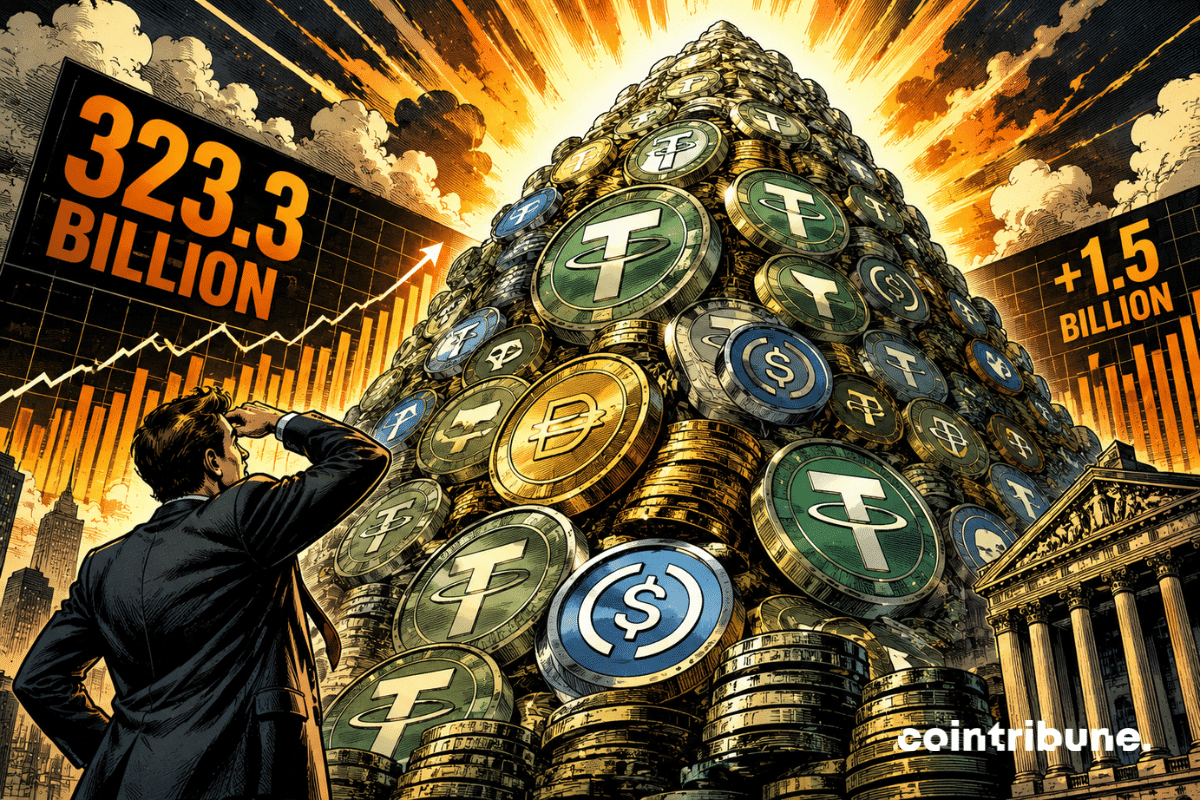
The crypto market finds a foothold after a more active week on dollar-indexed assets. According to Defillama data, stablecoins attracted well over 2 billion dollars in seven days. In this context, USDT maintains a central place, while several competitors progress at different rates. The sector now shows a total capitalization of 322.74 billion dollars.
Tether has just reminded a reality often forgotten: USDT circulates quickly, but it can also be frozen abruptly. In one month, the issuer of the largest stablecoin on the market has frozen more than 514 million dollars on Ethereum and Tron, according to BlockSec data.
The CLARITY Act, which has been stalled for months, has just cleared its final hurdle. With a compromise on stablecoins, the Senate could vote in May 2026. A historic breakthrough for crypto regulation in the United States. Read all about this revolution.
Stablecoins move trillions, but JPMorgan cools the champagne. Money spins faster than ever, and that promised jackpot might quietly stay locked behind the curtain.
Hacks no longer just weaken DeFi, but they are already reshaping the stablecoin market balance. In just a few days, a series of major attacks triggered a massive shift of capital towards assets perceived as the safest. In this climate of mistrust, Tether (USDT) significantly strengthens its dominant position over USDC, benefiting from an investor protection reflex. This shift reveals a deeper change in the stablecoin hierarchy.
Bitcoin is trading around 75,000 dollars, without calming the market. In this context, the head of Tether publishes a message with symbolic meaning that draws attention. This speech comes at a pivotal moment, where the price stabilizes and expectations remain high. It thus reveals the role of major players in shaping the narrative around Bitcoin.
Iran introduces bitcoin into its oil-related mechanisms. Under the effect of international sanctions, the country explores this asset as a strategic lever for its energy transactions. This direction marks a significant evolution, even if, in fact, flows still largely rely on other digital instruments, notably stablecoins. Between political display and operational constraints, a hybrid strategy is emerging.
At Tether, the stablecoin is no longer enough: bitcoin, gold, and now wallets are being stacked. At this pace, the vault almost starts to see itself as a State.
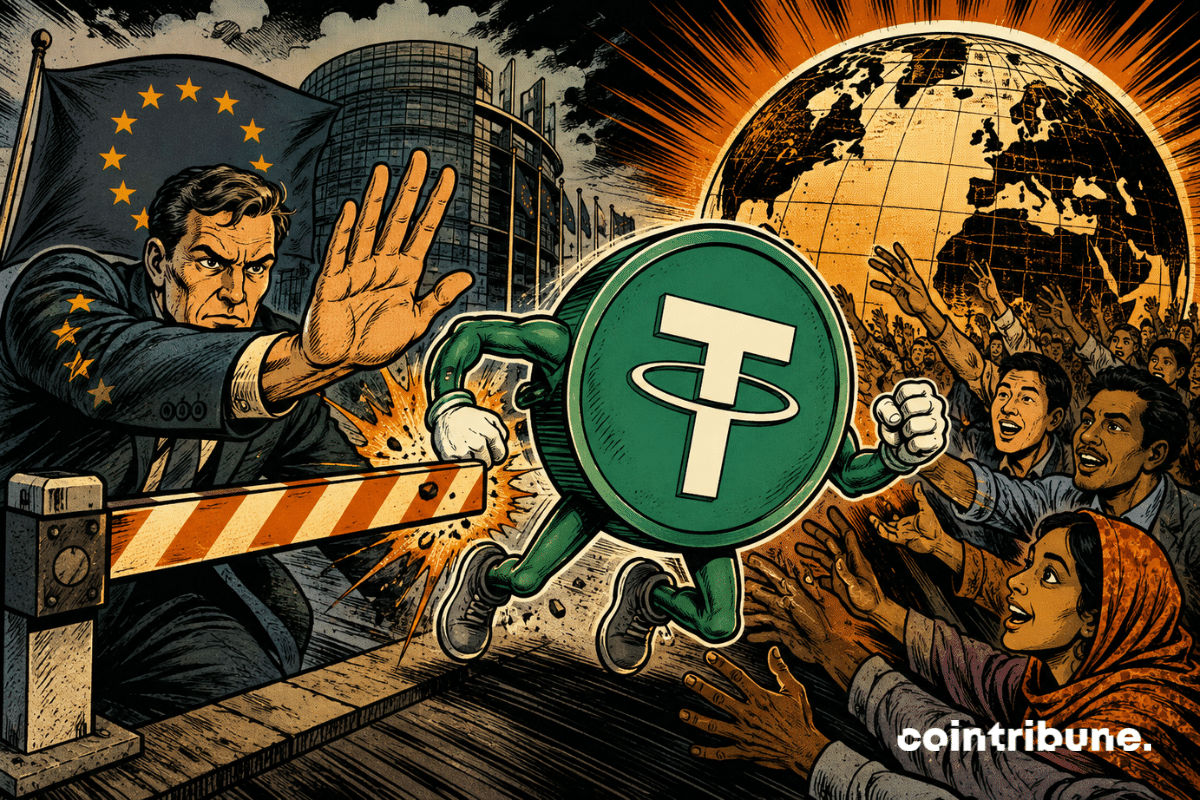
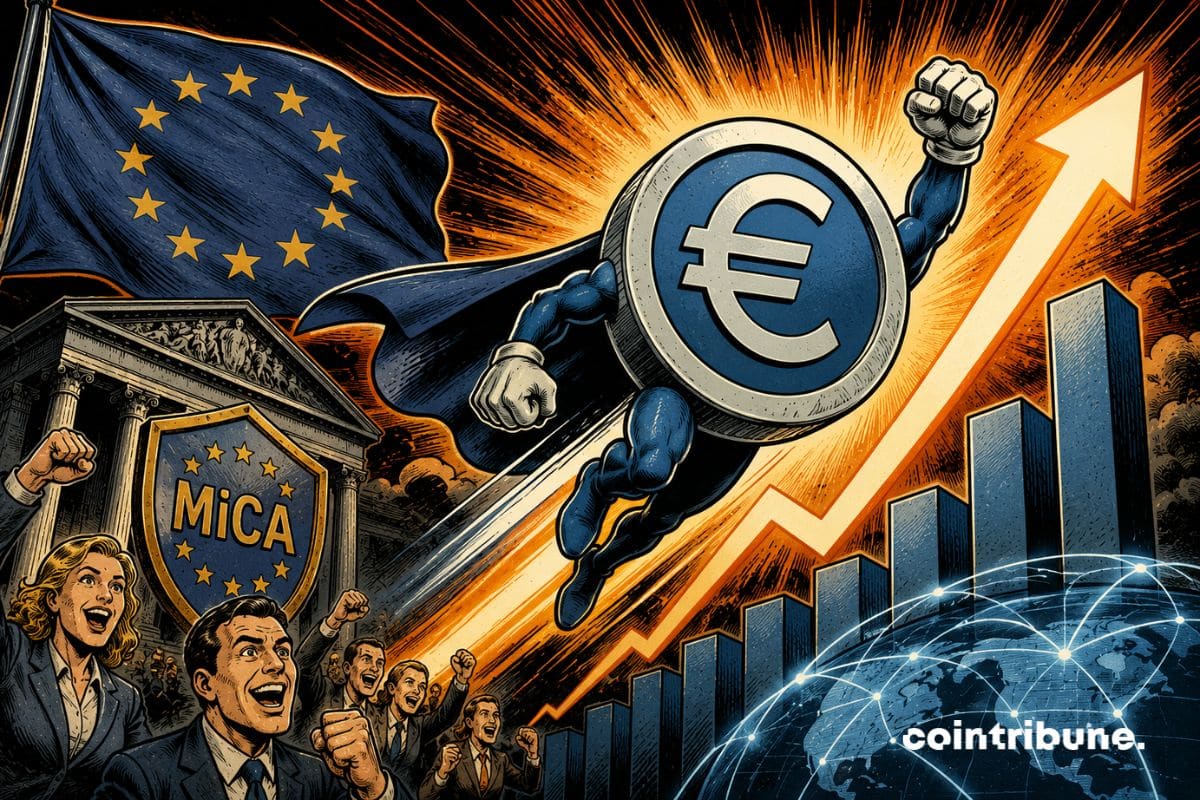
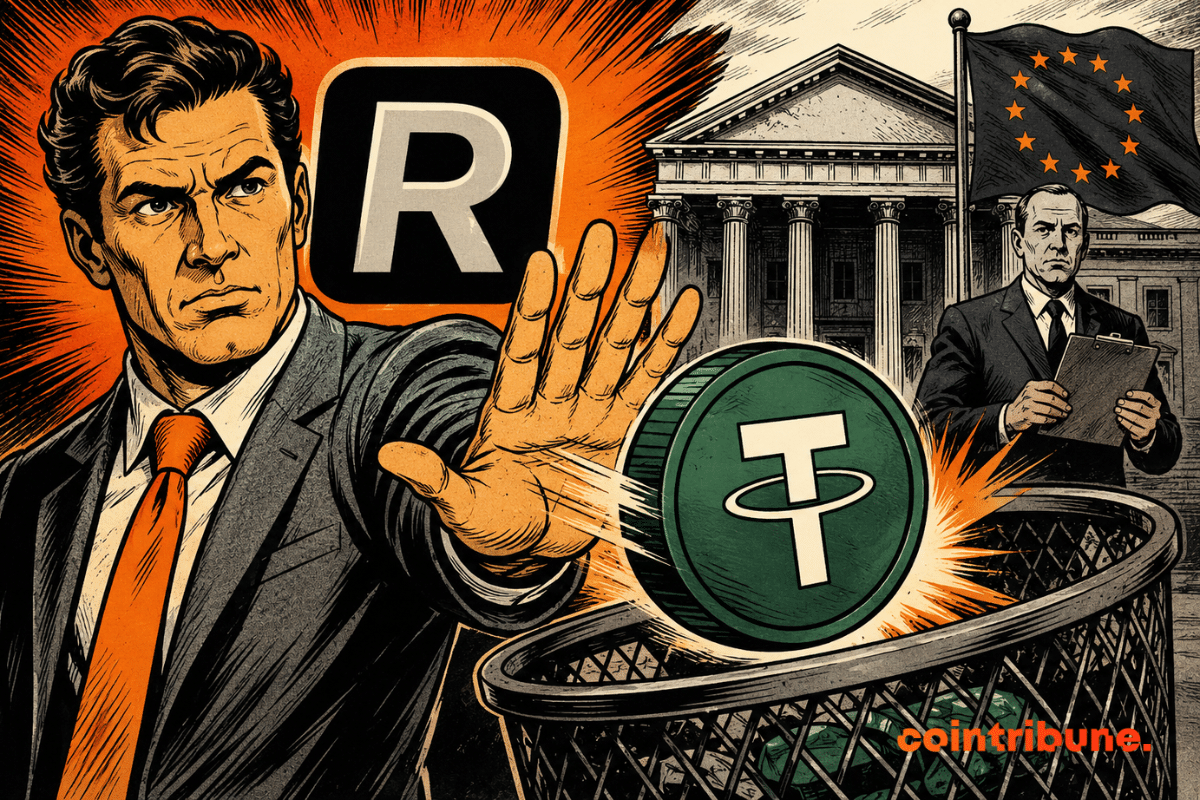
98% of stablecoins depend on the dollar, a threat to Europe. The Bank of France demands urgent tightening of MiCA rules. Why this decision? What risks for investors and markets? Analysis of the issues and proposed solutions.
Tether, the issuer of the world's largest stablecoin, is playing a risky card. The company is trying to close a historic fundraising at a valuation of 500 billion dollars, but time is running out. Investors have two weeks to commit. After this period, the project could be purely and simply postponed.
While crypto coughs and retail pulls out its marbles, stablecoins swell driven by bots, boosted by yield, while tokenized dollar changes masters.
Long considered the unshakable runner-up to Bitcoin, Ethereum's position is now threatened by an unexpected adversary: Tether. On Polymarket, bets on an "ETH flipping" in 2026 have jumped from 17% to over 59% in a few weeks. A trend that raises questions.
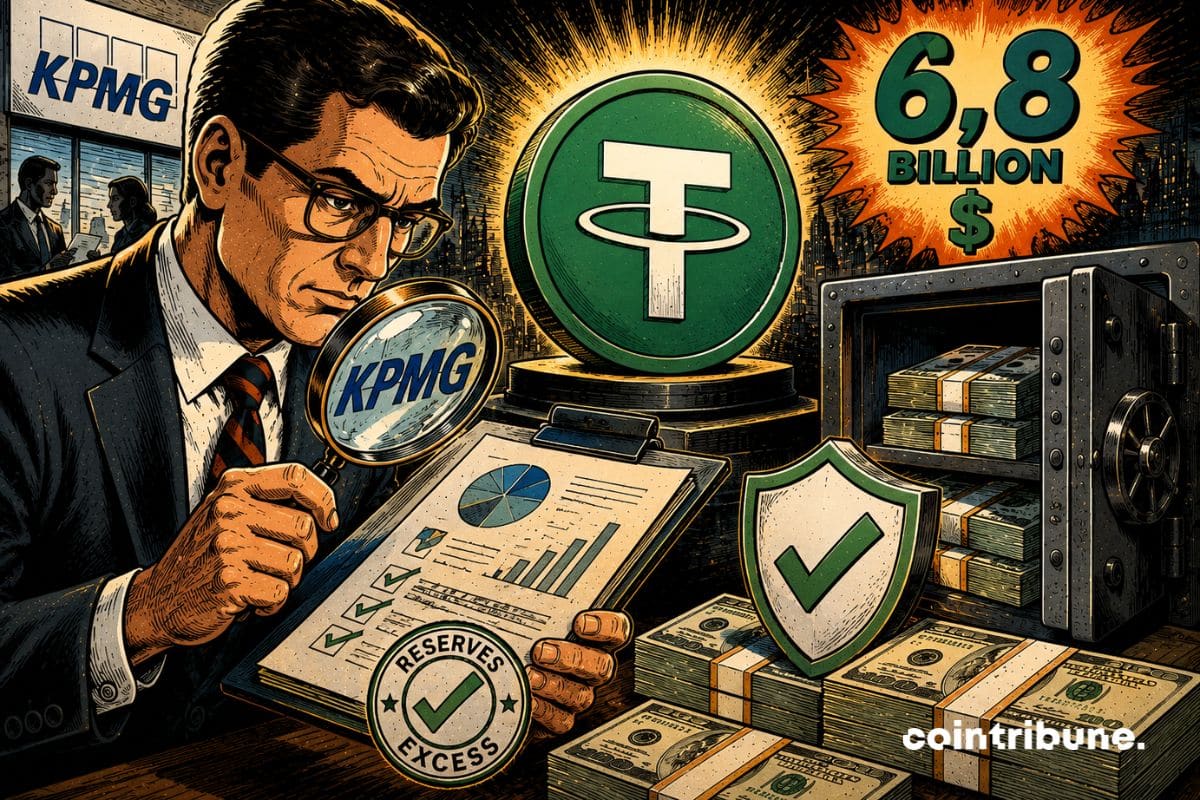
Tether is playing big. Long criticized for its opacity, the issuer of the USDT stablecoin finally announces a full audit of its reserves by a Big Four firm, a highly anticipated first by the market. Such progress could reshuffle the cards of trust around the world's largest stablecoin. However, the company refuses to reveal the identity of the firm in charge of this mission, casting doubt at the very moment it claims to want to increase its transparency.
AI: Tether makes a strong impact with a system that reduces costs and eliminates reliance on Nvidia GPUs. A revolution underway!
The duel between the two largest stablecoins in the market has just taken an unexpected turn. According to a report from investment bank Mizuho, Circle's USDC has surpassed Tether's USDT in adjusted volume since the start of the year, a key indicator for measuring the actual usage of these currencies. This shift does not yet challenge Tether's dominance in capitalization, but it reveals an evolution in how these assets are used. The stablecoin market is now divided between financial power and actual usage.
Tether has restarted the engine. The issuer of the market's first stablecoin created 1 billion dollars in USDT on Tron, a move that brings the crypto liquidity issue back to the center of the game at a time when geopolitical tensions are already shaking global markets.
In just 3 years, Tether has frozen 4.2 billion dollars of USDT tokens linked to illicit activities, establishing itself as a key player in the fight against financial crime in the crypto ecosystem. While some see this as progress against cybercrime, others fear a much more frightening danger.
World Liberty Financial (WLFI), a crypto venture backed by the Trump family, has unveiled a governance proposal that would require long-term staking to unlock voting rights while deepening incentives around its stablecoin, USD1. The initiative is designed to concentrate decision-making power among committed participants and expand USD1’s role within the ecosystem.
While the market cries, Circle is thriving. 770 million in revenue, USDC soaring, a blockchain accelerating. The others? They look at their shoes, embarrassed.
Paolo Ardoino, CEO of Tether, recently posted a short video on X. No title, no comment, no clue. Within minutes, the crypto sphere exploded. Behind this silence was much more than a simple teaser: the maturity demonstration of QVAC, the sovereign artificial intelligence project that Tether has been quietly developing for several months.
Stablecoins want to buy U.S. debt. 2 trillion in their sights. The Treasury panics, 30-year bonds suffer. Tether is rubbing its hands.
While the cryptocurrency market undergoes a phase of decline marked by strong risk aversion, Tether's USDT shows an opposite dynamic. The stablecoin records record adoption, driven by practical uses such as savings, payments, and cross-border transfers, confirming its central role in crypto ecosystem liquidity and stability.
Elemental Royalty will let shareholders receive dividends in Tether Gold, providing a digital alternative to traditional cash payouts.
One billion to Tehran via Binance? Investigators fired for seeing too much? The giant swears all is false. But the shadow of the past looms.