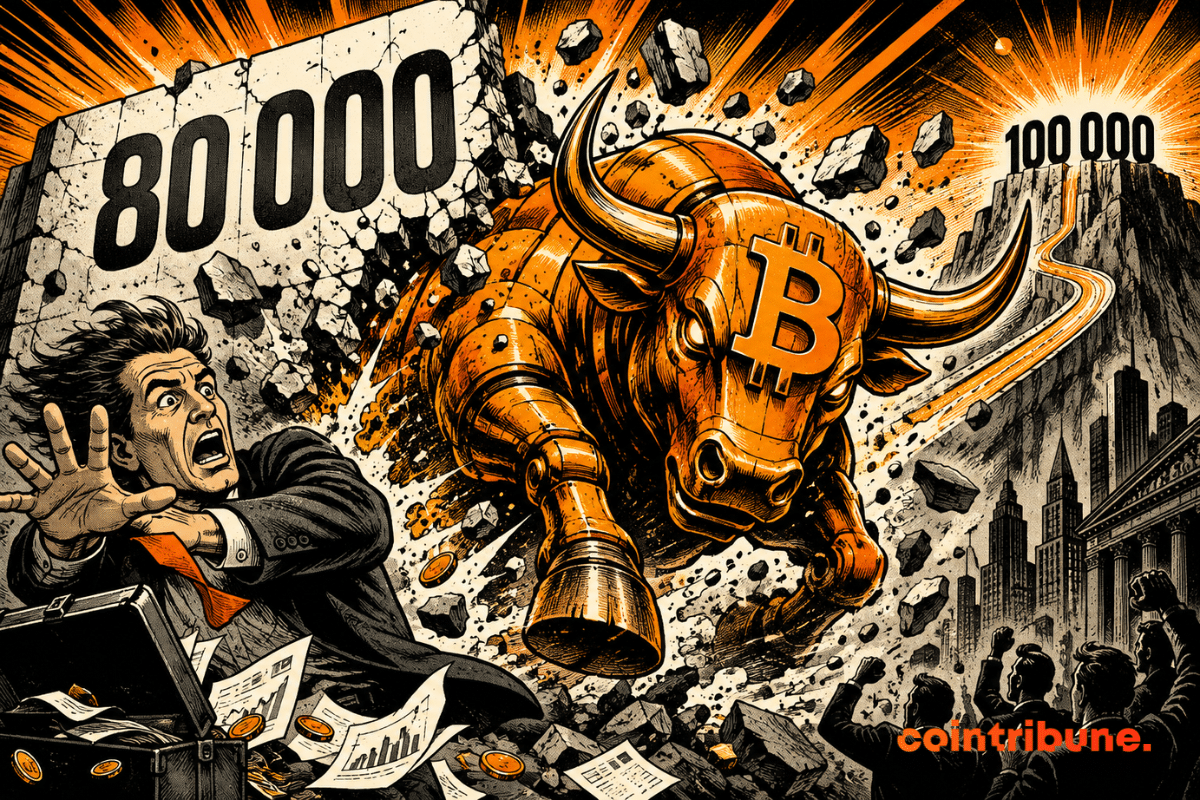
Alert on the Bitcoin network! According to a JPMorgan report, 20% of miners are currently operating at a loss. With an average production cost estimated at $78,000 and a pressured price, has capitulation started? Here is an update.
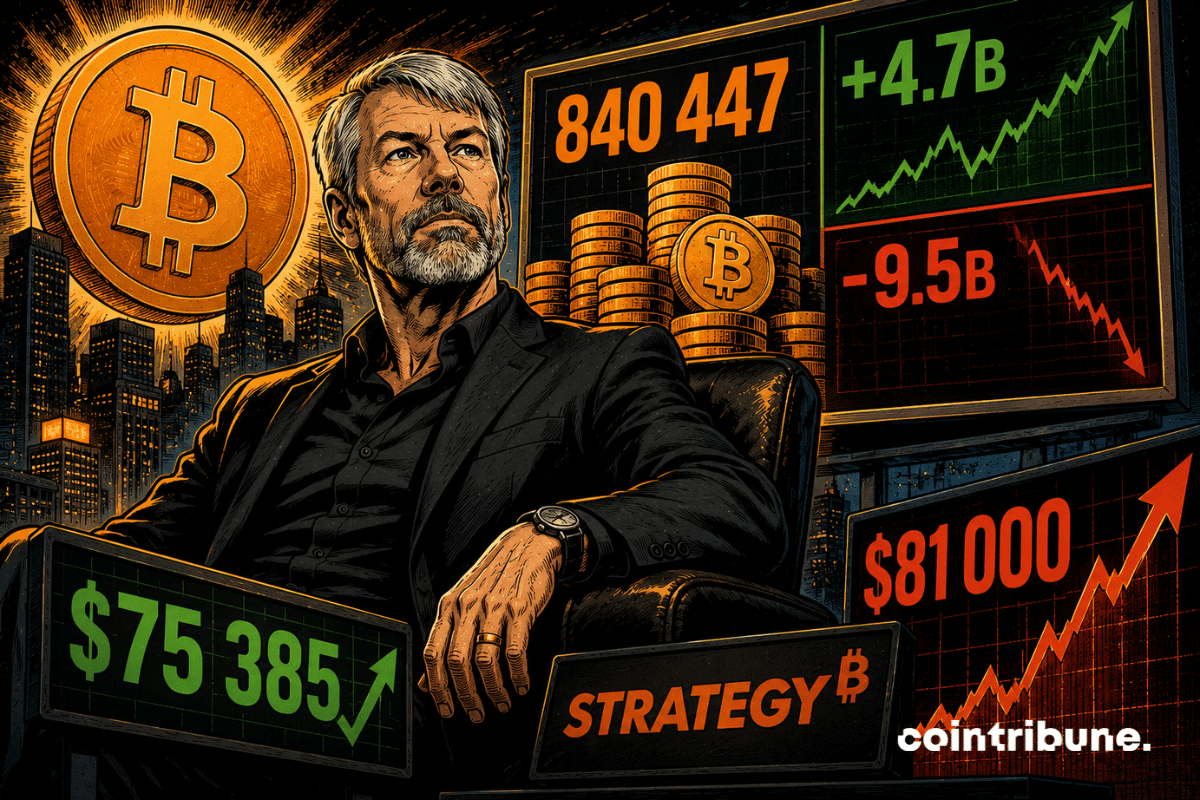
Strategy's preferred stock STRC hit $88.51 on Wednesday, its lowest level since the listing, before closing at $89. This 11% discount to the par value of $100 comes with a higher volume of put options than call options on contracts expiring June 18. Will Michael Saylor's main bitcoin financing vehicle withstand market pressure?
The volatility of cryptos and their close links with global geopolitical events have just written a new and surprising chapter for digital finance investors. While a major diplomatic breakthrough foretold a wave of widespread optimism, the crypto market reacted quite asymmetrically, surprising all operators. This dynamic reveals the complexity of risk transfer mechanisms, an important subject that is now redefining institutional and private fund allocation strategies at the international level.
The arrest of four men in Marseille revives concerns about violence related to digital assets. According to information provided by the police, the case reportedly began with an attempted crypto theft before taking a more serious turn with a hostage situation. This episode occurs in a context marked by the increase of attacks targeting cryptocurrency holders in France.
The National Cybersecurity Agency of France (ANSSI) has just laid the foundations for a mandatory transition to post-quantum cryptography, cementing a threat that many still thought was distant. This decision is crucial because it represents the tipping point between theoretical research and legal obligation, requiring critical infrastructures and the crypto industry to hasten their own technological transformation.
Changpeng Zhao wants to push states to tokenize their shares to make them accessible to investors worldwide. The founder of Binance envisions a market where national stablecoins, stock securities, and crypto liquidity would circulate on the same infrastructures. But regulation could slow down this ambition.
Grayscale sees Aave undervalued and promises it $175. Wall Street bankers are already buzzing, but the DeFi protocol remains cautious after the KelpDAO shock.
More than half of aspiring Web3 professionals cannot secure their first industry role because even junior positions demand prior experience, according to a new Bitget report. The findings expose a hiring contradiction: Web3 keeps attracting educated candidates, yet its entry doors remain remarkably narrow.
La semaine dernière, SpaceX a fait son entrée en bourse avec une valorisation initiale de 1 770 milliards de dollars, avant de la dépasser largement. Cet événement ravive les espoirs des créanciers de FTX, l'exchange crypto fondé par Sam Bankman-Fried, qui détenait une participation indirecte dans la société d'Elon Musk avant sa faillite en 2022. Les victimes de Bankman-Fried pourraient-elles finalement récupérer bien plus que prévu ?
The arrival of autonomous agents is evolving the very notion of sovereignty and infrastructures in the digital age. Faced with a rise in technology often faster than old rules, it becomes essential to give a legal existence to algorithmic entities. Estonia, a pioneer in innovative institutions and 100% digital, confirms once again as the global laboratory of this transition. By granting an official status to artificial intelligences, the Baltic state traces a new path in the history of technological governance.
Crypto markets are experiencing a new phase of capital rotation. Altcoins record a sharp decline in spot demand, while bitcoin and AI-related sectors attract more investor attention. This evolution shows a change in market flows, with volumes remaining high on some platforms despite a decline in direct purchases.
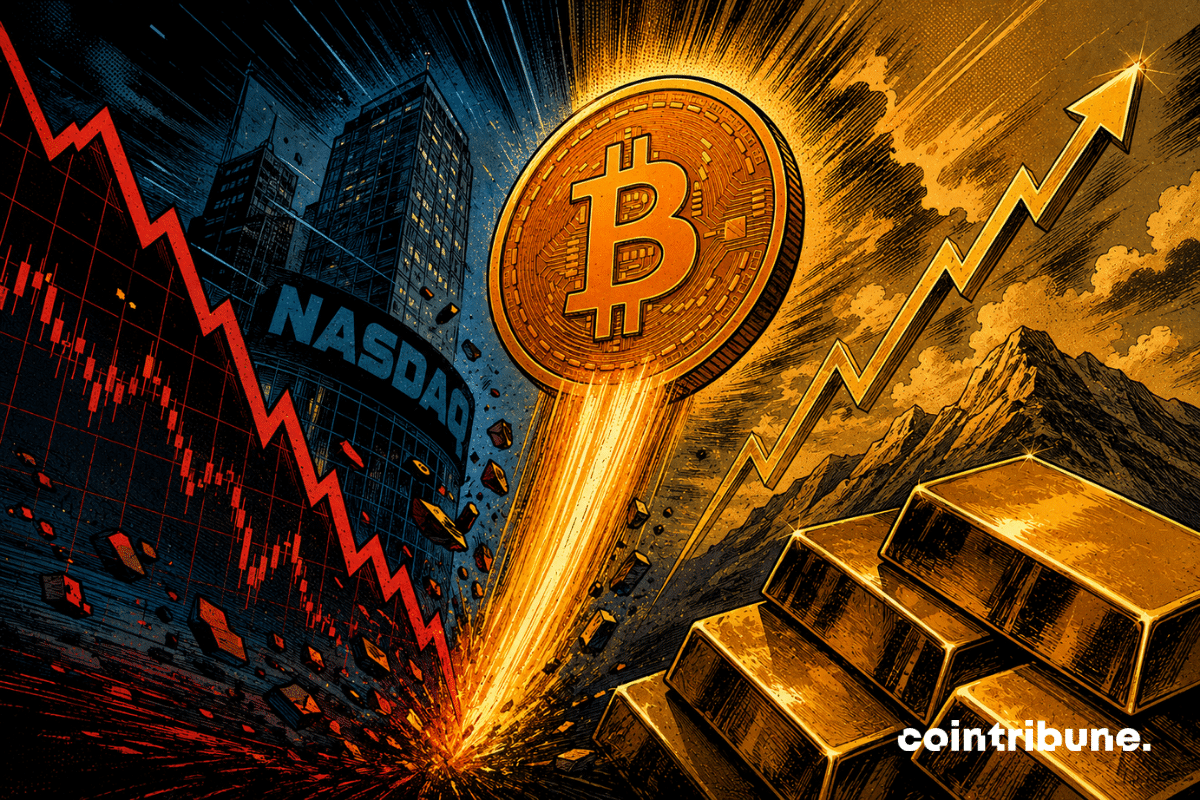
This Wednesday, June 17, a macroeconomic turning point occurred, symbolized by the capitulation of gold which lost more than 40 dollars an ounce, and by the drop of bitcoin below the threshold of 65,500 dollars. This reaction follows the Fed's forecasts, whose restrictive tone surprised investors who hoped for easing.
As Sam Bankman-Fried tries to obtain a presidential pardon, Republican and Democratic lawmakers step forward. The most explosive crypto case of the year could see a new twist.
Kevin Warsh's first Fed meeting: the statement and economic forecasts alter the game, but rates stay the same. a hawkish shift that might completely alter American monetary policy.
Published on June 16, the monthly report from the Chinese National Bureau of Statistics (NBS) is not limited to a series of macroeconomic data, but it reveals a major structural fracture, already forcing global fund managers to revise their risk asset allocations. In an ultra-connected financial context, Beijing's inability to revive its domestic demand, even as its technology factories operate at full capacity, outlines the contours of an unprecedented arbitrage for bitcoin, historically linked to global liquidity flows.
The regulatory future of Binance in Europe raises new questions after the publication of a Reuters article mentioning a possible rejection of its authorization request. According to this information, the platform might not obtain its MiCA license before the deadline set by the European Union. Faced with this situation, the company quickly reacted by contesting these statements and reaffirming its intention to continue its procedures with the competent authorities.
The US Congress recently outlawed CBDCs until 2030, but not in the way you might think, in a bill pertaining to housing! Who among Trump, Republicans, and Democrats is truly terrified of the digital dollar?
The fallen king SBF wants to launch a new crypto from behind bars, despite his appeal being rejected and a pardon bid on the table.
The crypto market often follows complex psychological dynamics where an excess of pessimism foreshadows the most violent reversals. Thus, the sector, characterized by inherent volatility and increased sensitivity to macroeconomic factors, once again demonstrates its resilience through recent movements of some major altcoins. It is in this tipping point context that the sudden recovery of XRP, Ripple's cross-border transfer token, fits in, drawing renewed attention from traders after a prolonged depreciation phase.
Interest in financial assets on blockchain continues to grow in the United States. In this context, Coinbase announced the upcoming arrival of tokenized American stocks backed by real securities. This initiative comes as several platforms seek to position themselves in this emerging market. Stock tokenization is indeed attracting more and more players who want to bring traditional financial markets closer to the blockchain ecosystem.
The spectacular collapse of memecoins, which have just erased nearly all the gains made by individuals in a few weeks, brutally confirms that pure speculation hits a wall of macroeconomic reality. Long considered a symbol of financial democratization driven by internet culture, these parodic assets are undergoing an unprecedentedly violent purge, calling into question the very structure of the crypto market. Such a situation could mark the end of a cycle of irrational euphoria and forces actors in the sector to reassess the viability of protocols lacking technological fundamentals.
The Bank of Japan raises its rate to an unprecedented high since 1995. A global macroeconomic earthquake reshaping the economy and crypto, but the digital assets market shows historic resilience against the Yen.
In May 2026, major crypto exchange platforms showed a facade of stability. Spot transaction volumes rose by only 0.1% on the main platforms, according to data compiled by Wu Blockchain. Behind this apparent calm, market shares moved significantly.
In a significant move, SpaceX pays $60 billion to acquire Cursor. Elon Musk's acquisition has the potential to completely change the ecosystem given the conflict with OpenAI and Anthropic as well as the effects on the cryptocurrency market. You'll want to learn more as AI enters a new era.
In the European Union, the regulatory balance of the crypto industry is challenged by a major situation that could disrupt the hierarchy of exchange platforms on the continent. The compliance of major platforms with the new unified crypto market standard (MiCA), less than a year before the crucial 2026 deadline, triggers unprecedented tensions between exchanges and national regulators. Indeed, European harmonization imposes extremely strict licensing criteria, making each local decision a geopolitical and financial arbitration at the scale of the bloc of twenty-seven.
The European digital asset market continues to evolve despite a regulatory framework deemed complex by some players. In this context, Capital B is working on a new credit instrument aimed at European investors. Presented at BTC Prague, this project relies on the Bitcoin reserves held by the French company, already recognized for its treasury strategy focused on digital assets.
Bitcoin does not need staking, inflation, or an embedded yield in its protocol. Michael Saylor instead advocates a model where bitcoin remains pure digital capital, while financial markets create credit and income around it. In brief Saylor believes Bitcoin doesn’t need to copy Ethereum staking. Yields…
Stablecoins have become a real payment circuit in Nigeria. For the IMF, their growth provides a concrete solution to costly transfers, but now tests the monetary and regulatory limits of the country.
Pudgy's penguins have put their controllers away. Their Party game is closing up shop due to a lack of players. Head to Pudgy World, the universe that's supposed to save the brand. The fans? They're seeing green—and not the good kind.
On international financial markets, the search for absolute scarcity leads analysts to periodically rethink the trajectory of value, but the latest projections made in Central Europe completely disrupt the known scales of magnitude. At the BTC Prague conference, Michael Saylor, CEO of the financial firm Strategy, presented his vision of a systemic upheaval on a global scale, which he calls Bitcoin capitalism. This intervention takes place in a particularly dynamic macroeconomic environment, marked by a general resurgence of investor confidence and a notable increase in the overall capitalization of cryptos. To properly analyze these statements, one must proceed rigorously to distinguish the dynamics of global wealth transfer from emerging financialization mechanisms.