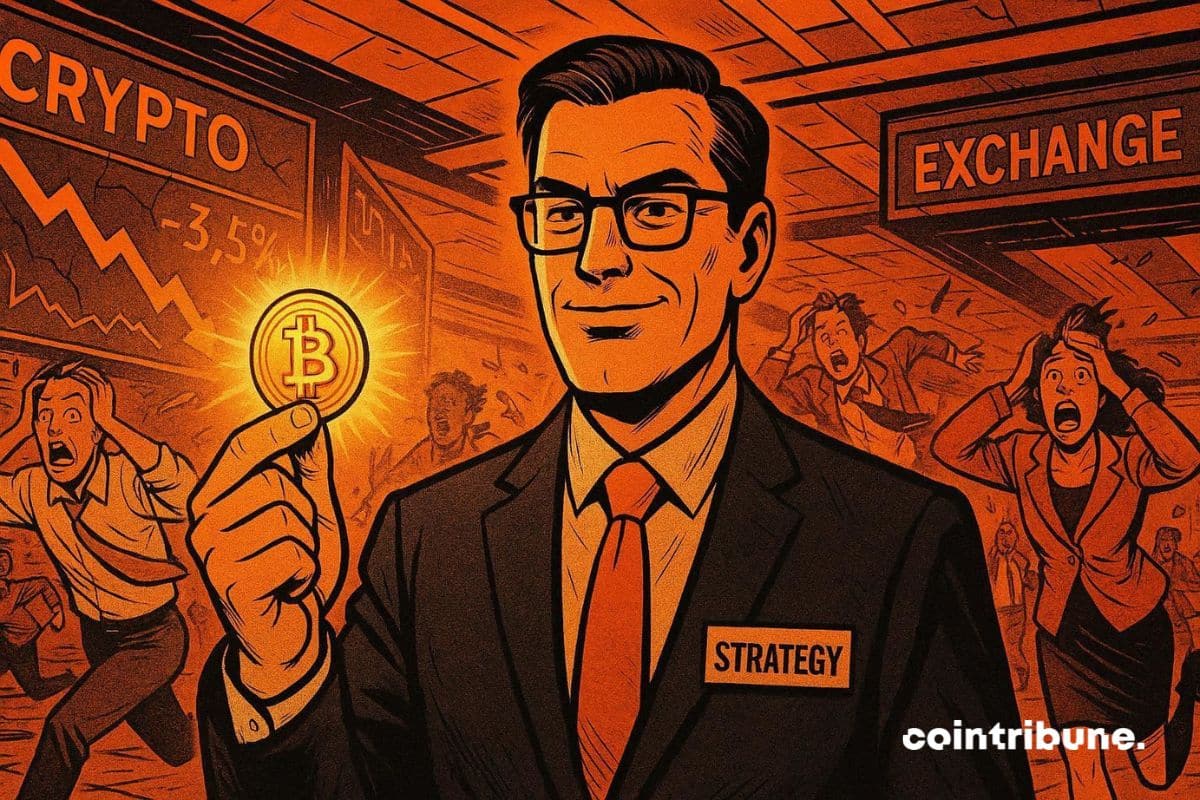
When bitcoin falters, Saylor blazes: 397 BTC more, 641,205 in stock... The man who confuses corporate strategy with a collection of digital coins still does not intend to ease off.
By promising $2,000 per American, funded by tariffs, Donald Trump shakes up budgetary rules. Without waiting for legal approval, risky assets, led by crypto, are already anticipating the impact of such an injection. This political move, resembling a unilateral stimulus, triggers as much hope as doubt, between populist drift and speculative catalyst.
Short shake, big signal. In one week, spot ETFs backed by ether recorded about $508M in withdrawals. At the same time, Bitcoin ETFs experienced notable outflows. The movement is not anecdotal. It says something about market sentiment, risk management... and how institutional investors are now calibrating their exposure to crypto assets.
A prolonged U.S. government shutdown has created a rare information void just as financial markets seek clarity. Investors are awaiting the Federal Reserve’s next rate decision with limited insight, while lawmakers continue advancing cryptocurrency legislation despite widespread staffing delays.
Ripple parades with Mastercard and Nasdaq, raises 500 million… but XRP collapses. In the crypto world, golden speeches do not always prevent wallets from lightening.
Growing attention to the long-delayed Fort Knox audit has reignited debate between gold and Bitcoin. Binance founder Changpeng Zhao (CZ) has once again joined the discussion, questioning gold’s verifiability while responding to long-time critic Peter Schiff. Rising interest in tokenized gold and continued market uncertainty have added fresh momentum to the conversation.
Growing interest in Ethereum’s long-term outlook has pushed validator queues higher for both entry and exit. Recent data indicate that roughly 1.5 million validators are waiting to join the staking system, while approximately 2.45 million ETH are in the exit queue. These conditions mark a busy period for participants who choose native staking over liquid staking alternatives.
Stablecoins are becoming the preferred cryptocurrency for illicit transactions, outpacing Bitcoin and drawing increasing scrutiny from regulators.
Italy supports the European Central Bank's (ECB) digital euro project but sets its conditions. Italian banks, while welcoming this digital sovereignty initiative, request a financial effort spread over time. Facing heavy investments, the Italian banking sector wants to avoid a budget shock. Will this stance resonate with other European countries?
Coinbase has deepened its involvement in BNB Chain activity by adding Aster (ASTER) to its listing roadmap. According to market chatter, the exchange’s decision to broaden its coverage is driven primarily by growing interest in BNB Chain–linked assets. Following this recent development, attention has turned to Aster’s market trajectory and the renewed focus from Changpeng “CZ” Zhao.
The countdown is on for an XRP ETF. Two asset management giants, 21Shares and Canary Capital, have initiated a legal procedure that could force the automatic approval of their funds within 20 days, unless the SEC explicitly vetoes it. In a climate where the institutionalization of cryptos is accelerating, this maneuver could propel XRP to the heart of regulated markets. This historic first places the American authority with a decisive choice or a silent deadline.
While Bitcoin and Ethereum flee wallets like the plague, Solana seduces the big players. What if the real crypto power was hiding behind well-structured staking?
OpenAI faces its most serious lawsuit since its creation. Seven American families accuse the company of rushing the launch of GPT-4o, its latest artificial intelligence model, without sufficient safety measures. Indeed, several suicides occurred after interactions with the chatbot. For the plaintiffs, the AI not only failed to prevent psychological distress but would have validated it.
In a crypto market marked by wait-and-see, Pi Network struggles to trigger a real recovery. Far from its promising beginnings, the asset now moves between consolidation levels and mixed technical signals. Some indicators show an improvement in flows but without a clear breakthrough of key thresholds. The momentum remains fragile, and the selling pressure latent. Between timid investor support and lack of a strong catalyst, Pi is going through a prolonged phase of uncertainty. The risk of technical deadlock persists.
When JPMorgan flirts with Ethereum without ever slipping the ring on its finger... 102 million slipped into Bitmine, it's discreet, clever, and above all very, very crypto-compatible.
Investors are cautious as crypto stocks face a rough week, with major firms seeing declines amid ongoing market and economic pressures.
Polymarket is regaining momentum after a long cooldown period as trading activity climbs again. User participation is also on the rise, with renewed interest from both crypto-native and mainstream audiences. Recent data shows the platform nearing the trading volumes last seen during the peak activity surrounding the 2024 U.S. elections.
A steady shift toward digital assets is underway across the hedge fund sector, as an increasing number of managers incorporate crypto positions. Rising market activity and clearer signals from U.S. policymakers have been key drivers of this trend. In fact, recent survey data indicate a broad transition that is gradually pulling crypto further into mainstream finance.
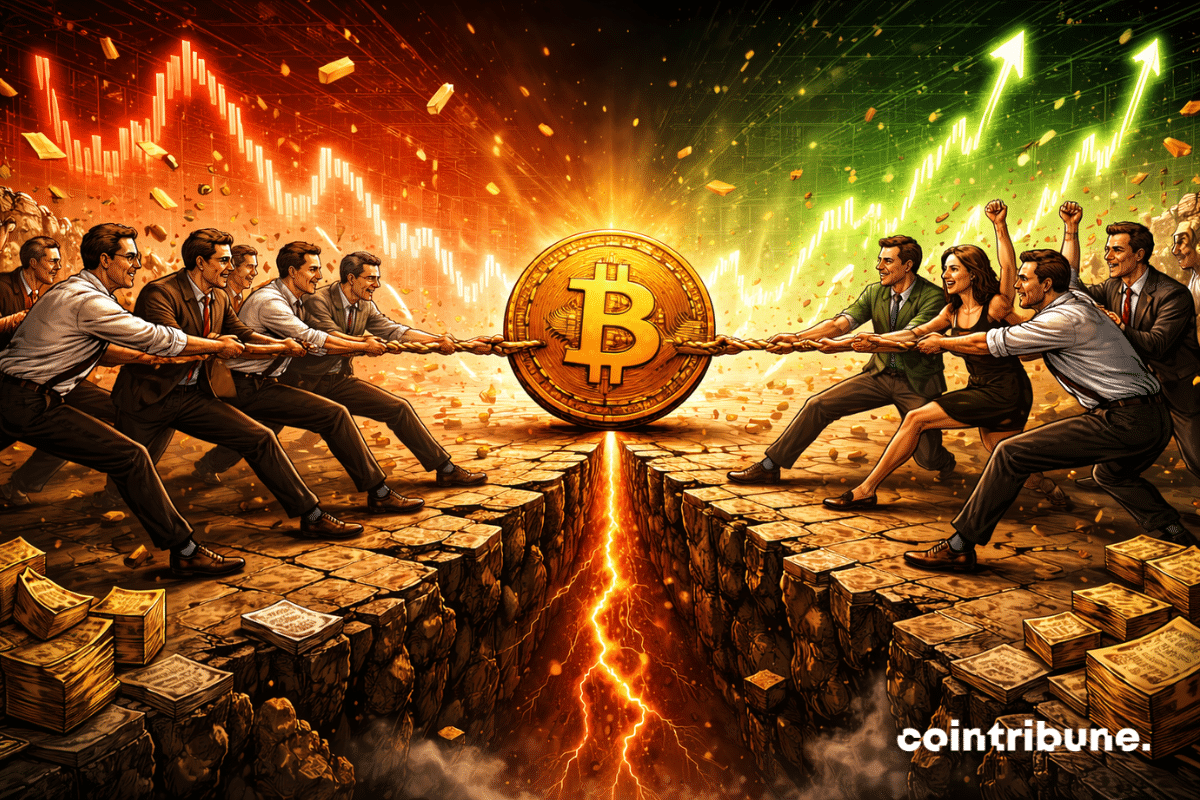
Bitcoin wavers, and the market divides. While crypto suffers a drop of nearly 15% in a few weeks, a clear rift appears between small holders and institutional investors. While the former take advantage of the decline to strengthen their positions, the whales quietly liquidate thousands of BTC. This strategic gap, observed by the Santiment platform, could mark a decisive turning point in the market's evolution.
At JPMorgan, the message is clear: the appetite for bitcoin remains strong. In the third quarter, the bank stated it held 5.284 million shares of the iShares Bitcoin Trust (IBIT) as of September 30, an increase of 64% from the previous quarter. In value terms, this represented 343 million dollars at the end of September. The bet was accompanied by a bullish note: a target of $170,000 for bitcoin in twelve months. Let's talk numbers, flows, and the direction of the movement.
Dogecoin, the quirkiest crypto on the market, could soon enter institutional portfolios. Bitwise has filed a new spot ETF application with the SEC, removing the last administrative barriers. The green light could come within twenty days… triggering a new rush towards Elon Musk's favorite meme.
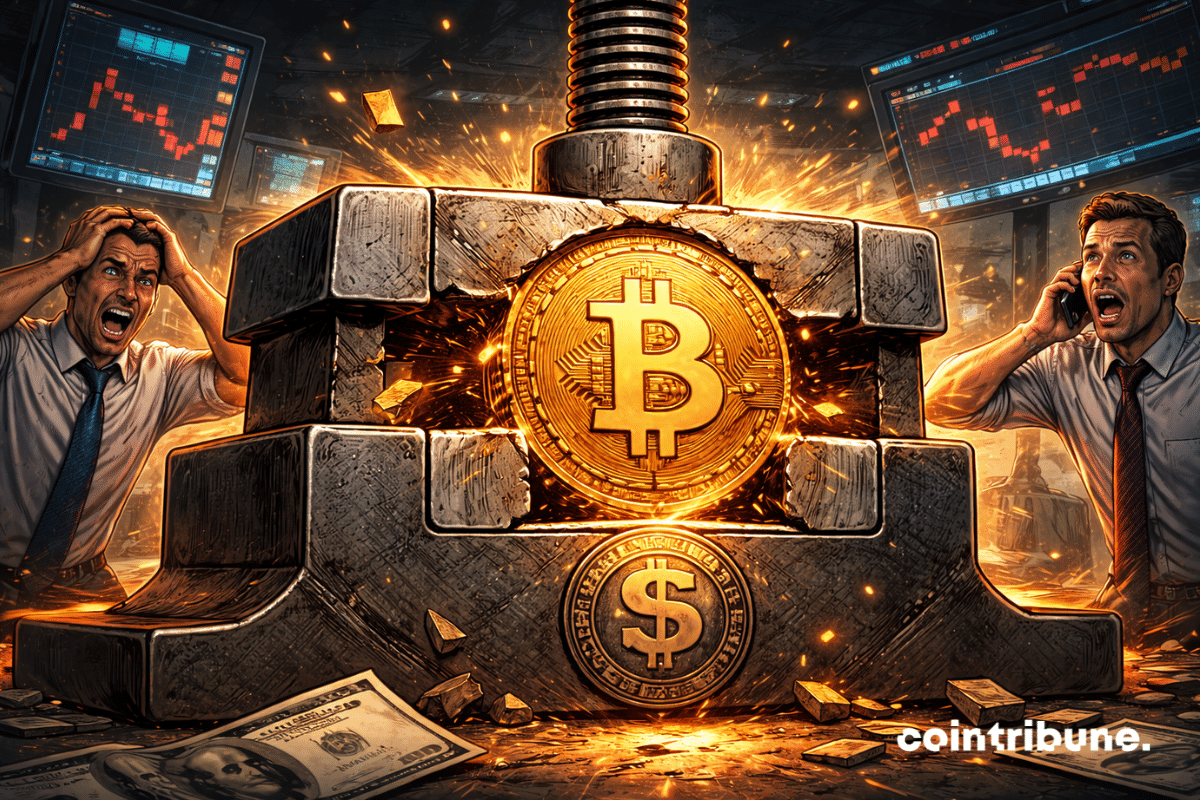
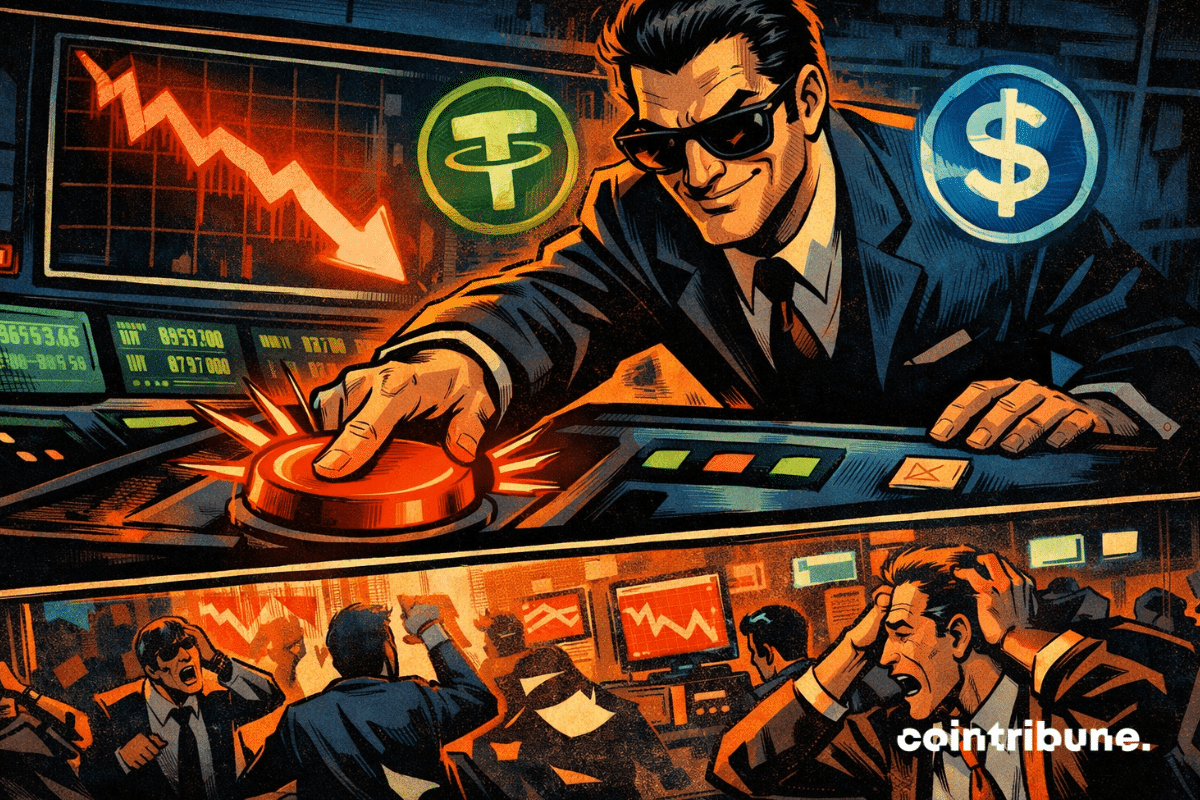
Trump believed he held the key to the crypto kingdom… Result? A stock market bloodbath, billions lost, and a truth stinging more than his tweets: crypto does not forgive.
What if the promise of financial inclusion hides a major systemic risk? Popular in crisis-hit countries, stablecoins have become the preferred tool for millions of citizens to escape hyperinflation. However, behind this massive adoption, a growing concern: by channeling savings towards the digital dollar, these assets could weaken the most vulnerable economies. As their usage explodes, a dilemma arises: are stablecoins a bulwark for the people or a silent threat to states?
While bitcoin is bogged down in divisive institutional adoption, an old privacy token makes a spectacular comeback. In five weeks, Zcash (ZEC) went from obscurity to a +900% surge, reaching up to 735 dollars this Friday, an unprecedented high in nearly eight years. Stabilized around 666 dollars, the asset still shows a 74% increase over the week. This unexpected rebound shakes the market and revives the debate on crypto privacy.
The US Federal Reserve stimulates the economy even as markets soar and employment remains strong. For Ray Dalio, this unusual combination bodes ill. The legendary investor sees it as symptoms of the end of a major economic cycle, where excessive debt forces monetary authorities to play with fire.
When crypto falls into public hands, Kazakhstan recycles and capitalizes. From seizures to ETFs, the former Soviet republic attempts a balancing act between repression and uncontrolled innovation.
While the crypto industry regains market confidence thanks to clearer regulation and growing interest from institutional investors, Ripple opts for an unexpected direction. Despite a legal victory against the SEC and a year of exceptional growth, the Californian company forgoes any public offering. A choice that contrasts with the ambitions of other industry players and raises questions about the company’s long-term strategy.
Google Finance is upgrading with AI, integrating Kalshi and Polymarket data to provide smarter market insights and real-time event predictions.
Growing interest in digital public infrastructure is prompting the United Nations to take a more active role in blockchain policy and training. A new wave of programs is being developed to help governments understand and apply technology in real-world systems. Momentum inside the UN suggests a coordinated effort to guide countries through the next phase of digital transformation.
A milestone has just been reached. Addresses accumulating Bitcoin have purchased 214,069 BTC over 30 days and bring their aggregated stock to 387,305 BTC as of November 5. This surge is not due to chance: it relies on investors with a precise profile and on a market mechanism that has become, whether we like it or not, institutional.