The gravediggers of NFTs had already brought out the shovels and mocking tweets. Too bad: BAYC resurrects, CryptoPunks climbs, and some skeptics are now swallowing their digital stethoscope.
For years, the quantum threat has remained a distant scenario for bitcoin. This perception is wavering. A report from Project Eleven now estimates that the network might lack time to prepare its cryptographic transition before the arrival of quantum computers capable of breaking its current protections. Behind this alert lies a colossal issue: several million BTC could become vulnerable if the ecosystem fails to coordinate its migration in time. Such a prospect brutally revives the debate about bitcoin's future security.
The digital asset market is regaining strength, but the optimism displayed on social networks draws analysts' attention. According to Santiment, this euphoria can weaken the ongoing rise and open the way to a possible pullback of bitcoin to 75,000 dollars. In this contrasting climate, crypto sentiment serves as a barometer to measure the rally's strength and risks of short-term exhaustion.
BlackRock pushes further its offensive in tokenization. The American giant is preparing a reserve fund for stablecoins and an onchain share class linked to a 6.9 billion dollar money market fund. The message is clear: traditional finance now wants to occupy blockchain territory before crypto players lock up this market alone.
Elon Musk has chosen public confrontation with the French justice system. Targeted by an investigation over X and its artificial intelligence Grok, the American billionaire published insults in French directly aimed at the magistrates in charge of the case. Behind this new provocation lies a much bigger conflict between European authorities and digital platforms accused of algorithmic drifts, dissemination of illicit content, and political interference. Paris is now taking on one of the most powerful men in global tech.
While investors were watching bitcoin, Nasdaq and oil, a completely unlikely asset posted the best performance of the month. In April, derivatives related to potatoes soared by 705%, benefiting from market nervousness amid geopolitical tensions around Iran. This spectacular rise reveals a global phenomenon: in a climate dominated by global uncertainty, speculative capital is now moving far beyond crypto and technology.
Trump Media & Technology Group starts the year with pressured accounts. Despite nearly $900,000 in revenue, the parent company of Truth Social reports a net loss of $405.9 million in the first quarter. The net loss is largely due to the impact of crypto on Trump Media’s balance sheet, even though Bitcoin remains a pillar of its financial strategy. This discrepancy illustrates the direct impact of digital assets on its results.
While Ethereum jealously guards its old digital hoard, Solana and Base are quietly nibbling at its pockets. Behind the crypto scenes, some are already nervously recounting the kingdom's tokens.
In one week, Chainlink regained momentum in the crypto market. The LINK token rose by 15.27% and reached an intraday peak of $10.60, its highest level in over three months. This increase comes as reserves on exchange platforms decline and social media discussions increase significantly.
Millions of SHIB disappear from the market again. Within 24 hours, more than 6 million tokens have been sent to burn addresses, immediately reigniting speculation about the deflationary potential of the memecoin. While activity picks up on several major platforms, the Shiba Inu community continues to bet on scarcity to support investor interest. A strategy that is central to discussions in a crypto market always seeking new catalysts.
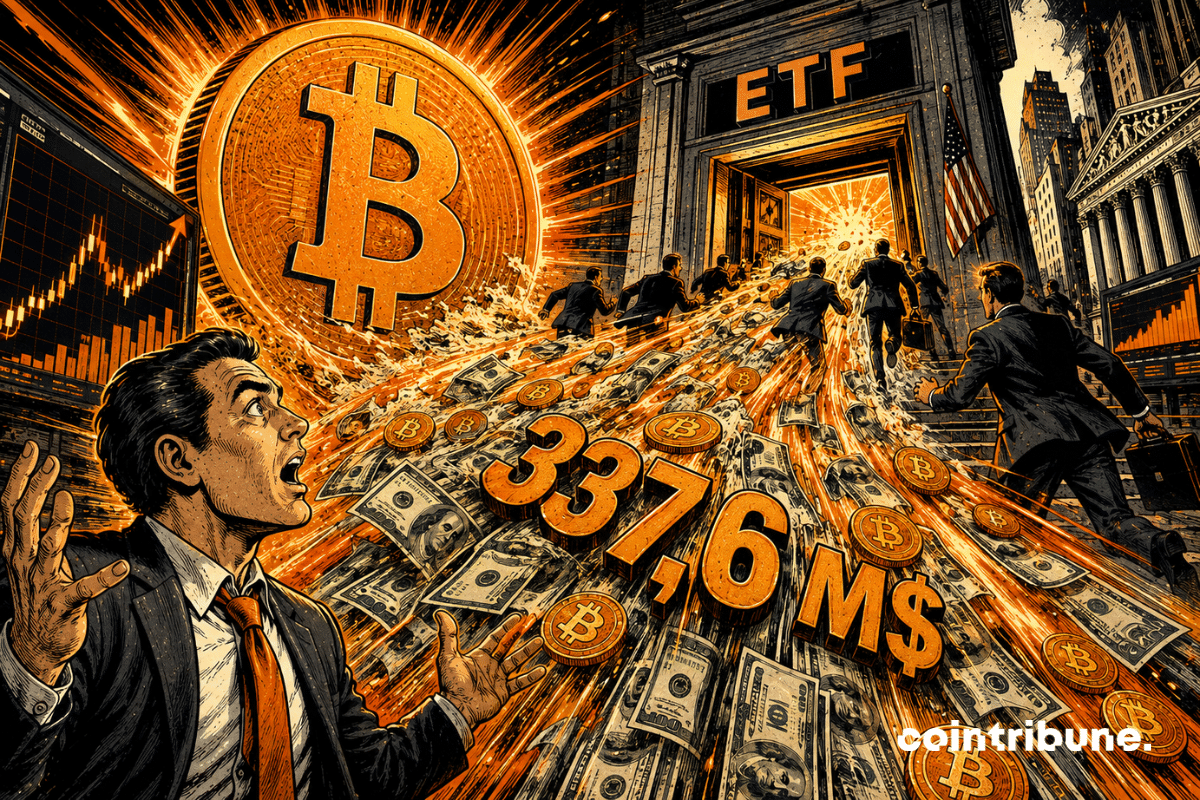
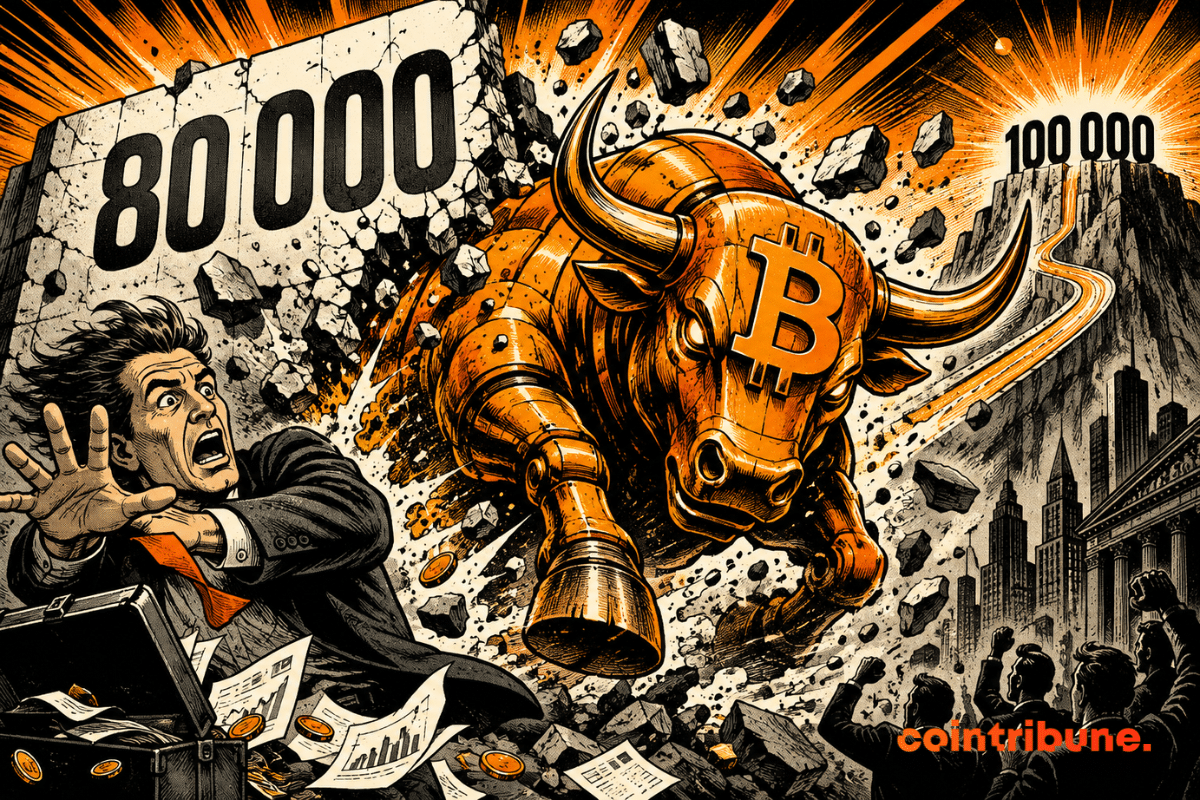
American spot Bitcoin ETFs have just recorded six consecutive weeks of net inflows. This is a first since August 2025. The signal is clear: institutional funds are returning, but the market remains tense around $80,000.
Europe does not want to let the stablecoin become the Trojan horse of the dollar in its digital payments. Christine Lagarde brought this issue back to the center of the debate, warning that the dominance of Tether and Circle could weaken European monetary sovereignty. The ECB does not reject the technology. It mainly refuses to import a model designed elsewhere.
While bitcoin captures the bulk of institutional flows, another asset quietly resurfaces in portfolios. ETFs backed by XRP have just recorded their first positive weekly inflow of May, reigniting speculation around a return of the Ripple token toward 2 dollars. Behind this renewed interest lies a global trend: the gradual return of institutional investors to altcoins through regulated financial products.
While bankers and regulators count their bolts, CZ is quietly preparing talkative machines fueled directly by global automated crypto payments, with Binance transformed into a giant algorithmic financial supermarket.
While Brussels knits regulatory barbed wire, Washington quietly restarts the crypto machine. Behind senator smiles, Coinbase, banks, and lobbyists are already moving their pieces like in a nuclear chess game.
AI enters a new phase of financial excess. The American startup Anthropic is preparing a fundraising that could propel its valuation towards 1,000 billion dollars. A perspective still unimaginable two years ago, but which reflects the explosion of demand around generative artificial intelligence models. Anthropic now wants to directly compete with OpenAI on the financial and technological power front. The company behind Claude plans to raise up to 50 billion dollars this summer. If the operation succeeds, its valuation could approach 900 billion dollars, with the symbolic trillion threshold now in sight.
Bitcoin shows a clear slowdown after several weeks of gains supported by institutional flows. American spot ETFs recorded $268 million of net outflows in one session, while liquidations accelerate in the derivatives markets. This renewed tension comes as investors are already watching another key factor: the future direction of the US Federal Reserve and its potential impact on the crypto market.
Long marginalized, privacy cryptos are regaining investors' attention. In one week, Zcash surged over 70%, driven by rising concerns around artificial intelligence, financial surveillance, and digital data control. Behind this spike, a shift in perception is emerging among investors. In an environment where every transaction can be traced, privacy is becoming a strategic issue for a growing part of the crypto ecosystem.
Tether has just reminded a reality often forgotten: USDT circulates quickly, but it can also be frozen abruptly. In one month, the issuer of the largest stablecoin on the market has frozen more than 514 million dollars on Ethereum and Tron, according to BlockSec data.
After five consecutive sessions of massive inflows, US spot Bitcoin ETFs have just undergone a sharp reversal. While Bitcoin fell back below $80,000 amid high volatility, institutional investors suddenly eased off. Is this a simple market pause or a sign of increased uncertainty?
Bullish projections are multiplying on bitcoin. Supported by flows to US spot ETFs and the return of institutional investors, the market now sees a target of 115,000 dollars before the end of the year. This anticipation is based on several technical and financial signals that fuel traders' optimism. One question now dominates the market: are current data enough to support a new acceleration of bitcoin?
Crypto exchanges are emptying their bitcoins at a pace rarely seen in two years. In less than three months, nearly 100,000 BTC have left Binance, OKX, and Gemini, amounting to over 8 billion dollars withdrawn from the market. While the available supply contracts, long-term investors quietly strengthen their positions. This combination of shrinking reserves and returning demand is beginning to fuel speculation around a possible supply shock on bitcoin.
American crypto is entering a fragile zone. After the GENIUS Act, the advances of the CLARITY Act, and the regulated rise of prediction markets, the 2026 midterms could decide whether this sequence becomes a true regulatory turning point or just a political parenthesis.
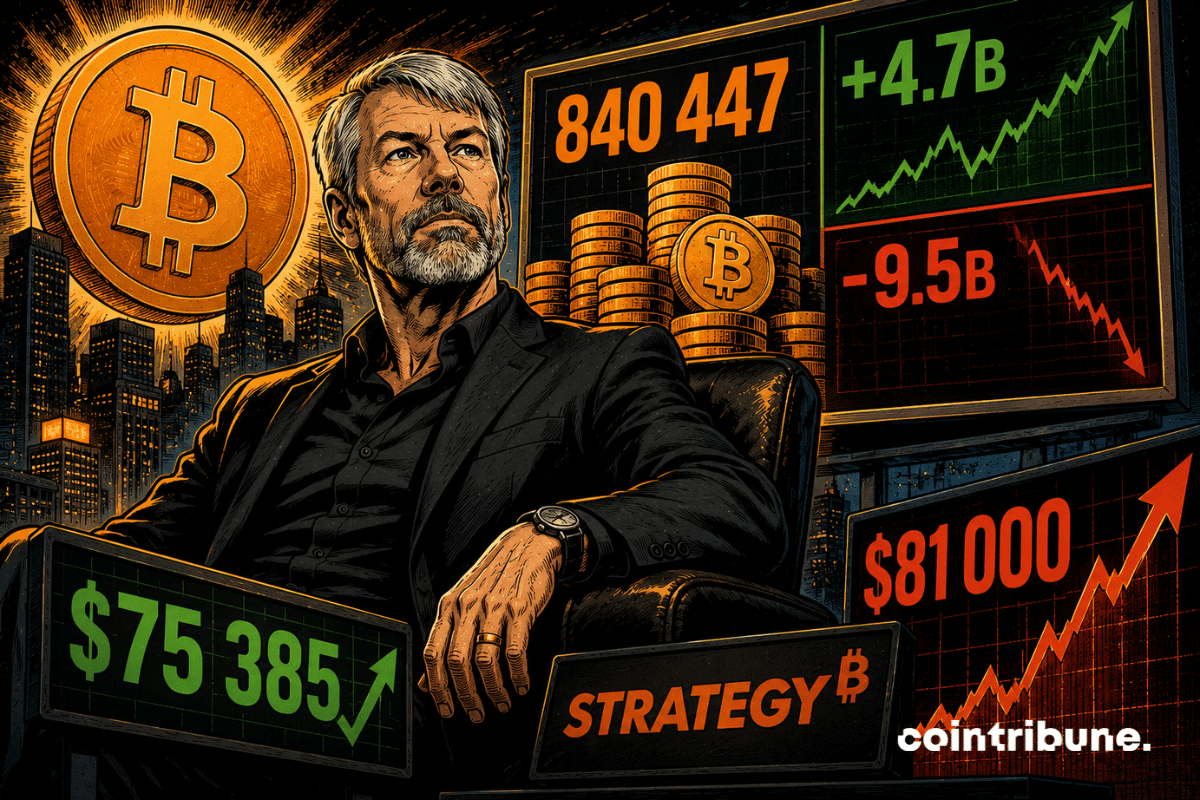
Bitmine could soon reduce the pace of its ether purchases. At Consensus 2026 in Miami, Tom Lee indicated that the company is quickly approaching its accumulation goal. This shift also concerns Ethereum, while Strategy plans to sell bitcoins to meet its dividend obligations. Bitmine is now preparing a new phase focused on staking, liquidity, and share buybacks.
Kalshi has just raised $1 billion and doubled its valuation in barely five months. Everyone wants a share of the prediction market.
While some crypto market undertakers were already preparing the blockchain coffin, Polygon unleashes the "turbo low-latency" mode. Visa now watches the engine heat behind the glass, even though the POL token still limps like an old worn-out cyberpunk taxi after a night under neon lights.
While the crypto market focuses its attention on bitcoin and ETFs, XRP quietly begins to attract technical analysts again. For several months, Ripple's token has been evolving in a historical support zone already observed before its previous rallies. This setup now fuels a bold scenario: a potential surge towards 12 dollars. In a climate dominated by doubt and skepticism, some traders believe the market might be underestimating XRP.
Kraken disrupts the rules of crypto trading. The platform has just launched in Europe a new category of futures contracts called Kraken TradFi Futures, allowing leveraged trading of stock indices, commodities, and forex pairs. An initiative that concretely brings the crypto and traditional finance worlds closer within a single interface. For Kraken Pro users, the experience expands considerably: in addition to the crypto perpetual contracts already available, derivative products modeled on traditional markets are now accessible within a regulated European framework.
Aave is approaching its full recovery after the devastating Kelp DAO attack. The lending protocol has just liquidated the hacker's last positions, unlocking considerable value. But the road to regained trust remains fraught with challenges.
BNY strengthens its pivot towards Bitcoin and Ethereum with an institutional custody project in Abu Dhabi. The signal is clear. Crypto no longer advances only through markets. It also advances through banking channels.