By 2040, will AI save us or destroy us? The alarm is set off by Vitalik Buterin. Could Ethereum be our last line of defense against an uncontrollable superintelligence in the midst of apocalyptic scenarios and decentralized hopes?
The cryptocurrency market has experienced mixed developments in recent days, but Ether stood out with a 3% increase between Thursday and Friday. This rise occurs in a context marked by the growth of tokenization, the successful launch of Robinhood Chain, and continued purchases by several companies. Despite this favorable dynamic, surpassing the 1,800-dollar threshold remains out of reach. On-chain data and indicators from derivative markets still show signs of weakness, limiting short-term growth potential.
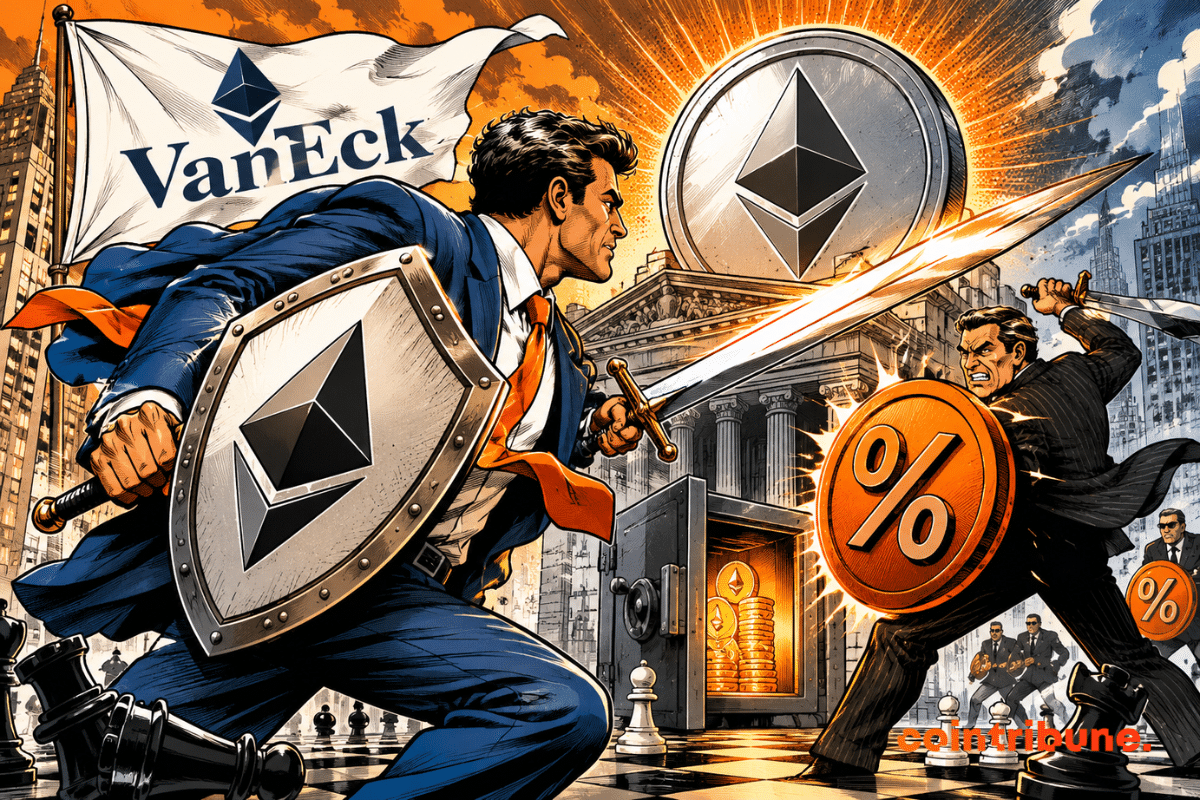
The market for investment products related to cryptocurrencies continues to evolve as issuers adjust their strategies. This time, VanEck has modified the registration documents of its spot Ethereum ETF, a change that occurs as competition intensifies among asset managers. While this update does not call into question the launch of the funds, it brings a new element into a competition where costs, capital flows, and investor choices become determining factors. This development thus deserves careful reading in the current context.
The Shiba Inu community burns tokens like there's no tomorrow, but the price keeps tanking. The memecoin market, meanwhile, is melting like snow in the sun.
After several weeks marked by high volatility, Ethereum shows signs of recovery that revive investors' expectations. The second most important cryptocurrency has rebounded from its low recorded in June and again attracts analysts' attention. Several technical indicators and the growing interest of institutional players support a favorable short-term scenario. However, some signals still call for caution, as the market remains divided between the prospect of a new rise and the risk of a temporary pullback.
Ethereum changes course: Vitalik Buterin unveils a roadmap focused on quantum resistance. Read our full analysis.
Vitalik Buterin promises inviolable crypto votes thanks to obfuscation, a fascinating technical feat. But patience: the technology will take longer than the universe to run. We'll wait patiently.
The crypto sector is entering a new phase with the arrival of an organization dedicated to the needs of large institutions. Ethereum sees the emergence of Ethlabs, an initiative supported by several major players in its ecosystem to prepare for broader institutional adoption.
The funding of blockchain networks remains a major challenge for decentralized projects. Ethereum is currently facing a new governance proposal that could change validator participation. The mechanism presented aims to redirect part of staking rewards toward ecosystem funding, particularly tools, research, and infrastructures necessary for network development.
Ethereum reaches a key moment of the quarter, as ETH risks recording a sequence never seen in its history. The second cryptocurrency on the market remains down, but it still has a window to reverse the trend. Between a more favorable macroeconomic context, mixed technical signals, and an increase in staking, the quarterly close now attracts all attention.
The debate on Ethereum's future is accelerating around a major technical goal: making Zero-Knowledge the foundation of its architecture in order to make the protocol faster, more affordable, and more secure. Joseph Lubin, CEO of Consensys, believes this transition could transform the network's base layer and bring layer 2s closer into a more unified ecosystem. According to him, Ethereum could become a protocol entirely based on Zero-Knowledge proofs within the next five years.
Criticism surrounding the Ethereum Foundation has been increasing for several weeks. Budget cuts, internal departures, and leadership changes are fueling debates within the blockchain community. However, Joe Lubin refuses to speak of a crisis. According to the network co-founder and CEO of ConsenSys, these adjustments rather reflect a necessary evolution of the foundation's role.
An old ICO contract resurfaces after an unusual technical recovery. Security researcher 0xflorent contributed to unlocking nearly 2 million dollars in ether that had been immobilized for nine years. Conducted with the HongCoin team, the operation allowed several investors to recover their funds from an old Ethereum contract affected by a bug never fixed.
Towards the end of forced liquidations in DeFi? Vitalik Buterin has just published a revolutionary manifesto on ETHResearch. His idea: to replace debt mechanisms backed by collateral with a system based on options. We explain the plan of the Ethereum founder.
In a still unstable crypto market, Bitmine once again draws attention with a major ETH purchase. The company added 25,000 tokens to its treasury, worth over 50 million dollars at the time of transfer. This operation comes as Ethereum tries to stay above 2,000 dollars, despite bearish signals and persistent volatility.
The crypto market is going through a fragile phase, marked by persistent selling pressure on Ether. In this context, Ethereum attracts analysts' attention, as several technical signals indicate a short-term risk of decline. Traders are closely watching the $1,800 area, considered a key support. If this level does not hold, the momentum could further deteriorate.
Europe is lagging behind the tech giants. Vitalik Buterin, co-founder of Ethereum, reveals the only strategy capable of reversing the trend: open source. A radical solution that could change the game forever.
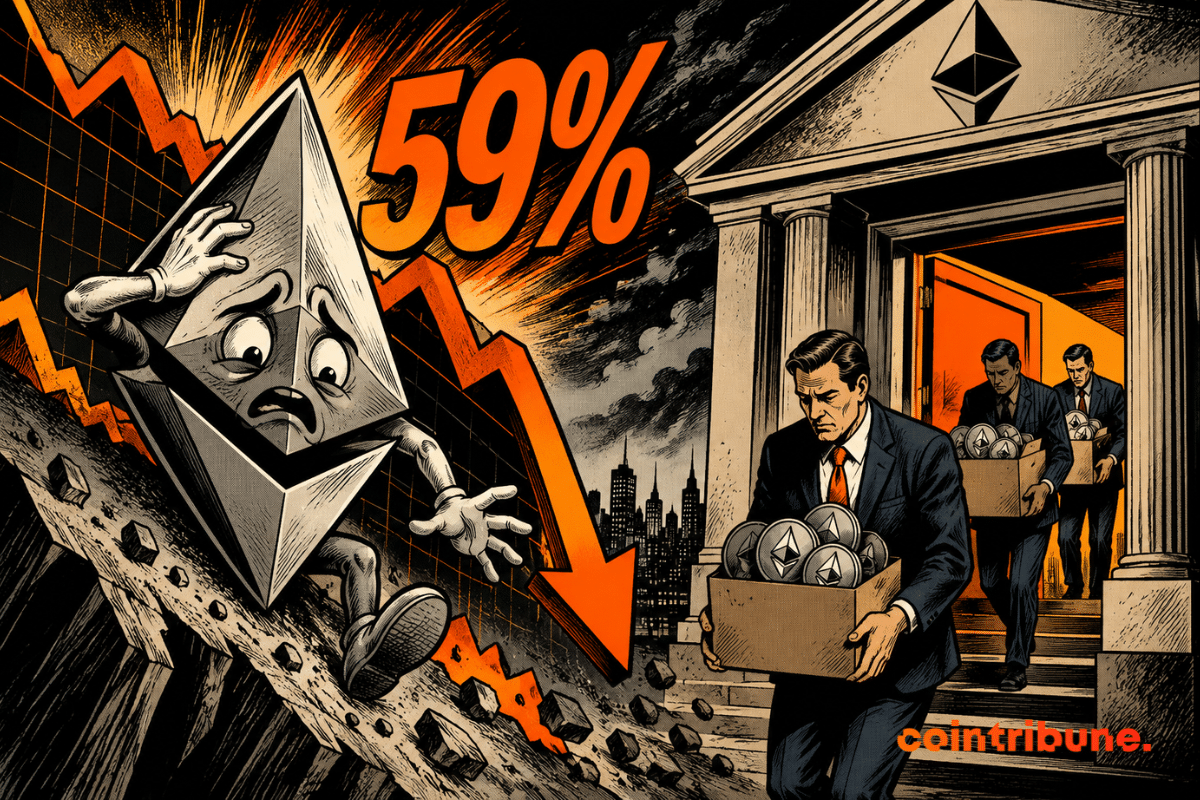
The cryptocurrency market continues to undergo strong turbulence, and Ether is no exception. Since its historic peak reached in August, the second-largest digital asset has dropped nearly 59%. Exchange-traded products linked to Ethereum are also experiencing a series of significant withdrawals, increasing investor concerns and sparking new speculation about the price trajectory in the coming months.
The crypto market is closely watching Bitmine's new massive purchase. The publicly traded company added nearly $237 million in Ether to its balance sheet as the price of Ethereum remains under pressure. This operation marks its largest ETH purchase in 2026 and brings the company closer to its strategic holding goal.
Ethereum is going through a new turbulent zone. Facing criticism directed at the Ethereum Foundation, Vitalik Buterin has just responded publicly. His statements could revive the debate on the future of the crypto network.
Despite a 28% drop since January, Ethereum keeps the market's attention. The price decline occurs while accumulators still follow on-chain signals. In this context, DeFi, stablecoins, tokenization, and staking show sustained activity. This situation provides a broader reading than price performance alone.
The cryptocurrency market is currently undergoing a period of high volatility, and Ethereum is no exception to this dynamic. Despite a recent correction, the crypto remains above essential support zones, which could preserve its long-term bullish structure. Technical analysts closely monitor these critical levels, as buyers' ability to defend these points could determine ETH's future trajectory.
Ethereum is back under scrutiny as several technical signals weaken its short-term trajectory. According to market analysts, ether could face heavy pressure if the $2,000 threshold does not hold. This level draws attention, as a break would confirm a bearish pattern already observed in January before a marked correction of ETH's price.
Ethereum size reaches 390 GiB and could exceed the critical threshold in less than 18 months. Developers are divided, Vitalik himself admits there is no simple solution. What's happening now could redefine the future of the network.
Bitmine could soon reduce the pace of its ether purchases. At Consensus 2026 in Miami, Tom Lee indicated that the company is quickly approaching its accumulation goal. This shift also concerns Ethereum, while Strategy plans to sell bitcoins to meet its dividend obligations. Bitmine is now preparing a new phase focused on staking, liquidity, and share buybacks.
The Ethereum network is moving toward a new technical milestone with Glamsterdam. This evolution is drawing attention from developers, as it could reshape resource management and transaction costs. As work progresses, the network is preparing for a significant increase in capacity, with a clear goal: handle more activity without compromising its internal balance.
Ethereum has just surpassed the milestone of 25 million validated blocks, without any major announcement or technical change. Yet this milestone tells the story of a network valued at $278 billion, moving forward block by block. At the same time, Bitcoin is approaching block 1,000,000—another symbolic marker for public blockchains and their ability to endure.
Recent movements around Ethereum are drawing attention across the crypto market. The transactions between the Ethereum Foundation and Bitmine are fueling discussions, with a new transfer of 10,000 ETH and nearly $47 million in sales occurring within one week. These operations are also raising criticism within the crypto community over asset management and the balance of the ecosystem.
The Ethereum Foundation emerges from austerity and relaunches its EPF7 program to recruit developers. A bold strategy to strengthen its protocol and rival Bitcoin. Find out how this initiative could redefine the future of blockchain and boost innovation.
AI is advancing fast, sometimes too fast for security. Vitalik Buterin warns of a worrying drift: intelligent agents open new vulnerabilities still poorly controlled. In the face of this risk, he breaks with dominant practices and opts for a radical approach, based on local and compartmentalized AI. Behind this choice, a question arises: is innovation in artificial intelligence compromising recent gains in privacy and data control?