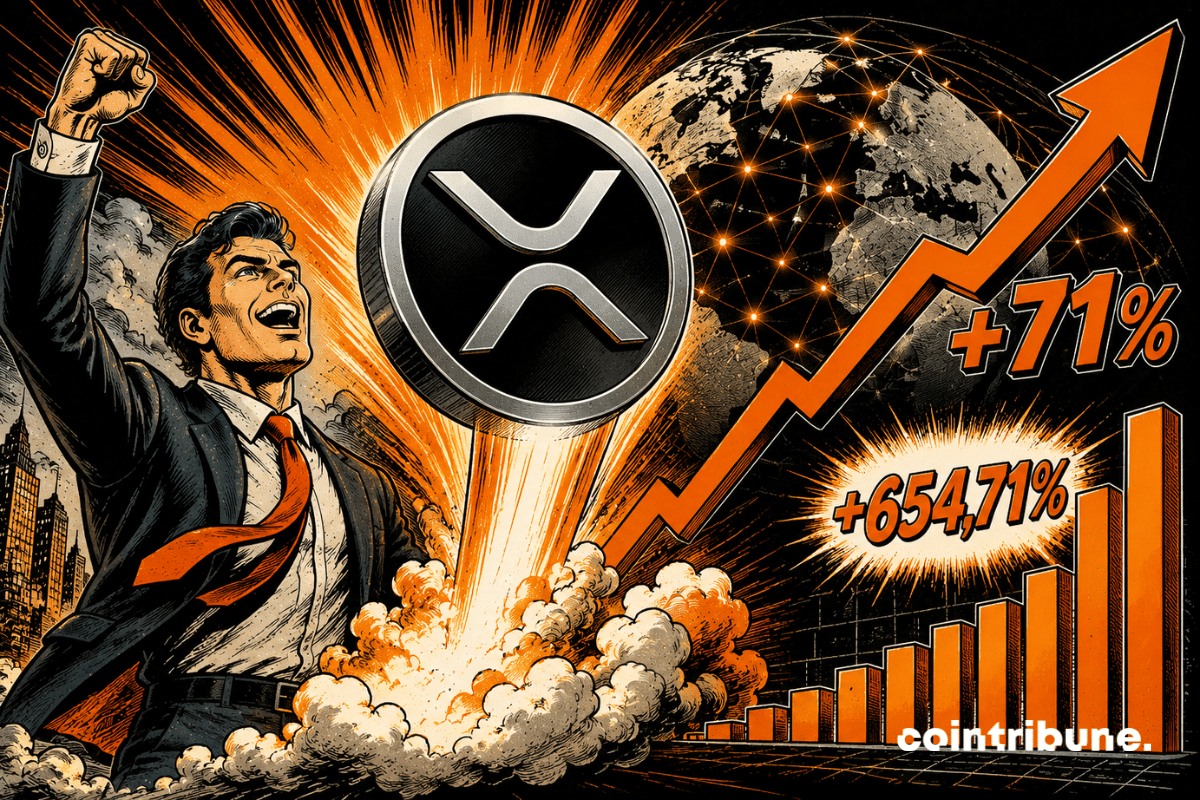
During the session on September 8, XRP ETFs recorded $1.55 million in net inflows. Such a result places XRP ahead of Bitcoin, Ethereum, and Solana for the day, without questioning the cumulative dominance of Bitcoin funds.
Among declared institutional holders of XRP ETFs in the second quarter of the year, Goldman Sachs held first place. The banking institution thus showed an exposure of 87.45 million dollars as of June 30, far ahead of Jane Street and Millennium Management. In total, the identified banks held 183.5 million dollars in shares. These figures attest to the integration of XRP products on Wall Street, without necessarily showing that these companies directly anticipate a rise in the crypto.
American Bitcoin ETFs attracted $101.15 million on September 2nd. This rebound comes after an outflow of $236.5 million the previous day. Ethereum and XRP ETFs ended positive streaks that had captured $1.62 billion and $170 million respectively. At the same time, Solana products also closed the session in the red. These movements reveal a temporary rotation of capital towards Bitcoin rather than a general withdrawal by institutional investors.
Net inflows have been recorded in US XRP ETFs for eleven consecutive sessions. This streak, starting on August 18, brought them nearly 170 million dollars and raised their cumulative flows to 1.68 billion since their launch. Meanwhile, Q2 publications position Goldman Sachs as the leading known institutional investor. However, these two statistics do not cover the same period and do not allow linking recent flows to the American bank.
During the week ending August 28, American XRP ETFs attracted 110.49 million dollars. For observers, this is their best weekly performance since the beginning of the year. Also, it is their first result above 100 million dollars since December 2025. Indeed, cumulative inflows now approach a record 1.66 billion dollars. However, this demand did not prevent XRP from falling below 1.40 dollars after its recent rebound to 1.70 dollars.
Ripple released a roadmap whose role is to make the XRP Ledger compatible with post-quantum signatures by 2028. Indeed, the project plans tests, a coexistence period between the old and new systems, as well as a global network migration. However, this protection is not yet activated on the main network. No computer is yet capable of calculating the private keys used to control XRP accounts.
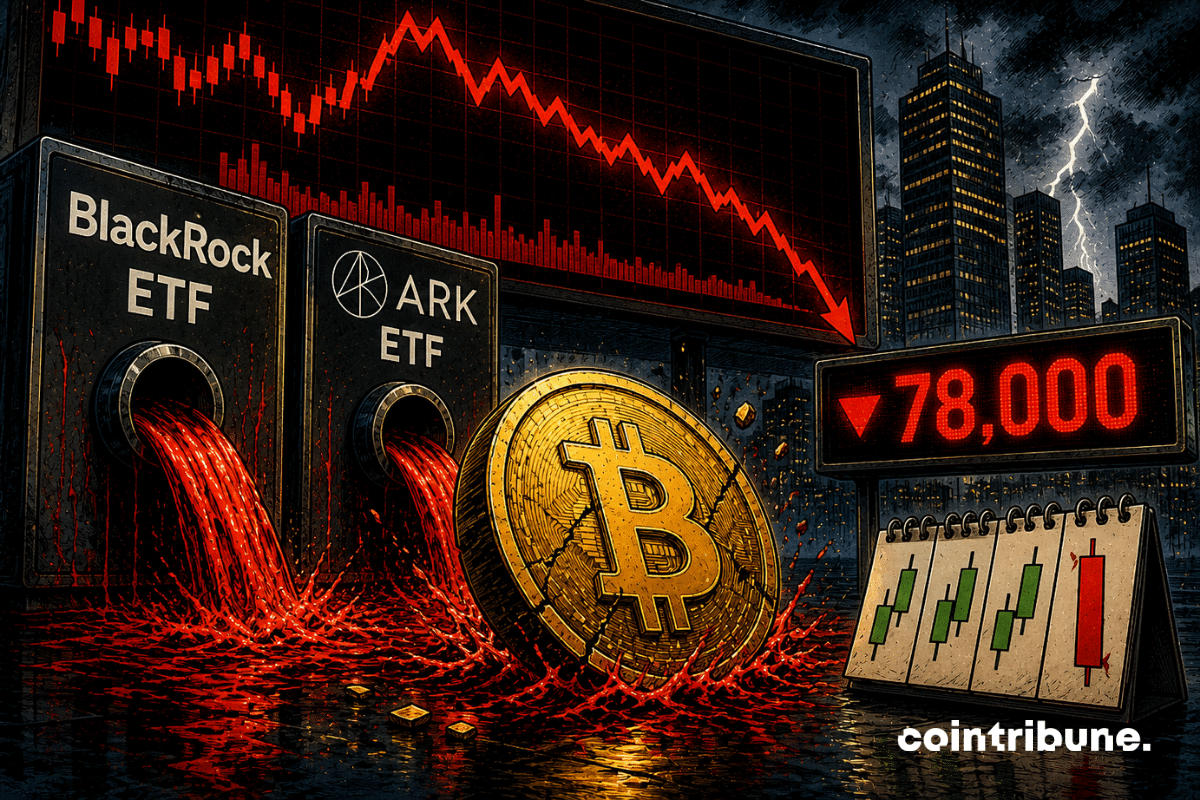
After swallowing more than three billion dollars in nine days, Bitcoin ETFs suddenly hit the brakes, leaving the king of crypto stuck below $81,000 while Ethereum and Solana quietly keep marching ahead.
The XRP Ledger has just come out of its lethargy. Indeed, blockchain activity has experienced spectacular growth, as XRP closes the month under increased scrutiny. Active addresses, price evolution, and flows on exchange platforms redraw a conformation that fuels market expectations. Moreover, derivatives products consolidate this pressure with quantified forecasts observed by investors. Does this surge in activity on the XRP Ledger herald a true shift in momentum for XRP?
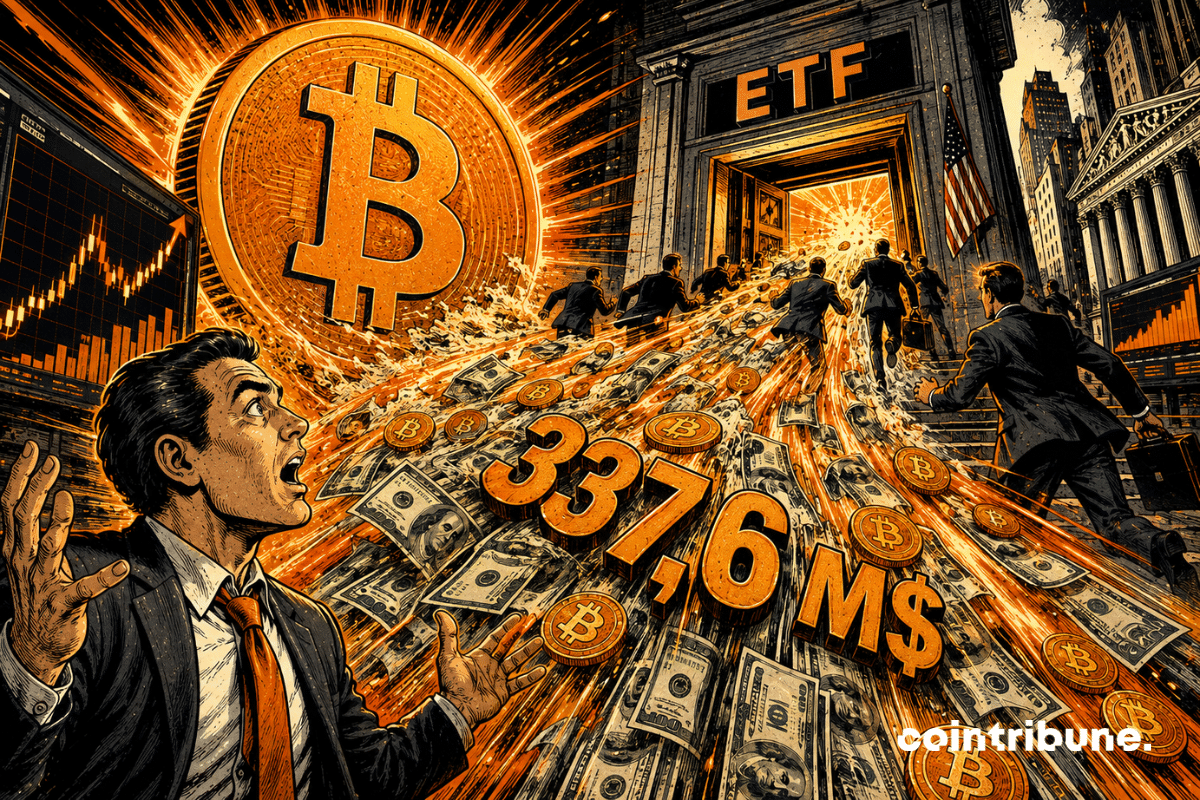
US spot Bitcoin ETFs have just chained a sixth session in the green. On Monday, August 24, they attracted 337.6 million dollars, bringing the total inflows over six sessions to 2.26 billion dollars. This series also significantly reduces the net outflows recorded since the beginning of the year.
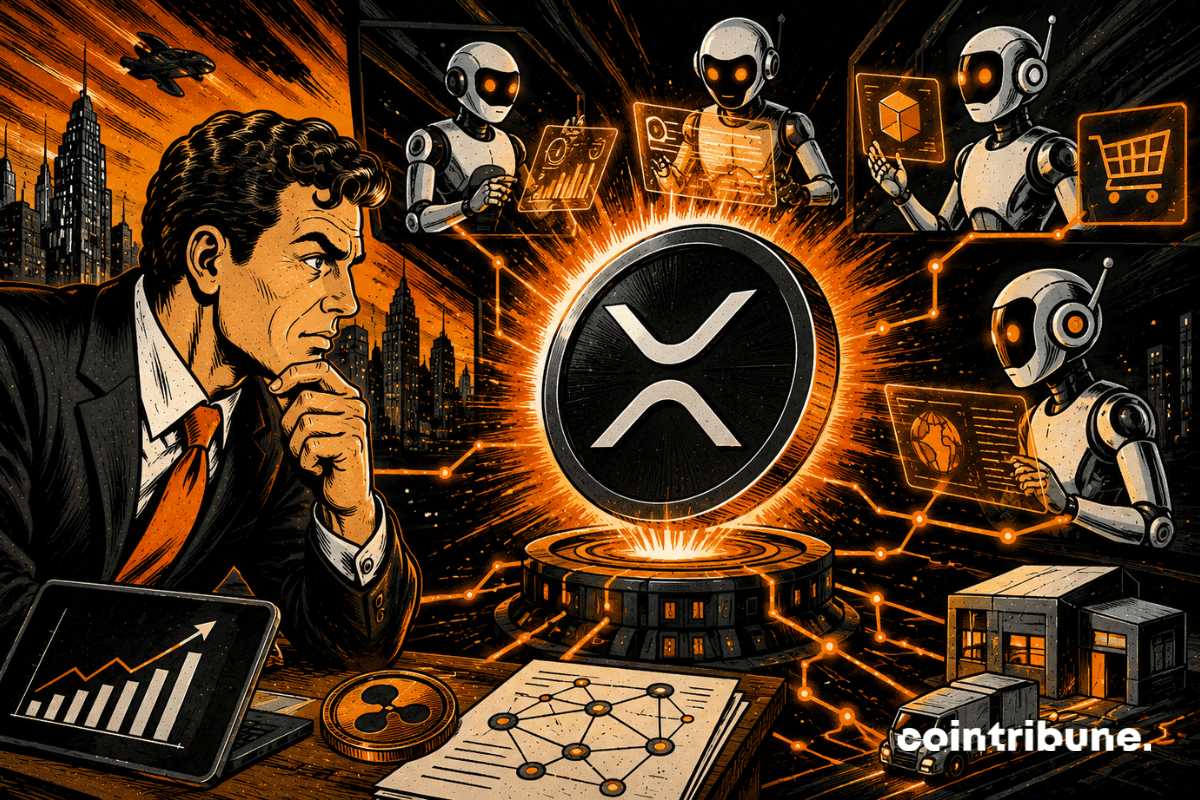
AI now goes beyond simple analysis and advisory functions. It already makes payments. Thanks to the advent and development of autonomous agents capable of conducting banking and commercial transactions, the role of the XRP Ledger will undergo an evolution. In addition to its function as a visible settlement infrastructure, the network could also serve as a secondary financial layer, directly solicited by machines. This revolution also shifts the question of adoption. Beyond the traded volumes, the value of the blockchain would now be assessed by its ability to automate various payments, organize flows, and make the network almost invisible to users.
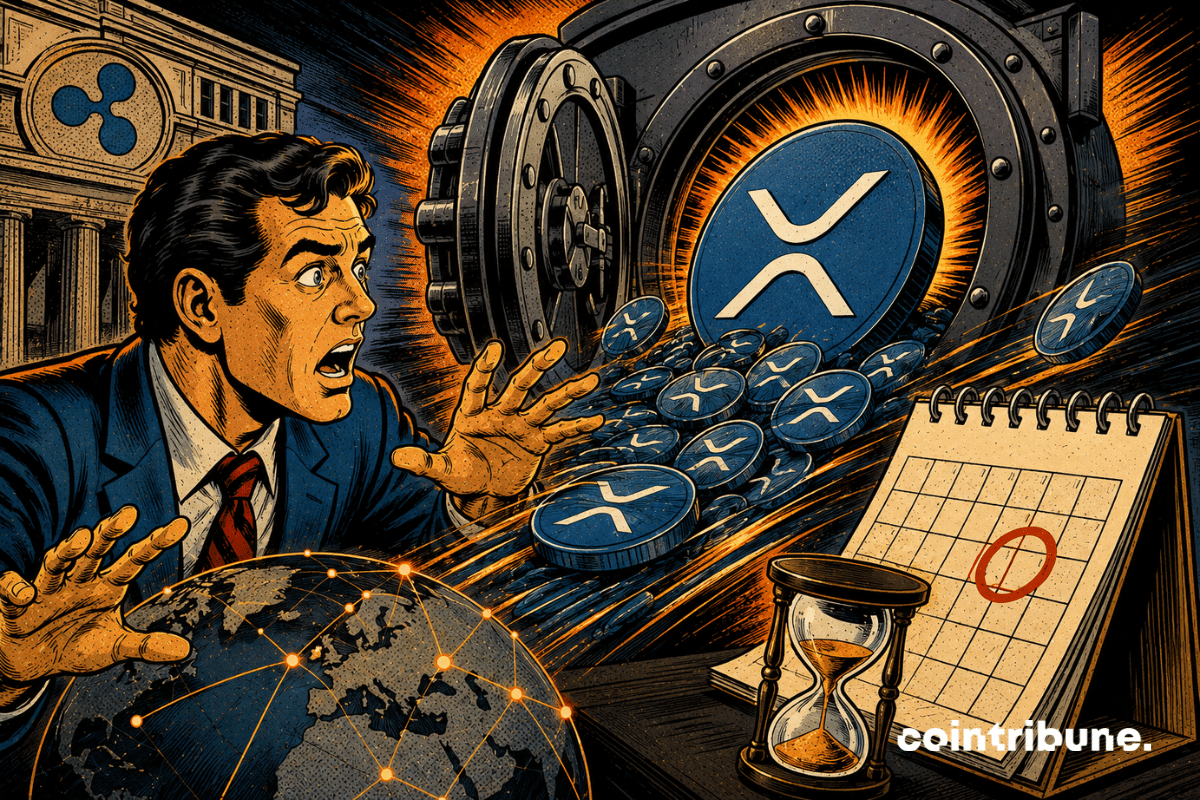
XRP is approaching a deadline that could put its market under pressure. A new wave of unlocking scheduled by Ripple is set to release a massive amount of tokens, while the price is already trading around a sensitive technical level. Behind the spectacular figure of this operation lies a more nuanced reality. Not all unlocked XRP necessarily join the market. Between genuinely available supply, risk of selling pressure, and price fragility, the coming weeks could become decisive for XRP.
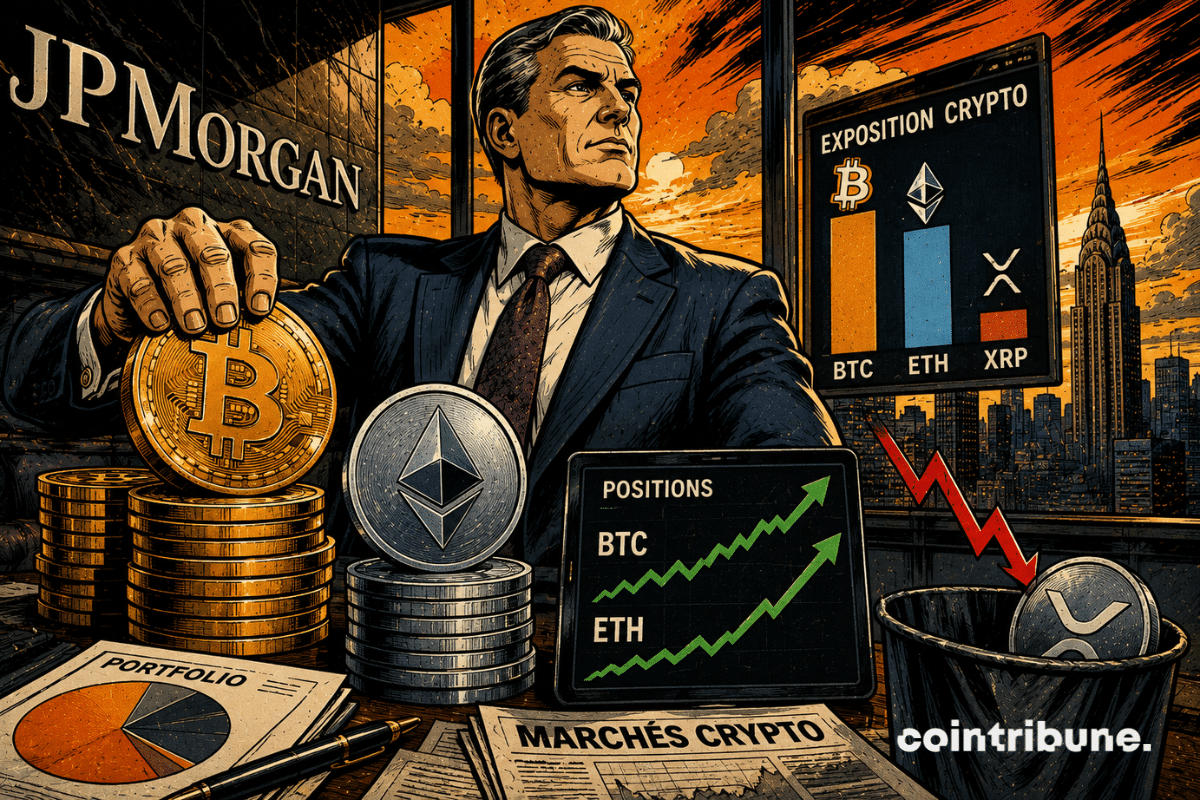
Is Wall Street taking advantage of crypto volatility to advance its pieces? In the second quarter of 2026, JPMorgan significantly increased its exposure to bitcoin and Ethereum, while reconnecting with XRP. The bank's latest regulatory filings reveal $355.7 million invested in BlackRock's IBIT Bitcoin ETF, as well as a 338% increase in its position on the Ethereum ETHA ETF. This move contrasts with recent capital outflows recorded by spot Bitcoin ETFs and reveals a striking gap between short-term turbulence and institutional choices.
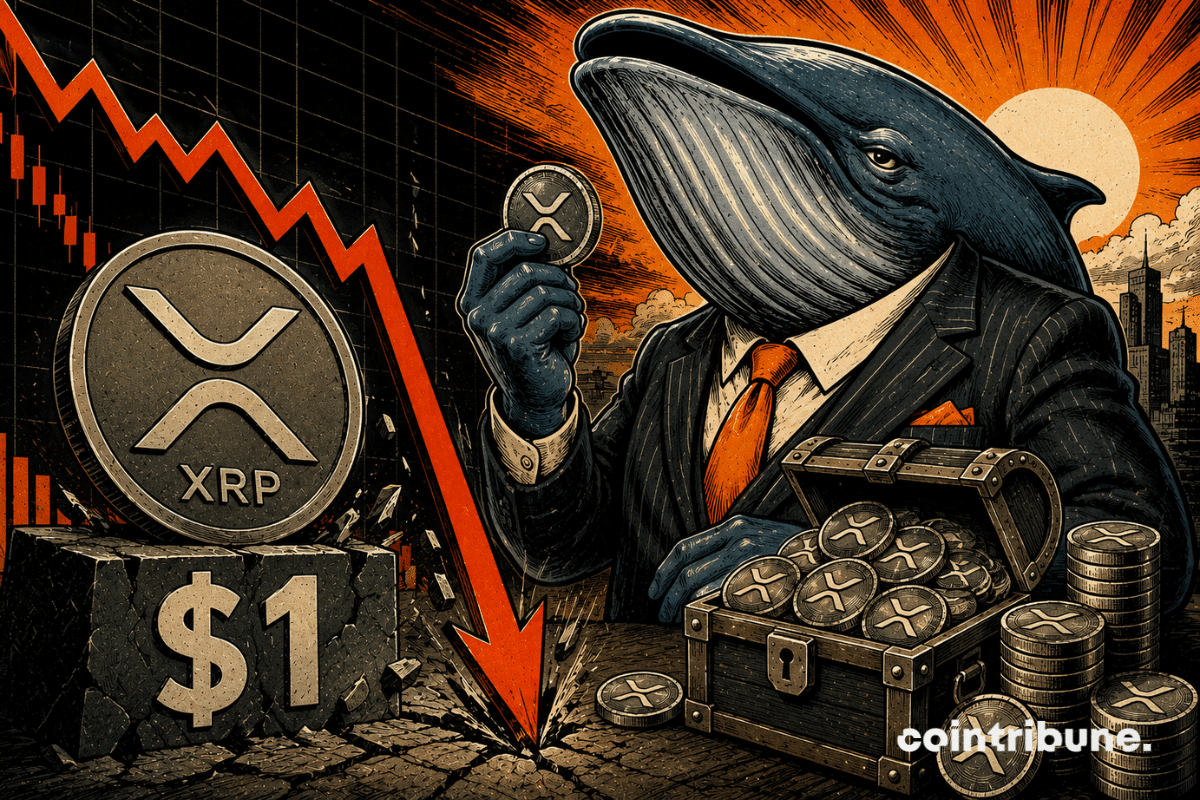
XRP has just lost a level it had defended since late 2024. Briefly falling below $1, Ripple's token now shows more than a 5% drop over one month, unlike Bitcoin, Ethereum, and Solana. Yet behind this weakness lies a paradox: long-term investors are massively accumulating, while derivatives markets intensify selling pressure and flows to ETFs have sharply dried up. Two opposing forces now clash around XRP, and their duel could determine the token's next move.
Spot ETFs linked to XRP have just recorded a fourth positive week. This dynamic contrasts with several more cautious signals that have recently appeared in the market. After a July marked by net inflows, flows slow sharply at the beginning of August. At the same time, the token price has approached an important support at 1 dollar. Investors are now monitoring the strength of this level, as analysts consider several scenarios for the next step.
While volatility continues to dominate the crypto market, the largest investors follow a contrary path. According to the latest "Smart Money" report from CryptoQuant, the most influential wallets are massively accumulating bitcoin, Ethereum, and XRP, despite a climate marked by uncertainty. This buying strategy comes at a time when several valuation indicators return to levels historically associated with the ends of bear markets. Behind these movements lies a deep trend: an increasing concentration of assets in the hands of institutional investors.
XRP-backed ETFs have just crossed a historic milestone in capital inflows, confirming the growing appetite of institutional investors for Ripple's crypto. This record comes despite a market where retail investors remain cautious, held back by persistent volatility and a lack of price direction. While the market hesitates, institutional players continue to accumulate through regulated financial products, making XRP one of the most striking symbols of this dynamic.
Small holders abandon XRP, whales buy without hesitation. This unprecedented divide within the Ripple ecosystem reveals a massive token transfer between investors with opposite strategies. On-chain data shows that modest wallets capitulate under the effect of volatility, while the largest fortunes methodically strengthen their positions. This shift occurs as XRP has rebounded over 8% in five weeks and regained the $1.16 level. Such a signal could say much more about the market dynamics than just the price evolution.
The XRP Ledger (XRPL) is about to reach a major technical milestone. A patch designed to evolve the management of its ledger is about to be activated, subject to final approval by network validators. While consensus seems largely achieved, a quieter reality draws attention. Many node operators have still not performed the required update. This gap reveals a often overlooked challenge of the blockchain ecosystem: the sustainability of a network depends as much on its governance as on the ability of its infrastructure to evolve without disruption.
Are the largest XRP holders sending a signal that the market has not yet fully integrated? While cryptocurrencies are evolving in an environment of uncertainty, a closely monitored on-chain indicator by analysts has just dropped on Binance to its lowest level in two months. Behind this movement, there may be a strategic shift among whales, those investors capable of influencing trends. Imminent selling, simple redistribution, or preparation for a new cycle? The data opens several leads.
XRP is about to reach a new milestone in Japan. On July 13, Doppler Finance and SBI Digital Finance announced a strategic partnership aimed at developing financing solutions backed by Ripple's asset. Far more than a simple commercial agreement, this alliance illustrates the rise of tokenized finance in a country that has become one of the most favorable grounds for the institutional integration of crypto. As infrastructures consolidate, Japan establishes itself as a full-scale laboratory for the financial uses of XRP.
XRP-backed ETFs have just experienced their first significant setback in 2026. After months of enthusiasm around crypto-related financial products, the latest figures reveal a clear trend reversal. The capital outflows observed in these funds question the scenario of a seamless institutional adoption for the Ripple ecosystem. This change in dynamics raises questions about the strength of investors' appetite for altcoins through listed financial vehicles.
As on-chain data establishes itself as a credibility barometer, the XRP ecosystem once again attracts attention thanks to tangible adoption indicators. This development reveals a deeper market transformation, where the strength of a network is measured as much by the daily engagement of its users as by its ability to attract institutional capital.
XRP is going through one of the most delicate periods in its recent history. After several months of decline, Ripple's token has left the circle of the top five cryptocurrencies by market capitalization, a downgrade that illustrates the pressure exerted by a market shaken by macroeconomic uncertainties. However, this drop contrasts with a reality often observed in recent years: the third quarter has regularly been favorable for XRP. Between historical momentum and current weakness, investors question the asset's ability to reverse the trend.
The historic volatility of cryptos once again reminded market operators that short-term certainties do not exist in this universe. This Thursday, July 2, the ecosystem recorded a technical reversal, inflicting dry financial losses on investors positioned short. Indeed, this sudden surge, occurring after several days of bearish pressure, redefines the short-term price dynamics for the main market assets. Understanding the mechanisms of such a purge is essential today, as it illustrates the extreme sensitivity of the crypto market to leverage effects and global macroeconomic indicators.
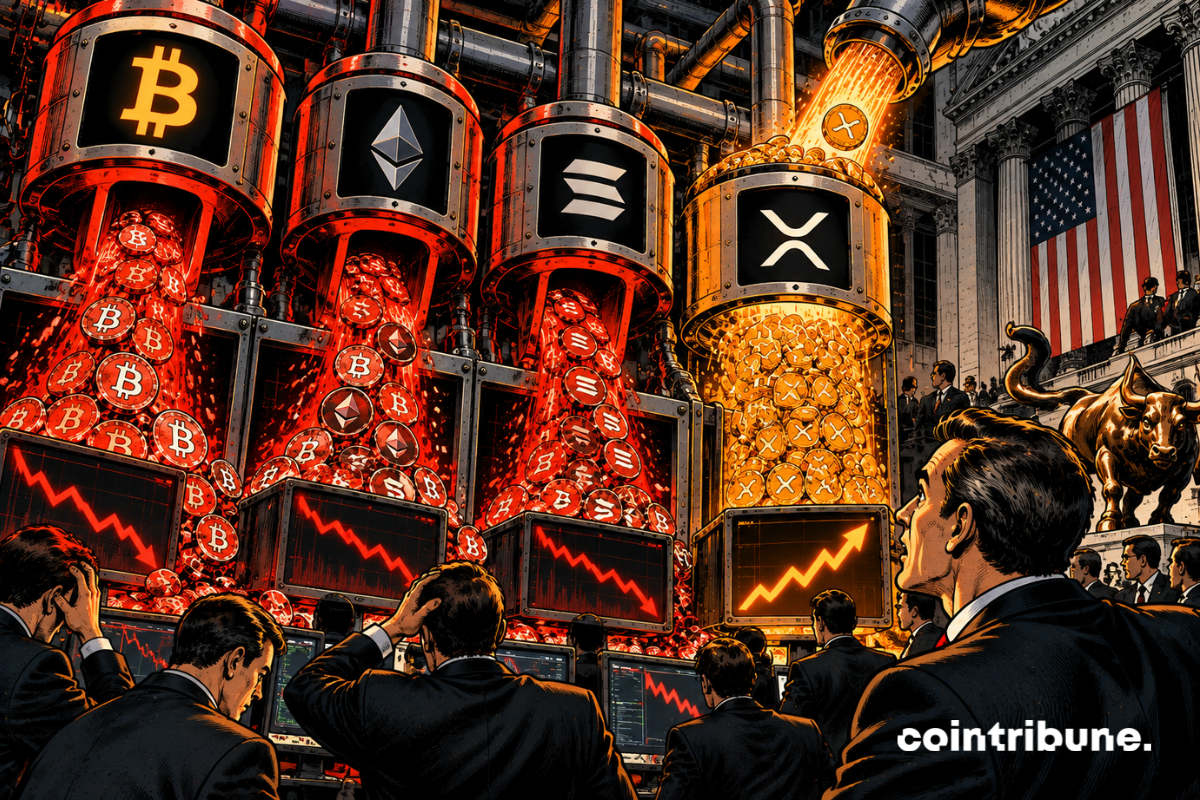
Capital movements within the blockchain very often precede the price dynamics visible on trading terminals. While the crypto market is going through a phase of uncertainty and successive corrections, a major divergence is emerging on the Ripple network. This phenomenon of complete disconnection between different categories of investors raises questions about the medium-term trajectory of the token. Far from the emotional reactions that often characterize the general public, on-chain data reveals large-scale institutional activity of rare intensity. Understanding this strategic positioning is crucial to anticipate the structure of upcoming market cycles.
The analysis of weekly flows on spot crypto index funds reveals an unprecedented fracture within the sector, challenging the idea of a monolithic institutional block. This data is important because it shows that professional investors no longer blindly put their money into the two dominant assets, but are starting to choose growth alternatives.
The historic gap between the gigantic volumes of traditional finance and the actual adoption of blockchain technologies is set to close thanks to digital settlement infrastructures. This transition is accelerating as financial institutions seek smoother architectures to modernize aging cross-border payment networks. It is in this context of systemic transformation that Brad Garlinghouse, CEO of Ripple, spoke in an interview with CNBC, revealing strategic figures and an unprecedented commercial ambition for the Ripple protocol and its native asset, XRP.
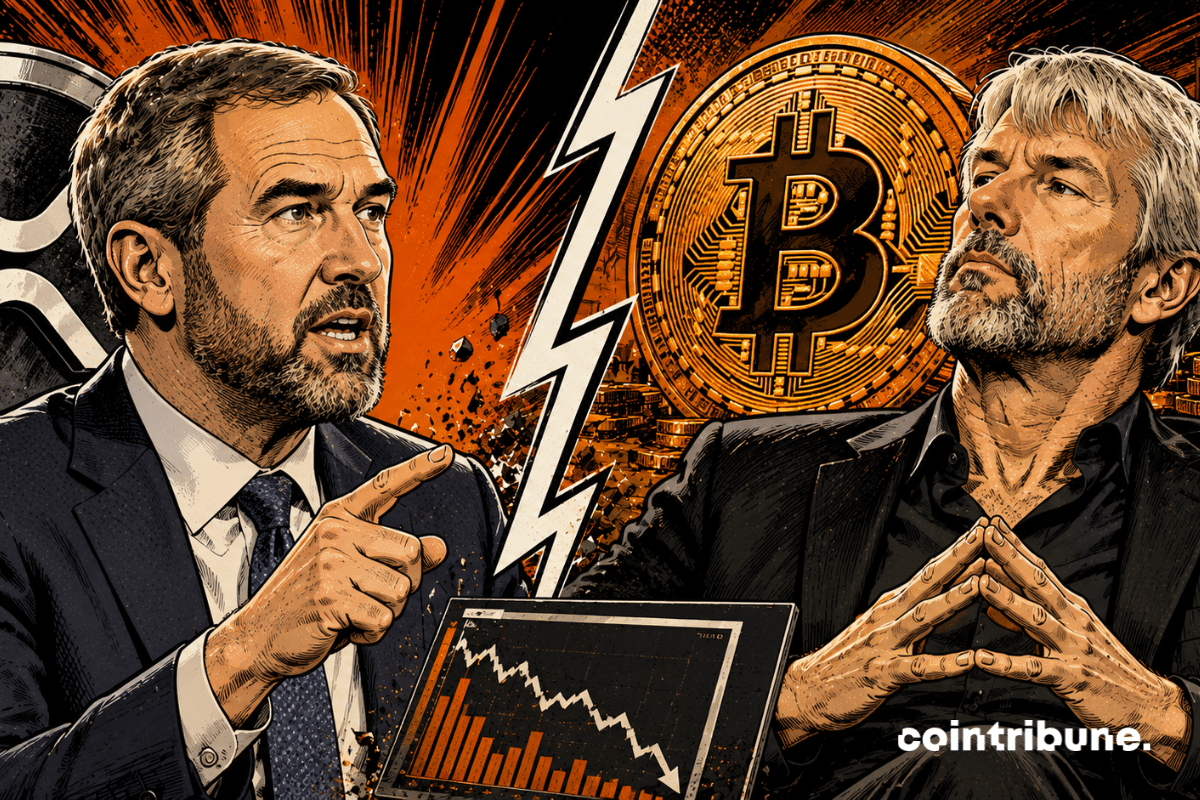
The verbal duels between iconic figures in the crypto industry often reveal the structural cracks of a market undergoing institutional transformation. During a particularly noteworthy media appearance on CNBC this Friday, Ripple CEO Brad Garlinghouse criticized Michael Saylor's Bitcoin accumulation strategy through his company Strategy, stating that this approach seriously harms the entire crypto ecosystem. This statement comes amidst an uncertain macroeconomic climate, where the leading crypto shows clear signs of weakness below the $60,000 mark, weakening financial architectures based on corporate over-indebtedness.
The crypto market is going through a phase of strong turbulence, once again illustrating the intrinsic volatility that characterizes this asset class. A systemic correction triggered by the main cryptos is leading investors to rebalance competitive power relations and historical valuation levels. This dynamic shows that the apparent resilience of institutional infrastructures does not always guarantee the price stability of the underlying tokens on secondary markets. With XRP, the native currency of the Ripple protocol, we have a perfect example of this contemporary sectoral fracture. The company is multiplying technical initiatives, but the stock is critically underperforming compared to other major capitalizations in the sector.
It is often the liquidity of major trading platforms that decides the fate of cryptocurrencies, and the concentration of volumes on Binance makes it the essential barometer of the market's major trends. While investors were looking for any sign of scarcity to justify a price increase, the latest fundamental data have just cooled hopes of an immediate rally.