After swallowing more than three billion dollars in nine days, Bitcoin ETFs suddenly hit the brakes, leaving the king of crypto stuck below $81,000 while Ethereum and Solana quietly keep marching ahead.
One week after the European Blockchain Convention, Barcelona returns to the technology scene. The AI Summit Barcelona takes place on September 22 and 23, 2026 at the World Trade Center, on the port. Only the second edition, but an immense ambition: to go from 1,500 participants last year to more than 10,000 this year, with NVIDIA, Google, Microsoft, and Anthropic featured. Here's what to remember, and the code reserved for the Cointribune community.
BRICS+ bloc nations would hold more than 6000 tons of gold, or 17.4% of official global reserves, according to an assessment by EBC Financial Group. China and Russia might concentrate about three-quarters of this stock. In a separate analysis, UBS projects the ounce to reach 5200 dollars by June 2027. These figures explain the growing interest in the yellow metal, however, they do not allow for a direct relationship to be established between BRICS+ acquisitions and the projection from the Swiss financial institution.
Twelve years after his death, Hal Finney remains an inseparable part of Bitcoin's history. The cryptographer received the very first BTC transaction sent by Satoshi Nakamoto on January 12, 2009. Ten bitcoins to test a network that practically had no value yet. Today, those 10 BTC would be worth more than 800,000 dollars. And another question still refuses to disappear: Did Finney really know Satoshi's identity?
Stablecoins find themselves at the center of a new showdown between community banks and the crypto sector. Today, in the United States, the review of the CLARITY Act reignites opposition around the yields associated with these digital assets. The Independent Community Bankers of America demands a complete ban on rewards linked to these assets. Its leader Rebeca Romero Rainey rejects the idea of a compromise on this issue. At the same time, banks warn of a possible massive transfer of deposits to digital assets in this debate.
Ripple released a roadmap whose role is to make the XRP Ledger compatible with post-quantum signatures by 2028. Indeed, the project plans tests, a coexistence period between the old and new systems, as well as a global network migration. However, this protection is not yet activated on the main network. No computer is yet capable of calculating the private keys used to control XRP accounts.
Security remains a top priority across crypto, yet losses keep climbing, with over $3.63 billion stolen since 2025. CEXes are most exposed through private key compromise, while DEXes face smart contract exploits, increasingly compounded by fake UIs and malicious integrations. The actors have evolved just as fast. Rogue individuals have given way to organized cartels and state-sponsored groups, including North Korean hackers, who now use mixers, bridges, and staggered withdrawals to stay untraceable. This report examines the shifting threat landscape, from auditing and insurance protocols to the security infrastructure CEXes like Toobit deploy to protect users. We’ve summarized the key highlights, but be sure to dig into the full 15 slides in the full report here.

The Commodity Futures Trading Commission (CFTC) has sanctioned Gabriel Perez, former teleprompter operator at the White House. He will have to pay 172,539.02 dollars after using non-public information to trade on the predictive markets platform Kalshi, notably on contracts related to Donald Trump's interventions.
Polygon has finally explained what its Austin and Kyoto hard forks were hiding. The two updates fixed several security vulnerabilities kept private during their deployment. Some could slow down the network, crash nodes, or force validators to perform very costly computational work. Polygon claims no exploitation was observed on the mainnet.
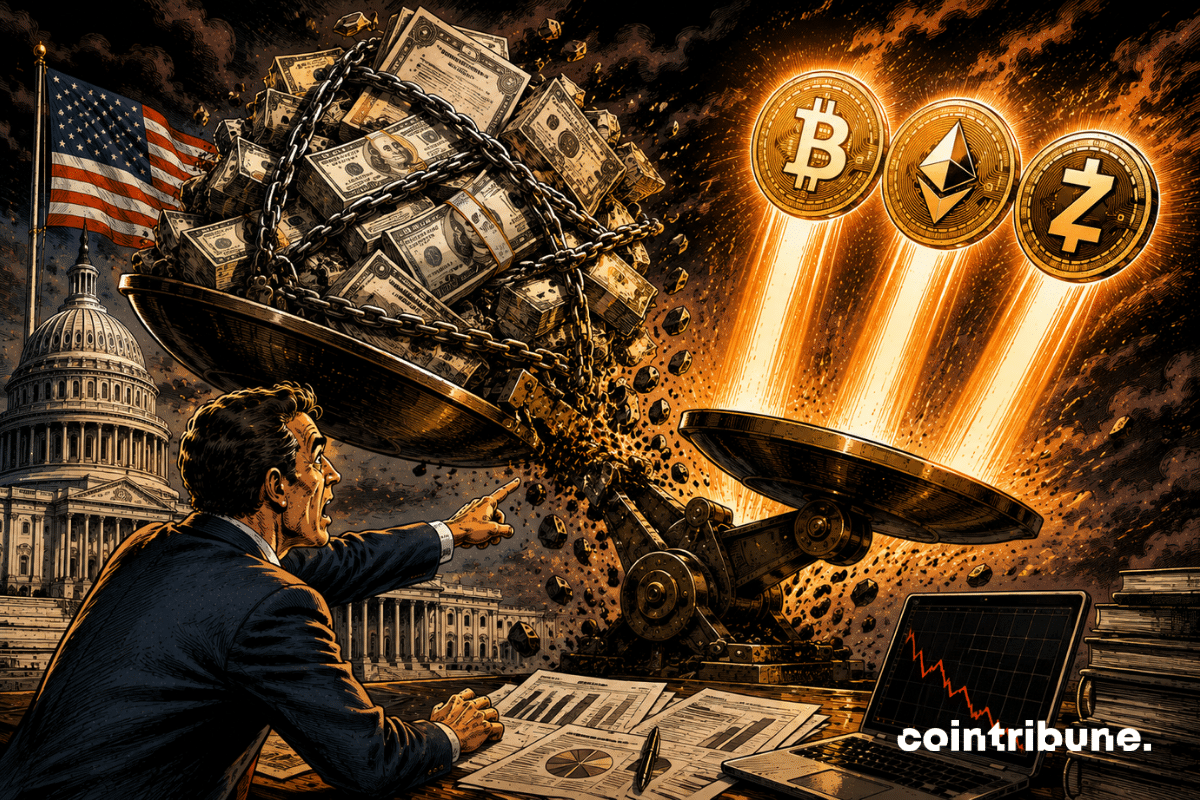
Grayscale believes that the evolution of US debt would favor Bitcoin, Ether, and Zcash. These three cryptos could benefit from significant demand for assets independent of fiat currencies. Indeed, this theory arises as federal debt has just exceeded 40 trillion dollars. However, it does not represent a current projection. A rate increase triggered by the US financing needs would also penalize the crypto ecosystem in the short term.