
Fri 20 Feb 2026 ▪
4 min read
▪
by
Bitcoin miners have no money left. So they promise 30 GW to AI. Problem: only 11 GW actually exist. The rest is air. But it looks nice.
Bitcoin miners have no money left. So they promise 30 GW to AI. Problem: only 11 GW actually exist. The rest is air. But it looks nice.

The apparent calm of bitcoin masks growing nervousness. Held below the $70,000 threshold, BTC moves within a technical compression zone while more than $200 million has been liquidated in just 24 hours. Behind this deceptive stability, signals accumulate: lack of convincing rebound, descending highs, and persistent institutional investor outflows. The crypto market holds its breath, suspended at technical levels likely to trigger a more violent move.
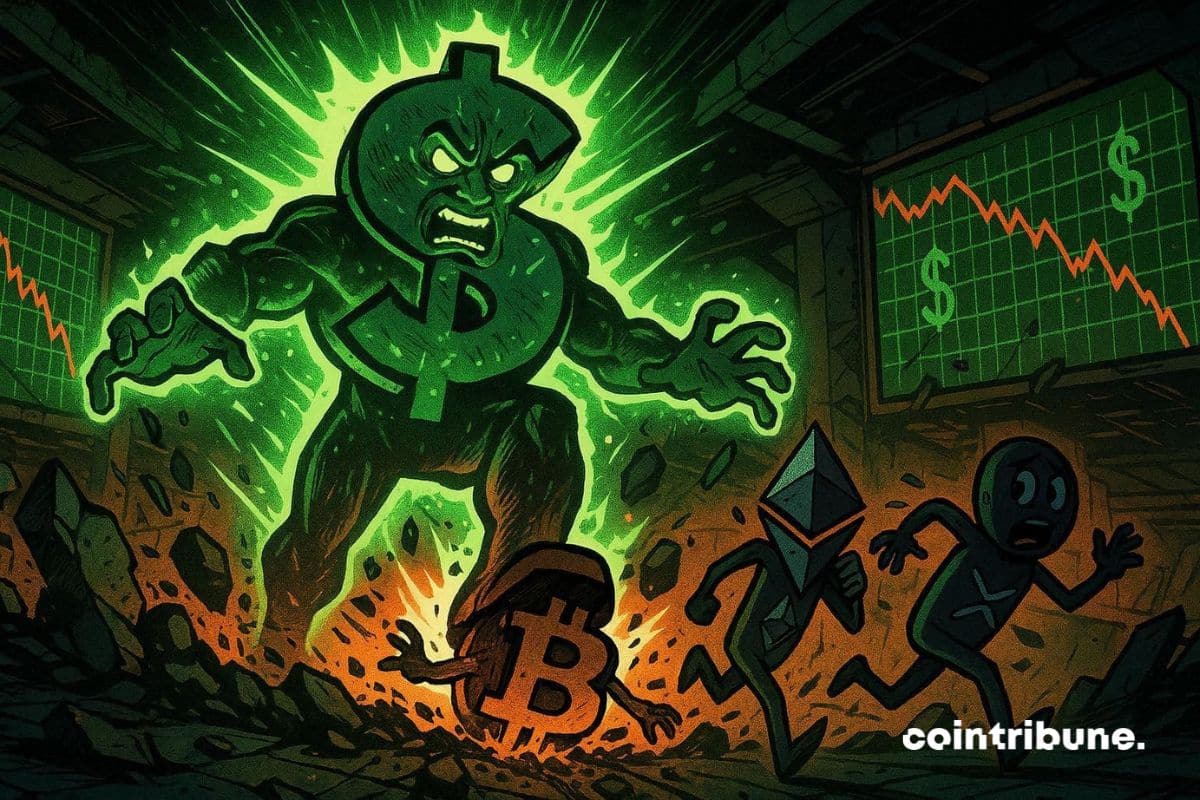
The Dollar reaches new heights and crushes the crypto market along the way. Bitcoin, Ethereum, Solana, and XRP collapse despite a rising tech market. Why does this Dollar pressure stifle digital assets?

The Bitcoin options market shows a clear signal: the 40,000 $ put has become the second largest bet before the February 27 expiration, with about 490 million dollars of notional. In other words, some traders are paying dearly for "catastrophe" insurance. Is this a prophecy? Not necessarily. It is often a hedging reflex when the market has just been shaken. Bitcoin currently drifts around 66,000–68,000 $, after a sharp decline from the October highs. In this setting, options look less like a vote on the future and more like a seatbelt fastened at the last moment.

Bitcoin is evolving in a pivotal zone. Below 70,000 dollars, the market is looking for a balance point after several weeks of pressure. A recent analysis highlights the role of investors who entered in the first half of 2024, whose positions concentrated between 60,000 and 69,000 dollars are currently stabilizing prices. Meanwhile, some traders anticipate a move toward 52,000 dollars. Between structural support and risk of breakdown, the short-term trajectory remains uncertain.

Bitcoin ETF flows plunge by $105M. Behind these withdrawals, a surprising dynamic could reshape the crypto market.

While the crypto market undergoes a brutal correction phase, some listed companies choose to strengthen their positions rather than scale down. Amid volatility, Strategy and Bitmine Immersion Technologies increase their reserves of Bitcoin and Ether, despite an unfavorable stock market climate. This contrast is striking as prices fall and crypto-related stocks plunge, these companies intensify their exposure.
Bitcoin undergoes a drastic drop in open interest, a sign of leverage withdrawal and nervous markets. Full analysis here.

The 70,000-dollar threshold did not hold. In a climate of high volatility in the United States, bitcoin takes the full brunt of the return of instability in traditional markets. Bond yields under pressure, rising volatility index, marked risk aversion: the macroeconomic backdrop is hardening. This sequence goes beyond a simple technical correction. It illustrates bitcoin's growing dependence on global financial dynamics. So, can the crypto market still free itself from macroeconomic cycles?

Capitulation often precedes market reversals. As crypto sentiment sinks into extreme fear, Matrixport believes bitcoin could be approaching a potential bottom. In a recent analysis, the firm highlights that several sentiment indicators and technical signals converge towards a historically sensitive zone. Simple excess pessimism or a true end-of-cycle signal? At a time when volatility intensifies, this diagnosis deserves special attention.

Bitcoin is going through one of its toughest phases in months. Nearly half of the circulating supply is at a loss, ETFs are bleeding billions, and yet — miners and long-term holders refuse to give in. Should this be seen as a sign of hope, or simply the denial of a market that has not yet hit bottom?

Bitcoin has just sent a signal that the market cannot ignore. After a brief surge above 70,000 dollars, Bitcoin sharply corrected in a fragile liquidity context, triggering a wave of massive liquidations. However, beyond this momentary volatility, a key indicator draws attention: the weekly RSI falls back to a level seen during the 2022 bear market. Between structural fragility and a possible echo of the previous cycle, the market finds itself at a strategic tipping point.

Discover how Metaplanet boosted its revenues by 738% thanks to Bitcoin. An impressive feat in the crypto market!

Large university endowments now refine their crypto arbitrage with surgical precision. Harvard's latest regulatory filing reveals a major rebalancing: a reduction of its Bitcoin exposure via BlackRock's spot ETF and a first declared foray into Ether. Behind this move, a strong signal is sent to the market. Indeed, in a context of marked volatility, Harvard Management Company redraws its digital allocation and illustrates the strategic evolution of institutional investors facing cryptos.

The bitcoin correction occurs in an already weakened macroeconomic context. As investors question the strength of the US economy, the fall of the flagship asset attracts attention far beyond the crypto market. For Mike McGlone, senior strategist at Bloomberg Intelligence, this movement could reflect broader tensions in financial markets and serve as an early signal of a recession risk in the United States.

Traders are placing sizable bets on Bitcoin’s path through 2026 across leading prediction platforms. Activity on Polymarket, Kalshi, and Myriad suggests a market that expects gradual progress rather than a rapid breakout. More than $84 million in combined volume across seven contracts reflects cautious optimism, balanced by consistent hedging against downside risk. While confidence appears to build later in the year, near-term expectations remain restrained.
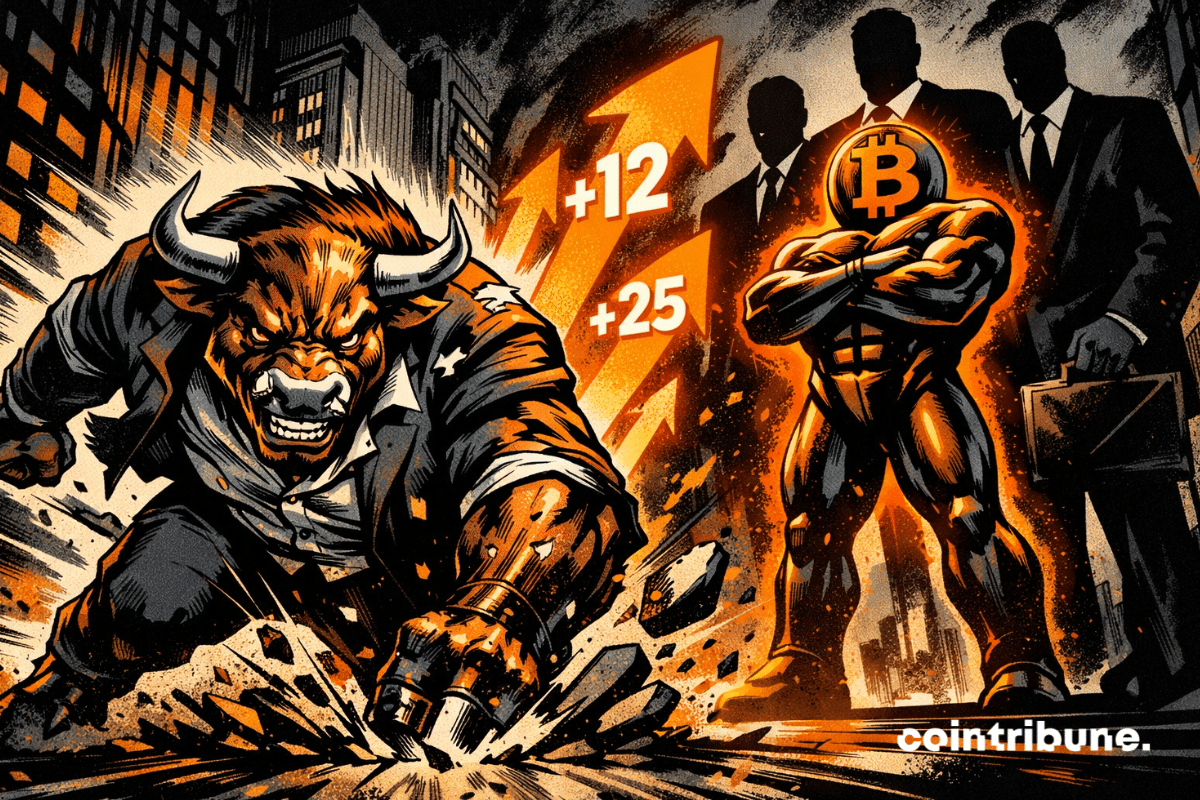
U.S. equities are seeing rising risk appetite, while Bitcoin lags with muted institutional demand and slow accumulation.

Crypto markets are going through a turbulence zone. For the fourth consecutive week, specialized funds record massive withdrawals. Bitcoin stumbles and falls below the symbolic 70,000 dollars mark.

Amid a correction of bitcoin and in a climate of increased volatility, Michael Saylor, the leader of Strategy, sends a new buying signal. This decision intrigues as much as it divides, while the asset evolves under pressure. Behind this announcement, it is the whole coherence and risks of an assumed accumulation strategy that are once again spotlighted.

Bitcoin is going through a moment of truth. As American inflation slows significantly, the main argument supporting its legitimacy, that of a hedge against monetary erosion, falters. The latest consumer price figures reshuffle the cards and force investors to reconsider their exposure to BTC. Between macroeconomic improvement, persistent volatility, and strategic questions, bitcoin's value proposition enters a phase of redefinition.

The debate is growing on social media and in crypto circles: what if autonomous artificial intelligences discovered the interest of bitcoin by themselves? This hypothesis, long relegated to the realm of science fiction, is gaining ground among experts. An unprecedented race could begin between humans and machines to control a resource that has become strategic.

Bitcoin struggles to stay above $70K as ETFs face significant outflows, reflecting cautious investor sentiment and ongoing market volatility.

The lady who manages billions says: AI will break everything, prices will collapse. Central bankers are in the dark. Her solution? Bitcoin, obviously.

A key valuation indicator today places bitcoin at an unprecedented level since March 2023, a period when BTC traded around 20,000 dollars. After several months of correction following its last all-time high, the market shows a reading rarely seen during the cycle. This configuration, based on on-chain data, raises questions about the real state of the market and the position of bitcoin in its current phase.

For years, Bitcoin has been sold as an escape route. A rare asset, outside central banks, supposed to shine when the rest trembles. Except that in 2026, the soundtrack changes: at the slightest twitch in tech, Bitcoin coughs too. And that is more than a market detail. It is an open identity crisis.

Donald Trump's empire continues to expand its footprint in the crypto universe. Trump Media has just filed two new exchange-traded funds focused on major cryptocurrencies with the SEC: a Bitcoin-Ether ETF and a Cronos ETF. This offensive comes as the market goes through a period of marked turbulence.

Bitcoin drops 28% in one month, short positions explode, and investors doubt. Yet, Anthony Pompliano remains convinced: this phase is only a prelude to a historic rise. Why does he see a unique opportunity in this volatility?

Friday the 13th, lucky day? Bitcoin flirts with its record driven by inflation. The Fed does not move. Truflation already knew. Atmosphere.

In Washington, the regulatory future of cryptos may be decided in the coming months. Amid market volatility, the CLARITY Act stands as a pivotal text for the American crypto industry. Treasury Secretary Scott Bessent advocates for its rapid adoption, believing that legislative clarification could soothe investor sentiment. Behind this tight schedule lies a major political stake: securing the crypto framework before the 2026 electoral balances reshuffle the cards.

Within a few sessions, bitcoin has plunged back into a turbulence zone rarely seen since previous major crashes. On-chain data reveals $2.3 billion in realized losses over seven days, a shock that ranks this episode among the most violent in its recent history. This wave of capitulation follows a brutal correction of BTC, falling heavily after its peak above $126,000.