Craig Wright, the man who faked being Satoshi, just got Hollywood's red carpet treatment. $70 million, Gal Gadot, and a whitewash of history. Truth takes a back seat. Where do we go from here?


Bitcoin has now surpassed 78,900 dollars after Wednesday's drop. BTC trades around 78,800 dollars, with a rise of more than 2% during the day. The movement also benefits several altcoins. Arbitrum continues its rally and PONS recorded a new high above 0.50 dollar. The dollar declines in parallel and gives some breathing room back to risky assets.
Bitcoin and gold have rarely moved so often in the same direction. Their 90-day correlation reached its highest level since 2020, according to Bitwise. This convergence comes as investors turn away from long-term U.S. bonds, pushing the 10-year Treasury yield up to around 4.8%.
Usually, the month of September is a risky period for crypto investments. Historically, Bitcoin shows its weakest monthly performance during this period, while central bank decisions can intensify volatility. This year's context adds many uncertainties, including a probable rate hike in the United States. Despite these threats, three cryptos still have strong arguments to get through the month. These are Bitcoin, Ethereum, and Solana.
Strategy sold 6,916 bitcoins at an average price of about 62,200 dollars between late June and mid-August. A few weeks later, the company bought back 4,603 at 80,318 dollars each. An operation that looks like a classic "sell low, buy high." Its CEO Phong Le does not regret anything: the Bitcoin price was not the priority. The balance sheet needed to be strengthened first.
After reaching a peak at the end of 2025, the computing power that secures the Bitcoin network is experiencing an unusual decline. Rapha Zagury, CEO of Twenty One Capital, calls this situation the first "bear market of the hashrate." This decline mainly reflects the deterioration of mining profitability. However, the phenomenon is amplified by artificial intelligence, as many operators are now dedicating their energy infrastructures to long-term computing contracts.
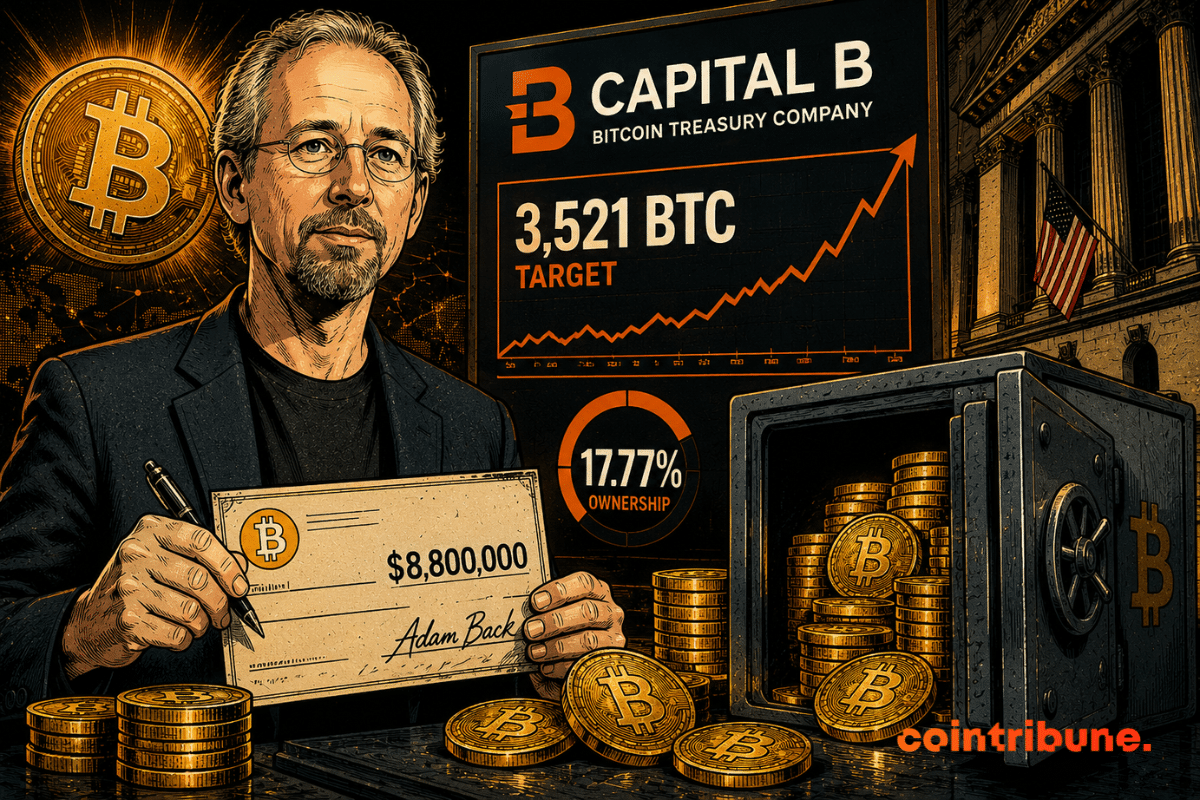
Adam Back, a living Bitcoin legend, puts another €7.6 million on the table for Capital B. The goal: 3,521 BTC. The catch? Shareholders could get burned by dilution. That's the name of the game.
The dismantling of Sality ends a long cryptocurrency hijacking operation. This botnet, active since 2003, spent its last eight years stealing bitcoins and Ethers. Its method relied on a simple technique: modifying wallet addresses copied on infected machines. CrowdStrike and the U.S. Department of Justice coordinated the operation. This globally conducted operation isolated more than 15,000 machines across several regions of the world. The crypto phenomenon was at the heart of this activity.
Bitcoin falls below $77,000 as U.S. strikes on Iran send oil soaring to $93. A surprising decoupling with gold emerges, revealing BTC's fragility to geopolitical shocks.
Hut 8 is transforming its Bitcoin-based infrastructures into machines for AI. Its Beacon Point campus in Texas now shows 704 MW of leased capacity for a base contract value of 19.6 billion dollars. Behind the setup are two giants: Nvidia would hold the site lease, while Anthropic has just signed a 35 billion contract with Lambda to use part of this power.
Net inflows have been recorded in US XRP ETFs for eleven consecutive sessions. This streak, starting on August 18, brought them nearly 170 million dollars and raised their cumulative flows to 1.68 billion since their launch. Meanwhile, Q2 publications position Goldman Sachs as the leading known institutional investor. However, these two statistics do not cover the same period and do not allow linking recent flows to the American bank.
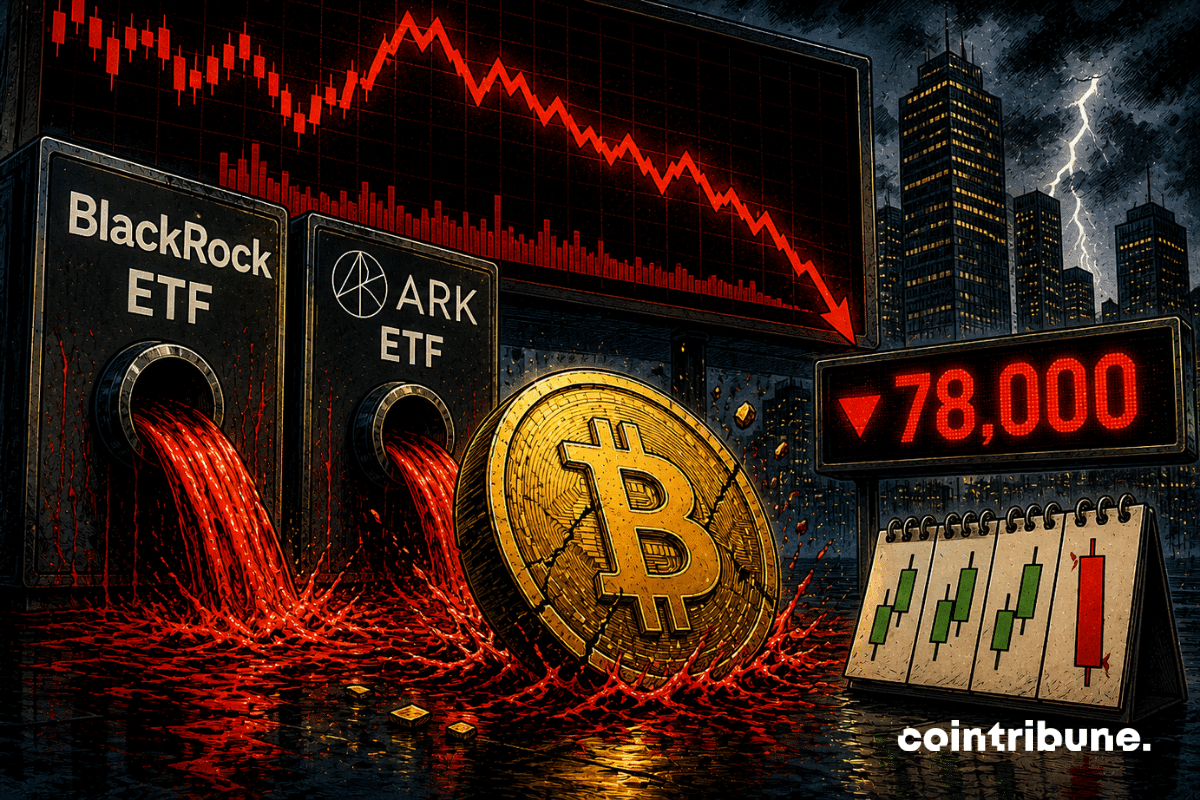
Bitcoin started September below 78000 dollars after a 25% rise in August, its best monthly performance since November 2024. Indeed, this entry into the month called "Rektember" revives an unfavorable seasonality. Bitcoin loses on average about 3% in September since 2013. In 2026, the main risk however does not come from the calendar but from the Federal Reserve. Markets now anticipate a possible rate increase starting September 16.
A nostalgic tweet, a power transfer worth 4,600 billion dollars, and a silence that says a lot about crypto. John Ternus officially takes the helm of Apple this Tuesday. Between a keynote within eight days, the OpenAI lawsuit, and a complete lack of position on bitcoin, the new boss has no time to catch his breath.
In my previous analysis, I was quite clear: Bitcoin was not bullish yet unless it was able to reclaim and decisively break above the $67,000 area.
That cheeky Bitcoin just served up its best August in nine years with a solid 25% run, giving exhausted crypto holders a rare summer win while everyone eyes the September trap.
Bitcoin treasury companies face a new debate around inclusion criteria in major indices. Saylor and Strategy contest an MSCI proposal targeting certain companies considered nonoperational. The group believes this filter could exclude several digital asset-related stocks. However, the cost of this decision goes beyond the companies concerned, as billions of dollars in capital could be affected. The MSCI consultation remains open until September 30 before a decision is expected in October.
The exchange Binance recorded 15.7 billion dollars in net asset inflows during August. This is a record according to Binance Research. Indeed, the exchange platform attracted more than 75% of the positive flows recorded by the main centralized exchanges. This trend coincides with a monthly increase of over 20% in bitcoin. However, it does not mean that 15.7 billion dollars were automatically used to acquire BTC. Deposits consider various cryptos and correspond to different strategies.
The number of addresses holding at least one million dollars in bitcoins increased by 10.4% during the month of August. According to available statistics, it rose from 111846 to 123482. This increase accompanies the monthly rebound of more than 20% of BTC. However, it does not mean that 11636 people became millionaires, because an address does not necessarily equate to a single investor.
Strive steps up a gear. The Nasdaq-listed asset manager (ASST) has just acquired 1,800 additional bitcoins for a total bill of around 143 million dollars. This operation was announced on Monday on X by its CEO, Matt Cole. Paid at an average price of 79,431 dollars each, this new batch raises the company's total reserve to 23,156 BTC, or nearly 1.76 billion dollars according to its latest 8-K report.
Eric Trump is bragging about fat margins and machines that never clock out, while Forbes claims the real numbers look a lot uglier, leaving the president’s son and his critics in a full-blown Texas-sized brawl over the true cost of mined bitcoin.
Michael Saylor's company has just resumed its bitcoin acquisitions, but at a price that raises questions. Strategy has just bought 4603 BTC at 80318 each for 369.7 million dollars after about two months of absence. However, the company had sold several thousand bitcoins a few weeks earlier at a significantly lower price. Thus, this market return is not a simple resumption of accumulation, but it provides insight into the financial arrangements that now mark this group's bitcoin strategy, between capital raises, liquidity management, and share buybacks.
Strategy reportedly acquired bitcoin for the first time since June 22 according to Michael Saylor's statements. The company president broadcast a brief message as BTC was close to 79,000 dollars. No acquisition, amount, or average price has yet been published. This announcement follows four consecutive sales that reduced Strategy's reserves by 6916 BTC since their last peak.
What if the bitcoin bull run no longer played out on Wall Street? While Ki Young Ju points internationally, Russia is already preparing to accept bitcoin as loan collateral. Two signals, one direction: adoption is scaling up, and the United States is no longer the only player at the table.
Grayscale believes that the evolution of US debt would favor Bitcoin, Ether, and Zcash. These three cryptos could benefit from significant demand for assets independent of fiat currencies. Indeed, this theory arises as federal debt has just exceeded 40 trillion dollars. However, it does not represent a current projection. A rate increase triggered by the US financing needs would also penalize the crypto ecosystem in the short term.
Twelve years after his death, Hal Finney remains an inseparable part of Bitcoin's history. The cryptographer received the very first BTC transaction sent by Satoshi Nakamoto on January 12, 2009. Ten bitcoins to test a network that practically had no value yet. Today, those 10 BTC would be worth more than 800,000 dollars. And another question still refuses to disappear: Did Finney really know Satoshi's identity?
After swallowing more than three billion dollars in nine days, Bitcoin ETFs suddenly hit the brakes, leaving the king of crypto stuck below $81,000 while Ethereum and Solana quietly keep marching ahead.
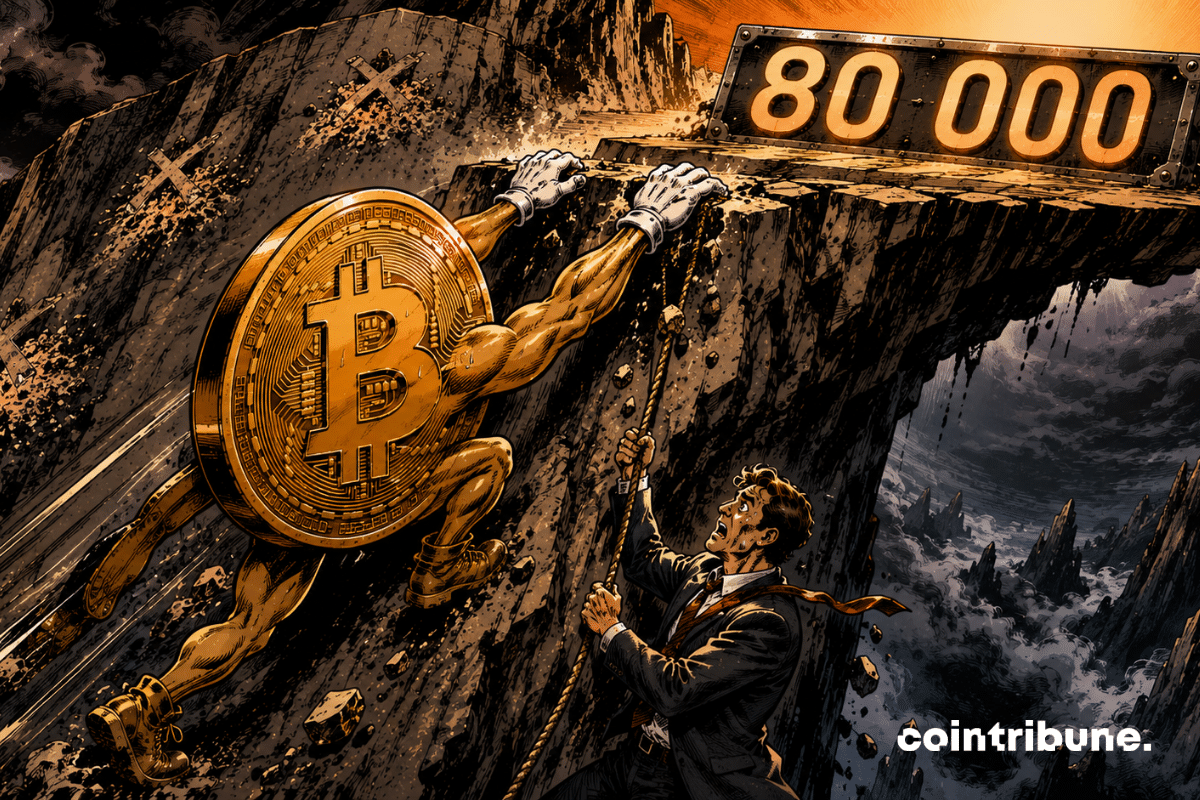
Bitcoin could not maintain the $80,000 threshold after rebounding to $81,455 on August 28. Then, its price fell to $76,877 before a slight rise. This rejection occurs while many sell orders remain visible between $80,800 and $83,000. Their presence can slow a recovery, however, it does not justify either the identity of their holders or their real intention to sell.
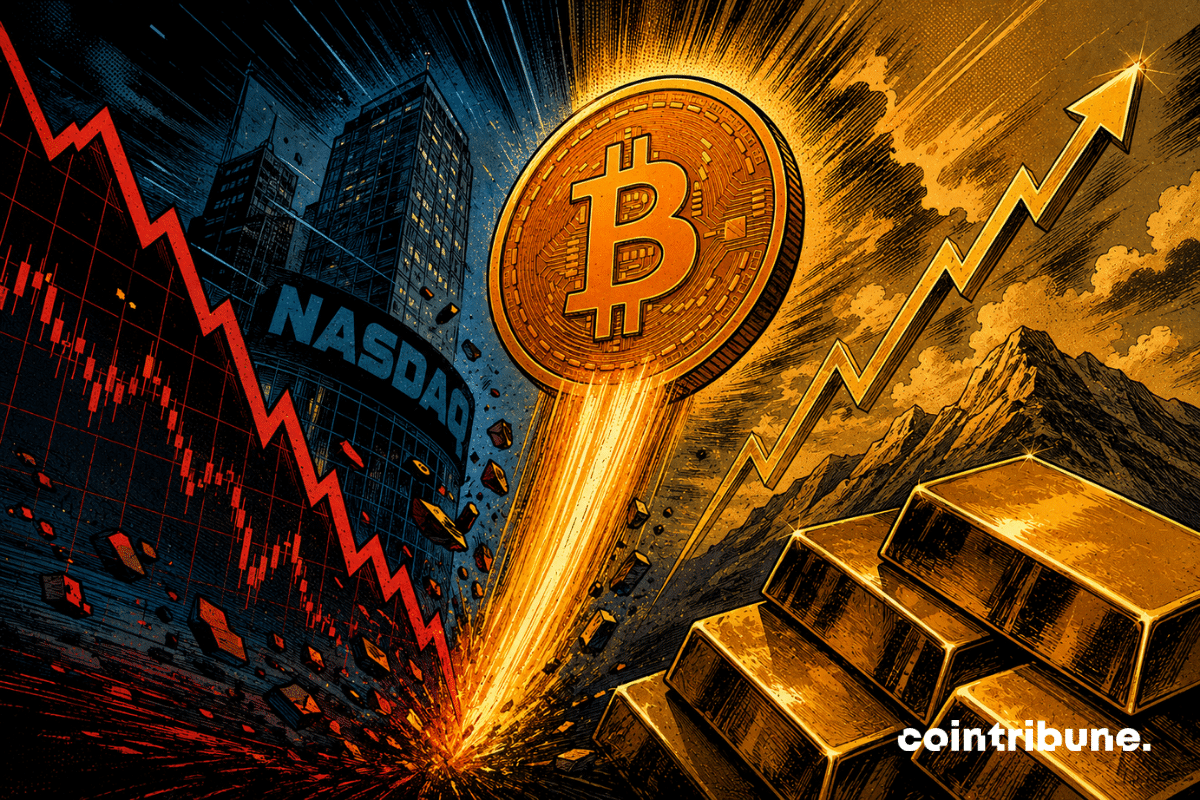
While the Nasdaq drifts and gold quietly plays its classic safe-haven role, bitcoin has crashed the party, started shadowing the yellow metal, and left everyone waiting on Kevin Warsh’s next sentence.
Arthur Hayes believes that the Strategy stock is no longer the best way to gain exposure to bitcoin. According to the BitMEX co-founder, the removal of the premium once granted to the MSTR share weakens the financial process that allowed the company to issue shares and obtain more BTC. However, this analysis does not explain an immediate insolvency risk. It is mainly related to Strategy's ability to continue its growth without diluting its shareholders.
Bitcoin has just returned a clear majority of its supply to profit. After rising from about 62,000 dollars to almost 80,000 in one week, 69% of the circulating BTC now show a value higher than their on-chain reference level. The rebound has therefore repaired part of the losses. Not all: about 617 billion dollars of capital are still underwater.