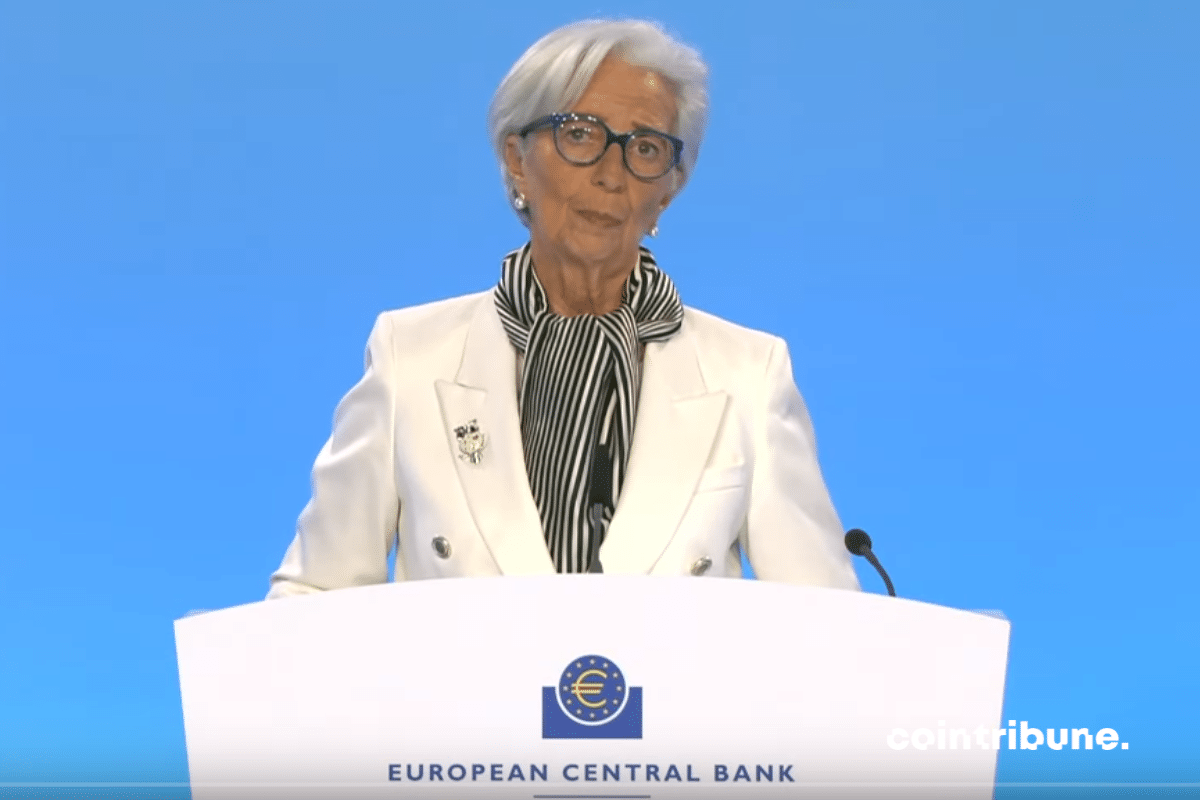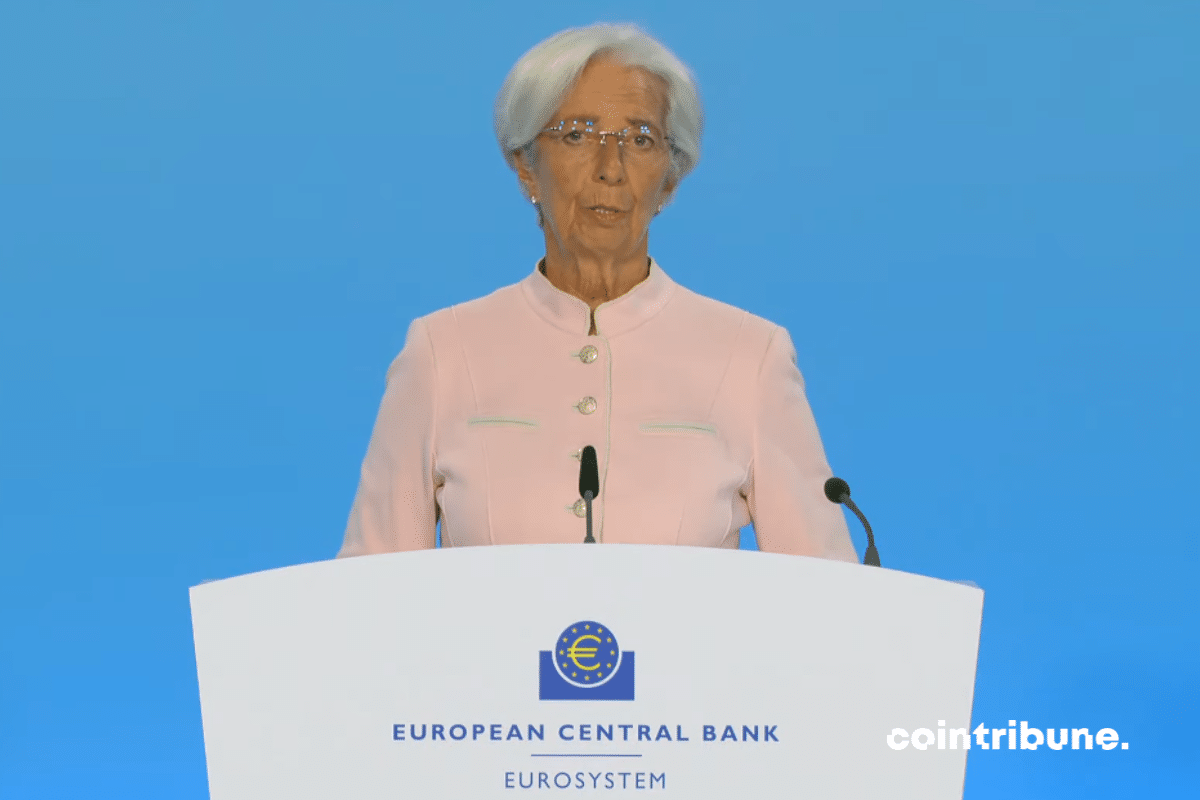
Lagarde packing up? The ECB denies it, but the euro is already sweating. Macron wants to place his protégé. The Germans grit their teeth. Atmosphere in Frankfurt.
Christine Lagarde presents the digital euro as a symbol of trust and unity, promising to revolutionize payments in Europe. But this ambitious project also raises passionate debates: financial sovereignty or risk of increased surveillance? Discover the issues and controversies behind this innovation and the hidden role of bitcoin.
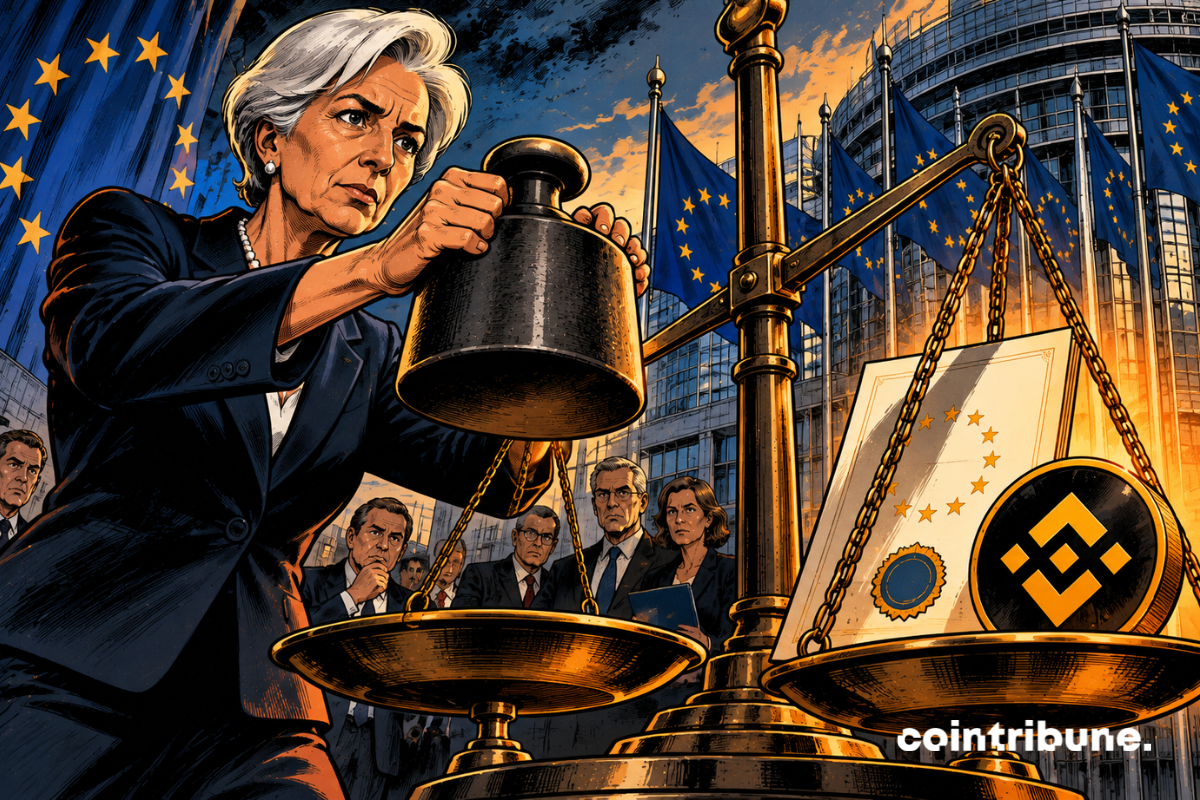
When Christine Lagarde brings down the regulatory hammer, even the crypto giants tremble. The digital euro advances masked but clearly targets stablecoins too comfortable in Europe...
Promised for 2026, the digital euro is already causing waves: Lagarde sees sovereignty, Navarrete calls it a useless gadget, and banks fear a digital bank run.
The President of the European Central Bank steps up against dollar-backed stablecoins. During a conference in Frankfurt, Christine Lagarde demanded "firm" guarantees for any foreign issuer wishing to operate in the EU. A strong signal of European fears regarding the growing influence of the greenback in cross-border digital payments.
The debt is making headlines again on both sides of the Atlantic. Bitcoin is ready to soar if the Fed and the ECB were to bring back the printing press.
When a former minister attacks stablecoins, it is not for their logo. But can we still speak of public money when crypto infiltrates everywhere? Follow the Lagarde trail…
Slowly but surely, the power is preparing minds for the end of cash. Fortunately, there will always be bitcoin.
Christine Lagarde dreams of a digital euro supplanting the dollar in global exchange reserves. The United States, on the other hand, is betting on bitcoin.
What if the euro finally established itself as a global reference? In Berlin, Christine Lagarde surprised her audience by asserting that the European single currency could replace the dollar as the main pillar of international reserves. Behind this bold statement, the president of the ECB outlines a clear strategy: to provide the European Union with the necessary levers to exert financial and geopolitical influence. Thus, in a reshaping world, this ambition redefines monetary power dynamics and places the euro at the center of a new global equilibrium in the making.
Central bank digital currencies would eliminate all privacy, but few seem to care. Fortunately, there will always be Bitcoin.
As the United States embraces bitcoin, Europe bogs down by continuing to promote the dystopia of the digital euro.
The integration of bitcoin into the reserves of central banks deeply divides economic actors. On one side, some governors advocate for a diversification of assets to adapt monetary strategies to a changing world. On the other, the European Central Bank (ECB) takes a firm stance and categorically rejects any legitimacy of bitcoin as a store of value. This debate has taken on a new dimension following Christine Lagarde's statements. When asked at a press conference, the ECB president abruptly dismissed speculation, asserting that bitcoin did not meet any of the required criteria to be included in the central banks' reserves: "liquid, safe, and secure." This stance contrasts with that of the governor of the Czech National Bank, Aleš Michl, who is open to the idea of exploring new asset classes. This growing divergence illustrates the rift between a conservative approach to the financial system and a more pragmatic vision, championed by some decision-makers who seek to anticipate upcoming monetary transformations.
The European economy is going through a period of instability where geopolitical tensions are intertwined with a significant slowdown in growth. In this uncertain context, the European Central Bank (ECB) is faced with a major challenge: to reconcile the need to contain inflation with the urgency of revitalizing a weakened economy. To address these issues, the institution led by Christine Lagarde announced a new reduction in its key interest rate, lowered by 25 basis points to 3%. This decision, the third of its kind in six months, reflects a gradual and cautious approach. However, this choice triggers criticism. While some praise the continuity of this policy, others point out a lack of boldness, and even argue that more ambitious measures would be necessary to stimulate consumption and investment.
The European Central Bank has just begun lowering interest rates. Very good news for Bitcoin.
Saudi Arabia and other nations like Indonesia warn Europe against seizing Russian foreign reserves. Bitcoin on standby.
The legislation was motivated by tensions with Russia, in response to the invasion of Ukraine.
Christine Lagarde has tempered expectations of a rate cut this summer. Bitcoin will have to wait.
Ensuring that the digital euro doesn't become a tool for surveilling Europeans. This is, in a way, the wish of the European Data Protection Board (EDPB) and the European Data Protection Supervisor (EDPS). These entities have recently called on the EU to establish a “privacy protection threshold” for cryptographic transactions in the euro. Let's take a closer look!
It has been several months since the ECB unveiled its digital euro project, an announcement that continues to reverberate in the financial markets. A recent statement by Christine Lagarde, President of the ECB, has garnered particular attention from the crypto community. According to the ECB President, the digital euro (to be distinguished from a cryptocurrency) will not be anonymous. This revelation raises deep questions about privacy protection, and many analysts are also pondering the potential implications of this digital euro project on cryptocurrencies.
Will the ECB stop raising its key interest rate soon? Some governors hope so.