Trump and Bukele, in their meeting at the White House, ditch Bitcoin to talk about prison and commerce. The future of crypto? It will have to wait until serious matters are settled.
Crypto ETFs are in free fall: $795 million withdrawn last week. Discover more details in this article!
The recent imposition of massive tariffs by Donald Trump, followed by an unexpected pause on certain Chinese products, has thrown financial markets into turmoil. While some see this as a deliberate strategy to reorganize the global economic landscape, others interpret this turnaround as a capitulation to market pressures and Chinese intransigence.
Larry Fink, head of the world's largest asset manager, BlackRock, believes that the American economy may have already entered into recession, mainly due to the impact of Donald Trump's tariff policies.
On April 12, Donald Trump surprised the markets by lifting a series of tariffs on strategic technology products. This move, amidst the rivalry with China, instantly propelled bitcoin beyond $85,000. Far from a simple trade adjustment, this decision reshapes industrial balances and sends a strong message: American economic policy is now aligned with the interests of digital players and the crypto sector.
American bitcoin miners are facing a new blow. The Trump administration has imposed heavy tariffs on mining equipment from Asia. As a result, costs are skyrocketing and the worst is yet to come...
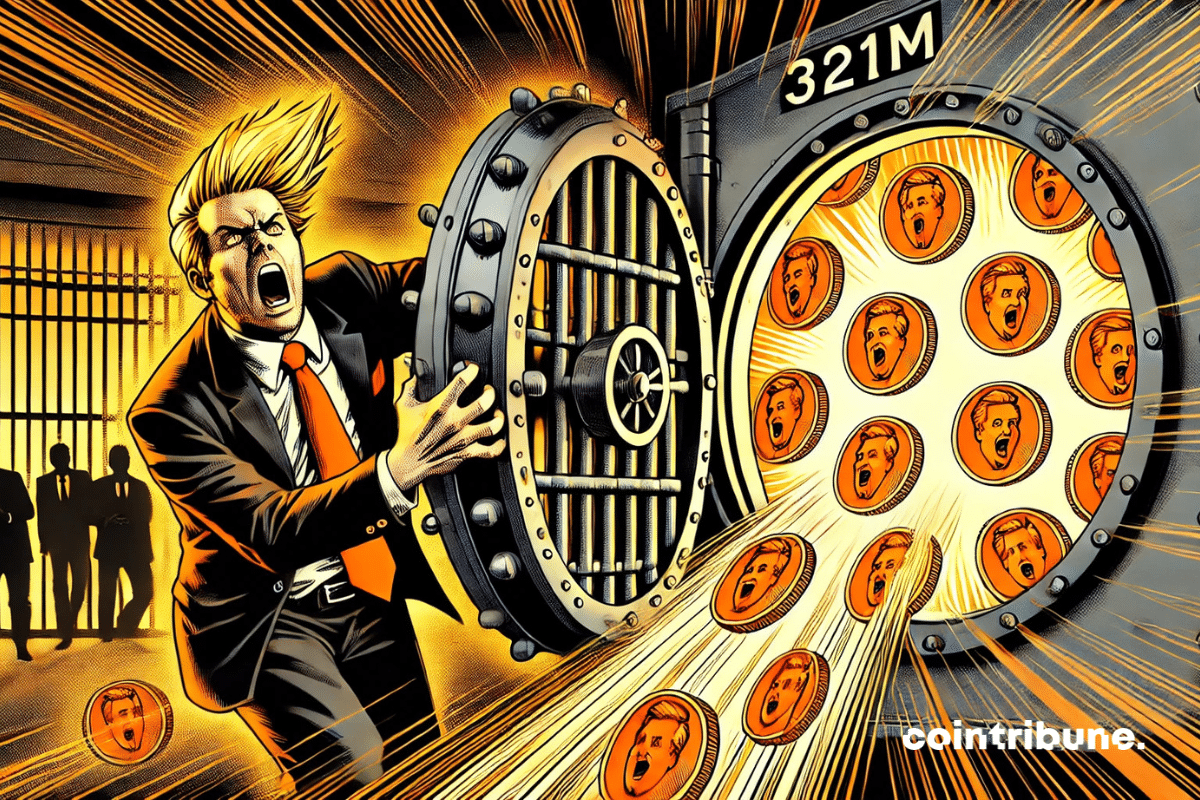
In the unpredictable arena of cryptocurrencies, unexpected twists often defy logic. The upcoming release of 321 million dollars in Trump tokens, scheduled for April 18, is proof of this. While the official memecoin of the American president has lost 89% of its value since January, this massive unlocking raises a crucial question: how can a plummeting asset still threaten the market?
As geopolitical tensions and economic turbulence create a chaotic financial landscape, tokenized gold emerges like a beacon in the storm. For the first time since the 2023 banking crisis, its trading volume surpasses the symbolic one billion dollar mark. This achievement combines technological audacity with an ancestral instinct for value preservation. However, behind this figure lie complex dynamics where political decisions, market fears, and blockchain innovation intertwine.
On April 9, 2025, American President Donald Trump announced a 90-day suspension of customs tariffs for most countries. Behind this apparent turnaround lies much more complex and overlooked issues. But what truly motivated this tariff pause?
A speculative wave approaching? Hoskinson predicts a Bitcoin orbit by the end of 2025. Discover the details of this prediction here!
Santiment, a company specializing in blockchain analysis, has just revealed that most altcoins are currently in a particularly favorable buying zone for investors.
The surprising decision by U.S. President Donald Trump to temporarily suspend reciprocal tariff rights has quickly reassured the markets and reduced the prospects of an economic recession.
Long suppressed by regulations deemed hostile, the American crypto industry may be on the brink of a major turnaround. Indeed, Donald Trump's return to the White House is accompanied by a clear shift in direction: to make the United States a bastion of financial technologies. An unprecedented discourse is taking root at the top of the state, driven by a desire to break away from the Biden era. Behind the announcements, a strategy is taking shape, promising a new momentum for cryptos and a rehabilitation of the sector in the eyes of regulators.
The American markets experienced a spectacular turnaround this Wednesday, April 9, leading to a surge in bitcoin-related stocks. The cause: the 90-day pause on tariffs announced by President Donald Trump. A partial truce that excludes China but was enough to rekindle the appetite for crypto assets.
In just a matter of minutes, bitcoin crossed a symbolic threshold: $82,000. A meteoric rise, directly linked to Donald Trump's surprise announcement. The American president declared a 90-day truce on reciprocal tariffs with several countries while toughening his stance against China. The markets, thirsty for certainty, reacted in a cascade. But behind these spectacular figures lies a more complex reality: bitcoin, far from being just a speculative asset, is establishing itself as a barometer of geopolitical tensions.
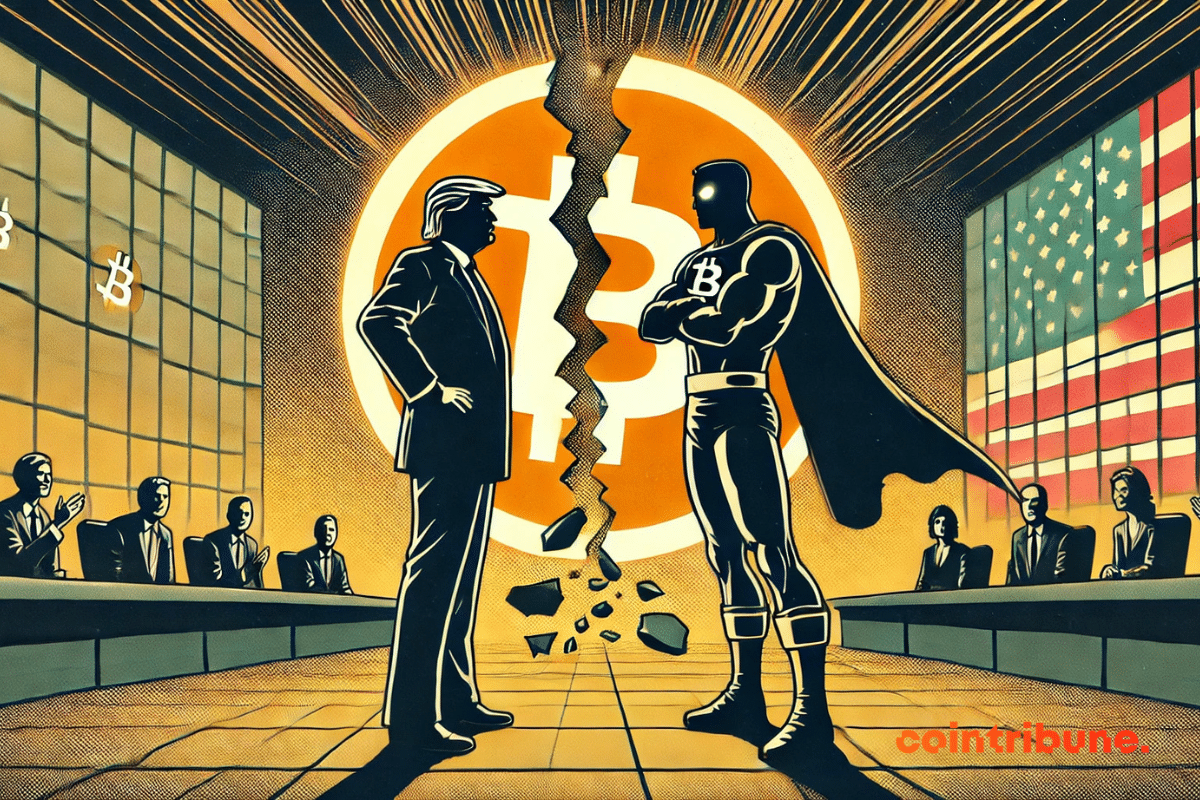
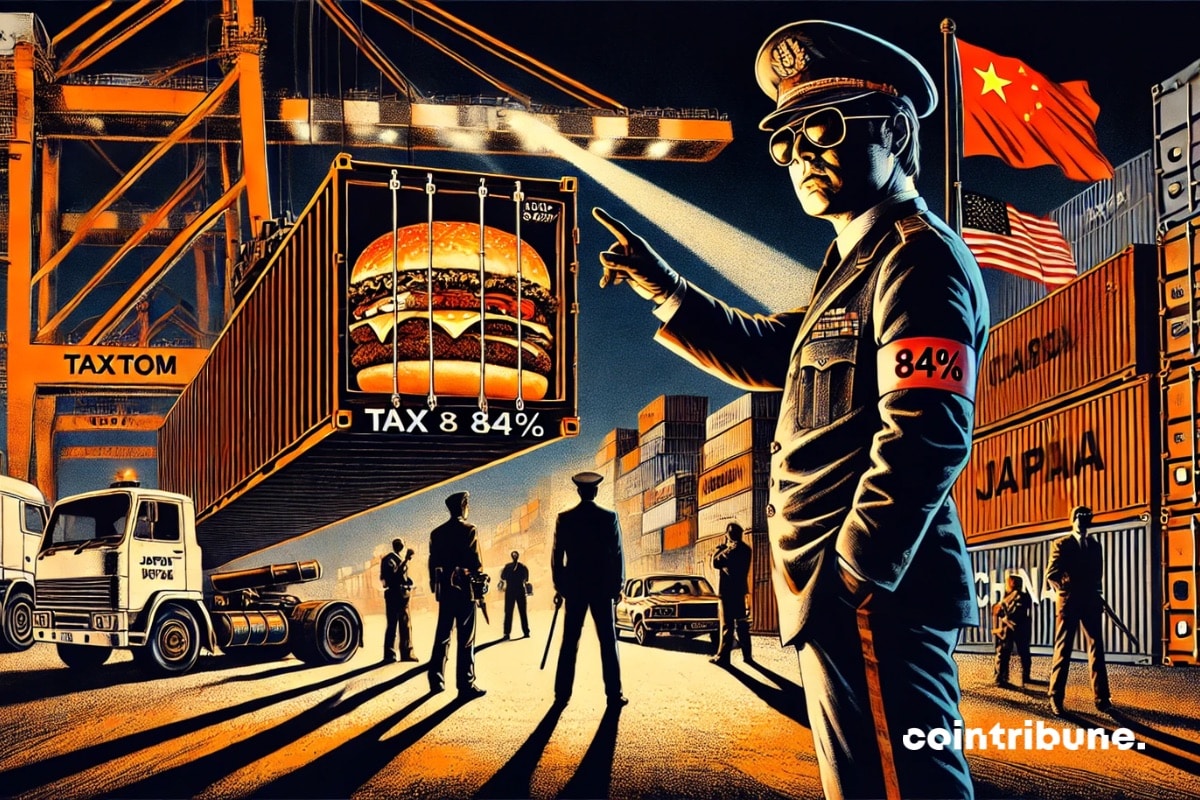
China announced on April 9 a dramatic increase in tariffs on American products, which will rise to 84% starting April 10, 2025 at 12:01 AM. This decision is a direct response to Donald Trump, who had raised tariffs on Chinese imports to 104% the day before!
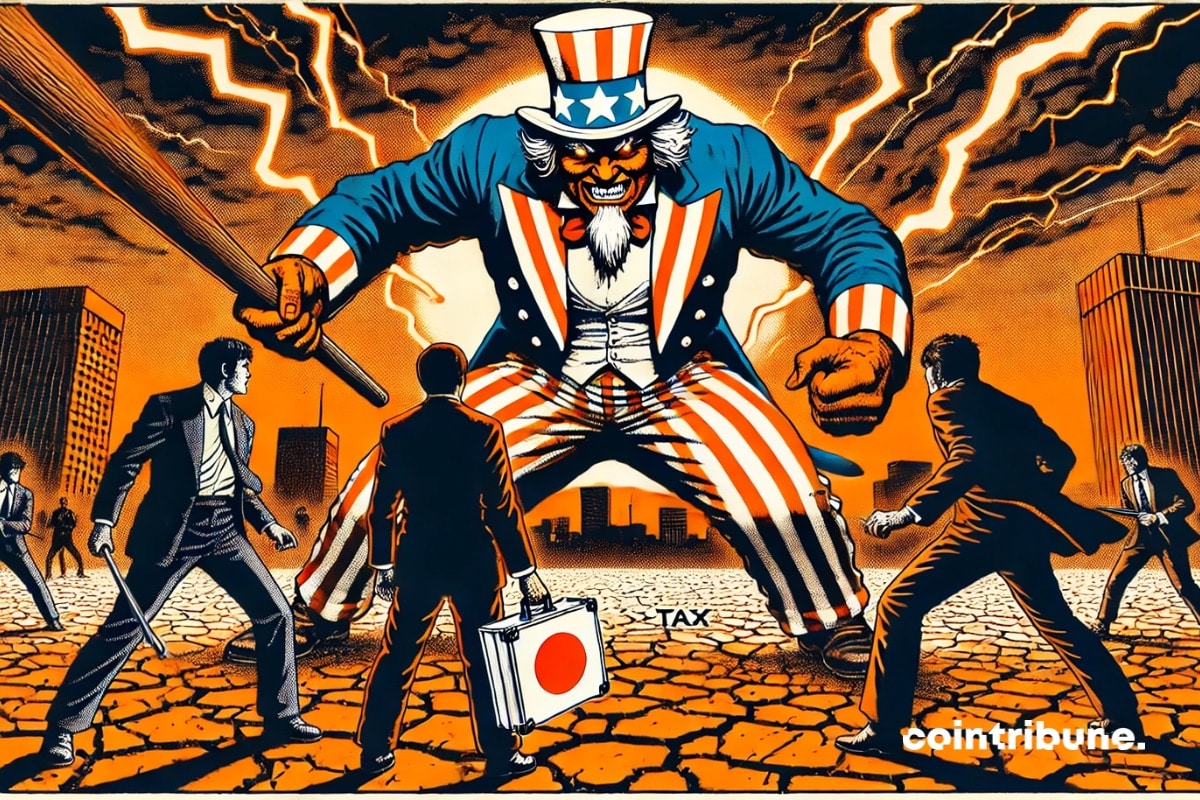
A new trade tension is shaking relations between Washington and Tokyo. Donald Trump's recent decision to impose massive tariffs on Japanese products is causing a shockwave. Japan is reacting, setting up a delegation, and trying to contain the crisis before it worsens.
The blockchain analysis company Bubblemaps revealed on Monday that over 30 million dollars worth of the memecoin MELANIA were transferred and sold discreetly, without any official communication from the project team.
According to Arthur Hayes, founder of BitMEX, China's reaction to the new American tariffs could trigger a massive capital flight towards bitcoin. This dynamic, which has already been observed in the past, could reignite the bullish trend of the crypto market in 2025.
Global trade is wobbling under the effect of a new escalation between Washington and Beijing. Donald Trump is reigniting the tariff offensive against China, rekindling a trade war that marked his previous term. Beijing, far from backing down, is deploying a firm response, determined to defend its strategic interests. This renewed showdown between the two superpowers resonates well beyond customs, threatens global economic balances, and stirs tensions in international markets. A confrontation whose implications could be felt well beyond American and Chinese borders.
In a move that further intensifies the economic tensions between Donald Trump and China, the White House announced the imposition of an additional 104% tariffs on Chinese imports. This measure comes after China has evidently maintained its own 34% duty on American exports.
Global stock markets regained some stability on Tuesday after three days of historic turbulence, despite worsening trade tensions triggered by Donald Trump's new protectionist measures.
WLFI, whose partner is the Trump family, is testing its stablecoin with a USD1 airdrop. While this initiative attracts attention, it also raises concerns about regulation.
Tether, the leader of USDT, is preparing a new American stablecoin aimed at financial institutions. This strategic project emerges as Washington moves towards a regulatory framework for these dollar-backed digital currencies.
The crypto market is regaining its colors after the "Black Monday" on April 7, which led to over one billion dollars in liquidations within 24 hours. Currently, the global crypto market capitalization stands at 2.53 trillion dollars, up 3.08% in a day, signaling a possible return of investor confidence.
Donald Trump reignited trade tensions with China on Monday, April 7, by threatening to impose "additional" tariffs of 50% on Chinese products. This new escalation would occur as soon as April 9, if Beijing does not reverse its decision to retaliate against the U.S. customs offensive. China had indeed announced an increase of its own tariffs to 34% on American imports, effective April 10.
A new trade confrontation is beginning between the two shores of the Atlantic. Through the announcement of a 20% tariff on all European products, Washington directly targets exports from the Old Continent. France, on the front line, faces the threat of a major economic shock. Between the vulnerability of strategic sectors and diplomatic urgencies, Paris must react quickly. Behind this American decision lies much more than a tariff battle: the entire architecture of transatlantic trade relations is at stake.
Bitcoin, often regarded as a safe haven against the volatility of traditional markets, finds itself this week caught in a global storm fueled by trade tensions between the United States and the rest of the world. Following a series of economic shocks, some analysts do not hesitate to compare the current situation to a Black Monday 2.0. But is it really the end of the bull market for Bitcoin or just a simple correction phase? Here are five key points to remember this week to understand the challenges Bitcoin is facing.
Trump's new taxes destabilize the markets. What are the consequences for the American economy? The full analysis here!
The Trump administration has just triggered a real commercial earthquake. Through the imposition of a universal customs tax of 10%, soon raised to 34% for certain countries, Washington is reviving an aggressive protectionist strategy. This decision, counter to multilateral rules, threatens to reconfigure global trade and is already prompting reactions from more than 50 states. In a tense international context, this major shift could well mark the beginning of a new era of economic confrontation.