Making European banks more resistant to crises and less permeable to unsecured cryptocurrencies was the aim of lawmakers from the 27-nation bloc meeting today. At the same time, an agreement was reached in favor of reforms to banking regulations.

EU lawmakers have always stated their desire to control banks' dealings with cryptocurrencies. They have now taken a giant step towards achieving this goal. EU MEPs have reached agreement on the capital requirements for crypto-banks. The latter must therefore comply with the new measures in force.
The European Union is gearing up to write a decisive new chapter. The rules governing the Markets in Crypto-Assets (MiCA) are fast approaching, promising a series of far-reaching changes for companies in the cryptosphere.
The European banking sector may witness new laws in the coming days. EU policymakers, who have never hidden their desire to regulate this sector, particularly banks' access to cryptocurrencies, are taking a giant leap and could see their dream become a reality soon. Governments across the European Union are now all in favor of strict restrictions on bank capital, a decision that could directly impact two prominent cryptos.
European authorities are actively working on establishing a framework suitable for regulating cryptocurrencies. Currently, they are particularly concerned about how to prevent tax evasion related to the crypto sector. Additionally, the UK's tax administration (His Majesty's Revenue and Customs, HMRC) has recently released a consultation document on the subject. In parallel, France aims to strengthen its measures to combat tax evasion.
The issue of tax evasion is increasingly being debated. It's one of the key issues in the regulation of crypto within the EU. Stakeholders want to speed up the process of adoption.
In October 2021, the ECB and central banks in the Eurozone began investigating the digital euro. The ECB has released a new report detailing the progress made so far and revealing the design and distribution options approved by the ECB's Governing Council.
On Thursday, April 20, the European Union's (EU) MiCA regulation on cryptos was adopted. This regulation sets a new guideline for the crypto industry. It can especially be a model for the global crypto industry. Indeed, elsewhere like in the US, it's still procrastinating.
For some time, the BRICS countries, including Russia and China, have been working to move away from the US dollar. Recently, China formalized an agreement with Brazil to trade state to state, without using the dollar. This desire for financial independence could be realized through the adoption of a digital currency.
Altme announces its conformity with the European Blockchain Services Infrastructure, backed by the European Commission and 29 countries.
The central bank of Estonia has discovered what it called ‘unlimited potential’ in its pilot tests of a blockchain-based digital euro. The trial results revealed that blockchain technology could ‘in theory’ support almost unlimited number of transactions. The experiment Following a research conducted in cooperation with several other central…
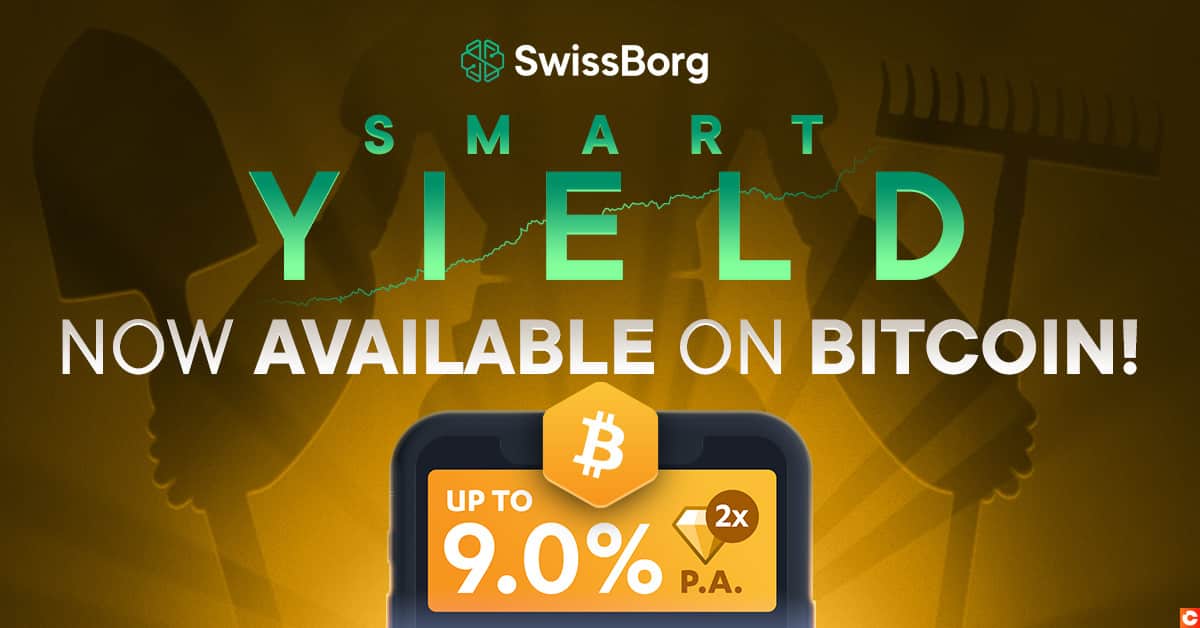
Just a week after its launch, over 22,000 SwissBorg app users have deposited the equivalent of £120 million worth of BTC. They have been earning upto 9% pa paid directly in BTC every 24 hours. This is in addition to their existing yield wallets, where you can earn up…