The AI crypto hype has gone cold, leaving speculators holding the bag. Meanwhile, RWA and Bitcoin are where the real money is flowing. The game has changed.
The intersection of traditional finance, artificial intelligence, and blockchain technology has just reached a historic milestone, thereby definitively redefining the contours of the global computer industry. While financial markets closely scrutinize the allocation of technological capital, it is now the cash flows of silicon giants that play the main role of catalyst in the diversification strategies of actors in the crypto sphere. Today this dynamic is propelled to the forefront of economic news by a financial operation of unprecedented scale by the undisputed leader of graphics chips Nvidia. The company's decision to raise massive funds to expand its infrastructure spectacularly validates the operational shift initiated by the largest crypto mining farm operators.
Nvidia takes a new step in open artificial intelligence with Nemotron 3 Ultra, its most powerful model to date. Presented at Computex 2026 in Taipei, this system impresses with its speed and reasoning capabilities. Yet, despite this major advance, Chinese labs continue to dominate the global open source AI rankings. Can Nvidia really catch up?
While Nvidia builds cathedrals for artificial intelligence, bitcoin miners bring out their secret plans. Wall Street applauds weakly, then discreetly recounts the cracks under the global digital foundations.
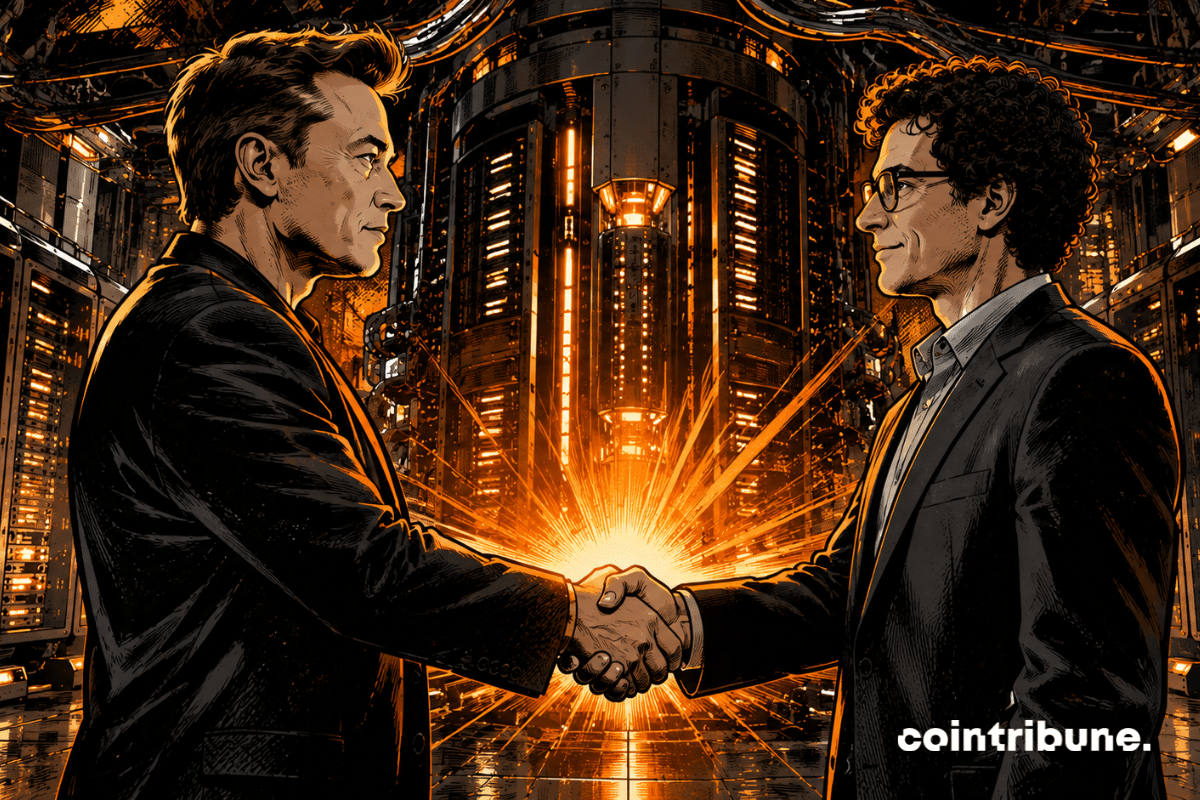
For months, Elon Musk publicly attacked Anthropic. Today, however, the billionaire opens the doors of one of the most powerful supercomputers on the market to them. Behind this surprise agreement between SpaceXAI and the company behind Claude lies a reality that has become central in the AI war: dominance no longer depends only on models, but especially on access to GPUs, energy, and infrastructures capable of powering the next generation of artificial intelligences.
DeepSeek launched its V4 models on April 24, 2026, optimized for Huawei Ascend chips and marking a major breakthrough in Chinese AI. With performance rivaling GPT-5.4 and Gemini, this open-source model could redefine global standards.
Nvidia remains a heavyweight in the American stock market, but a clear signal has emerged from institutional portfolios. In the fourth quarter of 2025, thousands of funds reduced their exposure, even though the group retains a massive hold on the capital. Institutions liquidated more than 70 billion dollars of Nvidia shares in the fourth quarter of 2025. According to data relayed by Finbold from institutional holdings, 2,627 funds lightened their positions, for a total of 440,075,433 shares sold, or approximately 73.5 billion dollars based on a price close to 167 dollars.
The crypto market is seeing the emergence of a new growth engine: decentralized artificial intelligence. In a few weeks, Bittensor has established itself as one of the most watched projects, with a valuation close to 1.5 billion dollars driven by a rapid surge in its tokens. This movement is not only speculative. It relies on concrete technological advances and the notable support of influential tech figures, pushing the project into a new dimension.
Nvidia stock collapses after the announcement of new American restrictions on AI chip exports. A decision that threatens the tech giant's growth and shakes markets.
Nvidia’s blockbuster results gave markets a late boost, with AI-driven revenue surging sharply. Yet behind the rally, investors remain divided on whether the current pace of AI spending can truly go the distance.
Is Bitcoin bored? Not really. Between wild OGs, voracious ETFs, and complicit regulations, the beast calms down... but could bite again where it's least expected.
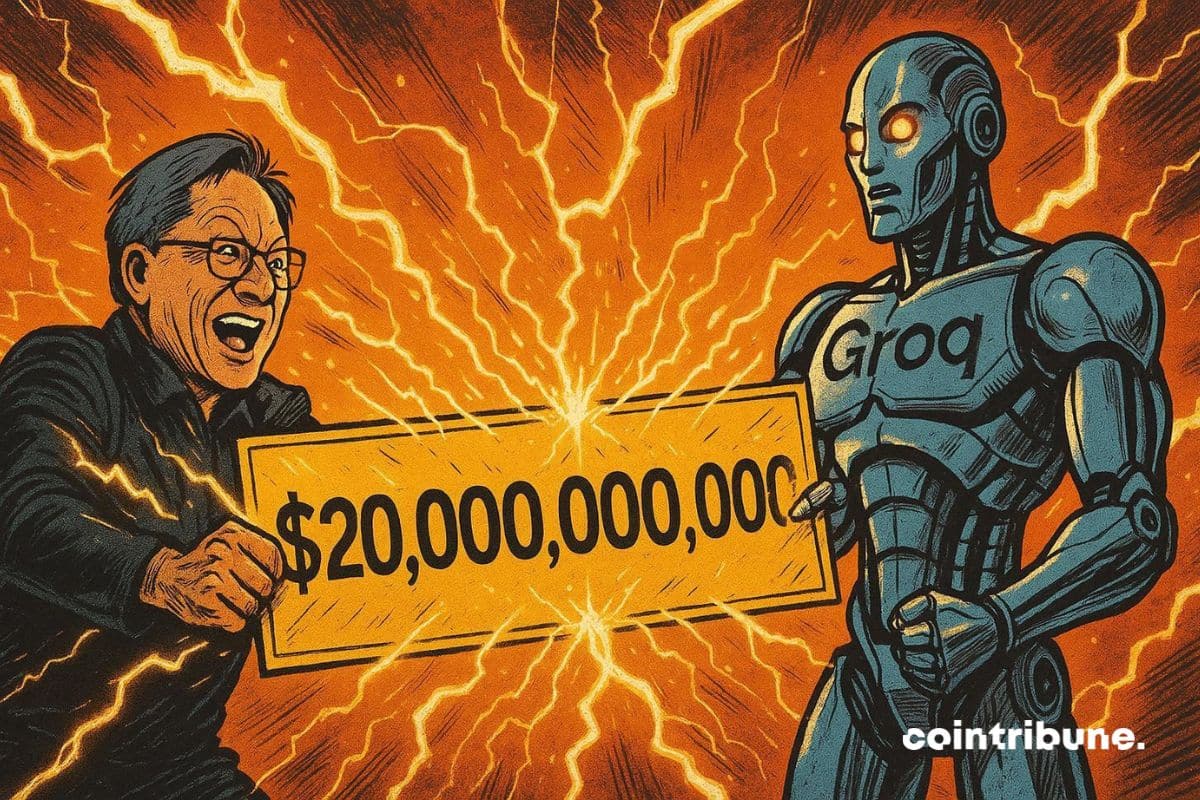
Nvidia has just signed a $20 billion check to acquire Groq's assets, an AI gem with chips 10 times faster. This historic acquisition will reshape the semiconductor market and impact even cryptocurrencies. Analysis of a masterstroke that could change everything, from data centers to investor portfolios.
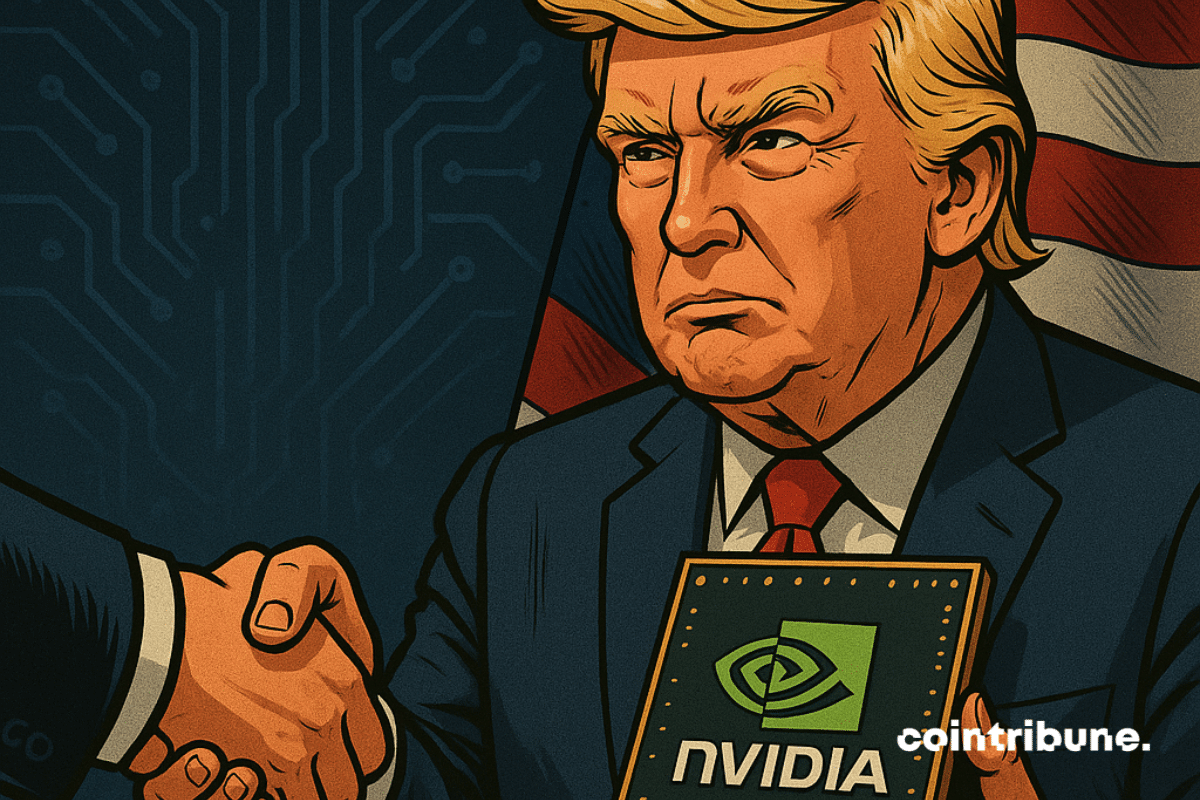
In 2025, Nvidia is no longer just a capitalization machine. The company has found another acceleration, this time political. Donald Trump, against part of his own camp, chose to open a very costly door for it.
Alphabet is back in focus after a Bloomberg report indicated rising investor confidence in its in-house semiconductor strategy. Interest in the company’s tensor processing units (TPUs) is reshaping expectations for future revenue and altering market sentiment. Many investors now see the chip program as a potential long-term growth driver, not just a tool used within Google Cloud.
While Wall Street panics over the AI bubble, Softbank sells everything, invests everywhere... and hits the jackpot! But how long will the billion-dollar machine run without bugs?
Nvidia has just made its name in history by becoming the first company to exceed 5,000 billion dollars in market capitalization, ahead of Apple, Microsoft, and Amazon. This record is not just a financial feat. It reflects a changing era, where artificial intelligence, supercomputers, and cloud infrastructure are reshaping the balance of power in global tech.
Valuations of artificial intelligence are soaring, sometimes without profitability to support them. Voices are rising, recalling the excesses of the 2000 Internet bubble. Disproportionate weight of sector giants in indices, massive investments, widespread enthusiasm: signs of a possible overheating are accumulating. In this climate of euphoria, a question reemerges: is AI the engine of a new economic era or that of a speculative bubble ready to burst?
Prediction platform Polymarket is broadening its reach into traditional finance with a new feature that lets users bet on stock and index movements. The move highlights the platform’s growing ambition to connect crypto-native speculation with mainstream financial markets, as investor interest in event-based trading continues to accelerate.
Nvidia becomes the world’s most valuable company at $4.68 trillion, fueled by AI demand and global expansion.
In the global battle to dominate artificial intelligence, computing power has become the new currency. Nvidia is set to inject up to 100 billion dollars into OpenAI to build one of the most ambitious AI infrastructures ever conceived. This partnership marks a turning point, as the time for laboratory promises is over, and the era of massive AI industrialization begins. Such an initiative could reshuffle the cards of the sector and redefine technological power relations on a global scale.
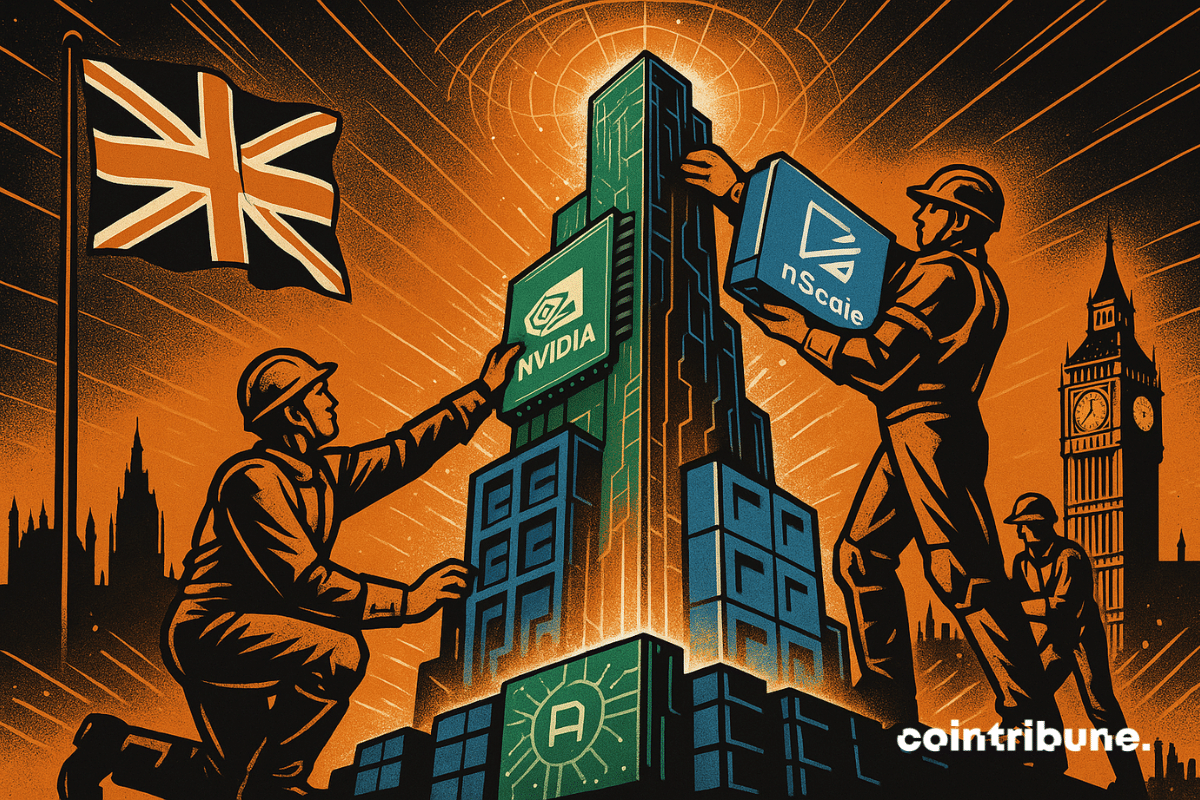
Nvidia joins the UK AI plan with a check for 683 million dollars. By betting on nScale, an entity stemming from crypto mining, the American giant bets on a sovereign infrastructure at the heart of Europe. This operation, as much economic as geopolitical, marks a turning point, as artificial intelligence is no longer an experimental field but a strategic lever of national power.
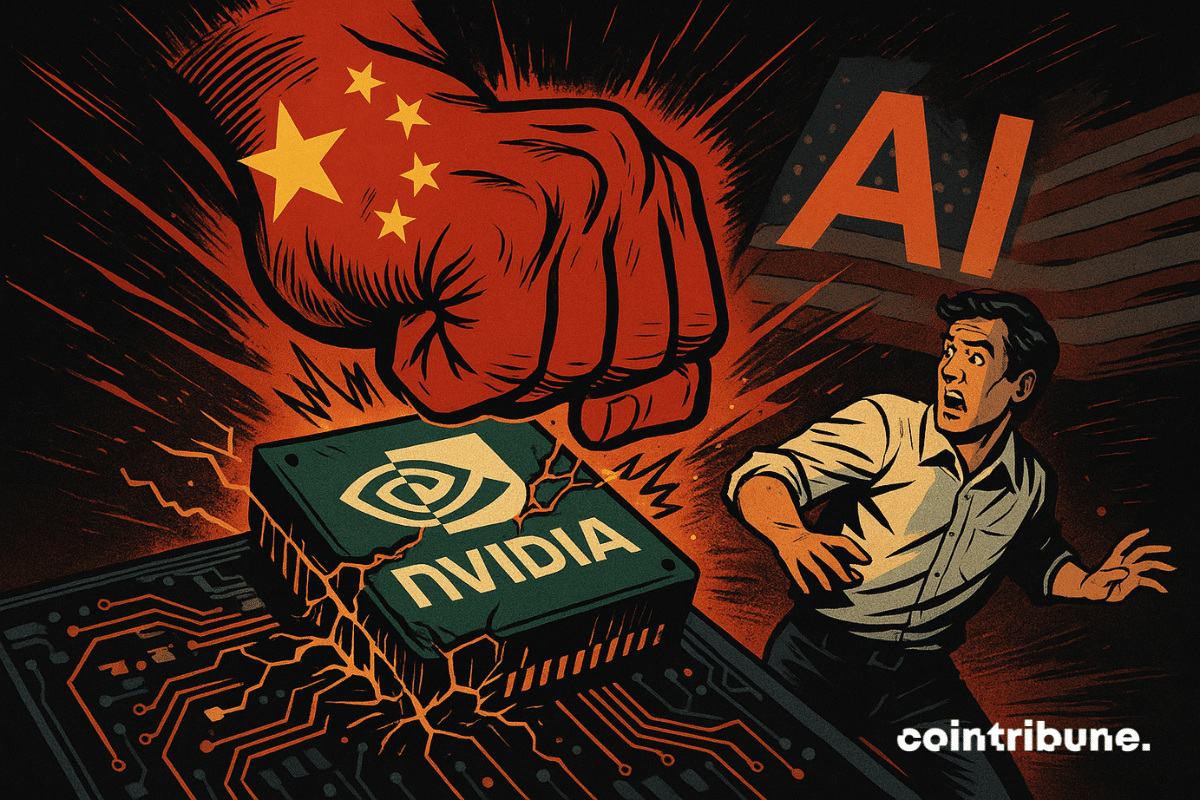
The technological battle between Beijing and Washington reaches a new level. According to the Financial Times, China has ordered its digital giants, including Alibaba and ByteDance, to immediately suspend their purchases and tests of Nvidia's latest artificial intelligence chips, the RTX Pro 6000 D. This decision illustrates the rising tensions around semiconductors, now at the heart of the geopolitical and economic rivalry between the two superpowers.
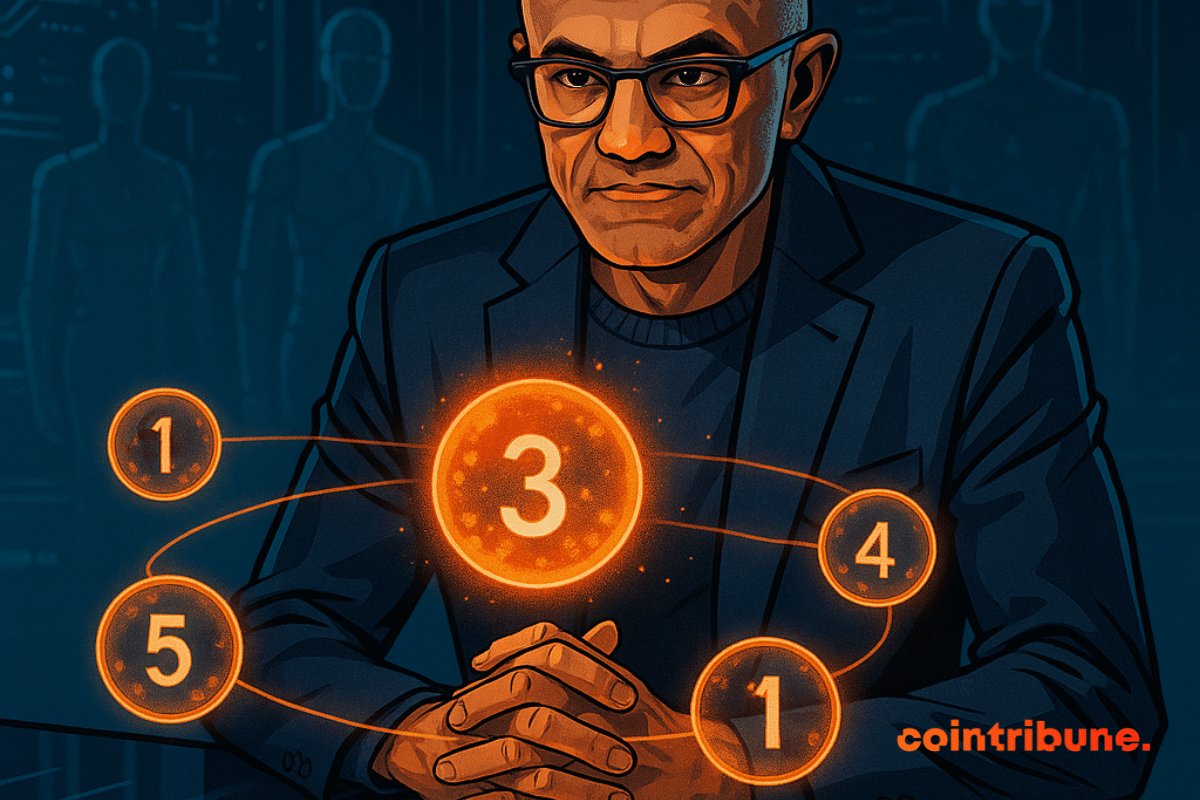
Artificial intelligence is no longer an option for leaders; it has become an extension of their executive brain. While many employees fear that AI will eliminate their jobs, CEOs use it as a strategic lever to stay competitive. Satya Nadella, head of Microsoft, recently revealed the five GPT-5 prompts he inserts daily into Copilot to boost his work. Concrete evidence that, even at the top, AI is not a gadget but a tool for professional survival.
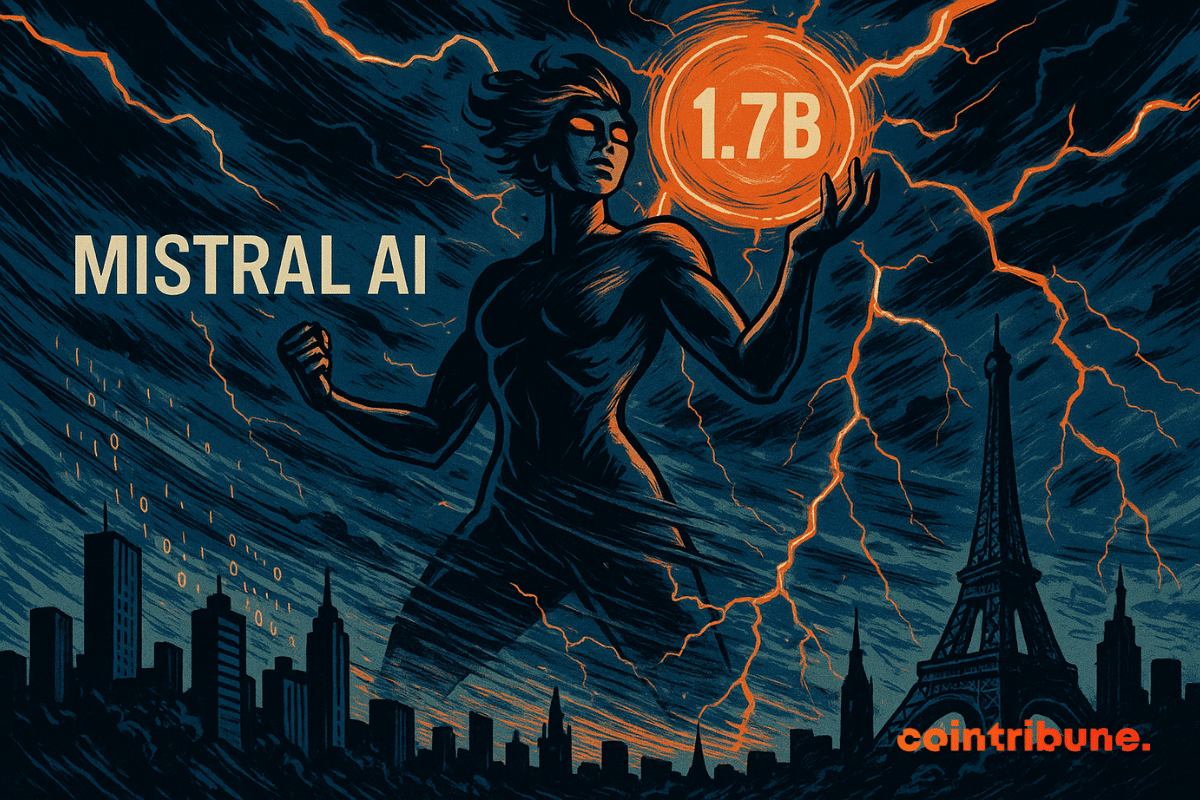
While OpenAI blazes at 500 billion, the start-up Mistral inflates its sails to 11.7 billion. Cocorico or European mirage? AI has found its Gaulish rooster.
With every Nvidia earnings release, the crypto market holds its breath. For several quarters, the semiconductor giant's performance seems to evolve in parallel with that of bitcoin. Enough to intrigue traders, increasingly watching this quarterly event as a leading indicator. Even before the announcement of the second quarter, attention was not only on Wall Street but also on the blockchain order books.
In the era of foundation models and continually growing datasets, computing resources are one of the most significant barriers facing developers and researchers. While the cloud offers scale, many builders now look for local alternatives that deliver speed, privacy, and flexibility.
The fragile balance between artificial intelligence and cryptocurrencies is about to be disrupted. DeepSeek, the Chinese AI gem, is about to launch a chip entirely developed and manufactured in China. This announcement, seemingly purely technological, could trigger a real earthquake in the US markets… and crypto would not come out unscathed.
AI: Nvidia releases a $6,500 chip to circumvent US sanctions and maintain its presence in China. Details in this article!
We are still waiting for those happy days when it would rain dollars, to the point of no longer knowing how to spend them. However, Wall Street and local businesses seem to be struggling. The CEO of Nvidia, Jensen Huang, is sounding the alarm. The technological and trade wars initiated under Trump have not finished causing damage. While some signs of peace appear after discussions in Geneva, American companies are still suffering heavy losses. Nvidia is on the front line and is questioning the future of an economy focused on AI.
American tech giants are uniting around a global-scale project in the United Arab Emirates: the artificial intelligence data center "UAE Stargate." This colossal infrastructure, backed by the biggest names in Silicon Valley, marks a strategic turning point in the global race for computing power. But what does this rapprochement between the United States and the Emirates really conceal in the current geopolitical context?