With a low of deposits on exchanges, is Bitcoin showing signs of an imminent new bull run? Analysis.
The American economy, that giant which once seemed untamable, today wobbles on a tightrope, caught between heightened trade tensions and a loss of domestic confidence. While some spoke of a mere gust of wind, the storm could very well be of unexpected violence.
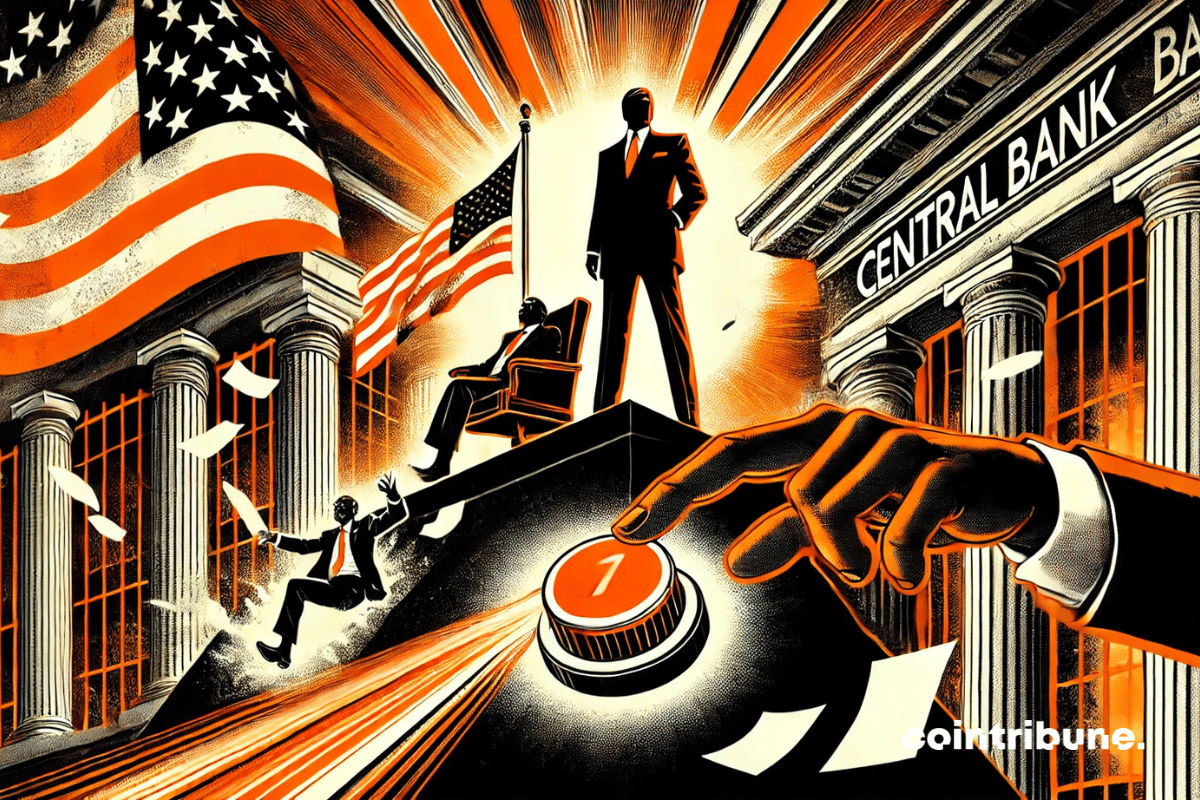
When Donald Trump challenges the bond market, it is not just a political confrontation: it is a systemic shock. The American president, driven by an interventionist economic vision, has triggered a wave of instability by upsetting the balances of interest rates and Treasury bonds. Opposing him is a relentless market that did not take long to react. This showdown, far from being anecdotal, reveals the fragilities of a strained economy and revives the debate on the reliability of traditional assets in times of uncertainty.
Markets only need a stir to get excited. This time, it is Donald Trump who has rekindled the flame by suddenly softening his stance on two hot topics: the Federal Reserve and Chinese tariffs. "No plan to replace Jerome Powell," he said, breaking with his past vehement criticisms. He also opened the door to tariff relief on Chinese imports. Two gestures of appeasement that immediately boosted global financial markets, seeking reassuring signals.
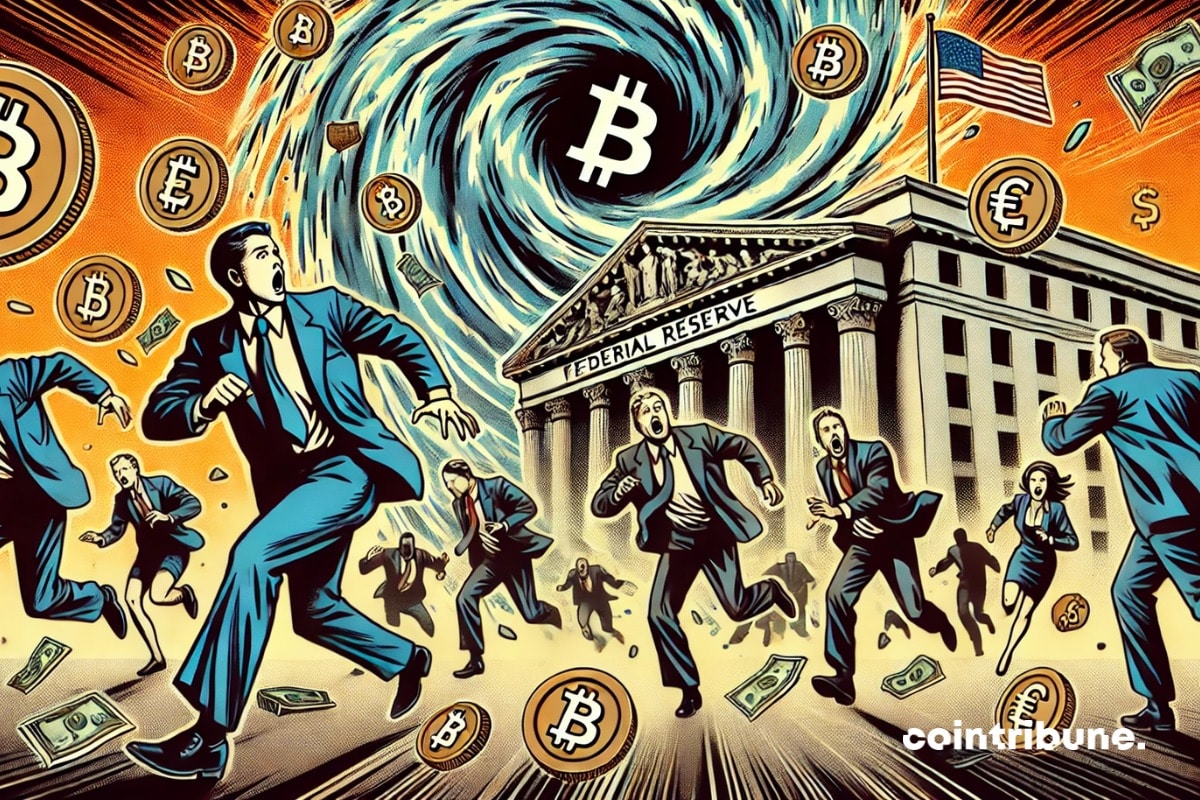
While Wall Street is emptying its pockets, Bitcoin is puffing its chest, flirting with the peaks and attracting billions — crypto is becoming the new refuge for capricious capital.
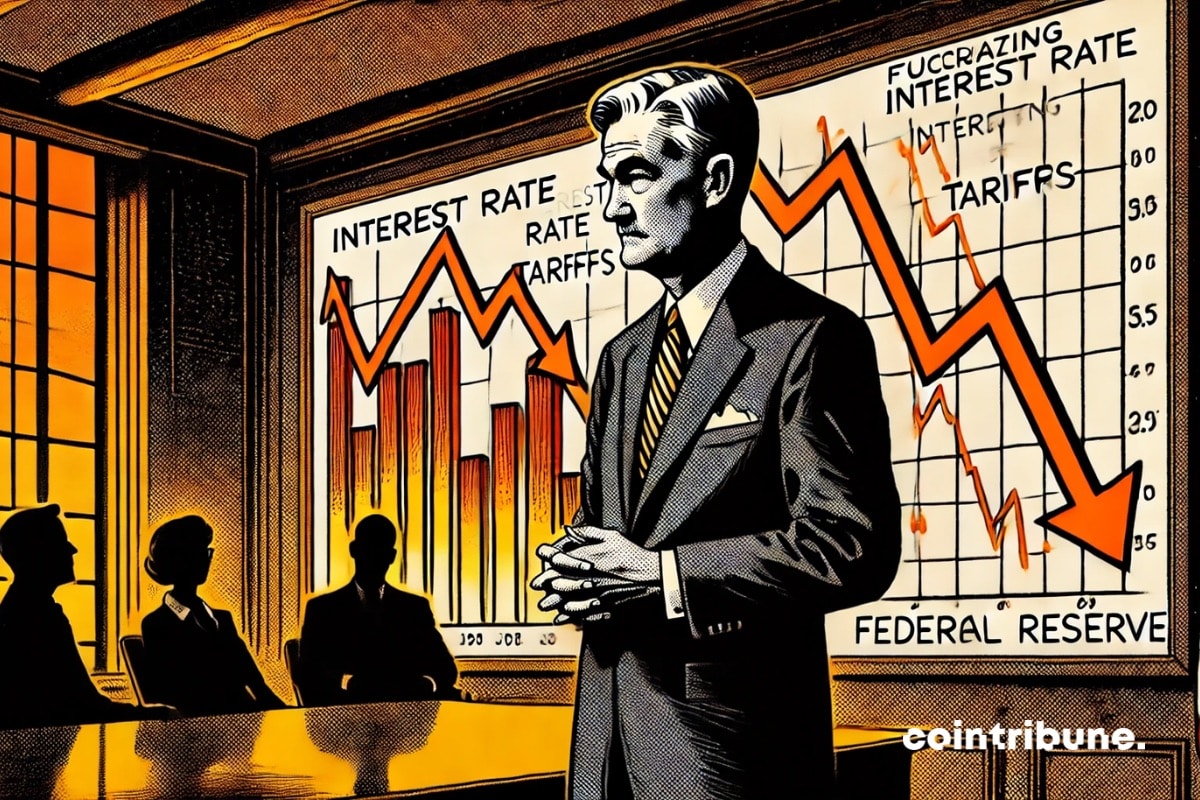
Jerome Powell, the chairman of the Federal Reserve (Fed), is facing increasing political pressure from Donald Trump, who is calling for an immediate reduction in interest rates. But Powell has no intention of yielding. Loyal to the independence of the institution he leads, he prefers to base his decisions on economic data rather than political demands.
The shadow of Donald Trump once again looms over American financial stability. His recent threat to fire Jerome Powell, chairman of the Federal Reserve (Fed), is not just another provocation. It is a political gamble that could crack the very foundations of monetary independence. A scenario where the impulsiveness of one man overturns the global economic chessboard. But behind the loud declarations lies a very real systemic risk, candidly analyzed by influential voices like Anthony Pompliano. Explanations.
In 2025, record US debt issuance is worrying the markets. Is crypto becoming the last refuge? Analysis.
In a recent explosive statement, Donald Trump did not mince his words regarding Jerome Powell. The American president stated that the "resignation of the Fed chief couldn't come soon enough" and that he would not hesitate to fire him if he wanted to.
Donald Trump has renewed his attacks against Jerome Powell, the chairman of the Federal Reserve. He accuses him of not acting quickly enough to lower interest rates. Amid political tension, this criticism reignites the debate over the FED's independence and its growing influence on financial markets.
Jerome Powell's words have rarely sounded so heavy. Faced with a weakened economy and renewed trade tensions, the Fed chairman warns: new tariffs could plunge the United States into a zone of turbulence. Growth under pressure, inflation lurking, political uncertainties: the Federal Reserve must now contend with increasingly contradictory variables, risking losing control over the country's economic balance.
While economists count illusions, Bitcoiners sense the truth. False data, weakening dollar: a new monetary dogma is being born before our eyes, far from official reports.
In response to the turbulence in the financial markets amplified by Donald Trump's trade policies, Susan Collins, president of the Boston FED, announced that the Federal Reserve is preparing to intervene. Among the options considered to stabilize the markets, a reduction in interest rates could become inevitable if the situation deteriorates.
Binance is giving away bitcoins, traders are balancing between euphoria and price headaches, and the CPI hovers like a sentence. The question remains who will suffer: the bulls or the bears.
Bitcoin is facing increasing pressure since the resurgence of the trade war initiated by Donald Trump. While many hoped to see the asset detach from the influence of Wall Street, reality is catching up with the markets: the rise in U.S. bond yields is dampening initial enthusiasm.
Donald Trump recently triggered an economic shockwave by announcing new tariffs. In response, Jerome Powell, the Chair of the Federal Reserve (FED), warned that these measures could exacerbate inflation while slowing down growth. What will be the impact on interest rates? Find out here.
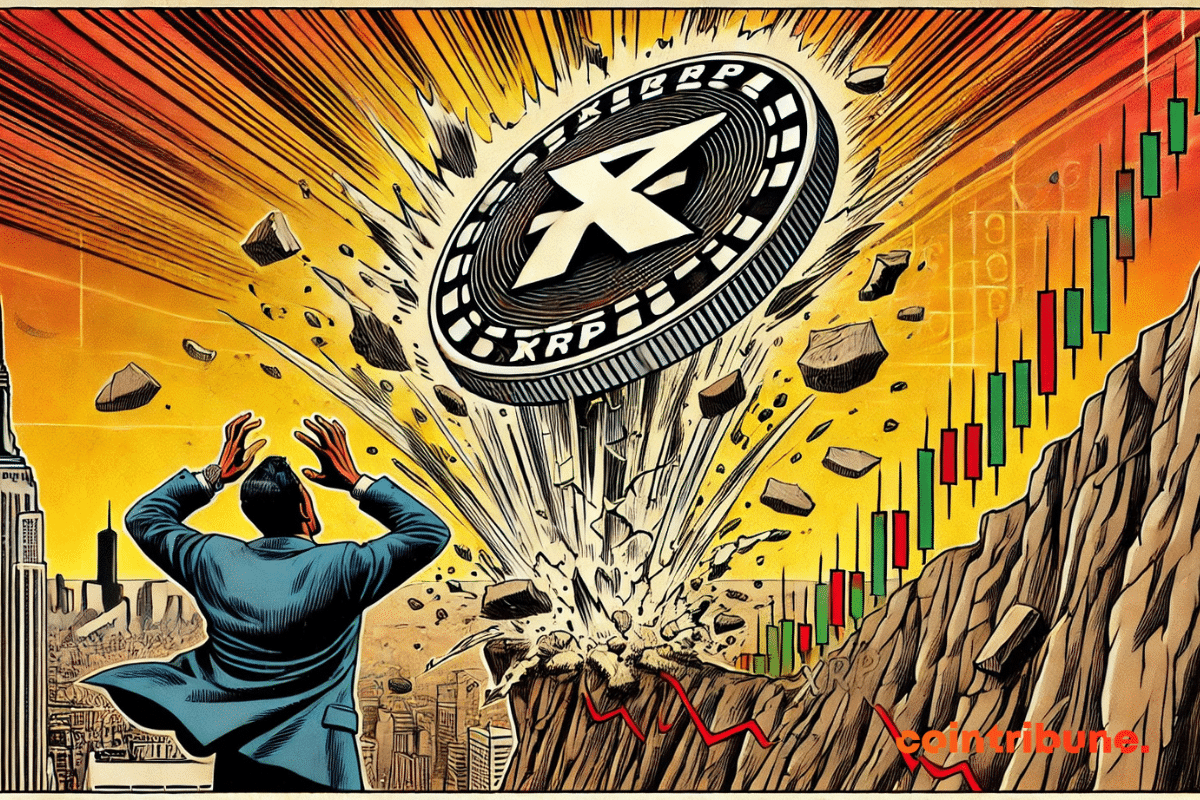
The crypto market is wavering, and XRP finds itself on the front line. After a phase of technical instability, the situation deteriorated with the announcement of new customs tariffs by Donald Trump on automotive imports. A double blow, amplified by the lowered expectations for a monetary easing from the Fed. In this uncertain climate, analysts fear a 40% drop, threatening to plunge XRP into a downward spiral. Amid alarming technical signals and macroeconomic tensions, the market is holding its breath.
While the stock market stumbles, gold dances on the ashes of commercial promises. Trump stirs the embers, the Fed holds its breath in this theater of golden uncertainty.
All eyes are on the PCE index, a barometer of inflation in the United States. Due on March 28, this figure could trigger a upheaval in risky asset markets. Bitcoin, in the crosshairs, could be the first beneficiary or the first victim. In a climate of geopolitical tensions and monetary uncertainties, this publication represents a decisive test to gauge speculative appetite and the strength of the bullish momentum in cryptocurrencies.
While BlackRock sees the recession as a springboard for bitcoin, the Federal Reserve cools the enthusiasm for crypto. Between bold predictions and economic warnings, the market navigates troubled waters.
The crypto market is once again in a period of uncertainty, suspended on a single question: what will be the next decision of the American Federal Reserve? While bitcoin fluctuates below $85,000 and the crypto market's fear and greed index collapses to 23, investors hold their breath. The Federal Open Market Committee (FOMC) meeting concludes today, and all eyes are on Jerome Powell.
The markets are currently buzzing around a growing hypothesis: the American Federal Reserve (FED) could end its quantitative tightening (QT) program by May. This scenario, which seemed unlikely just a few months ago, is now considered a certainty by bettors on the Polymarket platform. A decision that, if realized, could have major consequences for the crypto market.
The crypto market is buzzing, traders are accumulating, stablecoins are soaring. A prelude to a bullish party or the swan song before an unexpected crash? The riddle persists.
The U.S. Securities and Exchange Commission (SEC) may soon abandon its initiative to require certain crypto companies to register as exchanges. Mark Uyeda, acting chairman of the SEC, has asked the agency's teams to explore ways to waive this regulatory change.
Financial and crypto markets continue to experience severe declines as investors await inflation data and the FED's decisions. Despite favorable regulatory advancements, Bitcoin and Ethereum are falling, in hope of a relief that will certainly come from the upcoming CPI and FOMC data. But what will it really be?
Investors are closely monitoring every signal from the American Federal Reserve (Fed), whose monetary policy could trigger a bear market. While some were hoping for rate cuts as early as 2024, the latest statement from Fed Chair Jerome Powell has dampened those expectations. The absence of rate reductions could put pressure on financial markets, particularly on risky assets like Bitcoin. Economist Timothy Peterson warns: if the Fed does not cut rates by 2025, the Nasdaq could collapse, dragging the cryptocurrency market along with it. A new correction of Bitcoin below $70,000 is now a serious possibility.
In a crazy quest to save the American economy, VanEck sees bitcoin as a miracle cure. Could a strategic reserve of cryptocurrency really wipe out 21 trillion in debt by 2049?
The American economy is facing a dynamic that could disrupt the existing balances: demand for long-term Treasury bonds is weakening, calling into question the strength of the dollar and fueling new economic uncertainties. As the Federal Reserve remains committed to a delicate monetary policy and inflation struggles to slow down, Bitcoin finds itself at a strategic crossroads. Historically viewed as a speculative asset, it is now seeing its status evolve as some U.S. states consider incorporating it into their reserves. The central question is thus: will Bitcoin suffer the effects of this uncertainty or will it seize the opportunity to assert itself as an alternative safe haven?
While the Fed hesitates between caution and action, inflation runs rampant, and crypto wavers, poised for a week of financial roller coasters.
The impact of the latest U.S. inflation data was immediately felt on the crypto market this Wednesday, February 12, 2025. Bitcoin fell below the $95,000 mark following the announcement of higher-than-expected inflation, while Donald Trump continues to push for a reduction in interest rates.