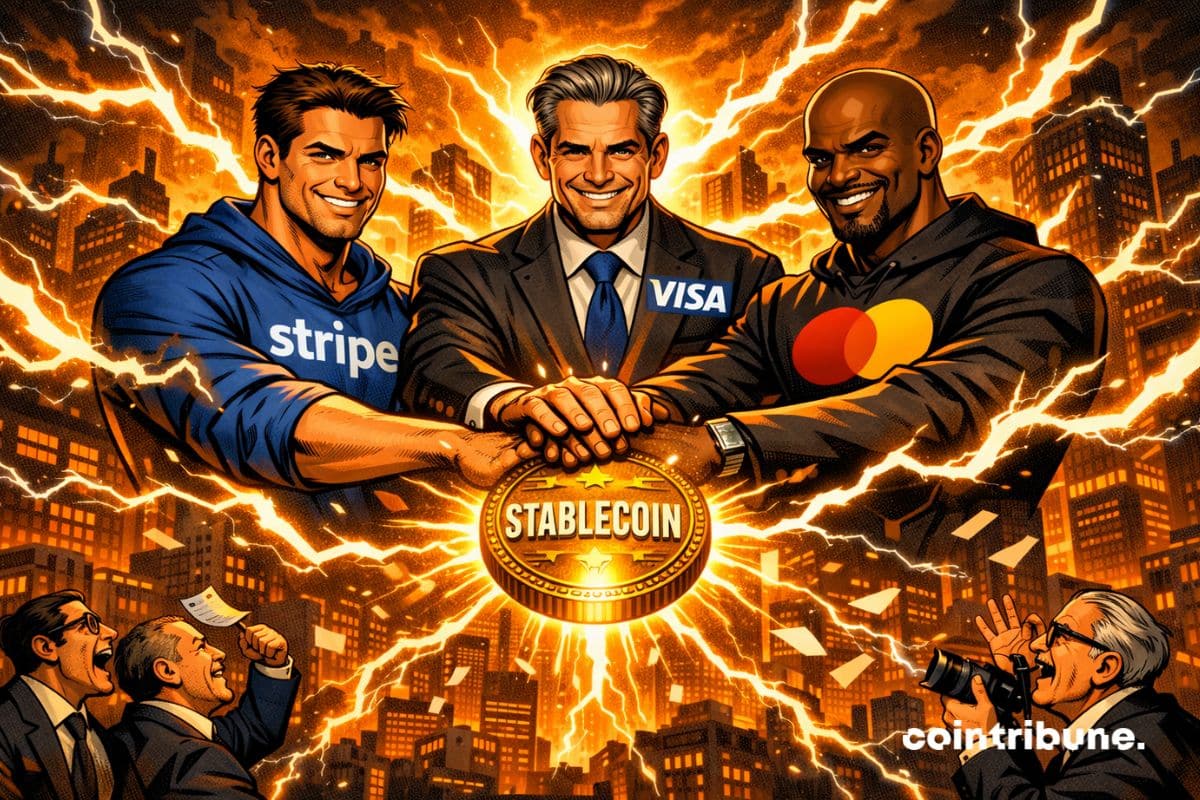
Stripe, Visa and Mastercard unite to launch a stablecoin platform. Circle collapses by 11%, Tether trembles. Who will dominate the $319 billion market? The war is declared, and the stakes are huge.


Gold joins your wallet! Tether and Fasset have just launched the very first gold-backed Visa card (XAUt). Revolution or gimmick? We explain everything to you.
Since their withdrawal from the Russian market in 2022, Visa and Mastercard have been gradually losing ground. But this time, Moscow is crossing a new threshold. The Bank of Russia now believes that the two American giants no longer have a place in the national financial ecosystem, as their market share has fallen below 17%.
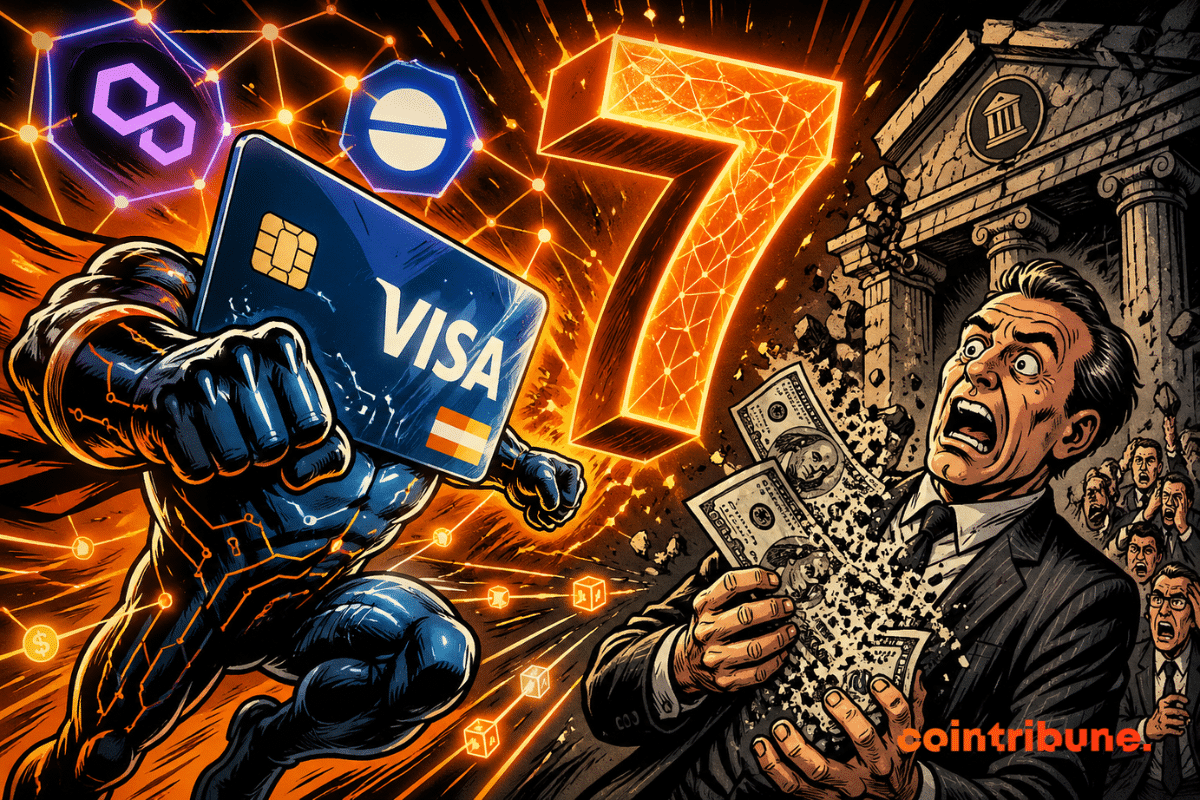
Visa is betting big on stablecoins with Polygon and Base. $7 billion at stake. A direct threat to traditional banks? Full analysis here.
The digital euro is taking on a more political than technical turn. The ECB wants to build an open European payment infrastructure capable of reducing the continent's dependence on Visa, Mastercard, and major foreign digital wallets.
Commerce enters a new phase where humans might no longer be at the center of the purchasing act. By launching a platform dedicated to autonomous payments, Visa relies on artificial intelligence agents capable of searching, deciding, and paying without direct intervention. This advancement marks a break in the organization of digital exchanges and accelerates the emergence of a model where machines and transactions become inseparable.
Elon Musk has just officially announced the public launch of X Money for the month of April. The financial super-app he has promised for years is finally taking shape, but without any trace of crypto. Enough to surprise, and perhaps worry, some industry players.
X is preparing to introduce Smart Cashtags, a new feature that will let users view stock and cryptocurrency data directly from their timelines. The rollout is expected in the coming weeks, according to X head of product Nikita Bier. Alongside the feature launch, the company is tightening rules around spam and automated activity linked to crypto promotions.
Venture capital and institutional investors are moving back into digital asset companies at the start of 2026, even as crypto markets remain under strain. Industry data shows around $1.4 billion committed through venture rounds, ecosystem funds, and public listings. Activity spans on-chain finance, market infrastructure, and consumer-facing platforms, pointing to renewed confidence in select areas of the sector.
BlackRock’s 2026 Thematic Outlook positions Ethereum as core financial infrastructure rather than a speculative asset. The report frames the network as a potential “toll road” for tokenized assets—capturing value through issuance, settlement, and transaction fees as real-world assets move onchain. For investors, the central question is whether growth in tokenization activity can translate into durable economic demand for ETH.
At Visa, it's no longer a toss-up with crypto: 91 million later, the card becomes the new favorite toy of decentralized financiers. To be continued…
Visa has introduced a stablecoins advisory practice to help businesses and financial institutions adopt and implement stablecoin solutions amid growing market demand.
Visa is taking another major step in digital payments with a new pilot program that allows U.S. businesses to send stablecoin payouts directly to crypto wallets. Announced at the Web Summit in Lisbon, the initiative connects traditional bank accounts to blockchain-based transfers, aiming to speed up cross-border payments and support the expanding freelance economy.
Visa is incorporating four stablecoins across four blockchains to enhance global payments and streamline transactions.
Mastercard is in late-stage negotiations to acquire stablecoin infrastructure provider Zerohash for an estimated $1.5 to $2 billion, according to a Fortune report citing five people familiar with the matter. The deal would position Mastercard among a growing number of global financial firms investing heavily in blockchain-based payment technology.
Wall Street trembles, BlackRock applauds, and the dollar digitalizes without asking the Treasury's opinion… Stablecoins are taking hold, while crypto weaves its planetary monetary web.
Cloudflare has partnered with Visa, Mastercard, and American Express to help shape the future of digital payments through a secure foundation for “agentic commerce.” The collaboration aims to develop authentication systems that enable trusted software agents to make purchases and payments autonomously—while protecting merchants from fraudulent bots.
Stripe, once skeptical, now has its own in-house blockchain. Officially for stablecoins, unofficially to outshine the crypto heavyweights. Engineers grumble, Collison celebrates.
The payment world is shifting. Between crypto expansion and offensive strategy, Visa is redefining the rules of a game that has become global.
The era of plastic is coming to an end. As Visa and Mastercard struggle under the weight of opaque fees and archaic delays, a new form of infrastructure is quietly taking power. Stablecoins, long relegated to the realm of traders' tools, are now establishing themselves at the heart of the Web as the "default settlement layer." This is no longer a futuristic hypothesis: it is a reality that is grounded in numbers and usage.
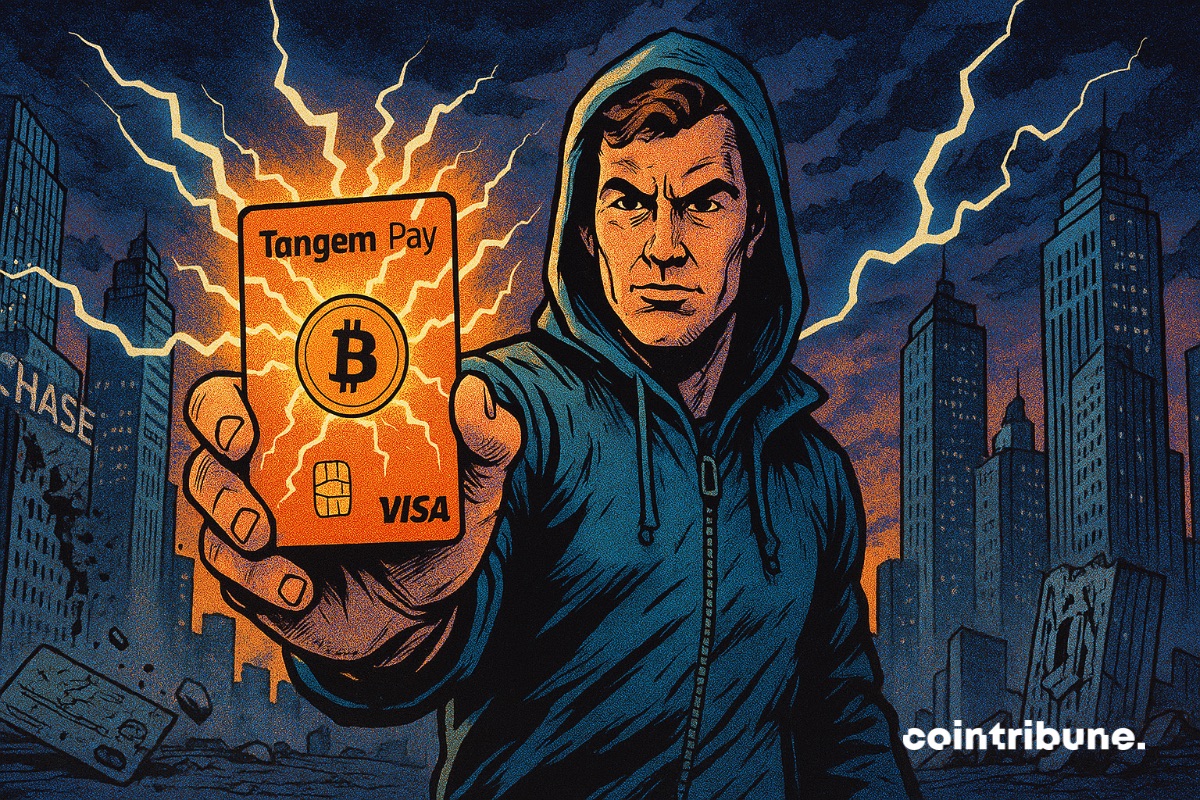
What if your Visa card became your ultra-secure crypto wallet? Discover Tangem Pay, the revolution that combines self-custody, bankless payments, and Web3 technology. An innovation that could transform your spending... into financial freedom.
"Ledger sorts its Visa crypto card in the USA with Bitcoin cashback. Discover all the details in this article."
The Avalanche Foundation, in collaboration with Rain, has just announced the launch of the Avalanche Card this Wednesday. This new card will allow users to spend their cryptocurrencies wherever Visa is accepted, with initial support for USDC, USDT, AVAX, and wAVAX.
The figure hits like a clap of thunder: 30% of Mastercard transactions are now tokenized. A silent revolution, almost sneaky, that redraws the boundaries of finance. Behind this percentage lies a strategic shift, a mockery of the skeptics. But this metamorphosis is just a prelude. The burning question is: what financial world emerges when a traditional giant embraces crypto to this extent?
Avalanche is launching a Visa card to pay with cryptos: finally a solution to spend your bitcoins at the supermarket!
Visa is going green with blockchain! BBVA is already preparing for a pilot in 2025 on Ethereum. The goal? To tokenize everything!
Visa and Mastercard, the undisputed leaders in card payments, are in the spotlight for their attempt to block the competition. According to a recent report, these two giants have spent millions to ensure they maintain their dominant position. But what is truly interesting is the impact this might have on…
Visa is launching a tokenized asset platform on Ethereum in 2025, providing banks with a new opportunity to access the crypto markets.
The world of digital finance has just reached a historic milestone. Bitcoin, often considered the digital gold, has surpassed Visa and Mastercard in terms of daily transaction volume, marking a major shift in the era of digital payments. This exceptional performance reflects the growing prominence of cryptocurrencies and their increasing integration into the global economy, challenging the very foundations of traditional payment systems.
Mastercard has just taken a new step in the world of cryptocurrencies. On May 29, the company announced the launch of the first peer-to-peer (P2P) pilot transaction of its innovative program, Mastercard Crypto Credential. This initiative marks a crucial turning point for cryptocurrency transactions, promising to simplify and secure international exchanges. Let's discover how this innovation will transform the landscape of digital transactions.