What if Ethereum was quietly preparing a world where AIs talk among themselves without us? With ERC-8004, the blockchain already dreams of a permissionless Web3... no gatekeepers either.

A solo Bitcoin mining success earned an independent miner $365,000 from block number 910,440.
Qubic shifts attention to Dogecoin after gaining control of Monero’s mining, clarifying the move is about mining, not attack.
olana is preparing to replace TowerBFT with Alpenglow, a new consensus model aimed at faster finality, stronger security, and performance closer to traditional financial markets.
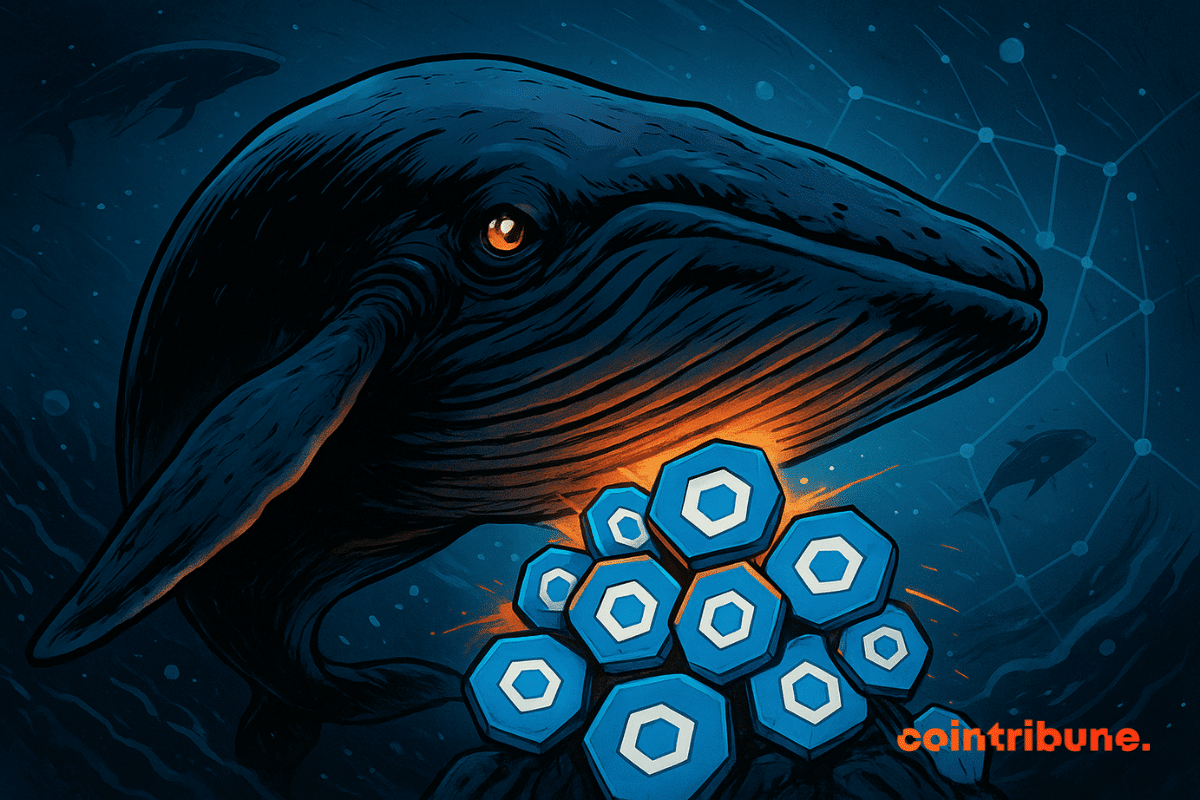
Since touching a daily high of $24.74 on August 13, Chainlink’s (LINK) northward price movement has cooled, pushing the asset a few levels lower. Despite LINK’s upward trend stalling, large holders are still accumulating the coin. Generally, these whale buyers view this slip as a “buy the dip” window for a potential next leg higher. So, what are the current bets regarding LINK’s future trend?
Digital assets have transcended the corridors of financing, entering the realm of space exploration. In a recent update, Jeff Bezos’s Blue Origin has joined forces with American firm Shift4 Payments to offer crypto payment services for expeditions to outer space.
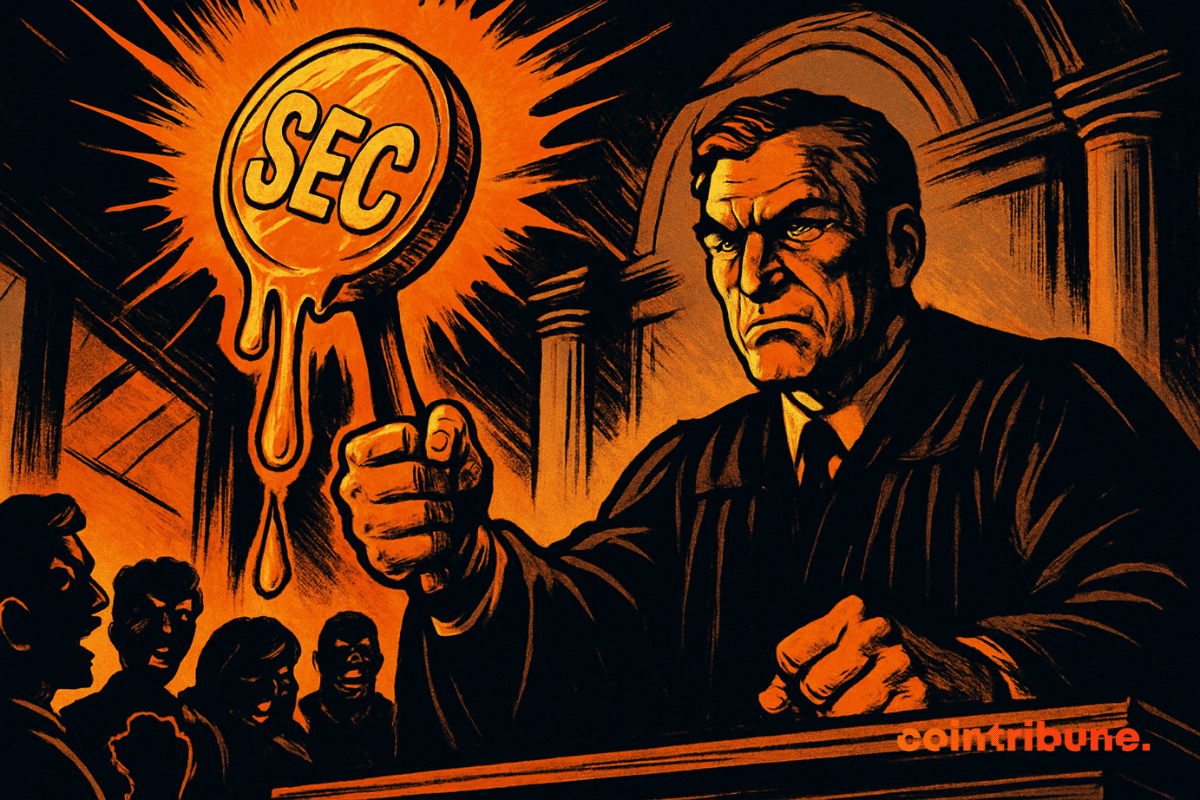
The U.S. Securities and Exchange Commission’s (SEC) statement regarding liquid staking has, as expected, drawn different views and opinions across all corners of the crypto space. Although some believe that this nonbinding guidance could help drive institutional and retail adoption, others have raised concerns over the risk, potential challenges and key legal hurdles.
Would Architect aim to become the Moody’s of Web3? A credit rating project based on blockchain is shaking the crypto sphere. A mutation in progress or just a publicity stunt? Discover what is really happening.
When Solana slips Web3 into your pocket, Apple and Google look glum. The trendy crypto Seeker promises a cage-free phone, but with dApps, tokens, and open war.
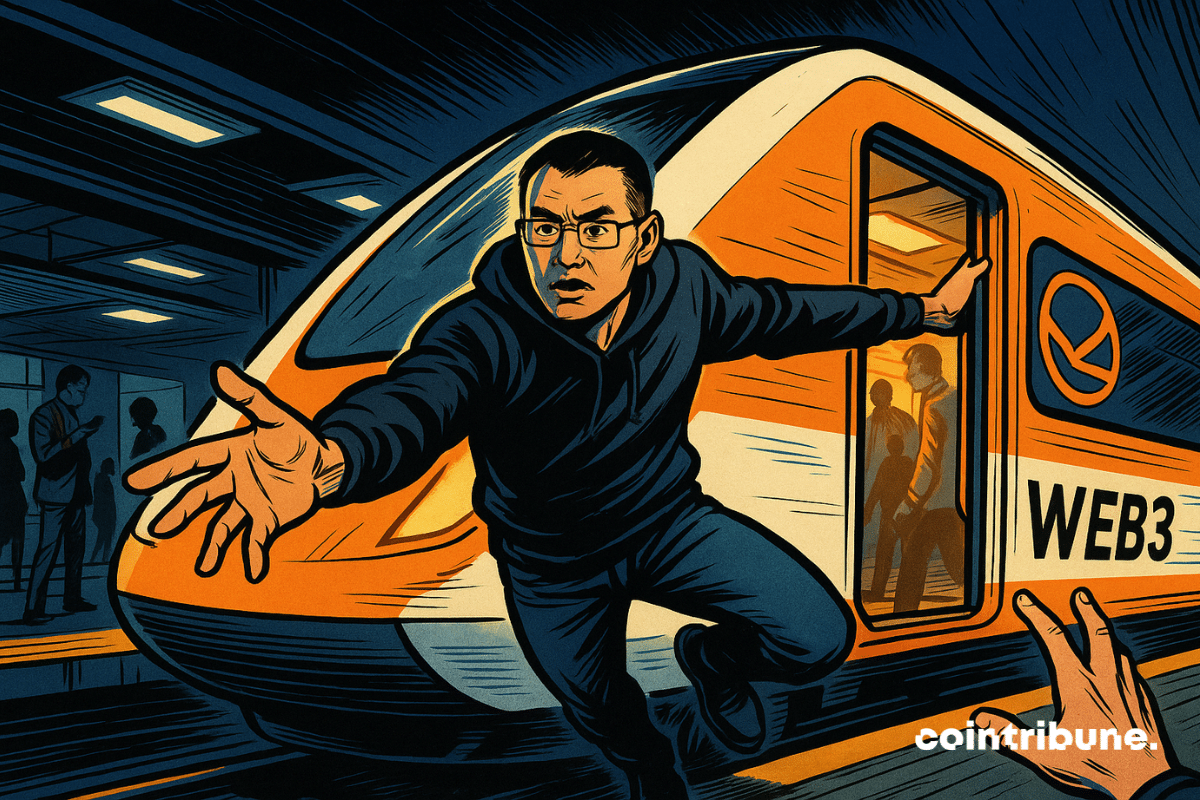
In an ecosystem where the speed of change surpasses that of traditional markets, some statements serve as landmarks. That of Changpeng Zhao, founder of Binance, is one: "Change will happen with or without you." Behind this phrase, a clear message to the blockchain community: adapt or disappear. Although retired from business, CZ continues to influence the sector's trajectory by directly addressing investors, developers, and entrepreneurs about their ability to support evolution.
HANOI, Vietnam – August 1–2, 2025 | National Convention Center - Vietnam is entering an “era of national rise”, a pivotal inflection point to assert its place in the global technology race. Fueled by bold policy reforms, surging investments, and a fast-growing digital infrastructure, the country is primed to become a strategic epicenter for the blockchain revolution.
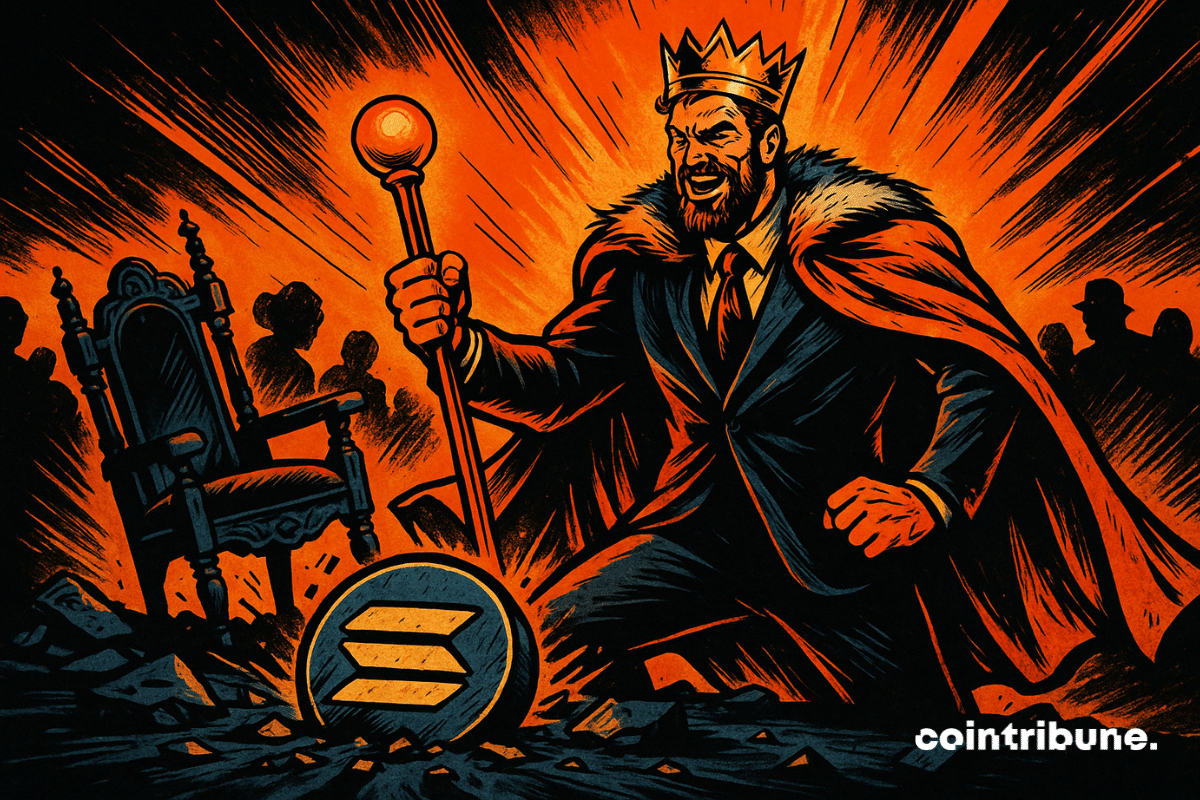
Solana dethroned, Zora is making waves, Pump.fun is frowning: in the dance of cryptos, the thrones wobble and the platforms waltz to the rhythm of tokens.
Polygon’s Heimdall V2 upgrade hit a brief snag, disrupting consensus. Most services stayed online, with fixes swiftly rolled out.
The digital landscape is evolving within an increasingly complex, interconnected, and vulnerable environment. The emergence of quantum technologies, the rise of AI, and the proliferation of connected devices amplify existing vulnerabilities. Web2 and Web3 infrastructures still rely on centralized models that cannot withstand new threats. This centralization creates single points of failure and weakens overall system resilience. In light of this reality, a new approach becomes necessary. Naoris Protocol introduces the Cyber Physical Trust Mesh (CPTM), a decentralized, post-quantum infrastructure solution. It surpasses traditional DePIN by establishing a trust mesh designed to validate, secure, and continuously reinforce every digital layer.
Web2 enterprises today are on the brink of an extinction-level event. 'We've entered what I call the quantum danger zone,' states Dr. Richard Feynberg, Chief Science Officer at Quantum Shield Technologies. 'What was projected as a 2030 problem is now at our doorstep. I would be shocked if current encryption standards survive beyond mid-2026.' Their centralized infrastructures, already buckling under targeted attacks and invisible vulnerabilities, face imminent obliteration from quantum systems that are evolving at an exponential pace far exceeding even the most alarming predictions from just months ago. Traditional approaches are no longer sufficient to protect interconnected, complex, and critical systems. To address this challenge, Naoris Protocol offers a compelling alternative: a post-quantum, decentralized infrastructure designed to integrate seamlessly with existing environments. Operating above DePIN, it provides a continuous, distributed layer of security with no single point of failure. This article explores how Web2 enterprises can adopt this approach through practical, real-world integrations.
The cryptocurrency market continues to attract a growing number of investors seeking innovation and returns. Yet, each new attack or exploited vulnerability highlights the fragility of the ecosystem. Security remains a non-negotiable condition for sustaining trust and enabling mass adoption. A new vertical is emerging in response to these challenges: cybersecurity cryptocurrencies. These assets combine utility, resilience, and direct responses to the structural weaknesses of Web3. Among them, Naoris Protocol stands out for its infrastructure-first, decentralized, and post-quantum approach. This article explores current market risks, the importance of native security, and Naoris’s strategic role in this transformation.
The arrival of quantum computers isn't just shaking the foundations of global cybersecurity, it's triggering a seismic collapse that could happen any day. These machines, advancing at a pace that has shocked even the most conservative experts, now threaten to obliterate classical cryptographic systems within months, not years. 'The quantum earthquake is no longer a distant rumble, the ground beneath crypto is already cracking,' declares Professor Wei Chang of the Quantum Security Alliance. 'By this time next year, we could witness the complete compromise of blockchains, digital identities, and sensitive data on a scale unprecedented in digital history.' The window to prepare is closing with alarming speed. Centralized architectures, still dominant, show their limits when faced with these emerging risks. They concentrate vulnerabilities and lack both continuous validation and true resilience. In this context, a new generation of infrastructure is required. Naoris Protocol embodies this shift, going beyond traditional DePIN by introducing a post-quantum infrastructure layer called Sub-Zero. This architecture sits beneath Layer 0 and secures the entire digital ecosystem, from Web2 to Web3, through an autonomous, resilient mesh.
Web3 is expanding at breakneck speed, even as it races headlong toward a quantum cliff edge. 'The Web3 ecosystem is like a magnificent castle built on sand, with a tsunami visible on the horizon,' warns Dr. Samantha Torres, Director of the Quantum Cryptography Institute. 'Quantum systems capable of devastating current blockchain security could emerge as soon as Q3 2025, perhaps even sooner.' This imminent threat makes today's sophisticated attacks look like child's play. Smart contracts, bridges, and DEXs aren't just vulnerable targets, they're primed for complete compromise within months, not years, as quantum computing progress has shattered all previous timelines. Current cybersecurity solutions fail to offer long-term protection, relying on periodic audits and tools poorly suited for decentralized environments. To enable mass adoption, Web3 must integrate native, continuous, and future-proof security. Naoris Protocol offers a structural solution. It deploys a post-quantum, decentralized, verifiable infrastructure that goes beyond traditional DePIN. It introduces security embedded directly into the core architecture of Web3.
As the summer heat reaches its peak, the crypto market could experience an unexpected cooling. In August, the value of token unlocks could drop by half to around 3 billion dollars, down from over 6 billion in July. A sharp decline, certainly, but far from signaling a lasting calm.
Bitcoin has gone from a routine decentralized medium of exchange to become one of the most valuable assets in the world. And as with any apex asset, the OG coin has witnessed massive global interest from both corporate bodies and regional powers. Top industry stakeholders are now calling for an increased portfolio inclusion of the first-born crypto, highlighting it as a store of value amid the rising U.S. debt profile.
European monetary sovereignty is wavering. In the face of the meteoric rise of dollar stablecoins, the ECB admits its limitations. The digital euro alone will not be enough. To avoid ceding more power to the United States, the Union must bet on private innovation, euro stablecoins, and decentralized technologies. A call for boldness.
Cyber threats are multiplying in a digital world where everything is becoming interconnected. Web2 and Web3 now share the same vulnerabilities: centralized cloud infrastructures, poorly secured connected devices, and cryptographic algorithms that are becoming obsolete in the face of quantum computing. Traditional solutions are no longer sufficient. They fail to monitor, protect, and validate in real time. Naoris Protocol offers a new approach. Its Decentralized Post-Quantum Infrastructure operates beneath blockchain layers to secure both Web2 and Web3 at their core. This article explores today’s cybersecurity challenges, explains the concept of decentralized security, and details the technical pillars and strategic advantages of the Naoris Protocol model.
Cyber threats are multiplying in a world where digital systems are becoming increasingly interconnected. Traditional architectures, based on implicit trust and centralized points of control, are no longer sufficient to protect data and critical infrastructures. The Zero Trust model emerges as a clear response to these flaws: it relies on continuous verification, granting no user or device default trust. To go further, blockchain offers an ideal foundation. With its Sub-Zero architecture, Naoris Protocol turns this promise into reality. It creates a decentralized, post-quantum, self-validating infrastructure capable of securing both Web2 and Web3 systems in real time, without a single point of failure.
Satoshi’s original vision for Bitcoin was to function as a decentralized peer-to-peer electronic cash system, free from the influence of governments or financial institutions. However, U.S. lawmaker Senator Cynthia Lummis believes that Bitcoin could serve a far greater purpose as a hedge against the rising cost of living.
A long-dormant Bitcoin wallet from the Satoshi era has sent shockwaves through the crypto market after offloading 80,000 BTC, with the sale facilitated by asset management firm Galaxy Digital. This sale ranks as one of the largest crypto transactions ever, as the market recorded a modest volatility during the trading session.
Less than a week after the approval of the GENIUS Act, two giants in the financial space, Anchorage Digital and Ethena Labs, have joined forces to launch a U.S. version of the offshore USDtb stablecoin. This digital dollar will become the first stablecoin to debut in line with the recently enacted stablecoin regulation bill.
Coinfest Asia, the largest crypto festival in the world, returns on August 21–22, 2025, at Nuanu Creative City, Bali. Known for its immersive format and hands-on Web3 showcase, this year's event is set to gather over 10,000 participants from across crypto, finance, tech, and the broader digital ecosystem.
Conflux has launched a stablecoin backed by offshore yuan and unveiled Tree-Graph 3.0 to advance global blockchain adoption.
The world of crypto is not short on spotlights, flashy predictions, and promises of decentralized tomorrows. Yet, behind the utopian speeches and soaring tokens, another indicator, much more discreet, is turning red: developer engagement. And what if, in 2025, the vitality of blockchains was no longer measured by their market capitalization, but by the sweat of those who build them?
Ethereum hits the gas accelerator... but who will stay the course? A small journey through ambitious technology, elitist blockchain, and scaling promises more slippery than a snake on RAM.