For Brian Armstrong, the CEO of Coinbase, bitcoin at $400,000 by 2030 remains a reasonable target. However, to reach it from its current price, BTC would have to multiply by more than five.
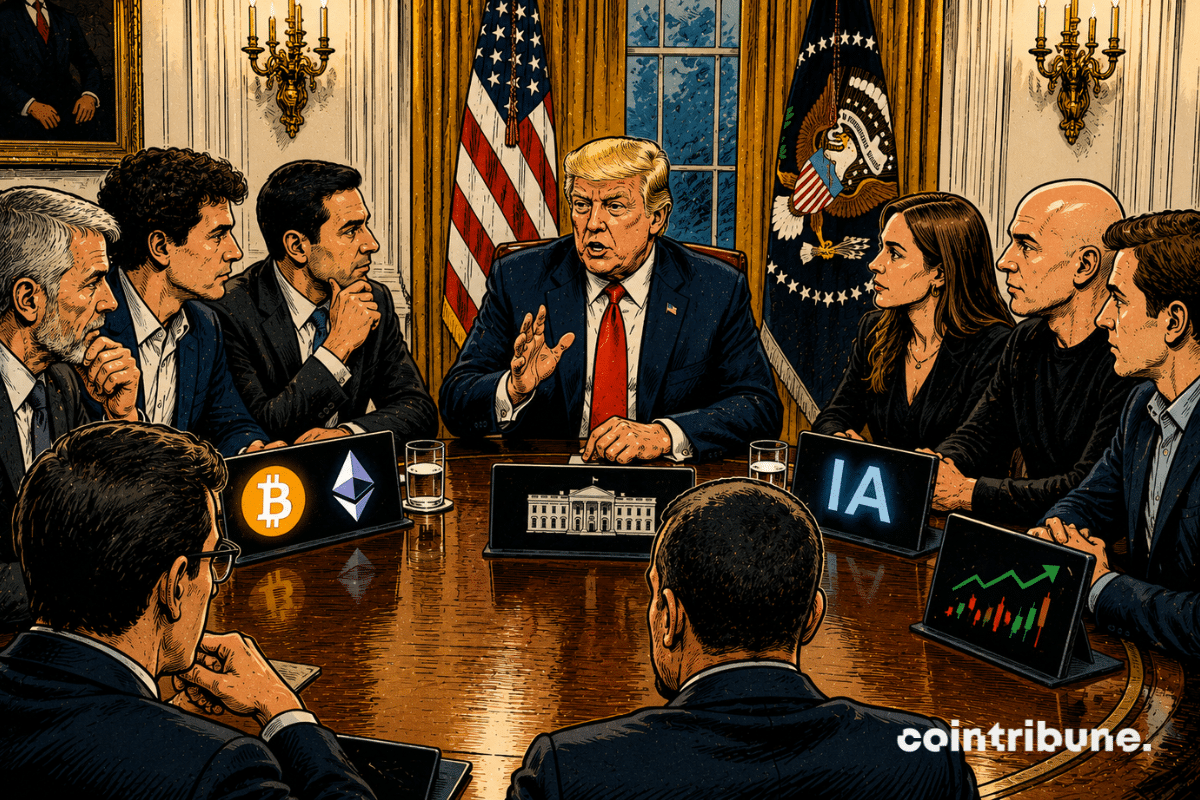
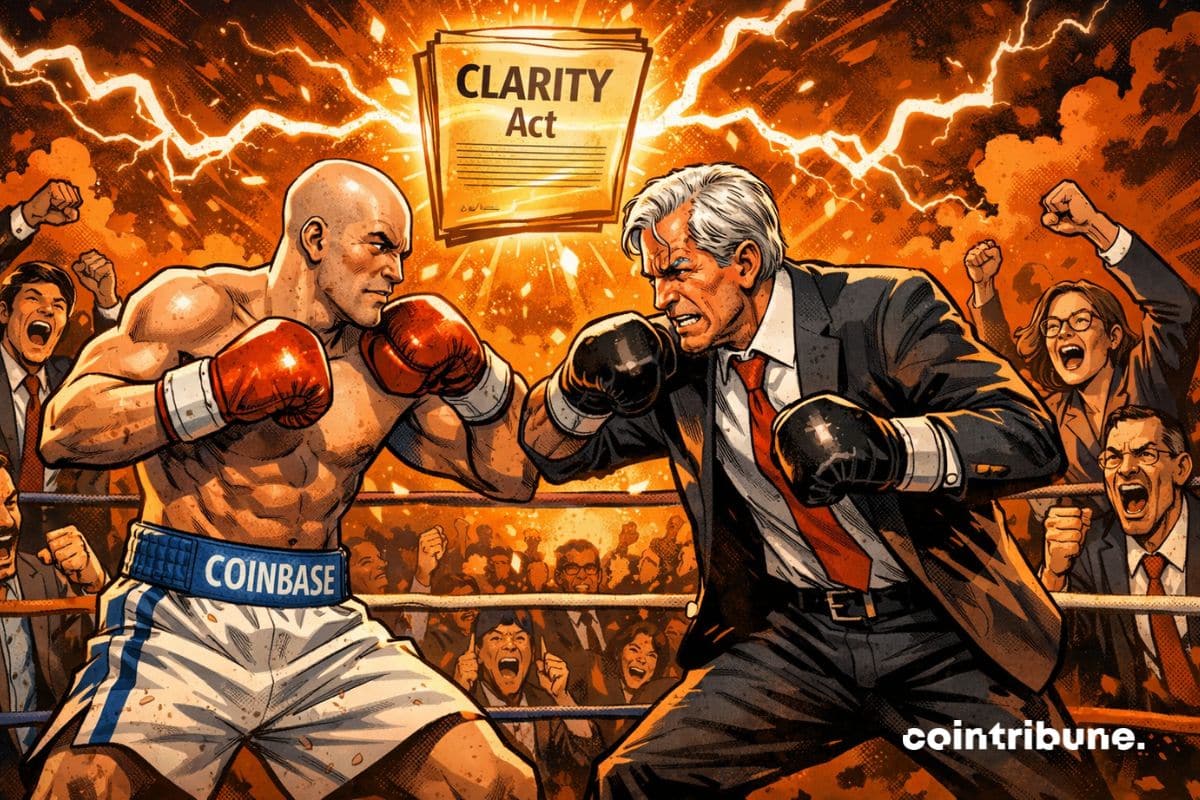
Donald Trump pressures the American Senate. This Wednesday, the president gathered several major figures from the crypto industry at the White House to try to unblock the CLARITY Act. The text, stuck in Congress, now crystallizes a confrontation that goes beyond the mere regulation of cryptos. Washington is also playing its ability to maintain its technological lead over China, against a backdrop of political tensions and disagreements over the sector's framework.
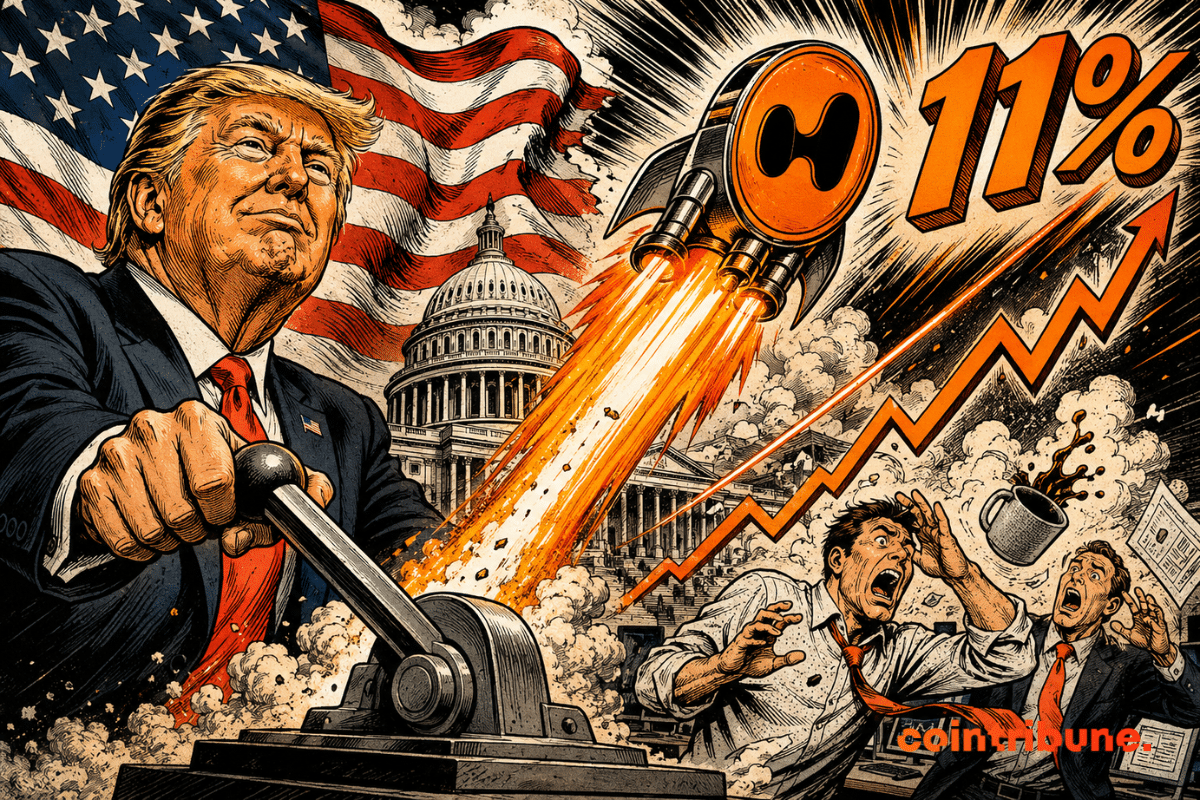
Donald Trump mentions a legal entry of Hyperliquid into the United States. The HYPE crypto jumps 19%. All the details in this article!
The CLARITY Act ignites debates: Coinbase wants to free stablecoins, and JPMorgan to block them. A conflict that could shake the crypto market. Who will emerge victorious?
Artificial intelligence was supposed to free workers from tedious tasks and boost their productivity. But a scientific study has just dampened this enthusiasm. By juggling with more and more tools, millions of employees end up... exhausted. What if AI was creating the problem it promised to solve?
Coinbase now sells stocks. Traditional brokers are sweating bullets. Yahoo Finance serves as a waiting room. Brian Armstrong wants to become the boss of your portfolio. Atmosphere.
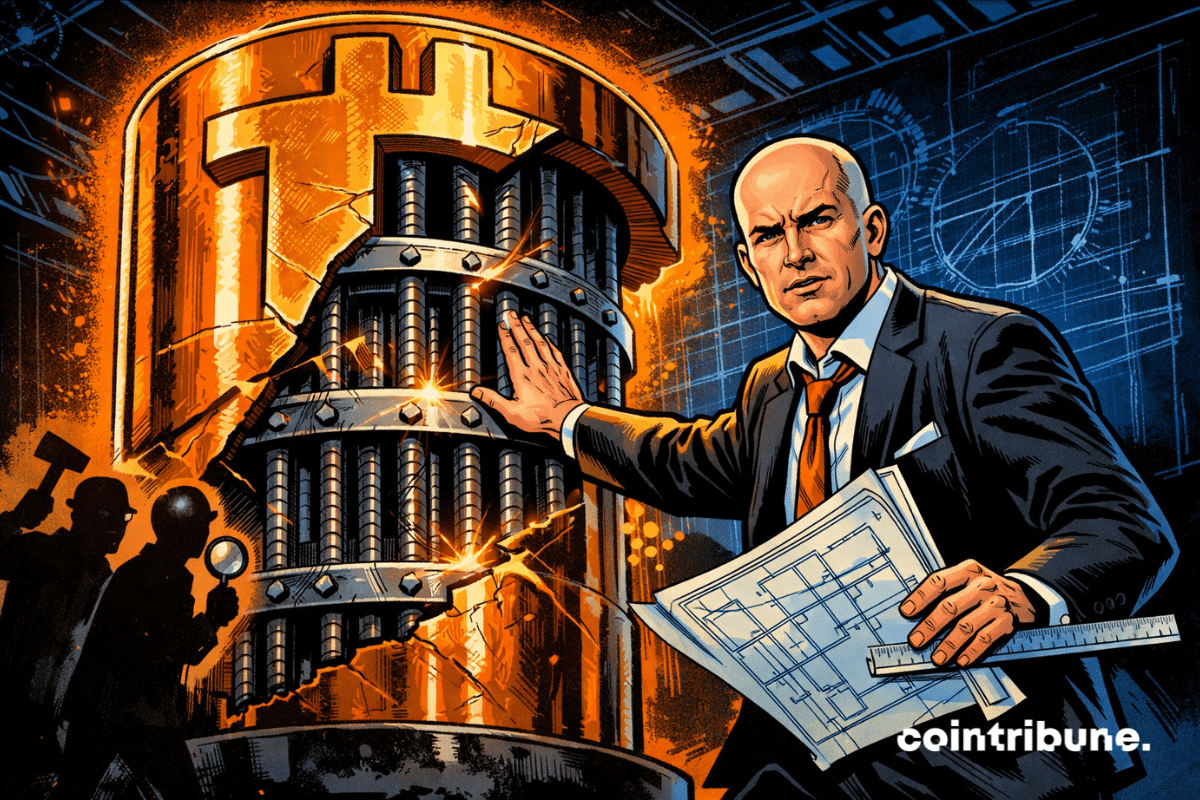
One can see a Bitcoin pullback as a diagnosis… or as a mirror. Brian Armstrong, CEO of Coinbase, clearly chooses the second option: according to him, the recent drop looks more like a collective nervous breakdown than an engine failure. The network is not damaged. It is the emotions that make the noise.
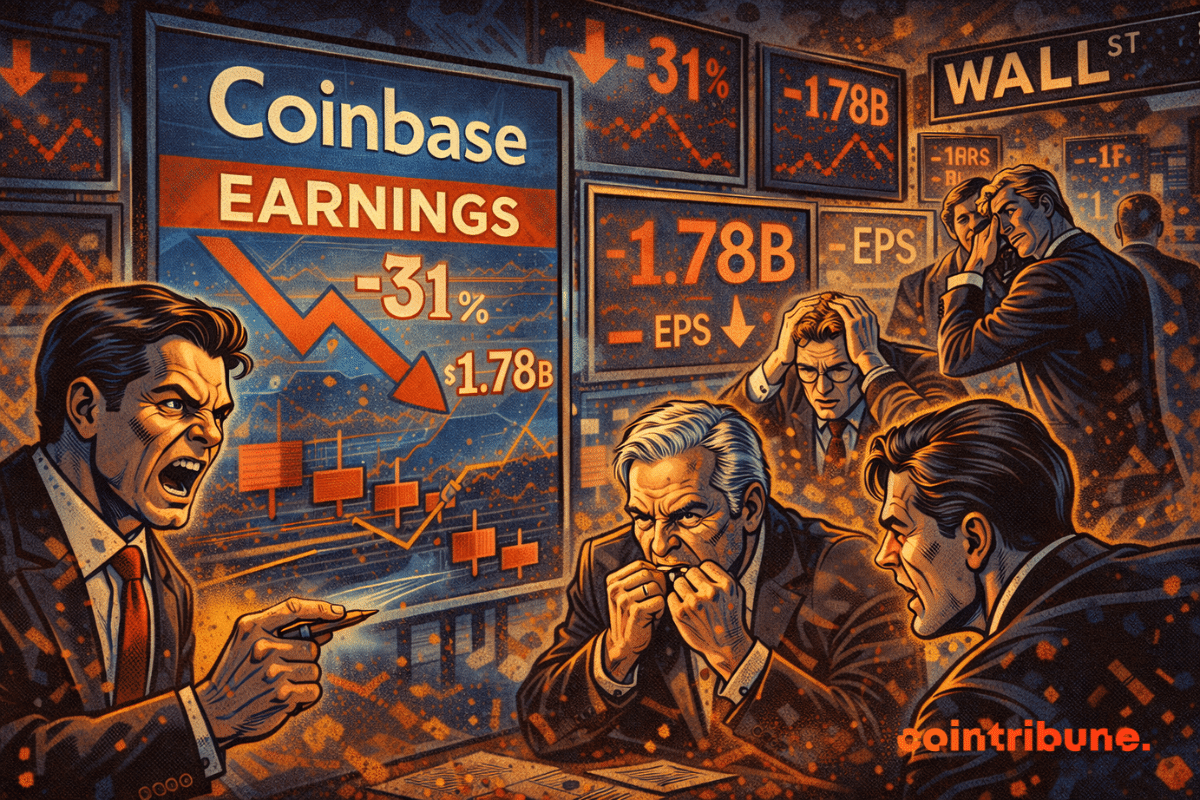
Coinbase loses 667 million. Yet, its subscribers are booming. Its stablecoins generate revenue. So do its loans. So? It's the trading that coughs. And Washington that sleeps in.
When crypto bites its own tail: at Coinbase, shareholders scream betrayal, and executives swear they only sold reluctantly. It smells like asset freezing...
The boundary between traditional banks and crypto could soon disappear. In Davos, David Sacks, White House crypto advisor, stated that these two worlds will soon form just one. Indeed, the CLARITY Act, a decisive bill for the future of the sector in the United States, is at stake. Behind the debates on stablecoin yields, a complete reconfiguration of the financial industry is emerging amid political tensions, power struggles, and strategic ambitions.
Under regulatory pressure, the American crypto sector closely watched the CLARITY Act, intended to establish a clear legal framework for these assets. However, the bill was abruptly paused in Congress after Coinbase dramatically withdrew its support. Presented as a structural reform, the latest version of the project triggered sharp criticism, accused of threatening innovation. A political setback that reignites tensions between legislators and actors of an ecosystem still seeking recognition.
Brian Armstrong clarified that Coinbase’s talks with the White House remain constructive as the CLARITY Act faces delays over regulation issues.
In Washington, crypto puts the Senate in a tailspin: Coinbase says no, the law collapses, and banks fear that open code will become uncontrollable.
In Washington, senators want to "clarify" crypto, but Coinbase slams the door. Clarity or control? The CLARITY Act turns regulation into a political battleground.
Coinbase pays for justice, not ransom. Data leak, arrest in India, bounty for whistleblowing... courtroom crypto-comedy in several acts.
Coinbase CEO Brian Armstrong says he has never been more confident that the Clarity Act will pass, bringing clear rules and growth to the US crypto market.
Coinbase puts its engineers on a dry diet: AI already codes 40% of the in-house software. Armstrong rejoices, skeptics grumble. Rapid layoffs for latecomers.
On July 29, Brian Armstrong, CEO of Coinbase, stated that "bitcoin is probably the best form of money ever created." Indeed, this statement resonates in a context where bitcoin is regaining traction among institutions. As the crypto ecosystem redefines itself, Armstrong reignites the debate on the monetary legitimacy of bitcoin and once again establishes himself as one of the most listened to voices in the sector.
Moscow is stepping up now that Washington has embraced bitcoin. Soon a Russian strategic reserve?
Donald Trump sparked an uproar by announcing that the strategic reserve of bitcoins would also include other cryptocurrencies.
Donald Trump's announcement regarding the creation of a national cryptocurrency reserve, including Bitcoin (BTC), Ethereum (ETH), XRP, Solana (SOL), and Cardano (ADA), has stirred reactions within the crypto industry. While this initiative aims to strengthen the position of the United States as a sector leader, Coinbase CEO Brian Armstrong believes that a reserve composed solely of Bitcoin would be the best option. Here's why.
Coinbase is aiming for a digital gold future: $10 trillion on the blockchain with Washington at the forefront. Armstrong: prophet or charlatan?
During the World Economic Forum in Davos in 2025, the idea of a strategic bitcoin reserve in the United States sparked a lively debate about the future of cryptocurrencies. This proposal, supported by President Donald Trump, was discussed during the session titled "Crypto at a Crossroads." Brian Armstrong, CEO of Coinbase, detailed this proposal to the delegates present in Davos, emphasizing the importance of holding assets that maintain their value over time. However, this idea was not universally accepted.
Brian Armstrong, from Airbnb to Coinbase: discover his inspiring journey and success story in the crypto world.
DOGE: when Musk and Armstrong play the state surgeons, with fiscal scalpel and crypto syringe!
Trump president? Bitcoin rejoices, traders salivate. Digital gold could well soar, and Wall Street implores it!
COIN: A Founder's Story is a documentary directed by Emmy Award-winner Greg Kohs. It tells the story of the creation of Coinbase, the world's first publicly listed cryptocurrency company. The film follows Coinbase's founders, Brian Armstrong and Fred Ehrsam, from the beginning of their adventure to the company's listing on the stock exchange.
Scams, hacks, crackdowns, aggressive regularization… so many stories marring the crypto-sphere. When will these terrible nightmares end? No one has the answer yet. We might as well redouble our vigilance to avoid being fleeced by ill-intentioned project promoters like the scammers behind BALD.
“We don't need more digital currencies,” said Gary Gensler on CNBC. Is this why the SEC is targeting both Binance and Coinbase, which have hundreds of millions of crypto investors? In any case, the heads of these exchanges declare that they will respond to the SEC's attacks.
According to Brian Armstrong, CEO of Coinbase, China could benefit from the restrictive laws imposed by the United States on the cryptocurrency industry. “The United States and other democratic nations are facing digital systems promoted by an ambitious adversary, China,” he said.