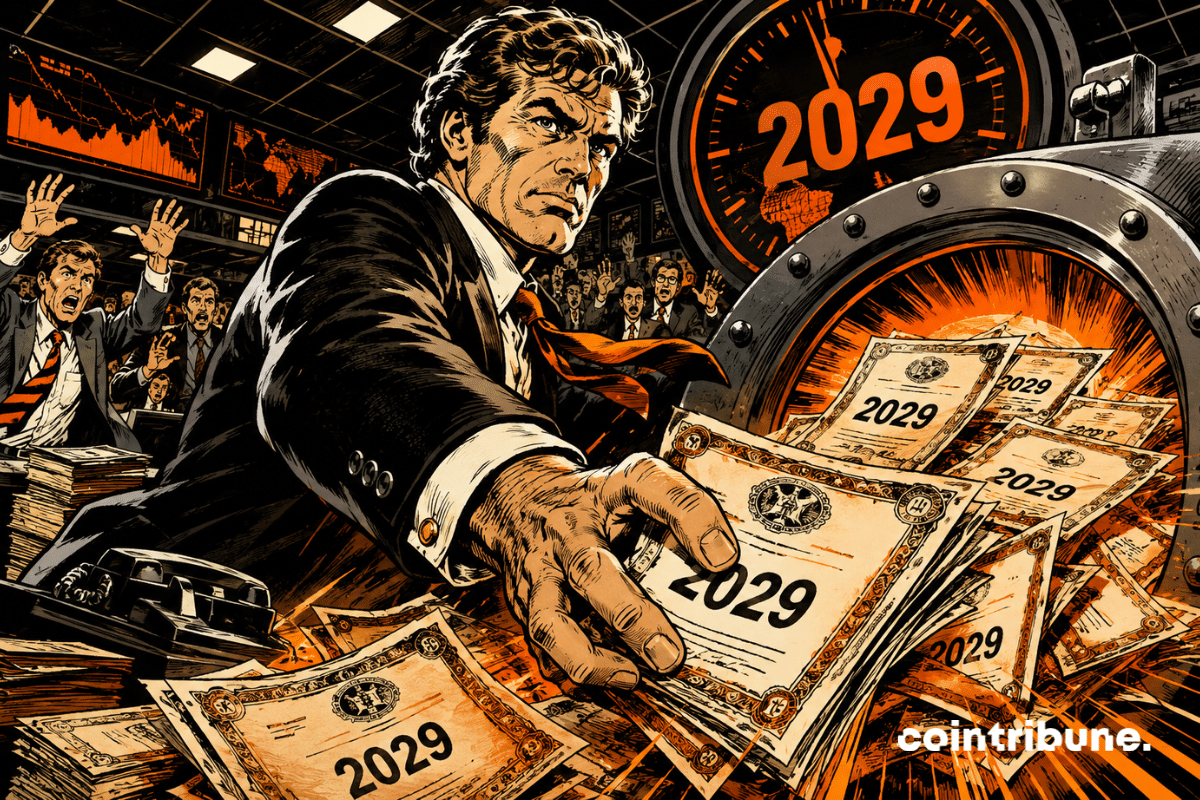
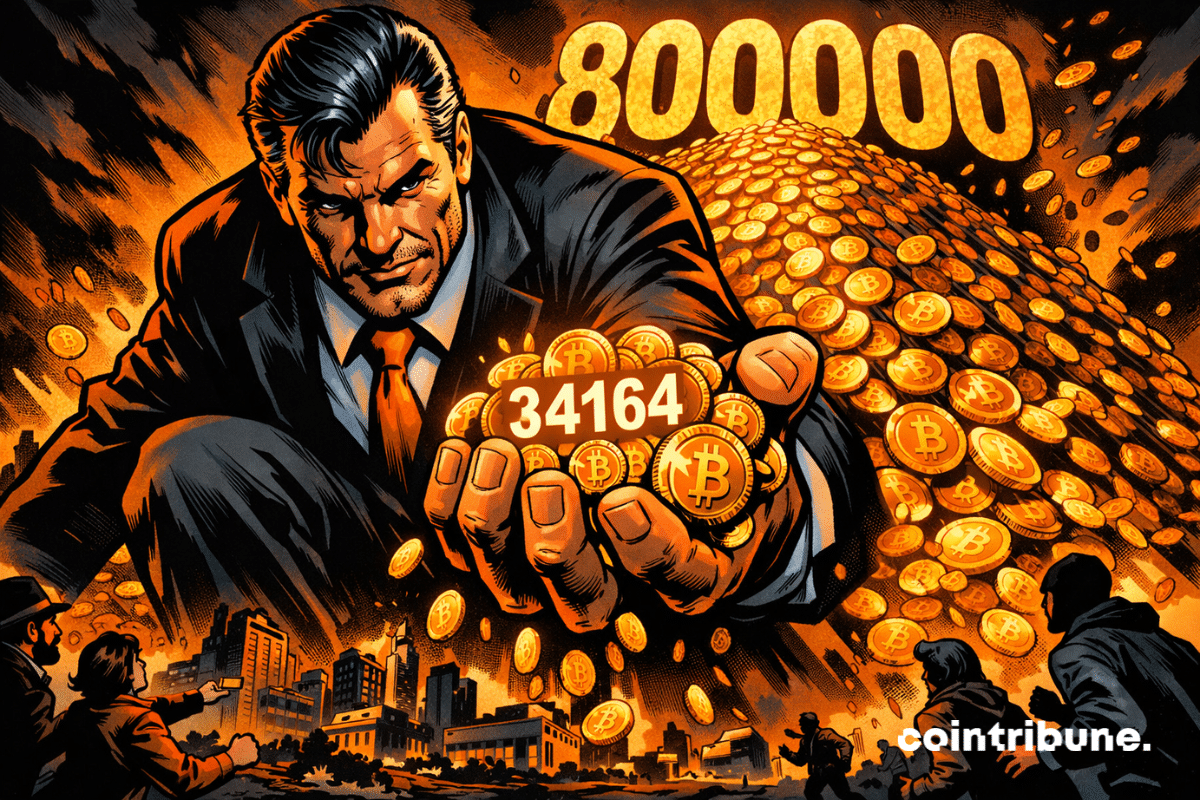
Saylor is buying bitcoin again. The price is underwater, Iran rumbles, ETFs flee. Nothing works. The head of Strategy posts a small message and the machine restarts.
At Strategy, the STRC stock is establishing itself as an increasingly scrutinized financing lever. The sudden surge in trading around this preferred stock launched in summer 2025 raises a specific question: Does Michael Saylor have new leeway to buy BTC? The answer will depend on a very concrete appointment, with the next document expected by the SEC on March 9, 2026.
Michael Saylor continues his offensive on bitcoin. Strategy has just announced a new massive purchase, further strengthening a balance sheet already dominated by the flagship asset. This operation, the 101st since the beginning of its accumulation strategy, takes place in a market context closely watched by institutional investors. With each acquisition, the company increases its exposure and confirms an intact conviction: making bitcoin the central pillar of its treasury.
With every advance in quantum computing, one question repeatedly arises: can bitcoin withstand a machine capable of breaking its cryptographic foundations? The topic, long confined to academic circles, is now imposed in the strategic debate. This week, Michael Saylor took a position, estimating that the threat would not materialize for more than ten years. He even mentions a coordinated global response if the risk became real. Enough to revive the debate on the strength of the protocol.
In a crypto market shaken by volatility, Michael Saylor reignites the strategic tension around bitcoin. The head of Strategy hinted that a new purchase might be imminent as his company nears a historic threshold of 750,000 BTC in reserve. This methodical accumulation, carried out despite a bearish context, goes beyond simple treasury management. It could impact market balance and revive the debate on the growing influence of institutional players in the Bitcoin ecosystem.
Bitcoin has only two outcomes according to Michael Saylor, either $0 or 1 million $. A radical prediction that shakes the crypto market. Between total collapse and financial revolution, which scenario will happen according to you?
While the crypto market undergoes a brutal correction phase, some listed companies choose to strengthen their positions rather than scale down. Amid volatility, Strategy and Bitmine Immersion Technologies increase their reserves of Bitcoin and Ether, despite an unfavorable stock market climate. This contrast is striking as prices fall and crypto-related stocks plunge, these companies intensify their exposure.
Amid a correction of bitcoin and in a climate of increased volatility, Michael Saylor, the leader of Strategy, sends a new buying signal. This decision intrigues as much as it divides, while the asset evolves under pressure. Behind this announcement, it is the whole coherence and risks of an assumed accumulation strategy that are once again spotlighted.
While the crypto market wavers and investors hold their breath, every statement from a sector leader becomes a decisive signal. Michael Saylor, co-founder and executive chairman of Strategy, reappears at the center of the game at a critical moment. As rumors of bitcoin sales spread, he answers frankly. Between prolonged price drops, loss-making results, and stock market tension, his statement sounds like an act of faith, or a risky bet, to defend a strategy that has become emblematic.
While bitcoin was falling sharply to 60,000 dollars, Michael Saylor surprised the entire market. His company Strategy invested 90 million dollars to buy 1,142 BTC at a price well above the market rate. This choice, far from trivial, raises questions about the accumulation strategy of one of the largest BTC holders in the world. Why buy so high in a declining market? And what are the consequences for investors and the sector’s dynamics?
While the crypto fear index reaches historic highs, Metaplanet's CEO displays a disconcerting calm. Simon Gerovich brings up Buffett's philosophy to encourage investors to do exactly the opposite of the crowd: buy when everyone is selling. A bold stance as his company continues accumulating bitcoin despite the storm.
While bitcoin briefly fell below $75,000, Michael Saylor did not hesitate to strengthen his positions. The Executive Chairman of Strategy invested $75.3 million to acquire an additional 855 BTC. A strategic choice, made official via the SEC, that fits into an uninterrupted accumulation policy since 2020. In a tense market, this move confirms the long-term vision of a key player on the crypto scene.
While bitcoin has been oscillating without a clear direction for months, several publicly traded companies continue to massively increase their reserves. This gap between price sluggishness and institutional actors' enthusiasm intrigues the markets. Far from a mere treasury choice, this strategy reflects deliberate bets on bitcoin's future as a strategic asset. Thus, the latest data confirm a persistent accumulation dynamic, revealing silent but structured confidence within the crypto economy, even amid prolonged uncertainty.
Michael Saylor warns that ambitious developers, even with good intentions, could unintentionally put Bitcoin’s network at risk.
Bitcoin under pressure, Strategy surprises. This new massive purchase fuels tensions within the crypto community. Details here!
Michael Saylor scores another breakthrough. His company Strategy now holds more than 700,000 BTC after a massive purchase of 22,305 bitcoins for 2.13 billion dollars. An unprecedented milestone that confirms the company's committed transformation into a true Bitcoin company. In a tense market, this move strengthens Saylor's influence and repositions Strategy as a central player in the crypto ecosystem.
While corporate bitcoin adoption remains a divisive subject, Michael Saylor continues to lead the movement. The executive chairman of Strategy no longer just accumulates BTC. He now steps up to defend, against criticism, an unapologetic vision of bitcoin as a strategic corporate treasury asset. In a context of macroeconomic uncertainty, his positions reignite the debate on the relevance and durability of this strategy.
Despite an accounting loss of $17.4 billion in Q4 2025, Strategy kicks off 2026 by purchasing 1,283 bitcoins for $116 million. As a global leader among institutional BTC holders, the company persists in its aggressive accumulation strategy, defying classic financial logic. This striking contrast between record loss and reaffirmed confidence raises the question: how far is Michael Saylor willing to push his bet on Bitcoin?
In 2025, the crypto market reminded its ruthless nature. While bitcoin briefly crossed 126,000 dollars, a brutal correction wiped out several major fortunes in the sector. Even the most influential figures were not spared, losing billions in a few weeks. From Michael Saylor to CZ, the year left behind a fractured landscape dominated by losses.
Michael Saylor's company Strategy resumes its weekly bitcoin purchases at a time when the markets are doubtful. Details here!
In an unstable crypto market, Strategy, one of the largest holders of Bitcoin, raised $747.8 million by selling shares, while suspending its BTC purchases. This decision highlights a desire to secure its finances amid market volatility. A strong signal for the crypto ecosystem, which could influence other companies adopting similar strategies.
Michael Saylor rekindles the suspense: a new bitcoin purchase is looming, while MSTR is collapsing and regulators threaten Strategy. With 671,000 BTC at stake, can this bold strategy withstand market pressure? Analysis of the stakes, key figures, and risk scenarios for 2026.
Bitcoin falls, Saylor buys. Two billion injected in two weeks, while the market panics. What if, after all, the crypto oracle wore a tie and sold shares?
Michael Saylor’s company, Strategy, is facing growing pressure as it challenges MSCI’s plan to exclude crypto-treasury firms from major stock indexes. Strategy, which holds the world’s largest corporate Bitcoin reserve, warned that the proposal misjudges how digital-asset treasuries operate. More so, the plan risks distorting fair index standards.
American banking giants are now playing the bitcoin card. Michael Saylor lifts the veil on a massive and silent adoption: eight of the ten largest banks offer loans secured in BTC. Figures, players, and stakes of a revolution that is disrupting finance.
What if bitcoin became the foundation of the future global banking system? Michael Saylor, executive chairman of Strategy, now urges nation-states to create digital banks backed by bitcoin. Far from an isolated provocation, this proposal fits into a climate of financial market shifts, marked by growing distrust of traditional banks and a global search for more profitable and resilient solutions against economic uncertainties.
While bitcoin hovers around $91,000 after its October peak, Strategy surprises the markets with a massive purchase of over 10,000 BTC. This billion-dollar bet, amid a prolonged downturn, reignites debates on the viability of the "Bitcoin treasury" model. The move fascinates as much as it worries: should it be seen as a strategic conviction or a major financial risk for an already pressured company?
Cantor Fitzgerald shakes the markets by lowering its target for Strategy (MSTR) by 60%. However, the bank dismisses fears of forced liquidation and maintains its confidence in bitcoin. An analysis that unpacks the stakes behind this surprise decision and its impact on crypto investors. Is MSTR's future being decided now?
What if everyone was wrong about Strategy? While speculation is rife about a potential bitcoin sale by the company led by Michael Saylor, Bitwise's Chief Investment Officer, Matt Hougan, steps up to methodically dismantle this panic scenario.
As Bitcoin passes through a new turbulence zone, Michael Saylor finds himself at the heart of a decisive showdown with MSCI. Threat of exclusion from indices, pressure from institutional investors, and massive exposure to the king asset: his bet on Bitcoin is more tested than ever.