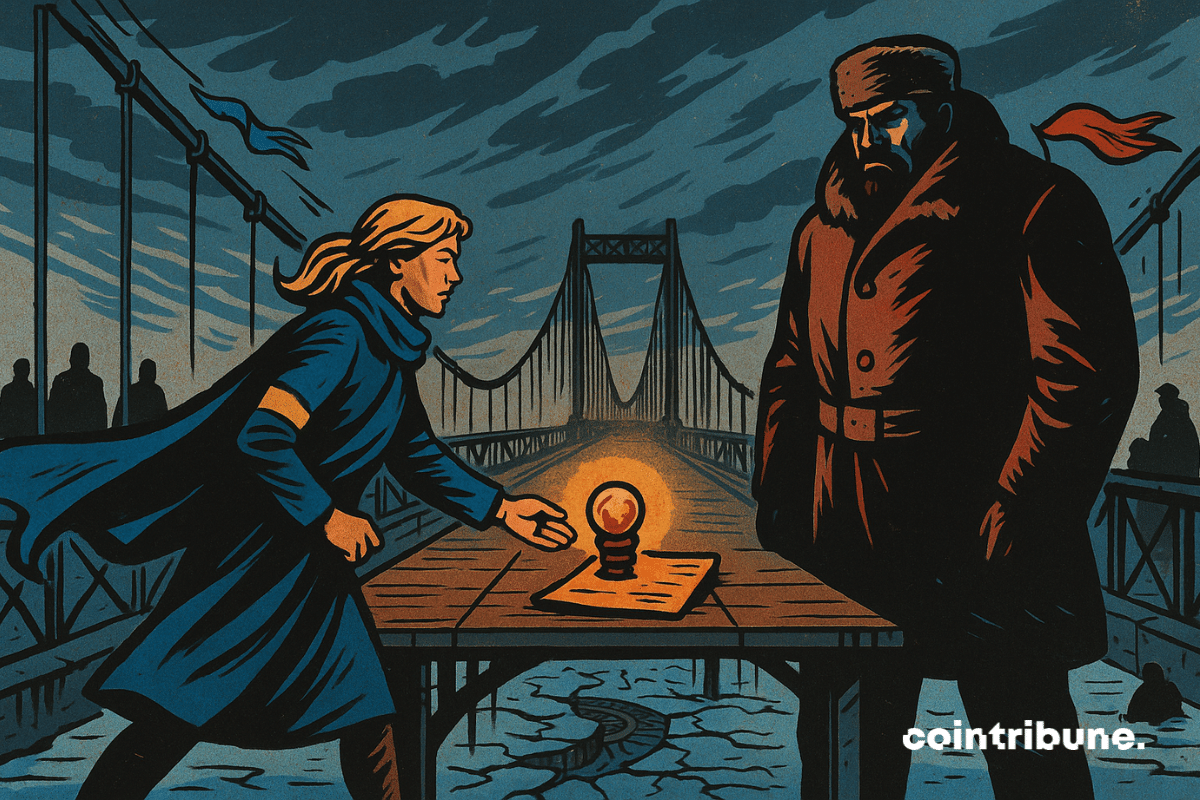
Pavel Durov rejects the "terrorist" label that Russia just assigned to him. The founder of Telegram states that Moscow is sanctioning him mainly for refusing mass surveillance and censorship on the platform.
Gold and silver closed 2025 at record highs, and that rally has accelerated into early 2026. A combination of strong demand, constrained supply, and rising political uncertainty is driving investors toward precious metals. New concerns about central bank independence have further intensified buying pressure.
Rising global sanctions and increased state involvement drove illicit cryptocurrency activity to record levels in 2025. Data indicates that sanctioned entities were the primary source of these flows, even though illegal use continued to account for only a small portion of total crypto transactions. Analysts describe the shift as a response to mounting geopolitical pressure rather than a breakdown in compliance.
Binance has suspended withdrawals via Visa and Mastercard for its users in Ukraine. The measure, linked to its fiat provider Bifinity, comes amid increasing regulatory pressures in Europe. This decision complicates access to funds for Ukrainians, already weakened by war and financial restrictions.
As the conflict in Ukraine drags on, the European Union opens a new front: that of cryptos. For the first time, Brussels plans to directly sanction crypto platforms, integrating these decentralized infrastructures into its economic measures against Moscow. A discreet but strategic shift, integrating cryptos into the realm of international pressure tools.
In a global climate under high tension, an unexpected name emerges in the bets related to the Nobel Peace Prize: Donald Trump. Indeed, favored on the Polymarket and Kalshi platforms, the American president outstrips several historical figures. This breakthrough, driven by geopolitical dynamics and relayed in crypto circles, triggers as much speculation as questions. Simple reflection of a strategic enthusiasm or indication of an international repositioning?
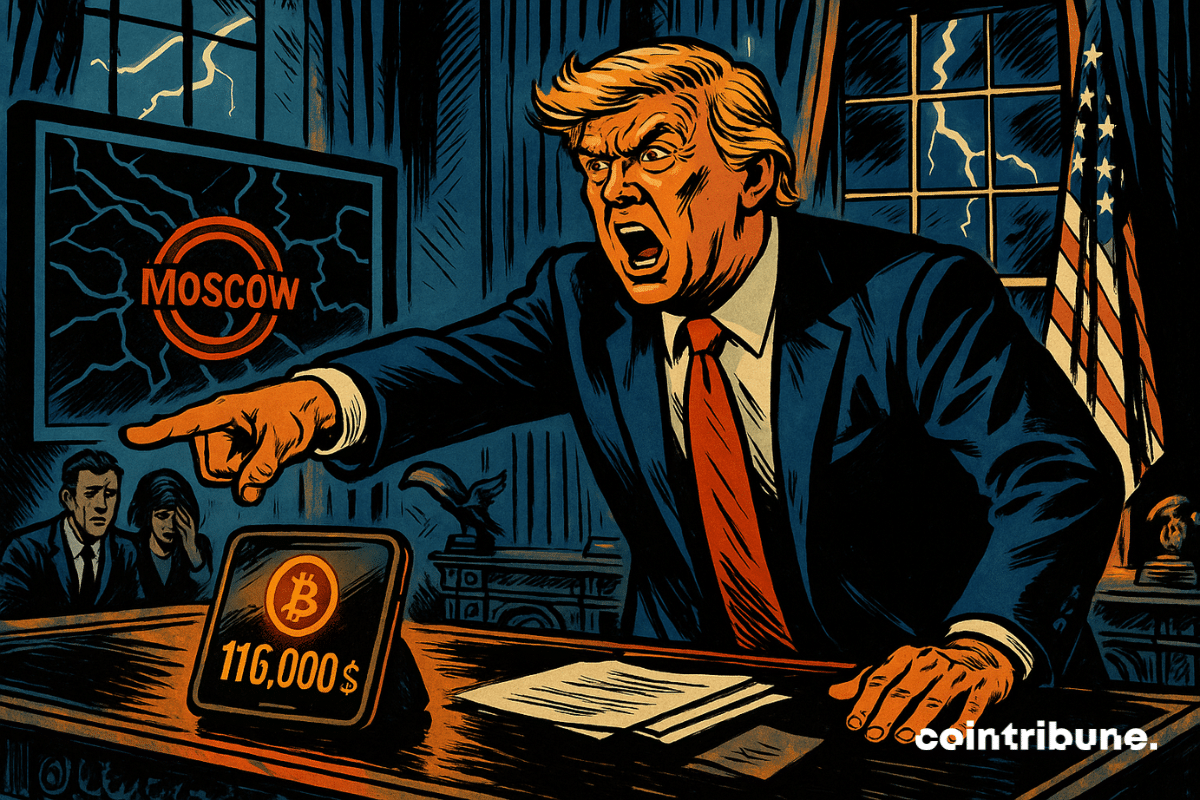
As he multiplies signals of firmness on the international stage, Donald Trump has imposed a 50-day ultimatum on Russia to end the war in Ukraine. This forceful statement, widely commented upon in diplomatic and military circles, has also triggered an unexpected upheaval in the financial markets. Bitcoin, particularly reactive to geopolitical tensions, began a rapid decline immediately following the announcement, reaching 116,000 dollars this morning. The climate of uncertainty created by this presidential warning fuels both political speculation and economic turbulence.
When Ukraine wants to create its Bitcoin vault, it resonates! But between pending laws and crypto-donations, the financial war has its new digital front.
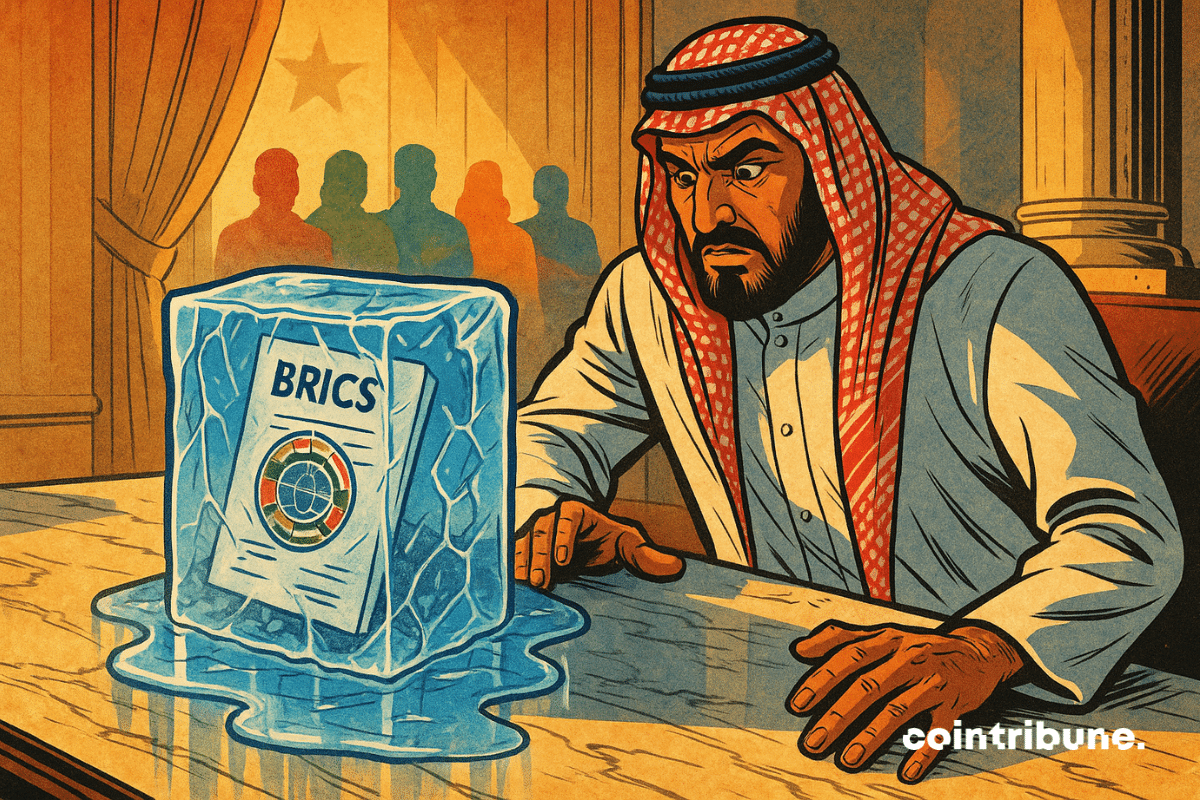
In a world where geopolitical fault lines are shifting rapidly, Saudi Arabia plays a delicate tune between two rival blocs. Solicited by the BRICS but still closely tied to the United States, Riyadh is biding its time, suspending its official membership despite signals of openness. While Beijing lures with its economic promises and Washington threatens with tariffs, the kingdom is preserving its options. Does this tactical ambiguity mask a pre-established strategic direction or is it preparing for a major rebalancing on the global chessboard?
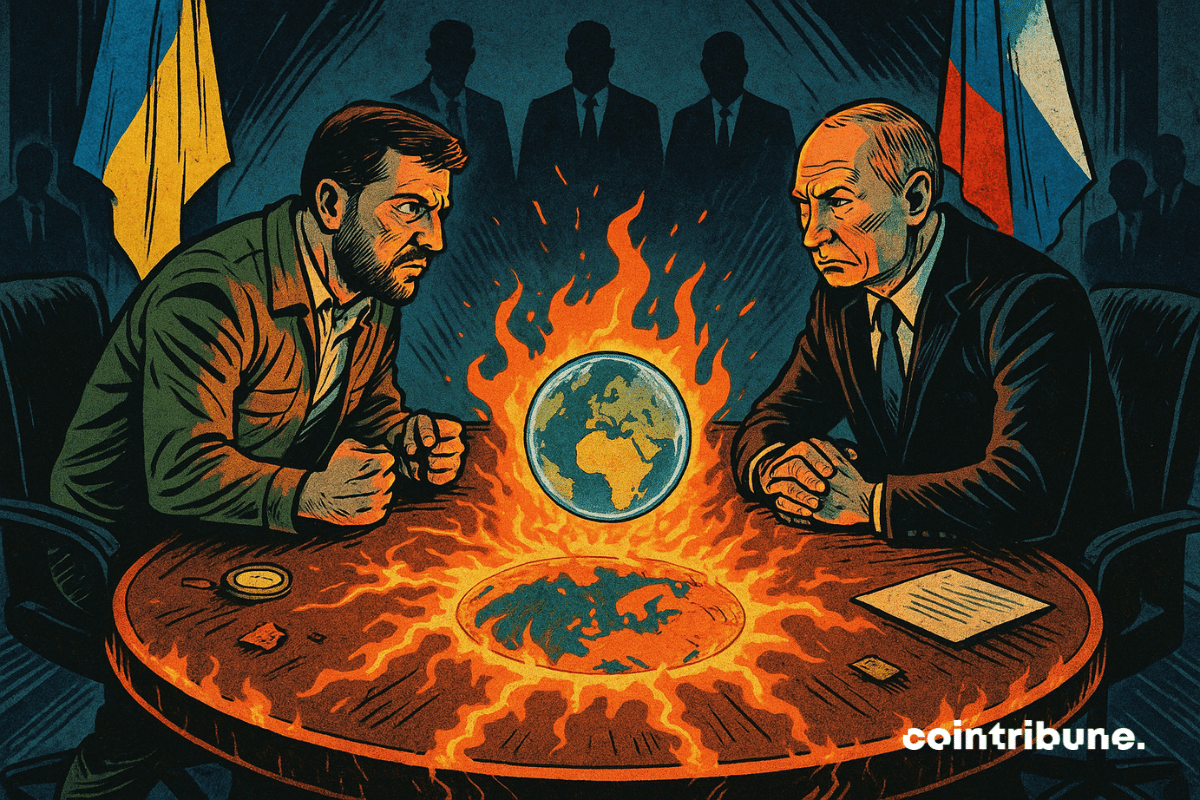
As the Russo-Ukrainian war drags into its fourth year, a possible meeting between Volodymyr Zelensky and Vladimir Putin in Istanbul could reshape the dynamics. For the first time in months, Kyiv is open to the idea of direct talks. Zelensky announced this Sunday, May 11, that he would await Putin on Thursday, May 15, in Istanbul. However, Ukraine sets a firm condition: no exchanges will take place without a total ceasefire, which is demanded from this Monday. This is a significant requirement in a conflict where every diplomatic gesture is closely scrutinized.
As the conflict in Ukraine reaches a critical juncture, Kyiv and its Western allies are proposing a comprehensive, unconditional ceasefire for 30 days. Supported by Washington and major European capitals, this initiative aims to create a pathway for negotiations. However, beyond the call for a truce, one question looms: will Moscow see this as a genuine hand extended or a tactical maneuver concealing a strategic advantage for Ukraine? The answer could reshape the balance of power diplomatically.
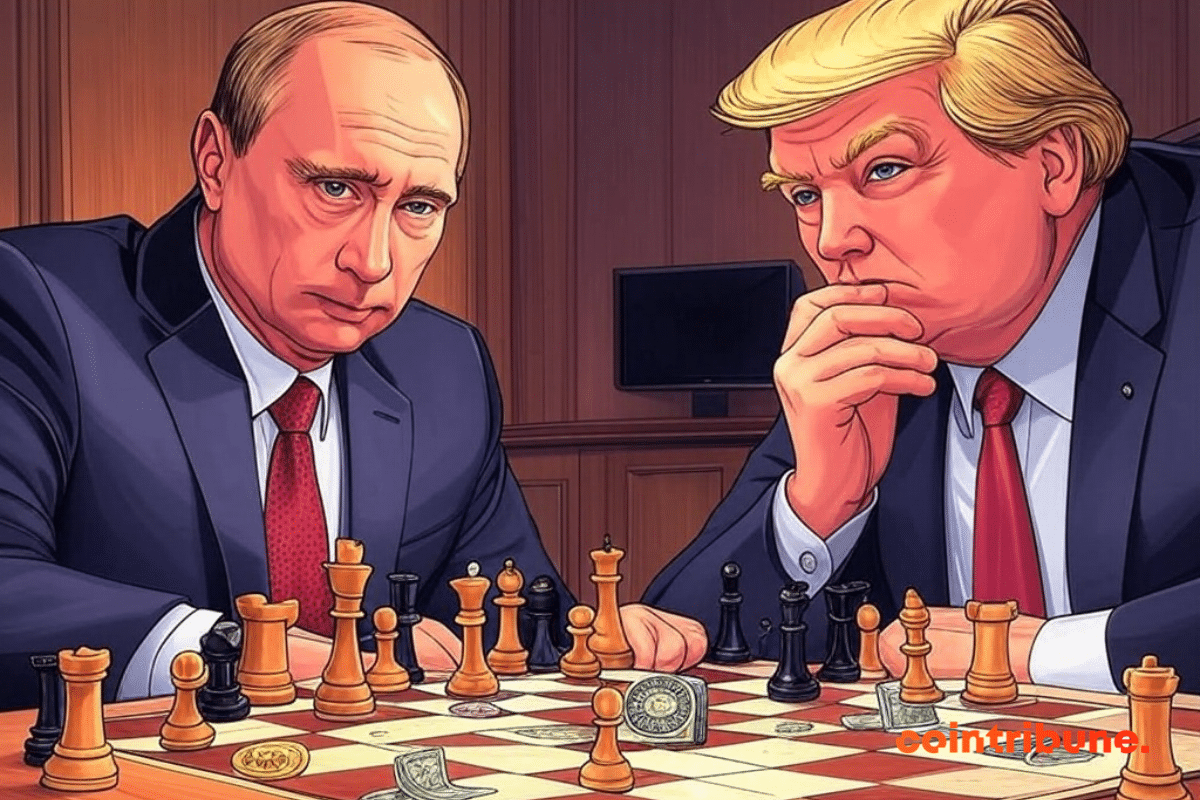
Moscow opens the golden cage: billions of Russian assets finally released, but under conditions. A masterstroke before a call where Trump will play the geopolitical illusionist.
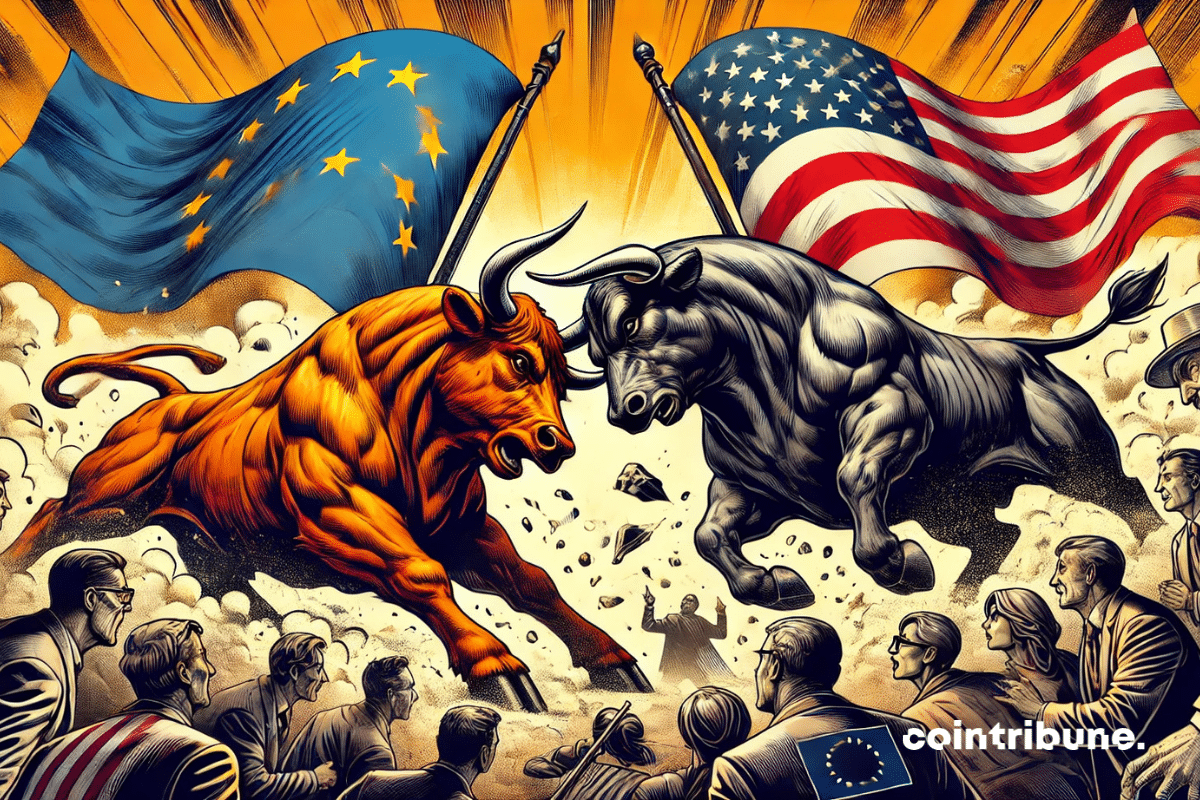
A European stock market in full swing, investors overjoyed, and Wall Street wondering where its crown has gone... Is the stock market history now being written the European way?
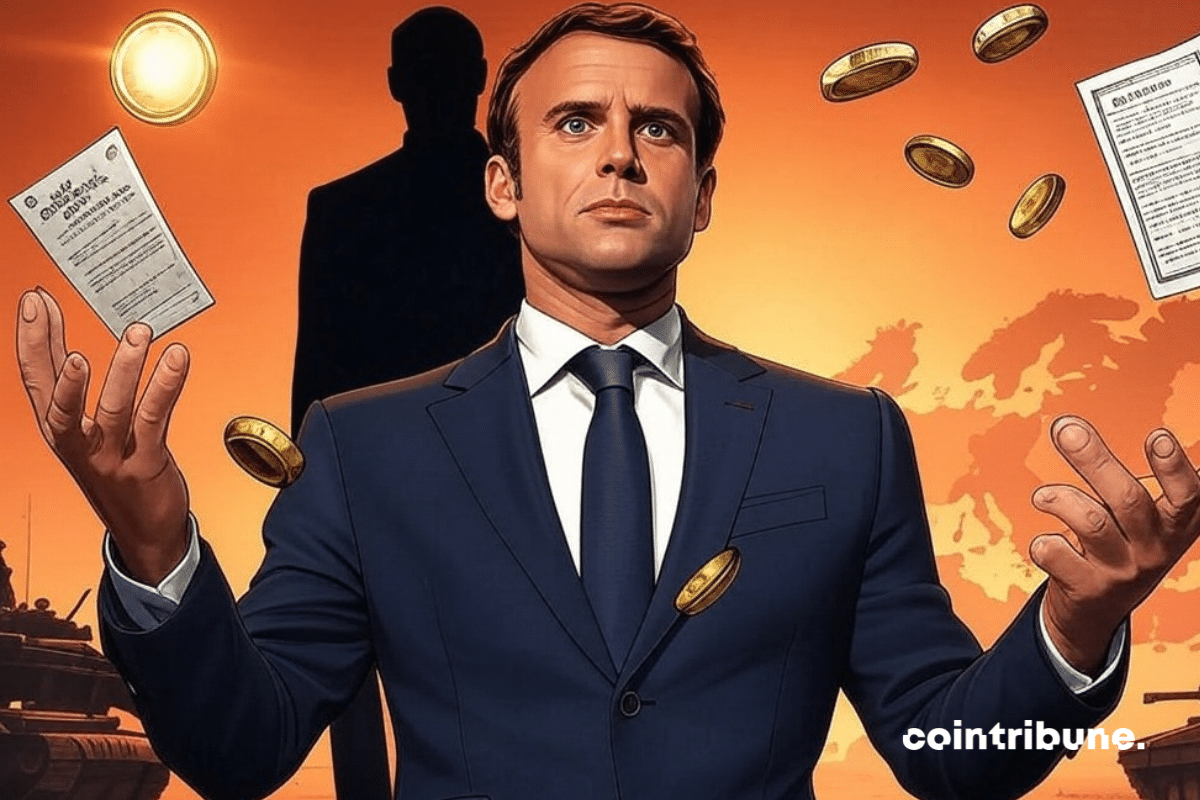
Between the requisitioned Livret A, lightly tapped fortunes, and a starving military budget, Manu juggles: finding billions without upsetting anyone, this is an art worthy of the French budget circus.
Stock Market: spectacular rebound of the markets. Europe is coming out on top while Wall Street plunges! The details in this article.
As the war in Ukraine enters a new phase of uncertainty, a major agreement between Washington and Kiev is reshaping the contours of Western support. Volodymyr Zelensky is set to travel to the United States this Friday, February 28, 2025, following the adoption of a pact that allows for American access to Ukrainian rare earths and establishes a reconstruction fund for the country. This compromise, which intertwines economic stakes and military considerations, marks a critical step in the relationship between the two nations. The discussions, conducted under tension, ultimately led to an agreement that could play a decisive role in the geopolitical future of the region.

Taiwanese youth are enjoying life as if nothing were happening. Yet, the threat of a Chinese invasion has never been more present. And when the Chinese Communist Party launches the offensive, we will officially enter a 3rd world war.
Goodbye pipeline, goodbye windfall: under the bombs, Kiev breathes a chilling wind that extinguishes the Russian stoves and warms Europe with embarrassment.
Ukraine halts Russian gas transit starting in 2025. Discover the major consequences for the European economy!
On Wednesday, October 23, 2024, Washington announced a contribution of 20 billion dollars in favor of Ukraine, a decision with significant consequences that hinges on the use of frozen Russian assets. Indeed, this measure is part of a broad G7 program aimed at supporting the Ukrainian war effort and maintaining economic pressure on Moscow. As the year 2025 approaches, the negotiations surrounding these frozen funds reveal the complex stakes of a conflict that is redefining international alliances and financial priorities.
Russia, although resilient in the face of Western sanctions, seems to be sliding down a slope. Supported by a flourishing war economy in 2024, the country could see its efforts crumble as early as the following year. The International Monetary Fund (IMF) indeed forecasts a severe slowdown in 2025, as…
The future of Western aid to Ukraine is currently hanging in the balance, faced with a series of uncertainties. On one hand, the Kiel Institute, a well-known German research institute, warns of a potential drastic reduction in financial support should Donald Trump return to the White House in 2025. On…
As the Middle East goes up in flames, Bitcoin stumbles. Gold, on the other hand, sparkles like a Napoleon found under a mattress.
The United States is facing multiple perils: debt, inflation, civil war... Yet, a terrifying threat could be imminent and lead to the fall of the United States, in a historical event comparable to 1945.
Ukraine, Middle East, Pacific... : war is back. As conflicts multiply, what is the optimal financial strategy in times of war?
The seizure of Russian assets by the United States will have serious repercussions on the international monetary system. It would be a godsend for bitcoin.
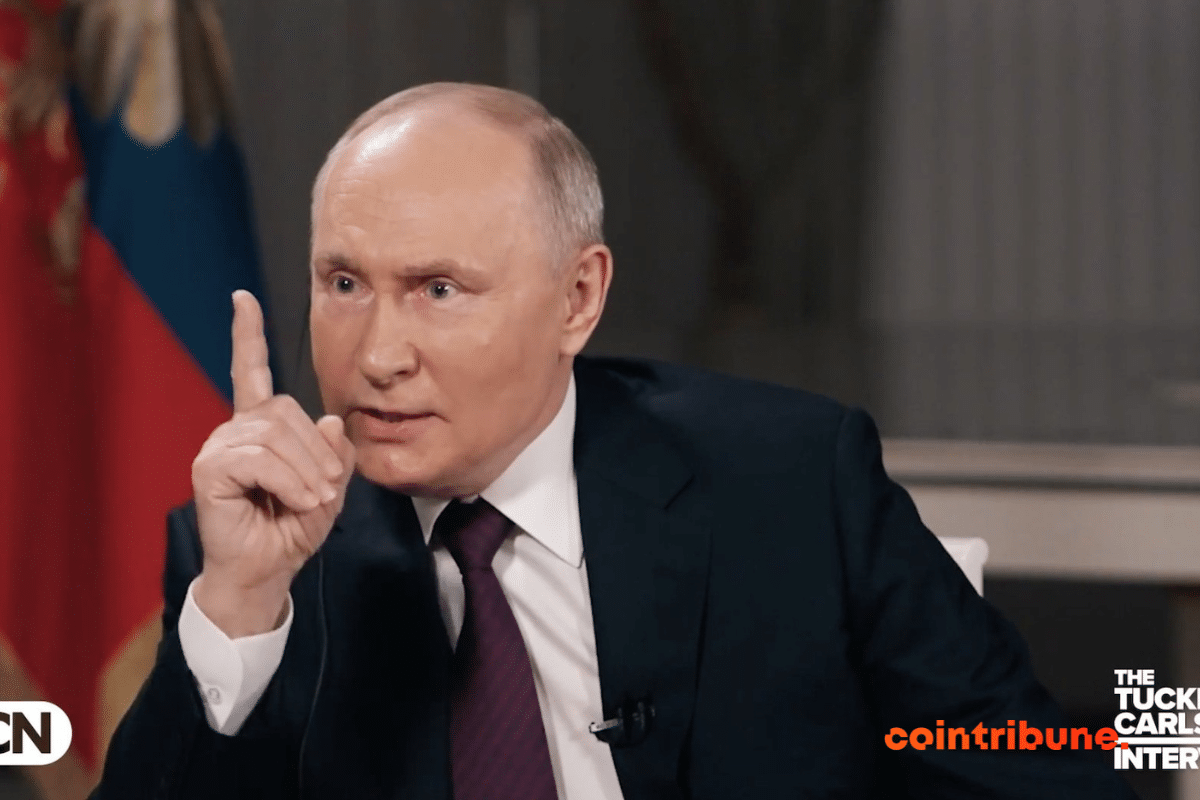
Tucker Carlson, the former Fox News journalist and potential future vice-president of Donald Trump, recently visited Russia to interview Vladimir Putin. This exciting interview comes at a time when Donald Trump has reaffirmed his desire to dismantle NATO and even encourage Putin to invade Europe. Should we expect a Polish invasion by Putin, 80 years after Adolf Hitler?
The interview of Vladimir Putin by American journalist Carlson Tucker was colorful. Especially the conversation about the dollar.
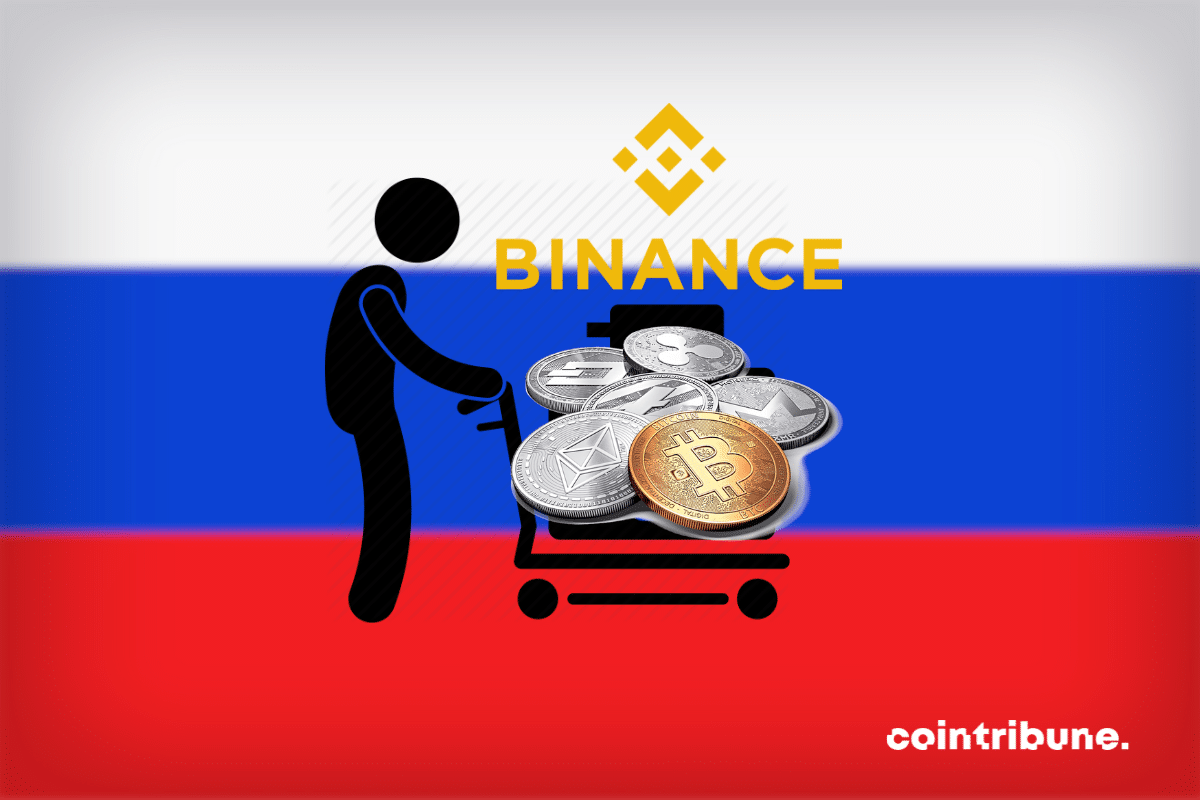
Tourmentée par des dizaines de milliers de sanctions infligées par l’Occident, la Russie, bourreau de l’Ukraine, n’a de choix que de se tourner vers les cryptomonnaies et les technologies connexes. Rouble numérique, plateforme nationale d’échange de devises numériques, DAO… forment actuellement un bouquet d’alternatives pour rehausser une économie russe en plein plongeon. Sauf que les États-Unis n’ont pas l’intention de lui faciliter les choses, même avec les cryptos. Washington n’hésiterait pas à faire pression sur Binance pour couper le pont entre les Russes et les actifs numériques. Détails !
Central banks continue to accumulate gold. Geopolitics and inflation redefine the rules of the game.