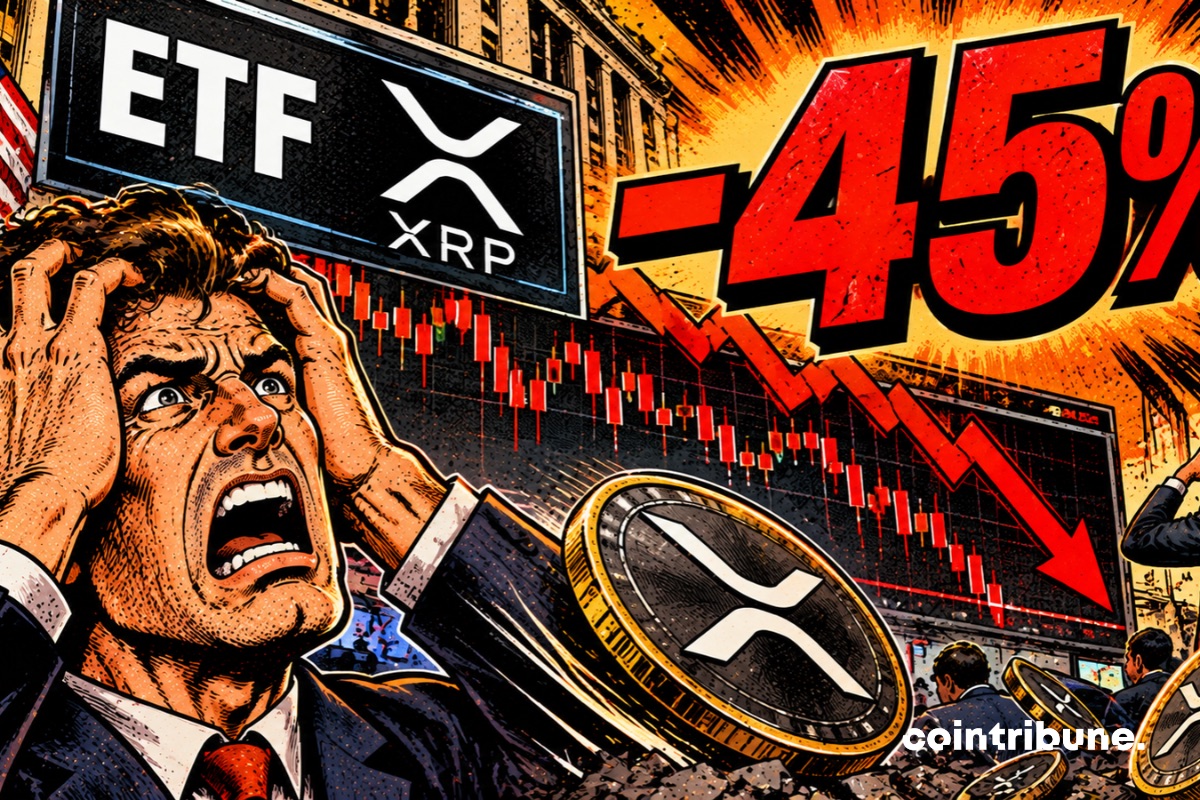
XRP ETF investors face an average latent loss of -45.3%, the largest percentage loss among major crypto ETFs. A recap this Sunday morning ahead of the new week, as XRP's monthly RSI hits a 14-year low.
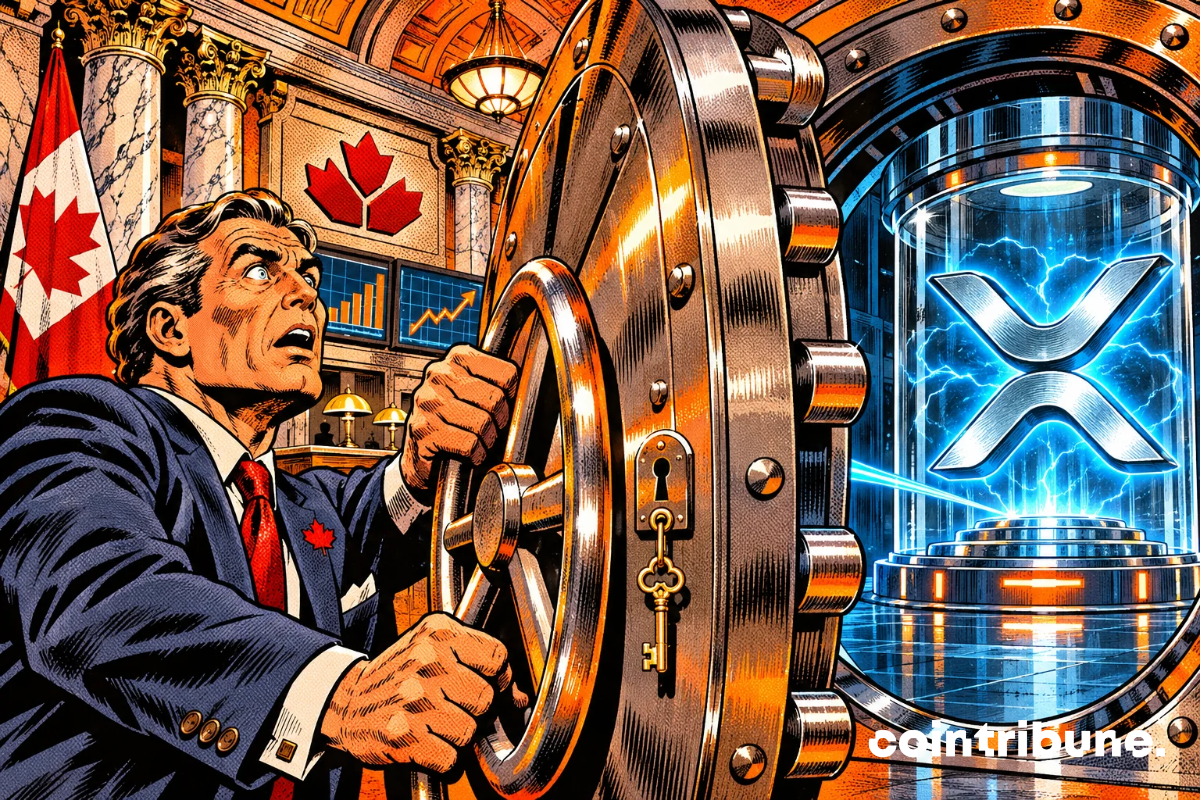
The National Bank of Canada confirms its exposure to the crypto XRP in a statement filed with the SEC on November 16, 2026. The institution holds 330 shares of the Bitwise XRP ETF, valued at 5,485 dollars as of September 30. A modest position for one of the major Canadian banks. However, review of previous statements reveals a detail: this investment already existed several months earlier.
Tom Lee proposes three possible explanations for the crypto crash: the drop in values related to artificial intelligence, the preparation of Anthropic's IPO, and the consequences of the Binance hack. These hypotheses remain unconfirmed, but they describe the same mechanism. When investors need liquidity, bitcoin becomes one of the first assets sold.
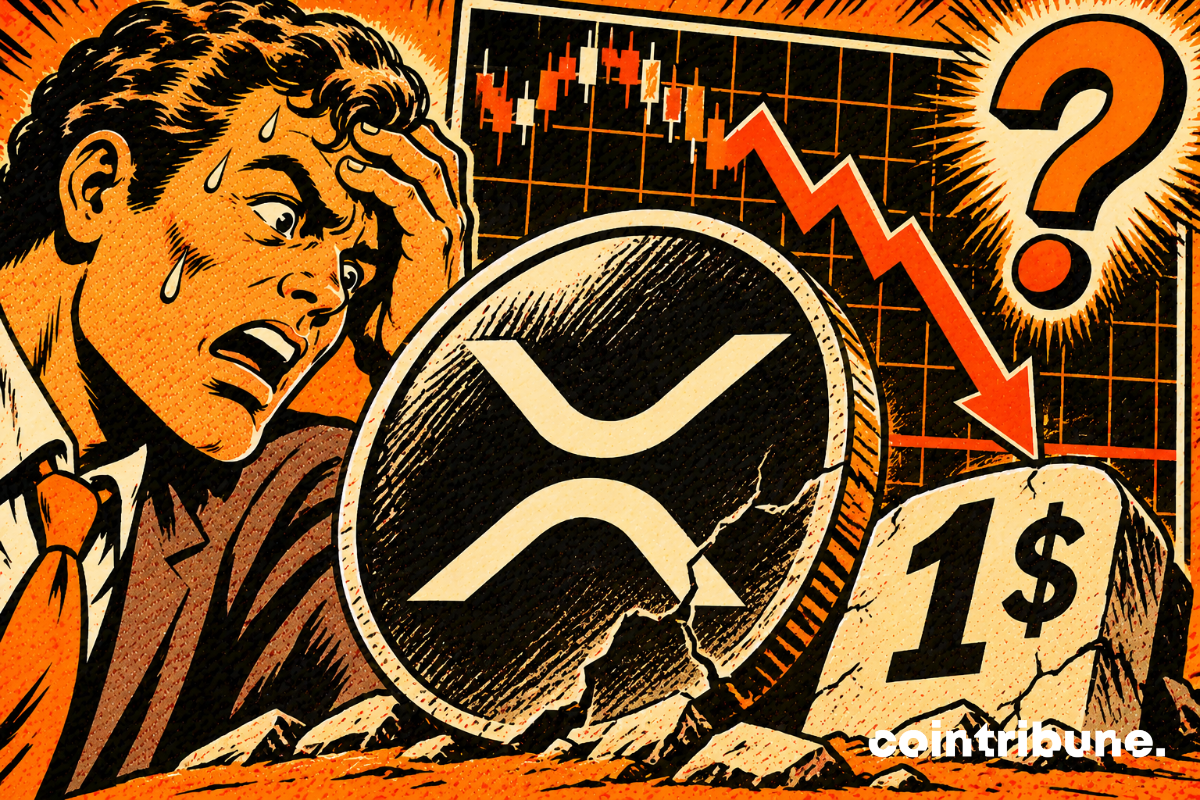
XRP fell below one dollar for the first time since August, after losing nearly 38% from its October peak. More than a psychological threshold, this break changes the market structure: each rebound towards one dollar can now face sellers looking to break even.
The sentiment around bitcoin, Ether and XRP has fallen into bearish territory, fueling hopes of a countertrend rebound. However, the fear observed on social media does not prove that sales are over: the real signal will come from the return of spot demand.
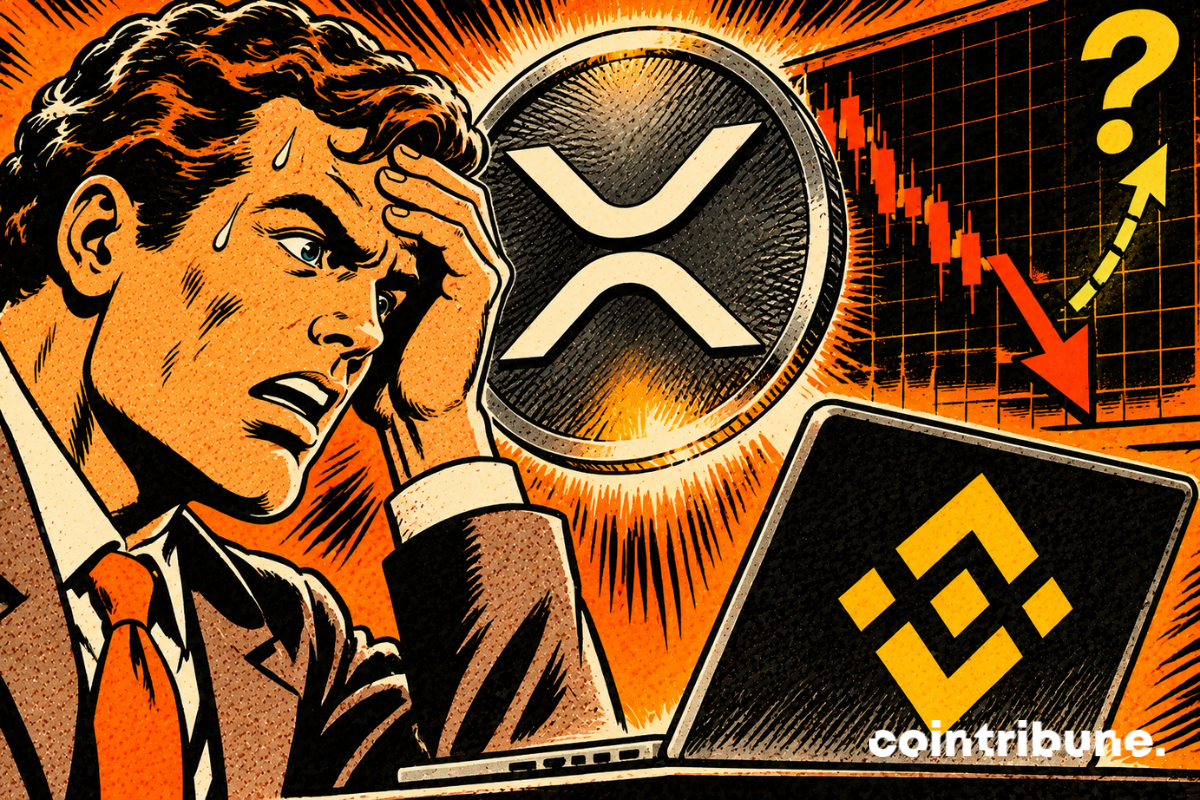
XRP lost nearly 7% in twenty-four hours and struggles around $1.10, but the decline is not explained solely by a new wave of sales. Binance data mainly shows a lack of sufficiently aggressive buyers to absorb the supply, while U.S. XRP ETFs no longer provide the support previously observed.
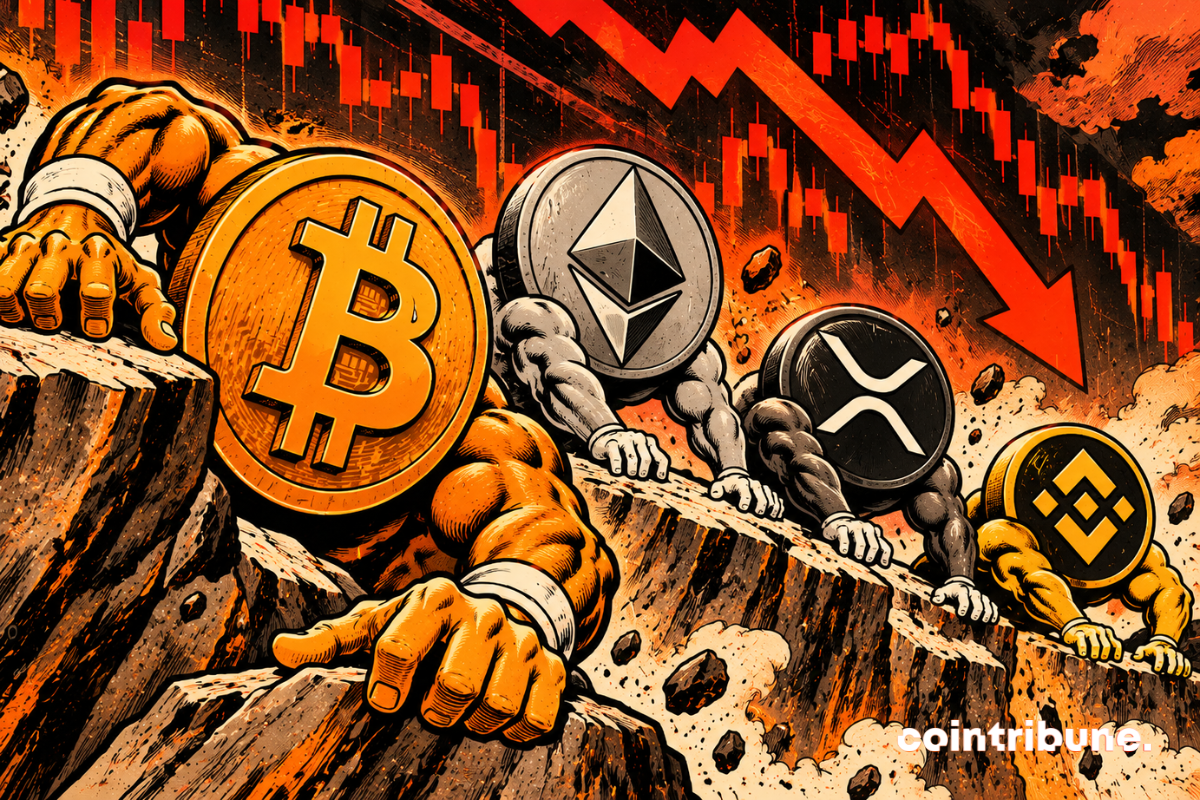
Bitcoin, Ethereum, XRP, and BNB all experienced a sharp increase in volatility after the Binance hack. However, comparing their declines shows very different situations: BTC still defends a long-term trend, while XRP and ETH need to rebuild several lost supports.
XRP is going through a difficult period, but investors in American crypto ETFs do not seem in a hurry to reduce their exposure. On October 29, the token was trading around $1.29, nearly 25% below the estimated average acquisition price of the funds. Yet, their monitored holdings decreased by only 0.26% between October 23 and 28. Six spot ETFs still held approximately 1.17 billion XRP.
The XRP Ledger now has 8.24 million addresses holding a balance, an unprecedented level despite recent XRP volatility. This growth confirms the network's expansion, but it is not yet enough to trigger a sustainable price recovery.
Arf will provide RLUSD to payment companies on the XRP Ledger, with repayments in one to five days. The native XRPL lending is not yet activated.
Wintermute considers bitcoin as the main defensive asset of the crypto market in the face of altcoin decline and macroeconomic nervousness. However, this qualification remains relative: BTC has also fallen and is not a risk-free investment.
More than 6 billion XRP have been deposited on exchange platforms in the thirty days preceding October 19. This seven-month record signals a strong recovery in transfers, but it does not prove that holders have sold their tokens.
XRP is trying to hold the $1.30 threshold after several sessions of decline, while open interest on futures contracts remains below $3 billion. The decrease in leverage reduces the risk of cascading liquidations, but it does not yet confirm a sustained return of buyers.
XRP is trading around 1.33 dollars, 62.5% below its January 2018 peak, while Bitcoin and Ether have largely surpassed their levels from that time. This underperformance does not mean that all its holders have lost money: it mainly concerns those who bought close to the peaks, while the increase in supply has diluted the value represented by each token.
American XRP ETFs continue to attract capital. After thirteen consecutive weeks of positive inflows, these funds are approaching $1.8 billion in cumulative net inflows. Meanwhile, Ripple is multiplying initiatives with two new agreements in international brokerage and South Korea. However, the XRP price remains under pressure.
XRP's share of the total crypto market capitalization has dropped from about 5% in July 2025 to nearly 3% in October 2026. This decline mostly reflects a relative loss of value compared to other digital assets and does not mean that the use of the XRP Ledger has decreased by the same proportions.
Every project claims to have "the strongest community in crypto." We set out to measure it. On September 28, 2026, we recorded for seven projects their social engagements over 24 hours (LunarCrush), the size and live presence of their Discord and Telegram servers, their subreddits and, above all, what their members actually did this year: votes, fundraising, events, code. The result: XRP leads on volume, Chainlink and Cardano follow, Kaspa and Qubic are the most mobilized small caps, and Dogecoin, with the largest audience of the seven, is not the most active. Here is the ranking, its criteria and its limits.
Bitcoin dropped to about 80400 dollars on Thursday evening, triggering a cascade of liquidations across the entire crypto market. Nearly 1.19 billion dollars of positions were closed within 24 hours, before a BTC rebound above 82000 dollars.
On October 6, the five XRP ETFs tracked by major databases held nearly 1.7 billion dollars in assets. However, their net inflows were only around 4 million dollars over one week, a sign of slowing demand.
Evernorth postponed to October 12 the expected start of its Nasdaq listing under the symbol XRPN, due to an administrative delay. This schedule coincides with two major upgrades to the XRP Ledger, but their activation does not guarantee an increase in XRP, which trades around $1.46.
On October 2, American XRP ETFs recorded net outflows of 3.28 million dollars, exclusively concentrated on the Bitwise fund. However, their assets experienced a decline of 37 million dollars during the session, a gap notably triggered by the drop in the price of Ripple's cryptocurrency.
According to a CryptoQuant indicator that fell to its lowest level since January 2025, the amount of XRP available for trading on the Binance exchange platform is increasing. This signal increases the risk of selling pressure, however it does not prove that holders have started to massively sell their tokens.
Peter Brandt finds the XRP chart interesting enough to consider a bet on the token. However, the trading veteran does not confirm any purchase and does not renew his previous target of 5.40 dollars in his latest post.
On September 25, the U.S. spot XRP ETFs recorded $22.65 million in net inflows. Bitwise mainly concentrates these flows, while XRP remains close to $1.55 despite this demand.
XRP and DOGE showed latent losses significantly higher than those of bitcoin and Ethereum according to information provided by Santiment. Such a signal can therefore contribute to reducing the risk of profit-taking, however it does not guarantee a rebound after their new drop.
In the week ending September 20, the average volume of XRP transferred to the Binance exchange platform reached 21.7 million tokens, 663% higher than its quarterly reference. Meanwhile, XRP surpassed $1.50, however, these inflows are not sufficient to confirm an increase towards $1.80.
While Bitcoin has just crossed back above the $80,000 threshold and capital is starting to flow back into altcoins, XRP has gained 6.93%. Behind this rise, a scenario closely watched by investors is unfolding. Indeed, XRP's moving averages are approaching a likely golden cross. This movement remains to be confirmed, however, various technical indicators now add more weight to the hypothesis of a sustainable rebound.
XRP leverage is shrinking on Binance while altcoins rebound. CryptoQuant data sheds light on selling pressure and an approaching golden cross.
During the shortened week of September 8, U.S. crypto ETFs recorded nearly $263 million in net outflows. The positive gathering of products related to Ether, XRP, and Solana was masked by withdrawals concentrated on Bitcoin ETFs.
Wealth managers are preparing to increase their crypto exposure as ETPs gradually make digital assets easier to access through traditional investment channels.