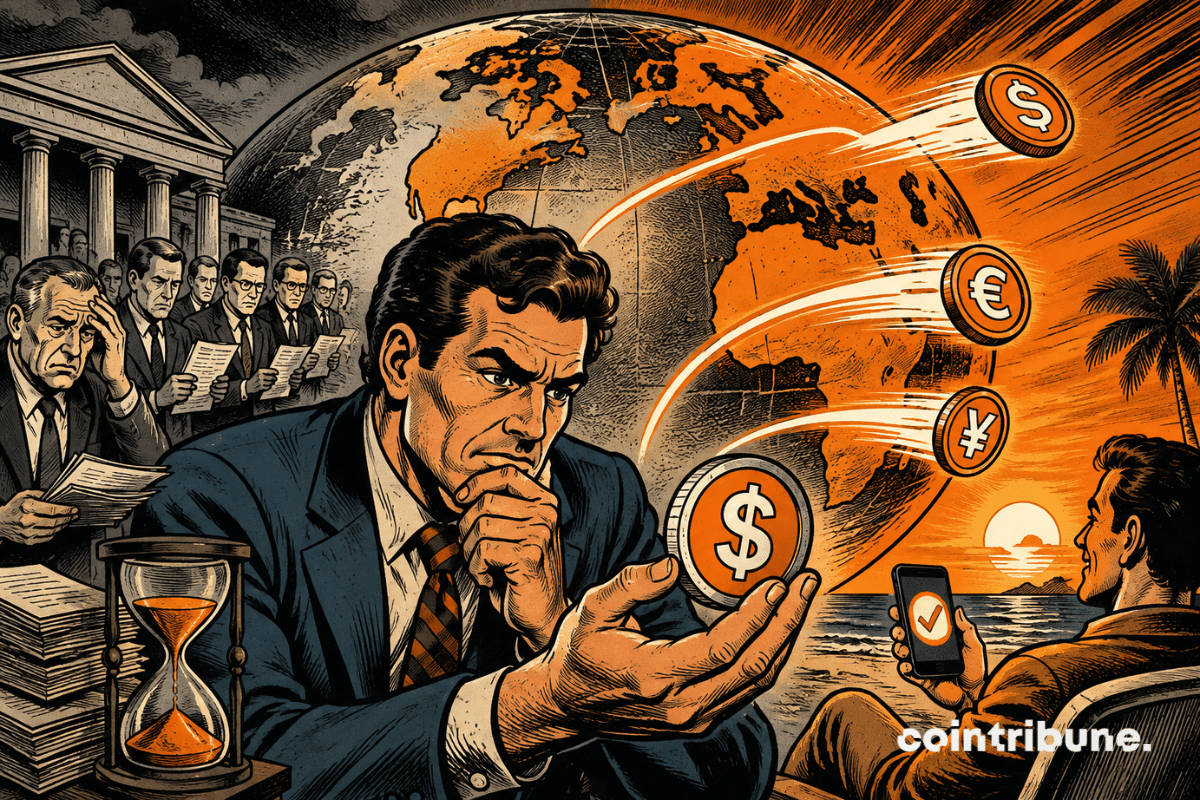
The digital euro is taking on a more political than technical turn. The ECB wants to build an open European payment infrastructure capable of reducing the continent's dependence on Visa, Mastercard, and major foreign digital wallets.
Bitcoin exceeded 79,000 dollars on Thursday for the first time since January, rekindling investors' appetite. Behind this rebound, VanEck analysts identify several technical indicators that, historically, have preceded significant increases. But how far can this momentum go?
The bitcoin market is changing dimension. Indeed, BlackRock's ETF has just surpassed a historic player in crypto derivatives, marking a turning point in the sector's organization. This surpassing is not just a simple record, but reflects a rapid advancement of regulated markets compared to offshore platforms. This evolution redefines the balances and confirms bitcoin's anchoring in traditional finance.
At Mar-a-Lago, Trump repainted crypto with the stars and stripes while his token was sinking. The guests smiled, the chart, meanwhile, was flushing.
Nearly 35 million XRP left exchange platforms within 24 hours. This movement, among the most marked of the year, occurs in a context of technical tension and a resurgence of institutional interest. Historically, this type of flow is observed at pivotal moments in the market. Between contraction of the available supply and increasing buying pressure, XRP could enter a decisive phase.
Brazil tightens its control over prediction markets related to crypto and financial betting. Authorities have initiated the blocking of 27 platforms, including Kalshi and Polymarket. This measure comes after a directive from the Ministry of Finance and an action by the National Telecommunications Agency. According to authorities, these services do not comply with the current legal framework. The case therefore goes beyond just the crypto issue. It also affects gambling, user protection, and financial stability.
88 people indicted, organized criminal networks, tortured victims: crypto-kidnapping is exploding in France. Vanessa Perrée, prosecutor of PNACO, reveals an unprecedented wave of violence targeting cryptocurrency holders. Why is this phenomenon spreading so fast?
China has multiplied strong signals over the past 24 hours. It is continuing to toughen its economic and technological policy while strengthening its control over crypto. Beijing further regulates American capital and accelerates its autonomy in artificial intelligence. Meanwhile, Washington's sanctions against Chinese energy companies add additional pressure. Between finance, technology, and energy, the balance of power between Beijing and Washington takes on a new dimension.
In crypto, bridges are no longer invisible infrastructure. They are pressure points. Every cross-chain transaction carries the same silent tension: will it go through or break somewhere in the shadows? The promise of decentralization once painted a frictionless future. Reality pushed back. Exploits, failed transfers, fragmented liquidity—the industry learned the hard way that moving value across chains is still one of its most fragile layers. In 2026, reliability is no longer about speed alone. It’s about execution, resilience, and user outcomes. And when you zoom out, a pattern emerges: two competing philosophies shaping the future of cross-chain.
Large Bitcoin wallets resume activity. On-chain data signal an intensification of movements among these major players, a phenomenon often observed at key market moments. As these flows multiply, expectations evolve. Does this resurgence of activity mark the beginning of a new bullish dynamic, or is it part of a simple strategic adjustment?
Morgan Stanley launches a money market fund designed for the reserves of stablecoin issuers. The product, named Stablecoin Reserves Portfolio (MSNXX), targets a very specific area: the liquidity that backs payment stablecoins. The message is clear. The bank no longer just views crypto as an asset class. It also wants to become part of its regulated back office.
A researcher has just broken a 15-bit elliptic crypto key on a publicly accessible quantum computer, winning 1 Bitcoin. This breakthrough, 512 times more powerful than the previous one, does it threaten the security of Bitcoin and blockchains?
The crypto market is once again eyeing Solana. A technical signal identified on its weekly charts, previously observed during strong upward phases, has just been confirmed. This return occurs in a still fragile environment where investors are seeking benchmarks. Between historical precedent and critical price levels, the asset finds itself at a pivotal moment in its trajectory.
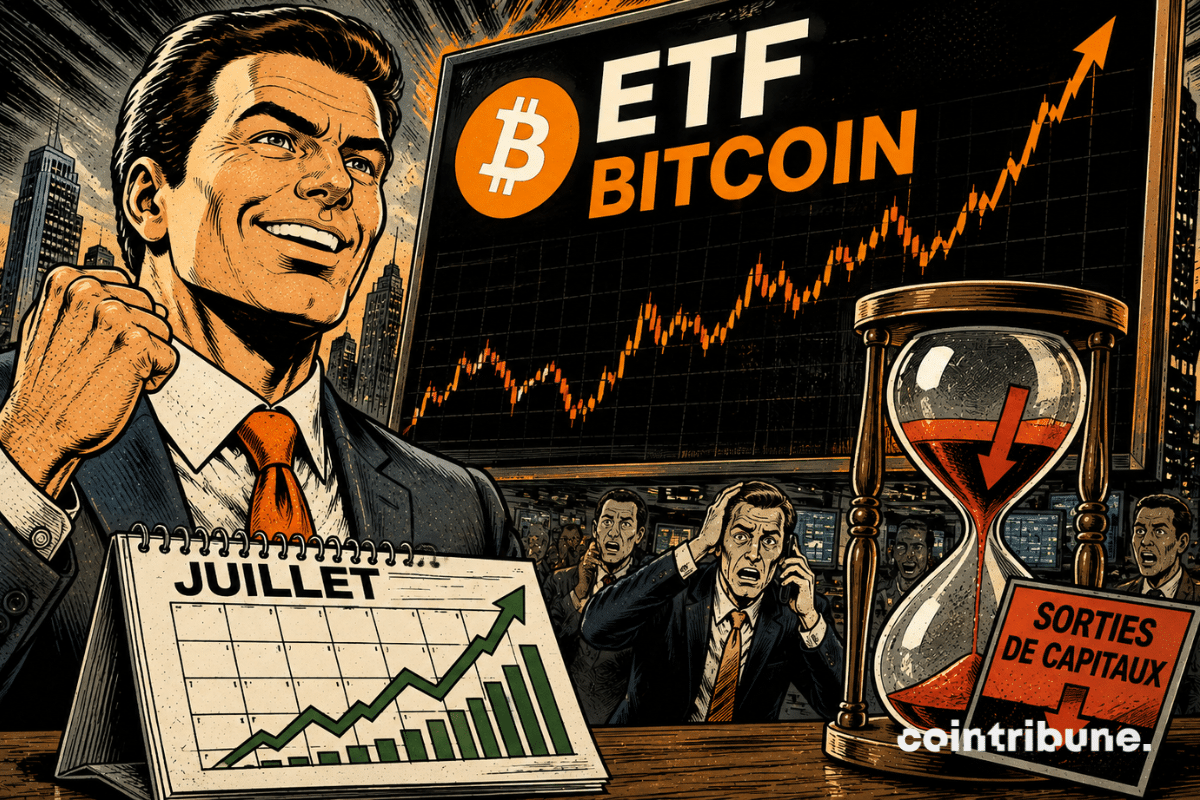
The US spot Bitcoin ETFs have just closed eight consecutive days of net inflows, totaling more than 2 billion dollars in less than two weeks. A rare streak, which is no coincidence. Are we on the dawn of a new cycle of institutional accumulation?
The dollar is no longer just contested, but it is now bypassed in real usage. Starting April 30, 2026, the BRICS take a decisive step with the deployment of an operational payment system between China and Indonesia. Behind this initiative is a clear ambition: to concretely reduce dependence on the greenback in daily transactions. This progress marks the transition from a political strategy to a tangible application, likely to reshuffle the cards of the international monetary system.
Cardano reveals its big plan, Hoskinson promises the top, and skeptics count the steps. In crypto, social mobility exists, but it often breaks down.
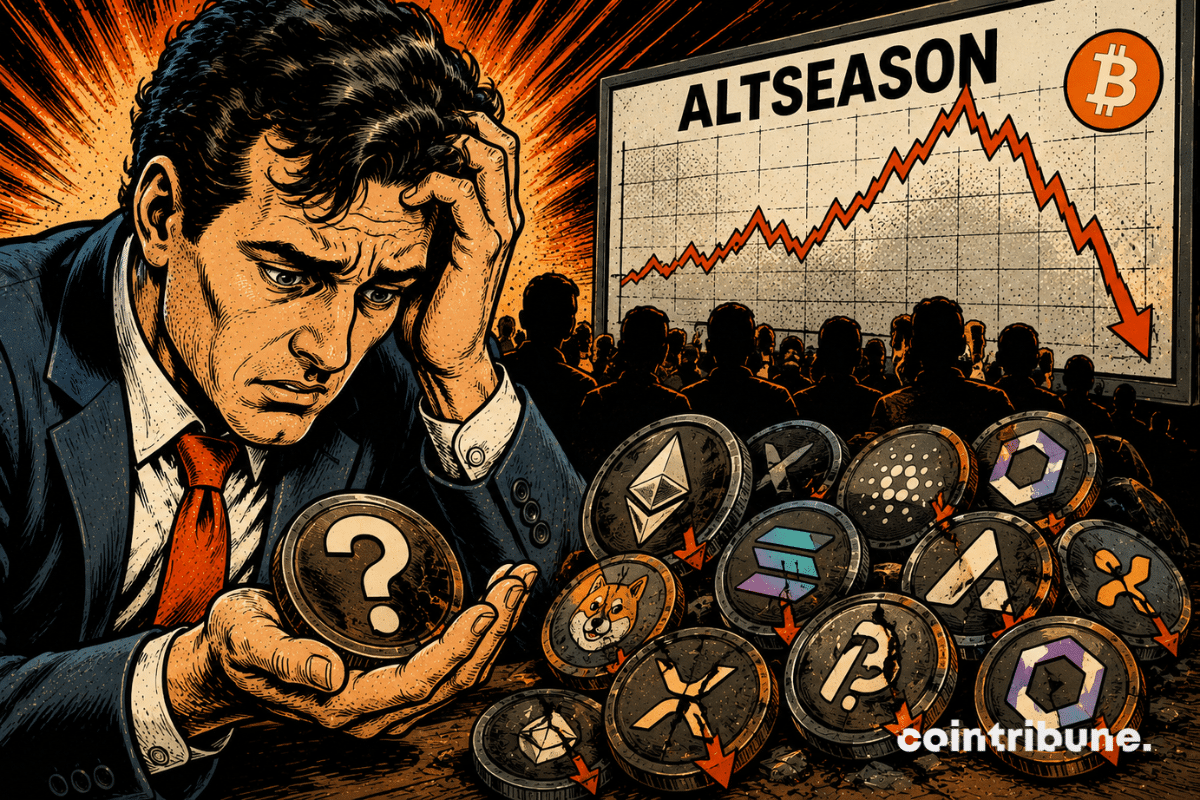
Institutional flows are intensifying, but the market is sending a completely different signal. Despite nine consecutive days of inflows into XRP-related investment products, its performance against Bitcoin is deteriorating dangerously. This unexpected gap between capital inflows and price weakness raises questions for investors: do ETFs really suffice to support an asset? Behind this contradictory dynamic, technical indicators outline a much more worrying scenario for XRP.
DeepSeek launched its V4 models on April 24, 2026, optimized for Huawei Ascend chips and marking a major breakthrough in Chinese AI. With performance rivaling GPT-5.4 and Gemini, this open-source model could redefine global standards.
Metaplanet raises 50 million dollars to buy more bitcoin, and this choice confirms a strategy that has become central for the Japanese company. The company listed in Tokyo no longer just keeps BTC in reserve. It now builds its financial model around it.
The White House has just lifted the veil: Donald Trump will indeed speak Saturday at the gala organized for holders of the TRUMP memecoin. An event as fascinating as it is controversial, mixing presidential power, crypto, and suspicions of conflicts of interest.
Medical AI crosses a threshold that is no longer just theoretical. OpenAI now claims that its ChatGPT model outperforms human doctors in certain clinical tasks, with supporting figures. With ChatGPT for Clinicians, the company tackles directly the heart of the healthcare system, between documentation, research, and decision support. Behind this announcement, a promise of productivity… but also questions about reliability and the methodology used. This advancement marks a turning point in the accelerated integration of artificial intelligence in medicine.
Predictive markets enter a new risk zone. The arrest of an American soldier for betting on Polymarket linked to an operation against Nicolás Maduro shows that the boundary between information and exploitation can quickly disappear.
The use of digital assets enters a more contrasted phase after several quarters marked by dynamic global activity. According to a TRM Labs study, cryptocurrency adoption slowed in the first quarter of 2026, especially in developed economies. This evolution shows a more selective crypto market, where local needs, digital payments, economic conditions, and geopolitical tensions increasingly influence user behaviors.
The Strait of Hormuz, a key passage through which nearly one-fifth of the world’s oil transits, is tipping into a zone of extreme tension. Donald Trump now claims to have total control over access, stating that no ship can pass without the approval of the United States Navy. This stance comes after several military incidents between Washington and Tehran, escalating an already explosive crisis. Between shows of force and direct responses, this standoff is redrawing energy and strategic balances on a global scale.
DeFi hits a wall: JPMorgan warns about a lack of trust from institutions. Detailed explanations in this article!
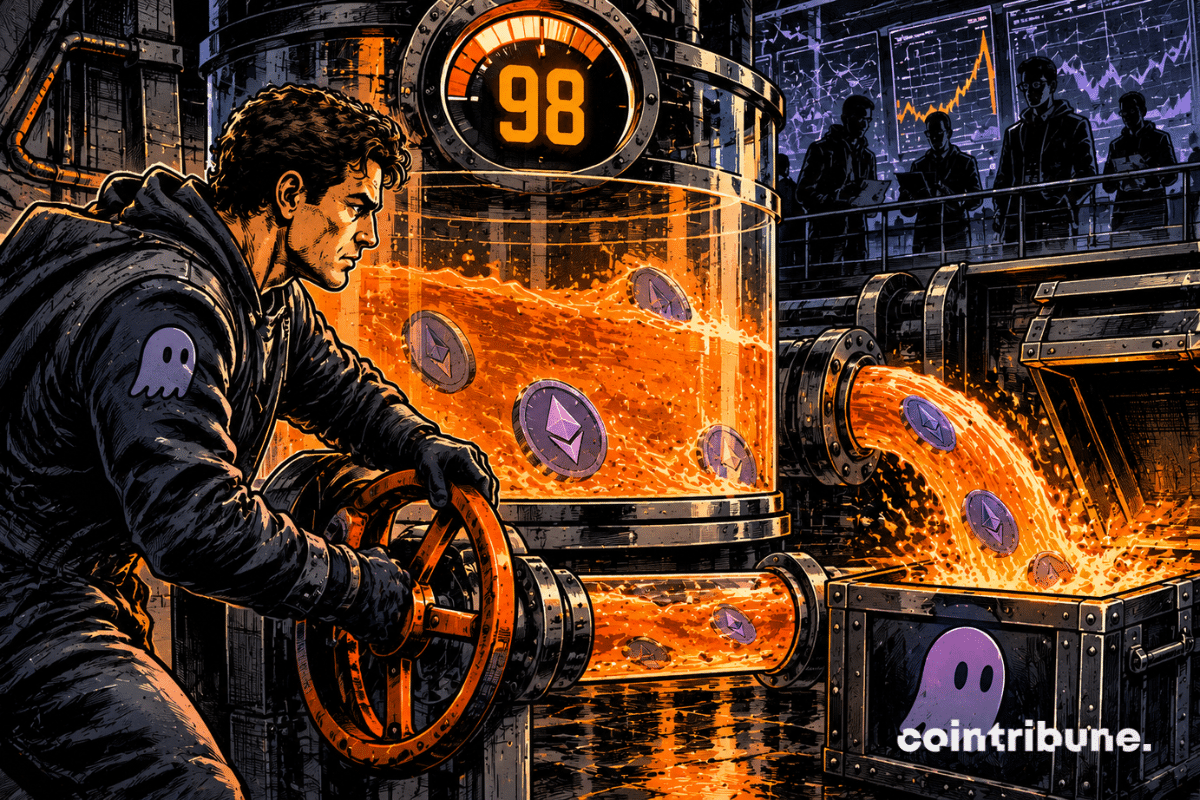
At Bitmine, ether no longer sleeps, it works. Tom Lee stacks, stakes, promises yield, while the market watches this whale with admiration, cold sweat, and a calculator.
The crypto market sends a breaking signal. After several tense weeks, investor sentiment suddenly recovers, driven by a bitcoin close to a key threshold. The Fear & Greed index confirms this rapid shift. It remains to be seen whether this recovery reflects a lasting change or just a simple rebound in an still unstable environment.
Artificial intelligence is revolutionizing bug bounty programs in crypto, but at what cost? With a 900% surge in submissions, security teams are overwhelmed. Discover how AI is redefining security challenges and why this wave could threaten protocol stability.
Ethereum experiences an explosion of buying pressure on derivatives, with a 72% increase in aggressive traders. Investors now target $2,600, a key liquidity zone. Does this dynamic signal a historic rally for ETH?
The trading volume of memecoins exploded to over 5 billion dollars in a single day, before falling as quickly as it had risen. Behind this spectacular volatility lies a reality well known to analysts: short-term speculation rules supreme. But this time, is it a sign of a lasting slowdown?