On Wall Street, money flows out through the crypto ETF door while Morgan Stanley comes in through the window with its bitcoin trust. The dance of the hesitant truly begins.


The mystery surrounding the creator of Bitcoin resurfaces. A new investigation by the New York Times points to Adam Back as the probable Satoshi Nakamoto. But between firm denials and weak evidence, the truth still seems out of reach. Are we finally witnessing the end of a myth... or yet another false lead?
Bitcoin reacted immediately to Donald Trump's statements on the conflict between the United States and Iran. In a context of heightened tensions, the crypto market recorded a rapid increase, driven by contradictory signals between threats and negotiations. The possibility of a ceasefire strengthened this dynamic, placing investors in an environment where each political announcement directly influences prices.
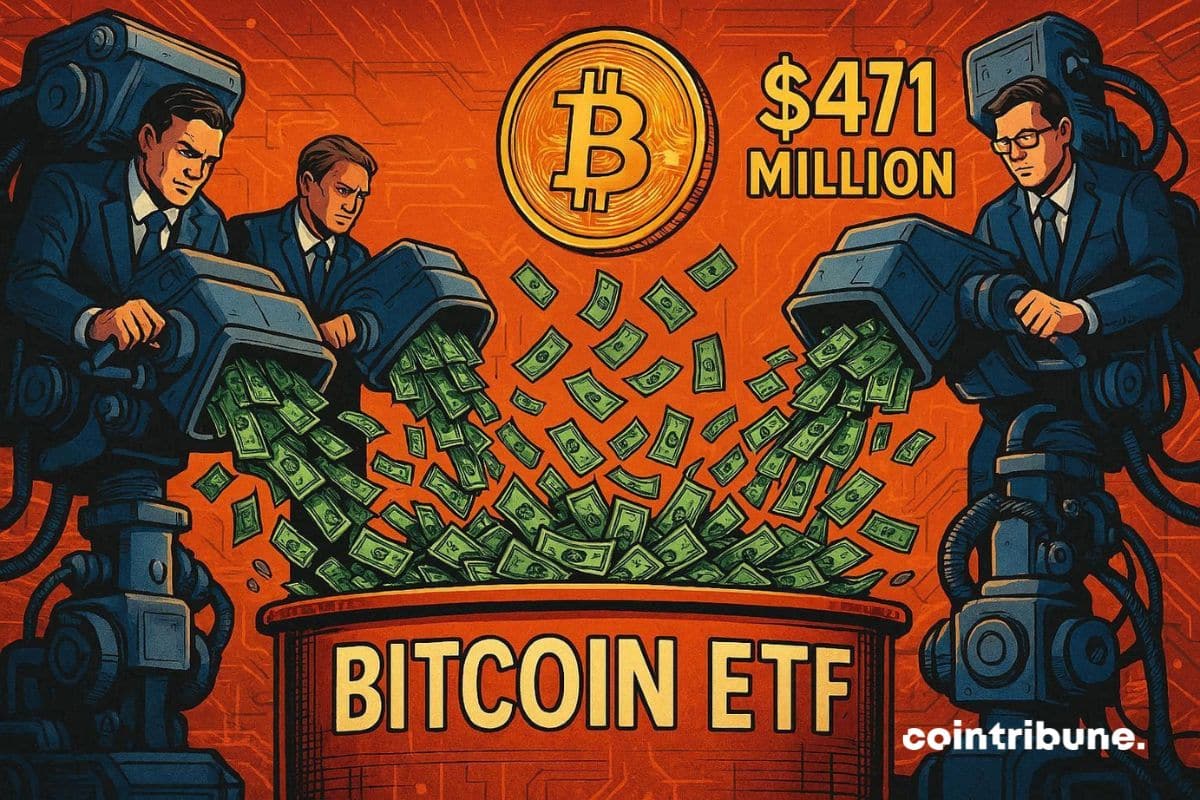
Crypto news: $471M net flows on Bitcoin ETFs in one day. Here is what this institutional signal really means.
Capital is returning to crypto investment products. After a week of strong outflows, ETPs recorded inflows of 224 million dollars. The movement remains however mixed. XRP captures the majority of flows and establishes itself as the main driver of this recovery, while other assets struggle to follow. This rebalancing reveals an evolution in investment strategies in a market still subject to high uncertainties.
On April 6, 2026, Bitcoin ETFs attracted 471 million dollars in a single day, an all-time record since February. BlackRock, Fidelity and ARK Invest lead the charge, transforming the crypto market. Does this phenomenon mark the beginning of a new era for Bitcoin, or does it hide unsuspected risks?
Institutional flows depict the real balance of power in the crypto market, and this shortened week provides an important illustration. While Bitcoin manages to attract capital, Ethereum and other altcoins face persistent pressure, revealing a subtle but real shift in investment strategies. Behind these movements, a trend emerges: investors sort, arbitrate, and reduce their commitments. Crypto ETFs thus become a key barometer of a market in search of direction.
The digital euro and bitcoin are profoundly reshaping the use of money in Europe. Between flow centralization and individual autonomy, these two opposing models are transforming payments, fund management, and privacy issues.
While the crypto world grimaces, Saylor puts another coin into the Bitcoin machine. Fourteen billion losses on the counter, and the gentleman keeps buying, like a firefighter playing with gasoline.
Everything collapsed within a few hours. On the Hyperliquid platform, crypto trader James Wynn saw his account drop from 100 million dollars to just 900$, after short selling bitcoin with extreme leverage. Every transaction, every loss, every liquidation, was captured in real time and relayed by the on-chain tracker Lookonchain on X.
Strategy did not buy any bitcoin between March 23 and 29. But Saylor's signal return on X changes everything. Analysis here!
Bitcoin is evolving in a rare configuration where fear dominates without causing an immediate drop. Despite broadly negative sentiment, declining demand, and persistent selling, prices remain surprisingly stable. This divergence reveals a market under tension, caught between selling pressure and institutional support. In this uncertain context, the balance remains fragile and could quickly shift depending on the flow and overall climate.
Bitcoin is going through a rare moment of tension. The debate around BIP 110 is not only about a technical update. It concerns the very definition of bitcoin, its neutrality, and the limit of what the network should accept.
Global crises reshuffle the market cards, but rarely in the expected direction. While investors instinctively turn to gold or defensive assets, a Mercado Bitcoin study reveals a counterintuitive reality: bitcoin outperforms after major shocks. Behind its initial volatility, the flagship crypto follows a unique trajectory that questions traditional reflexes. This dynamic, observed over several recent episodes, could well redefine market interpretation in times of instability.
The Bitcoin network has just recorded its third difficulty increase since the beginning of the year. Good news on the surface? But behind this technical rebound hides a much darker reality for miners. And the current signals already announce an imminent turnaround.
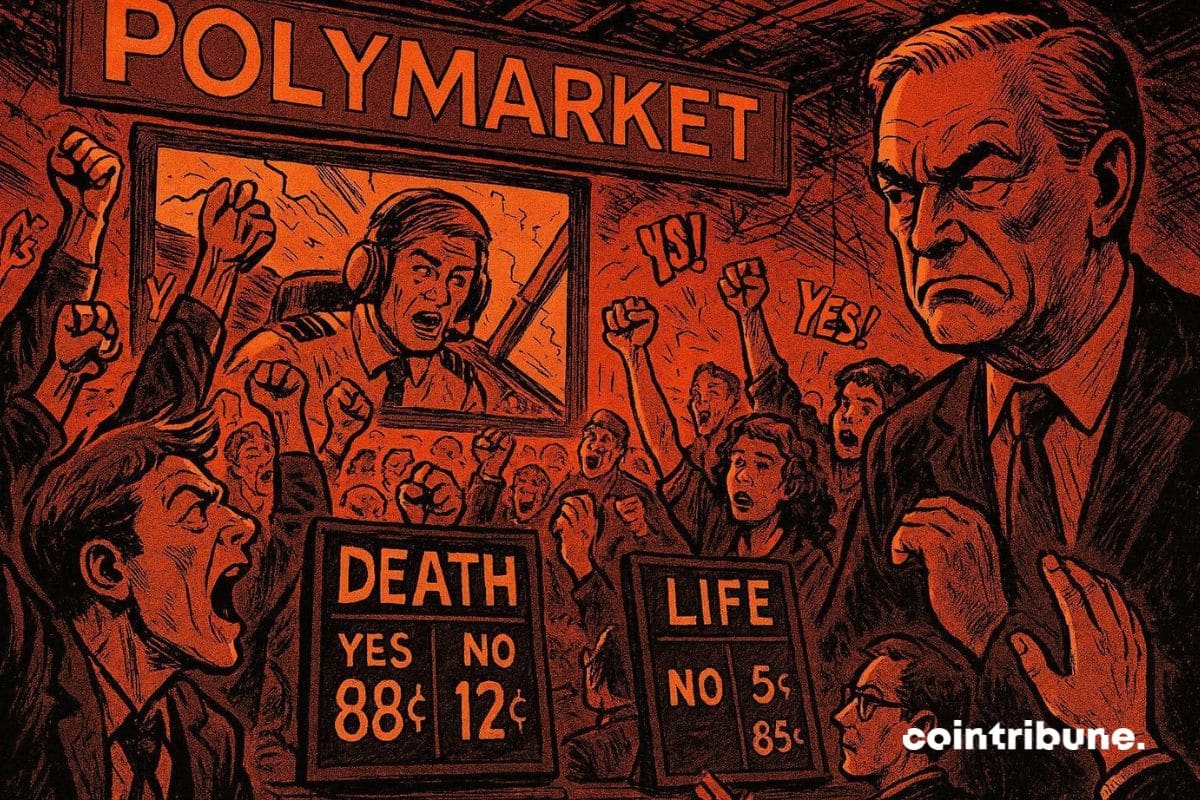
A prediction market on the fate of an American pilot missing in Iran is causing scandal. Polymarket removes it under pressure, while the United States prepares a law to ban these controversial bets. Between innovation and ethics, where to draw the line?
The Bitcoin market is approaching a critical threshold. As short positions accumulate, a technical level now concentrates several billion dollars exposed to liquidations. In an environment marked by geopolitical tensions and macroeconomic uncertainties, this fragile balance could quickly give way. A limited move would be enough to trigger a chain reaction in the derivatives markets.
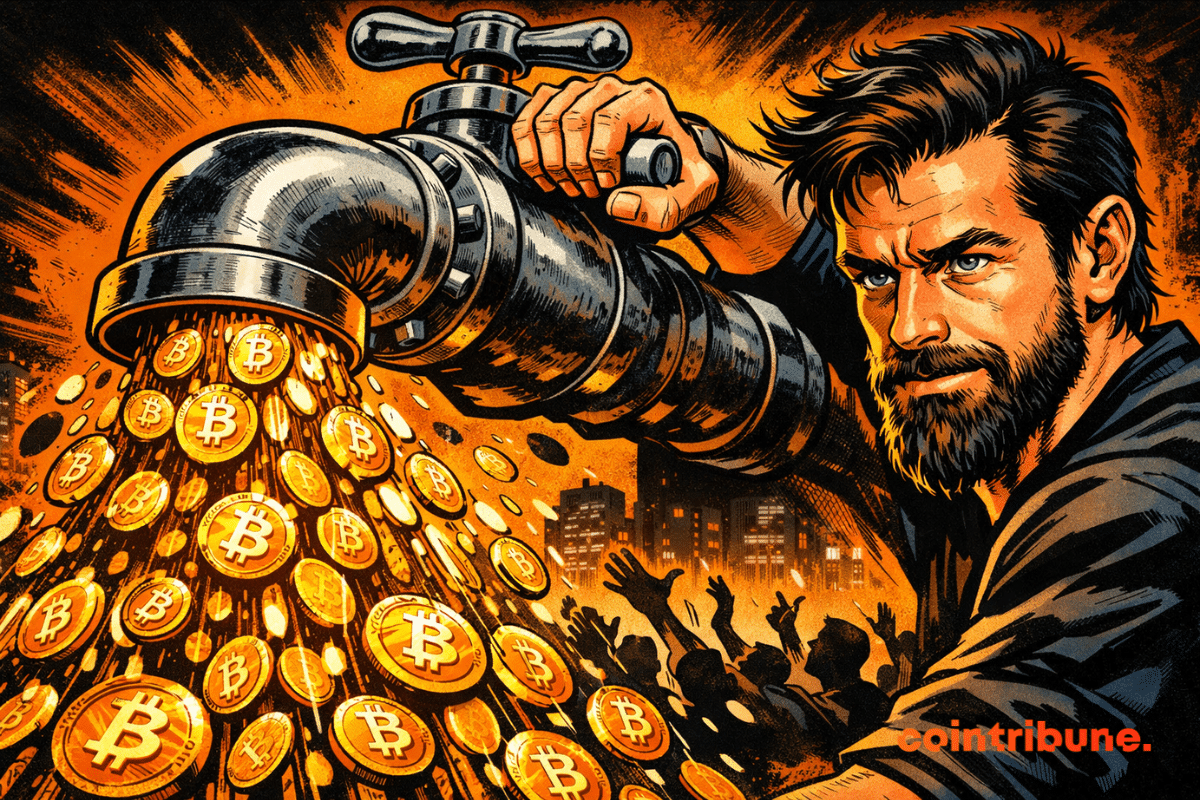
Receiving Bitcoin for free seemed to belong to the past. However, this practice could make a comeback. With Jack Dorsey’s initiative, the Bitcoin Faucet reappears as an intuitive and accessible tool. Behind this concept, a broader ambition is emerging. Reduce entry barriers and revive Bitcoin adoption in an ecosystem that has become complex and dominated by institutions.
The American financial giant Charles Schwab is about to reach a historic milestone. By the end of the first half of 2026, its clients will be able to buy Bitcoin and Ethereum directly on the platform. An announcement that comes at a time when the crypto market is going through a period of turbulence.
A solo miner wins an exceptional bitcoin block, reminding us that this lottery survives despite the brutal industrialization of current global mining.
While the crypto market remains under pressure, MARA sends a strong signal. Between layoffs and massive Bitcoin sales, the company no longer just endures the market, it redefines its strategy. Behind these decisions, a shift towards AI and energy is taking shape, revealing a deeper transformation of miners' role in the crypto ecosystem.
Bitcoin is going through a phase of tension that increasingly resembles the beginning of a true bear market. Several on-chain indicators show that the market is approaching areas historically associated with cycle lows. Are we at the dawn of a general capitulation… or simply halfway through a cycle correction?
Under pressure from traditional markets, the leading crypto has just hit a weekly low in a climate dominated by soaring oil prices and geopolitical tensions. This movement goes beyond a simple technical correction and revives darker scenarios. Some analysts already mention a return to $10,000, reigniting the debate on the crypto market's vulnerability to macroeconomic shocks.
Bitcoin is wavering and taking a brutal shock: nearly 600 billion dollars are now unrealized losses. At 66,000 dollars, the market reveals fragility rarely seen at this scale. A significant part of the supply is under pressure, while some long-term investors are starting to give in. Between capitulation and demand exhaustion, this phase marks a turning point in the current market dynamics. It remains to be seen whether this tension signals a simple adjustment... or a deeper cycle change.
Markets are wavering, energy is soaring, and even gold is retreating amid geopolitical tensions. In this unstable context, Bitcoin is beginning to reveal a deeper transformation of the global system that few anticipated.
American crypto is approaching a key moment. According to Coinbase, a compromise on the CLARITY Act is now close in the US Senate, but the text still has no date for committee passage or guarantee of a final vote.
Metaplanet has just crossed a milestone that very few companies can claim. The Japanese company bought 5,075 bitcoins in the first quarter of 2026, bringing its treasury to 40,177 BTC. This move pushes it to the third place among the largest publicly traded Bitcoin treasuries, behind Strategy and Twenty One Capital.
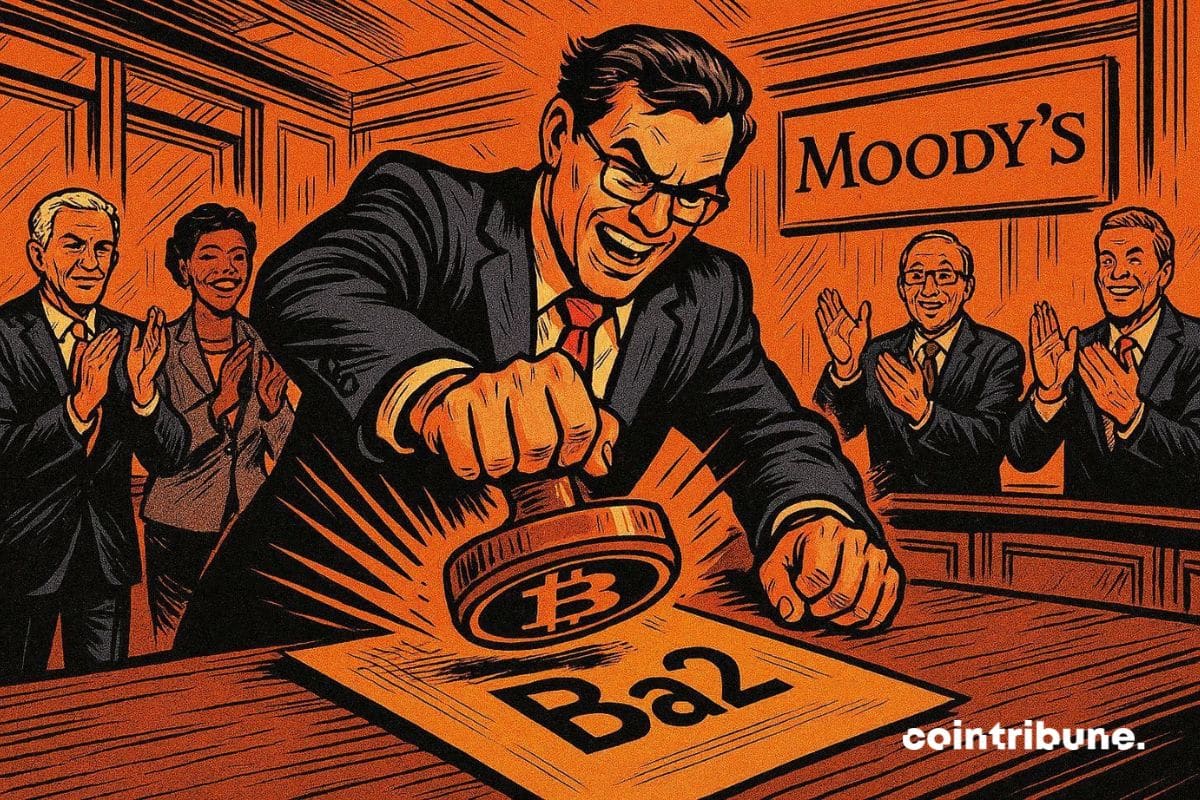
Moody’s has just made history by rating bonds secured by Bitcoin. A world first that could revolutionize finance. Discover how this alliance between crypto and traditional institutions opens new opportunities, while raising major challenges.
Warren Buffett just bought $17 billion in Treasury bills. What this historic signal means for bitcoin price.
The month of March 2026 offered a breath of fresh air to Bitcoin ETF investors. After two months of massive outflows, funds returned to capital inflows. But behind this encouraging signal lies a much less flattering quarterly report. Is the awakening sustainable, or just a lull before the next storm?