Peter Brandt believes that the price of Ethereum would reach 8600 dollars following a break of 5000 dollars. Ether progressing around 2660 dollars, this scenario remains distant and depends on multiple intermediate resistances.
In the third quarter, SHIB shows a cumulative increase of 44.1%, thanks to three consecutive months in the green. Historically, the month of October often has an average return of 167.5%, however this figure almost entirely relies on the spectacular explosion of 2021.
Bitcoin has just held above $86,000 this Tuesday, after many weeks of strong progress supported by the return of appetite for risk. Various observers see in this scenario the end of "crypto winter," however, short position liquidations and monetary uncertainties still call for caution.
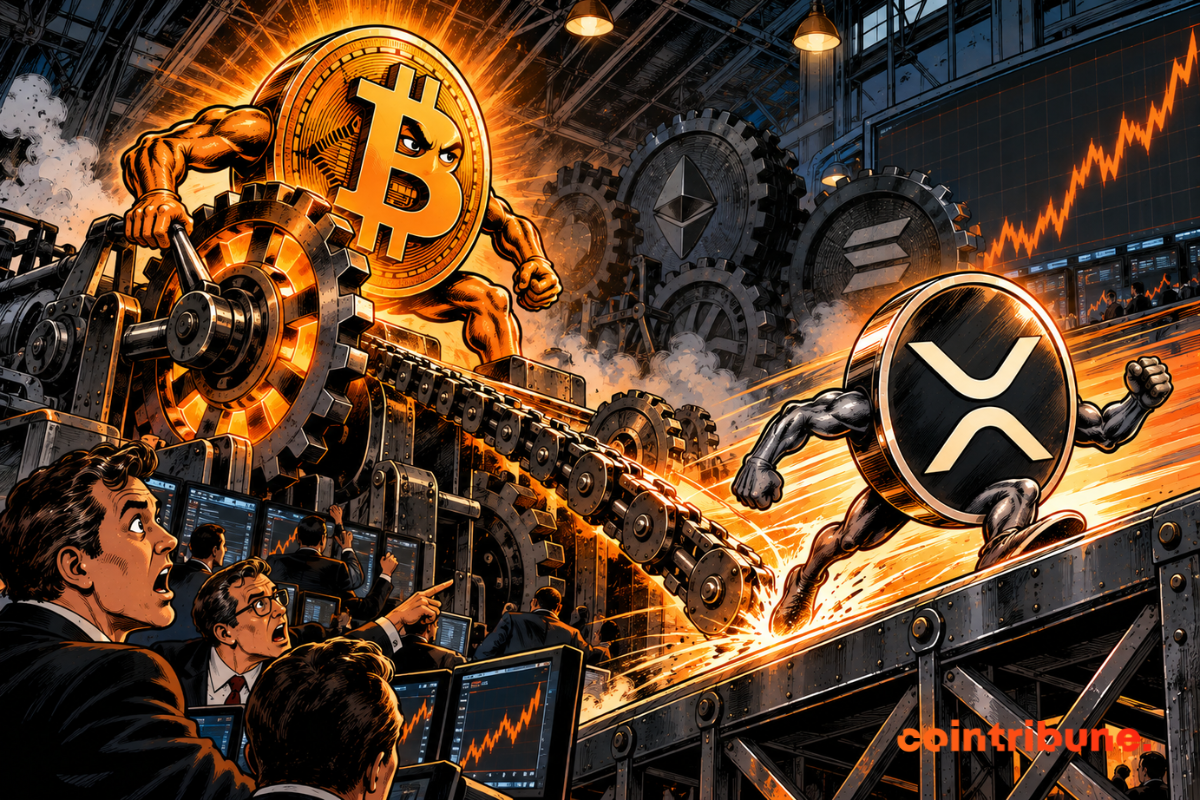
While Bitcoin has just crossed back above the $80,000 threshold and capital is starting to flow back into altcoins, XRP has gained 6.93%. Behind this rise, a scenario closely watched by investors is unfolding. Indeed, XRP's moving averages are approaching a likely golden cross. This movement remains to be confirmed, however, various technical indicators now add more weight to the hypothesis of a sustainable rebound.
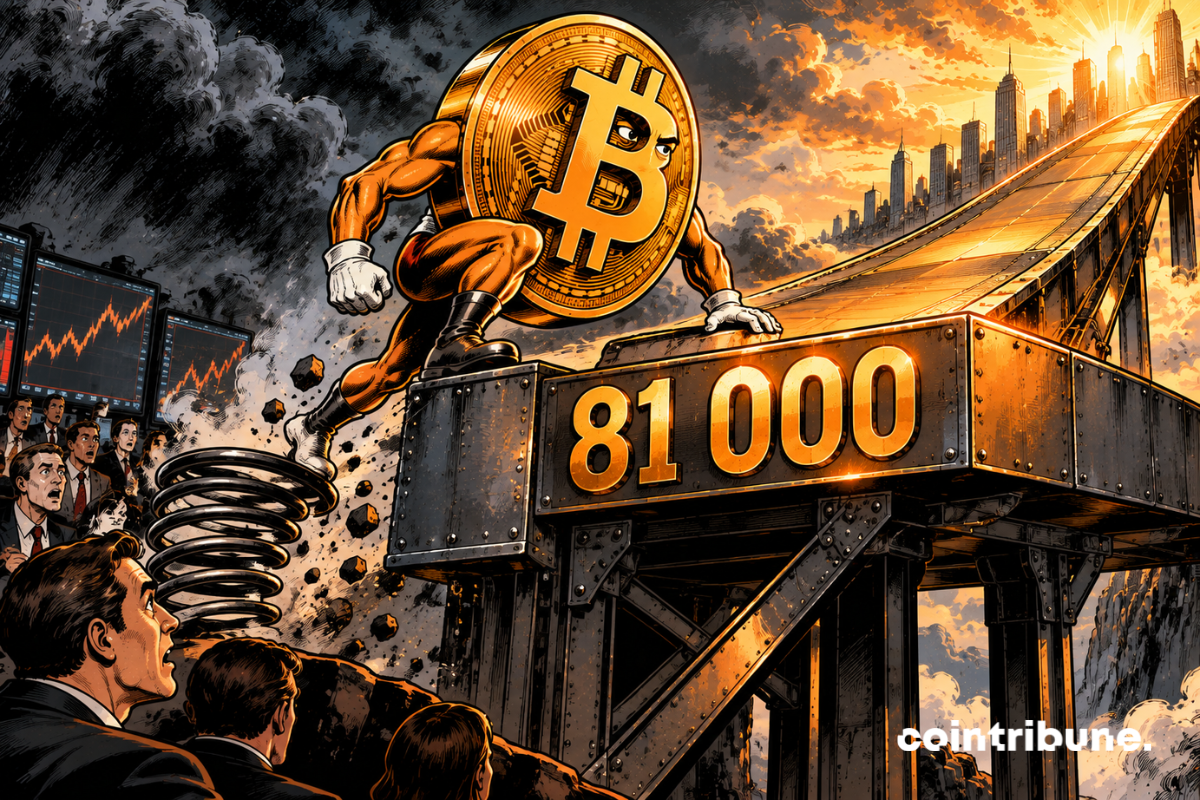
Bitcoin has just marked a new reversal. A few days after a drop below 75000 dollars, the leading crypto rebounded to 81636 dollars, its highest level since September 4. Indeed, this recovery comes after a week marked by the failure of the CLARITY Act, Federal Reserve decisions, and new regulatory signals from Washington. Behind this increase, another phenomenon grabbed attention: the return of spot demand was accompanied by a massive liquidation of short positions.
Net inflows have been recorded in US XRP ETFs for eleven consecutive sessions. This streak, starting on August 18, brought them nearly 170 million dollars and raised their cumulative flows to 1.68 billion since their launch. Meanwhile, Q2 publications position Goldman Sachs as the leading known institutional investor. However, these two statistics do not cover the same period and do not allow linking recent flows to the American bank.
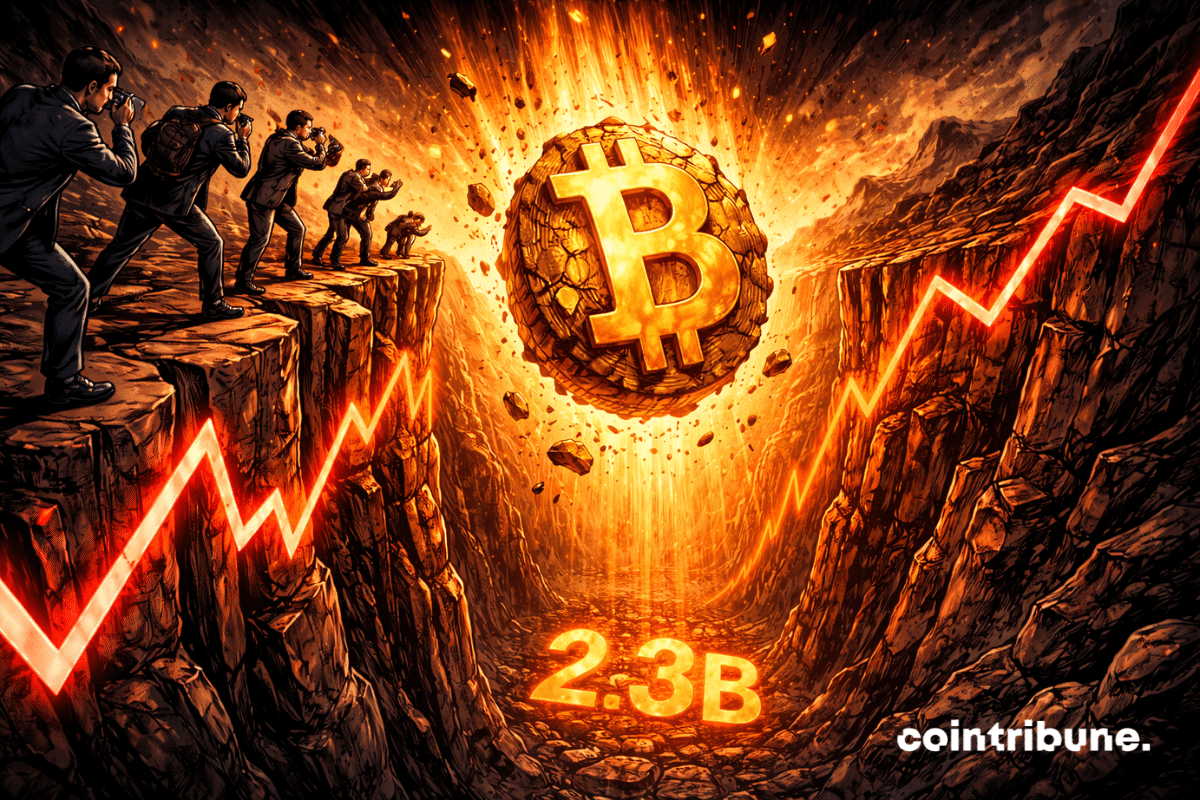
The crypto market has just reminded how explosive bearish bets can become. In just 48 hours, a massive wave of short position liquidations hit derivatives, while bitcoin approached a major psychological threshold. Behind this acceleration is a decisive macroeconomic factor: the surprise inflow of liquidity in the United States. Between short squeeze, American budget intervention and on-chain investor repositioning, this scenario reveals the forces that could now dictate bitcoin's trajectory.
While bitcoin struggles to find a clear direction, VanEck attempts to date the end of the correction. The asset manager relies on on-chain data and market structure to measure the extent of the purge, especially among long-term holders. Its analysis mainly outlines a scenario for what follows. An accumulation phase whose duration could provide valuable clues about the next market reversal. How far do these models really allow anticipating the bitcoin awakening?
Cryptos are no longer a marginal bet in Canada. A new study by the Ontario Securities Commission reveals a marked acceleration in their adoption by investors, signaling a lasting shift in the country’s saving habits. This progression is accompanied by a paradox. Interest in cryptos grows faster than the understanding of their functioning and associated risks. Between the democratization of cryptos, increased regulator vigilance, and tightening of the federal framework, the Canadian market is entering a phase where every decision could reshape its future.
Is bitcoin threatened by its own evolutions? This is the warning issued by Michael Saylor on July 28, 2026. On X, the executive chairman of Strategy defended the immutability of the network consensus rules, believing that any change to its architecture could weaken the first crypto. This stance comes as debates about the protocol's evolution intensify within the Bitcoin community.
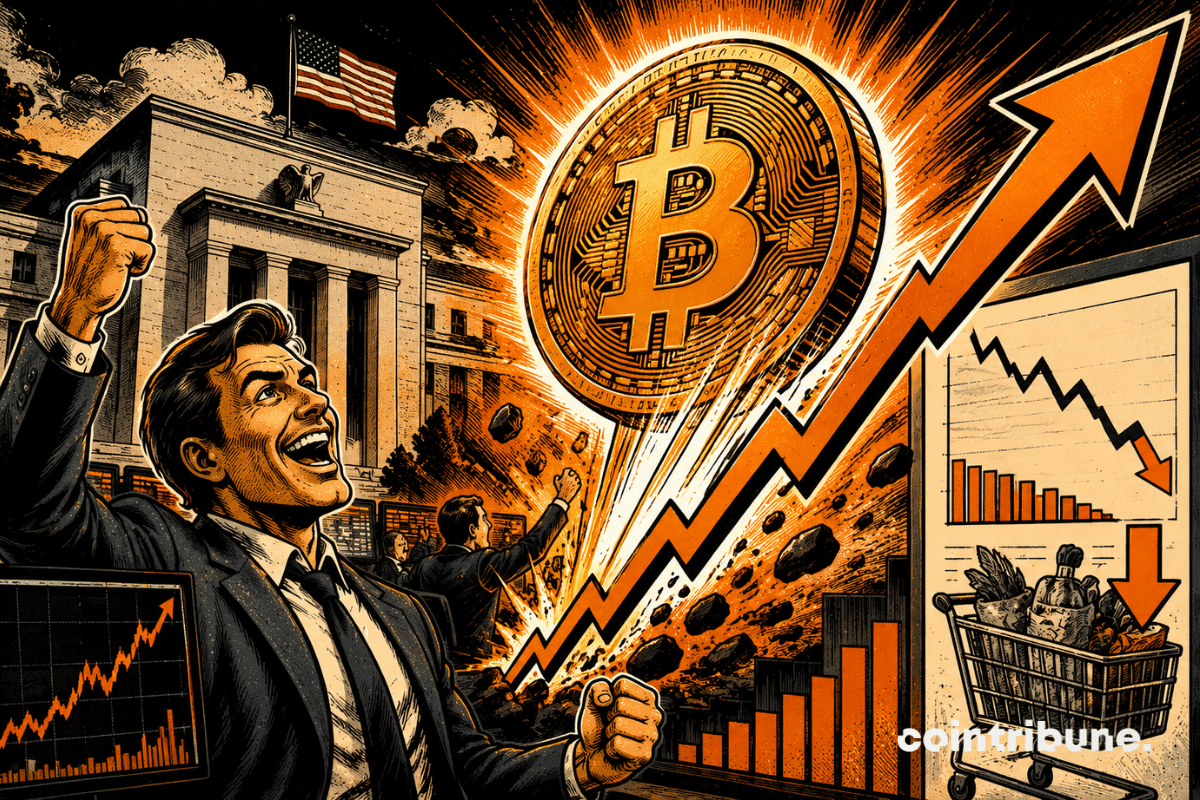
The constant interaction between traditional macroeconomics and the crypto market has just passed a new decisive milestone on an international scale. While the US Federal Reserve (Fed) has maintained a strict monetary policy for months, the release of the latest economic indicators has shaken all investors' certainties. On Tuesday, July 14, at the opening of the Wall Street session, the price of the leading crypto recorded an upward impulse, once again crossing the major psychological resistance of $64,000. This responsiveness reveals the persistent dependence of assets on US macroeconomic data, particularly inflation trends.

While institutional investors’ confidence wavered amid significant volatility, Bitcoin and Ether ETFs have just recorded their first positive weekly trend reversal since May. This crucial rebound breaks a prolonged capitulation phase. Moreover, it serves as a barometer to measure the real appetite of traditional finance.
While most altcoins plunge and see their market capitalization fall to its lowest level since December 2023, Solana follows a radically different trajectory. Contrary to a pressured market, the network attracts capital at a steady pace and fuels renewed interest around its SOL token. This decoupling, rare in the crypto ecosystem, intrigues both investors and analysts alike. Behind this resistance are two distinct drivers: a fundamental dynamic carried by the network and a speculative momentum that further enhances its attractiveness.
The dynamism inherent in decentralized networks sometimes manages to overcome graphical hazards to reveal the real power of conviction within a community. While the global crypto market is going through a phase of uncertainty related to persistent macroeconomic pressures, the Shiba Inu (SHIB) protocol has just crossed a historic milestone. Token allocation mechanisms in decentralized finance often serve as a powerful leading indicator, and a thorough examination of distributed ledgers reveals a growing divergence between the attraction of unique users and short-term price performance.
The crypto market often follows complex psychological dynamics where an excess of pessimism foreshadows the most violent reversals. Thus, the sector, characterized by inherent volatility and increased sensitivity to macroeconomic factors, once again demonstrates its resilience through recent movements of some major altcoins. It is in this tipping point context that the sudden recovery of XRP, Ripple's cross-border transfer token, fits in, drawing renewed attention from traders after a prolonged depreciation phase.
XRP is recovering on a still hesitant crypto market. Investment products linked to Ripple's token have just recorded their strongest inflow since January, driven by a marked return of institutional capital. This surge rekindles bullish expectations around the asset, as several market indicators signal a gradual rise in speculative appetite for XRP.
A technical signal absent since 2023 on bitcoin has just reappeared. This on-chain crossover, closely monitored by analysts, preceded the last major bullish phases of BTC. As the market tries to regain positive momentum, this return of the golden cross reignites speculation about a possible trend change. Investors are now scrutinizing Bitcoin's next key levels in a climate mixing optimism and caution.
While the crypto market focuses its attention on bitcoin and ETFs, XRP quietly begins to attract technical analysts again. For several months, Ripple's token has been evolving in a historical support zone already observed before its previous rallies. This setup now fuels a bold scenario: a potential surge towards 12 dollars. In a climate dominated by doubt and skepticism, some traders believe the market might be underestimating XRP.
XRP is evolving in a decisive phase. Behind an apparently stable market, several technical signals converge and place the asset at a critical point. Price compression, sustained volumes, tense structure: the conditions for a large-scale movement seem to be met. Such a configuration, closely followed by analysts, could mark a turning point in the trajectory of the crypto.
The crypto market sends a breaking signal. After several tense weeks, investor sentiment suddenly recovers, driven by a bitcoin close to a key threshold. The Fear & Greed index confirms this rapid shift. It remains to be seen whether this recovery reflects a lasting change or just a simple rebound in an still unstable environment.
Bitcoin finally breaks through a resistance monitored for months. This breakout ends a bearish sequence established since October and places the market at a technical turning point. In an uncertain macroeconomic environment, this movement revives expectations without dispelling doubts. It remains to be seen whether this break marks a real change in momentum or just a rebound.
In Paris, during Blockchain Week 2026, Tom Lee delivered an analysis that contrasts with the prevailing sentiment. According to him, the recent bearish phase is already coming to an end. Even better, the analyst anticipates a marked reversal, notably driven by Ethereum. Between macroeconomic reading and ambitious projection, this position reignites expectations for the next phase of the crypto cycle.
Ethereum reconnects with a technical pattern already observed in 2025, which triggered a spectacular price rally. This configuration resurfaces as the market approaches a key level. Between graphic signals and investor expectations, does this structural return signal a new bullish cycle for ETH?
Bitcoin crosses the $74,000 mark again, supported by renewed investor interest. Behind this movement, the market is crossed by opposing forces. Institutional demand supports prices, while persistent sales limit the extent of the rise. This return to a key level comes in a context of tension, where the balance between buyers and sellers remains uncertain.
In a few hours, the price of oil has crossed the 100 dollar mark again after the announcement of a blockade of the Strait of Hormuz by Washington. This nerve center of global energy trade becomes again a major pressure lever in the confrontation between the United States and Iran. Behind this surge, an immediate risk: to see geopolitical tension turn into a global economic shock, with direct repercussions on inflation and financial markets.
After a prolonged hesitation phase, buyers regain the initiative, supported by aligned technical and on-chain indicators. Traders now set a clear course for bitcoin at 88,000 dollars, in a context where the market structure recalls phases preceding major impulses. Between a critical threshold and strategic accumulation, a new dynamic seems to be settling, with a potential lasting shift in sentiment favoring bullish investors.
The Strait of Hormuz has been blocked for several weeks, disrupting one of the main axes of global oil trade. To maintain its exports, Saudi Arabia has pushed its East-West pipeline to full capacity. This technical response is not enough to compensate for the market disarray. The rapid rise in crude prices reveals a structural fragility in global supply amid growing geopolitical tensions.
The dollar takes the initiative and sets its pace for the markets. In March, it recorded its best monthly performance since December 2024 supported by geopolitical tensions and an adjustment of expectations on U.S. monetary policy. This move caught part of Wall Street off guard and forced investors to review their positions. In the foreign exchange market, the balance shifts quickly, with repercussions already extending beyond Forex.
On-chain data suggests a possible bullish move for Ethereum. Investor accumulation analysis reveals a low resistance area that could pave the way to 2,800 dollars if certain technical levels are breached. This setup is based on the purchase price distribution of ETH holders. Yet, derivative markets send a more cautious signal. Between accumulation momentum and trader hesitation, Ethereum is entering a decisive phase of its market cycle.
Geopolitical crises have often caused violent shocks in financial markets. This time, bitcoin seems to be withstanding the impact. As international tensions around Iran fuel global uncertainty, the leading crypto surprises with its resilience. BTC has risen back above 72,000 dollars, a threshold closely watched by traders. For several analysts, this reaction could mark a key moment. Beyond the simple rebound, bitcoin's behavior in the face of geopolitical turbulence could transform how investors perceive its role in the global economy.