
Thu 23 Jul 2026 ▪
5 min read
▪
by
Bitcoin: The supply held by long-term investors has just reached a record of 16.64 million BTC. Full analysis!
Bitcoin: The supply held by long-term investors has just reached a record of 16.64 million BTC. Full analysis!

Tesla's quarterly results far exceed the automotive industry framework. With every release, investors and analysts scrutinize a strategic indicator: the group's bitcoin treasury. The second quarter accounts of the year confirm an assumed choice by Elon Musk: to keep all BTC holdings despite market volatility and its accounting effects. This status quo, far from trivial, sheds light on the growing role of bitcoin in the financial management of large companies and sends a signal closely followed by the entire crypto ecosystem.

The digital asset market continues to mature with the arrival of new tools intended for institutional investors. In this context, S&P Dow Jones Indices and Pantera Capital unveil a benchmark index that favors projects generating real economic activity rather than the popularity of cryptocurrencies. This new approach aims to offer an analytical framework closer to the standards of traditional financial markets. It is also distinguished by a striking choice: the exclusion of bitcoin, whose operation does not meet the criteria retained by the two companies.
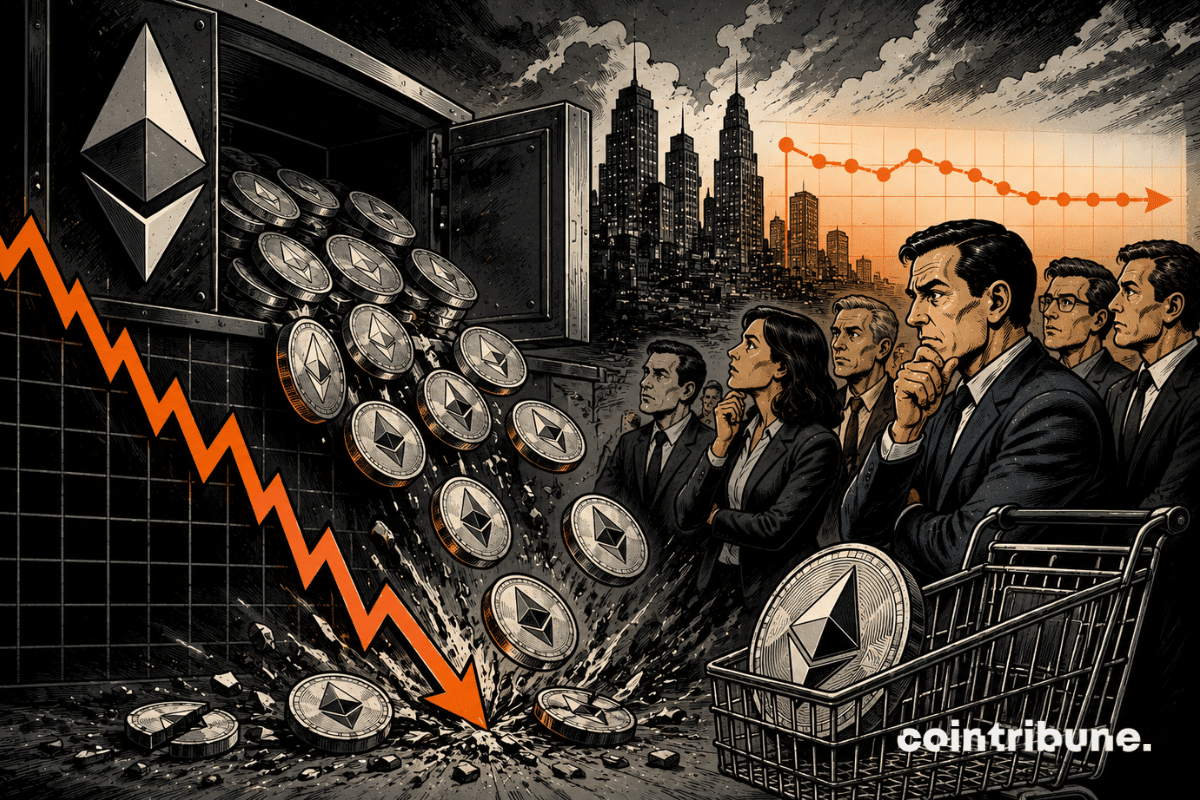
Ethereum reserves on exchange platforms continue to shrink, while an increasing portion of the supply remains locked in staking. This dual dynamic progressively tightens the liquidity available in the market and strengthens the scenario of a supply squeeze, a supply shock likely to impact price formation. While ETH tries to maintain around $1,900, on-chain data reveals a fundamental evolution that could redefine the balance between buyers and sellers in the coming weeks.

Bitget has moved into the top tier of TradFi-linked crypto trading after generating nearly $70 billion in TradFi perpetual volume in Q2 2026. The TokenInsight report shows a clear shift: tokenized stocks, commodities and real-world assets are no longer side experiments for exchanges. They are becoming a serious battleground for liquidity, market share and product depth.
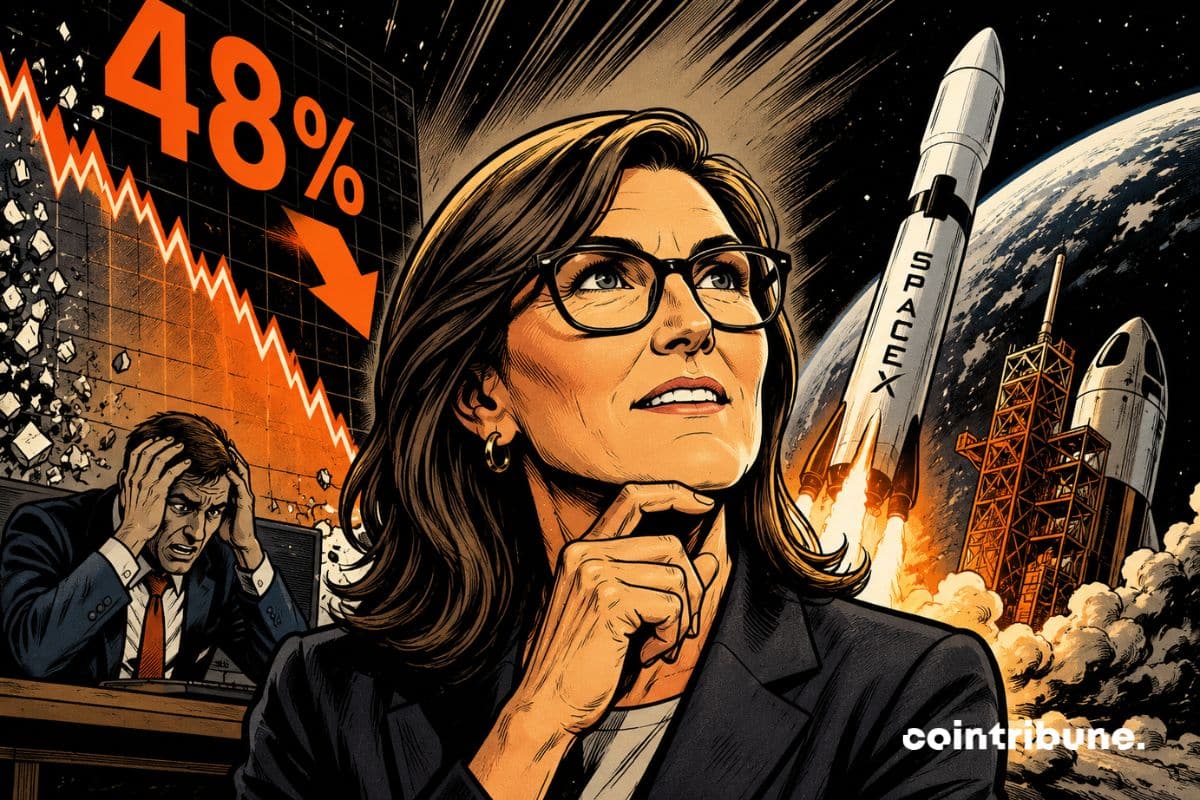
Cathie Wood looks beyond SpaceX's 48% stock market loss to a financial and technological revolution. AI, Starlink, Bitcoin... Can her audacious wager alter the course of history?

BitMEX will permanently close its doors on September 23, 2026, after eleven years of activity. The crypto platform, long associated with the rise of derivatives products and extreme leverage, now asks its users to close their positions and withdraw their assets. Its exit marks the end of a symbol, but also a brutal change in a market that has become more demanding, more liquid, and more regulated.

Europe concentrates more than two-thirds of block production on Solana, according to data released by Glassnode on July 22, 2026. Frankfurt dominates this geography and shows latency significantly lower than that of the US East Coast. Does this operational lead indicate a lasting regional dependency?

The Web3 sleep-tracking app has scrapped its original plan: a marketplace where users would have sold their biometric data to researchers. What replaced it is quieter and more technical. Sleepagotchi keeps no health data on its servers. Statistics are sent to the AI anonymously, processed, returned, then dropped. The project, which claims $6.5 million raised, has made that pipeline its central argument, and it lands in a sector that has spent a decade doing the exact opposite.

For several months, financial markets have been evolving in a unique economic context for digital assets. Bitcoin continues to attract investors, but it now faces an environment marked by the rise of real bond yields. This situation changes the arbitrages between different asset classes and raises new questions about the continuation of the bull run. At the same time, flows towards spot ETFs and transformations in the exchange platform sector show that the cryptocurrency market is also continuing its maturation phase.