France is struggling with a massive deficit, Bayrou calls for more work, but amid social cuts and political tensions, the reform risks triggering a governance crisis.
The Italian Minister of Economy and Finance, Giancarlo Giorgetti, expressed his concerns about the threat posed by American stablecoins, emphasizing that they could represent a greater danger than Donald Trump's tariffs. According to him, these dollar-backed cryptos risk disrupting Europe's financial stability.
Crypto in France is moving out of its phase of euphoria towards a more mature structuring. This 2025 study by Adan (Association for the Development of Digital Assets), conducted with Deloitte and Ipsos, presents a clear assessment: stabilized adoption, asserted industrial ambitions, but persistent challenges. Amid the rise of Web3, institutional openness, and regulatory barriers, the French ecosystem is carving its path towards sustainable integration. This survey sheds light on the springs of a dynamic in full redefinition, where the strategic future of cryptocurrencies in Europe is at stake.
In the midst of a commercial battle, the European Union agrees to negotiate the elimination of tariffs on Chinese electric vehicles. Supported by massive subsidies, these low-cost models disrupt the balance of the European market. This turnaround marks a turning point, as Europe, torn between industrial protectionism and ecological transition, opens itself to a risky compromise. In a key sector, this rapprochement could reshuffle the cards between two rival powers, linked by competition as much as by interdependence.
"Kraken and Mastercard are teaming up to launch a crypto debit card in Europe and the UK. This announcement illustrates the willingness of industry giants to make cryptocurrencies a tangible payment tool, beyond speculation. In a market under regulatory pressure, this initiative embodies a new phase: that of usage and the real integration of cryptocurrencies into everyday life. It is a strong signal at a time when the industry is seeking tangible and compliant use cases."
A new trade confrontation is beginning between the two shores of the Atlantic. Through the announcement of a 20% tariff on all European products, Washington directly targets exports from the Old Continent. France, on the front line, faces the threat of a major economic shock. Between the vulnerability of strategic sectors and diplomatic urgencies, Paris must react quickly. Behind this American decision lies much more than a tariff battle: the entire architecture of transatlantic trade relations is at stake.
After a bleak week, the CAC 40 fell by 8%, shaken by the trade war, market volatility, and grim economic outlooks, with a rebound still uncertain.
The Trump administration has just triggered a real commercial earthquake. Through the imposition of a universal customs tax of 10%, soon raised to 34% for certain countries, Washington is reviving an aggressive protectionist strategy. This decision, counter to multilateral rules, threatens to reconfigure global trade and is already prompting reactions from more than 50 states. In a tense international context, this major shift could well mark the beginning of a new era of economic confrontation.
In a single session, the euro surged 2.15% against the dollar, reaching $1.109, its largest increase since 2015. This abrupt jump exceeds the mechanics of exchange rates. It signals a sudden loss of confidence in the American currency. Through this shift, markets appear to be reassessing the balance of power among major currencies, in a context where macroeconomic signals and central bank choices are redefining monetary fault lines.
In a single session, the euro surged 2.15% against the dollar, reaching $1.109, its largest increase since 2015. This sharp rebound goes beyond the mechanics of exchange rates. It signals a sudden loss of confidence in the American currency. Through this shift, markets seem to be reevaluating the balance of power between major currencies, in a context where macroeconomic signals and the choices of central banks are reshaping the lines of monetary fracture.
Ultra, the one-stop destination for gamers, publishers, and developers, has completed a $12 million funding round led by Luxembourg-based multi-family office NOIA Capital through its NOIA Digital Assets fund.
Donald Trump triggered a new trade earthquake on the night of April 2 to 3, 2025. By announcing an increase in tariffs of up to 20% on products from the European Union, the current head of the White House is reviving transatlantic tensions. But France and Europe are not going to take it lying down and are going on the offensive!
Good news for European FTX customers: Backpack, which has acquired the European subsidiary of the bankrupt exchange, is finally starting the process that allows users to recover their funds. Users can now begin the first phase of the claims process.
While European markets are experiencing a technical rise, attention turns to Washington. Supported by encouraging economic indicators, the main stock indices of the Old Continent closed in the green this Tuesday. However, this improvement remains fragile. Investors are holding their breath ahead of potentially decisive announcements from Donald Trump, who could reignite the United States' trade offensive. The possibility of new customs barriers raises tensions and threatens to reshape the dynamics of the global economic balance.
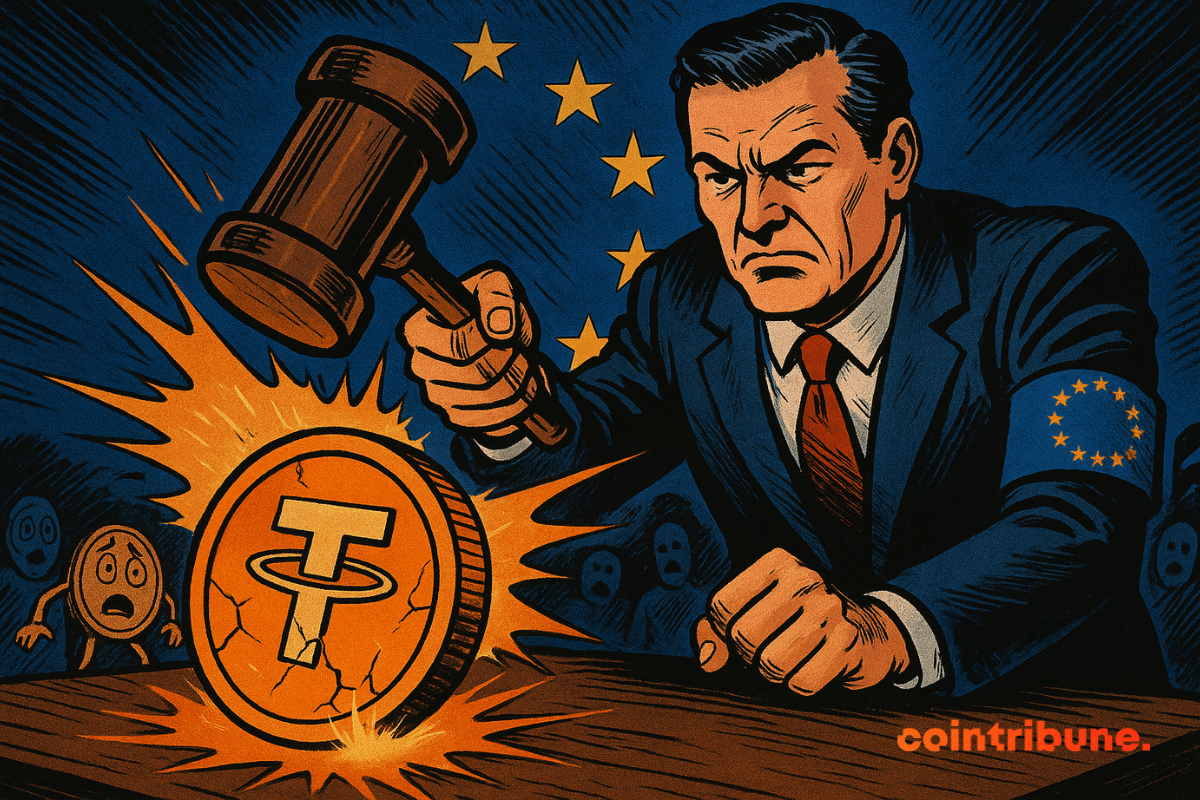
Binance stops USDT trading in Europe, a historic decision driven by MiCA regulations. This major turning point directly impacts crypto users in the EEA and redefines the future of stablecoins on the old continent. Is this the end of USDT in Europe? What solutions are there for crypto investors?
Regulatory shock for crypto: insurers ordered to fully cover their risks. We provide you with the details in this article.
BlackRock launches its iShares Bitcoin ETP, a bold bet on a hesitant European market. Will BTC finally establish itself against traditional assets?
The European Union is undergoing a discreet yet persistent revolution. A recent report from Oobit, a platform specialized in crypto payments, reveals that 70% of crypto transactions on its network are absorbed by retail, food, and beverages. This figure shatters the clichés about the marginal use of cryptocurrencies. But how can we explain this silent infiltration into the daily lives of Europeans? Between regulatory adoption and economic pragmatism, the landscape is reshaping.
Money migrates, silent and methodical. Wall Street, once untouchable, sees its throne wobble under the hurried steps of investors, captivated by a Europe shining with trillions.
Tensions between Washington and Brussels are taking a disturbing turn. While transatlantic trade represents a colossal market of $9.5 trillion, the new tariffs imposed by Donald Trump risk upsetting an already fragile balance. A trade war between the two economic powers could lead to increased production costs, a drastic drop in trade, and growing instability for businesses.
Christine Lagarde has confirmed the planned launch of the digital euro for October 2025, pending approval from European authorities. This initiative comes in a context where a recent survey reveals a marked disinterest among Europeans for this central bank digital currency.
Tesla, once a star of the roads, is now heading towards the abyss: in France, outraged bosses and emptied fleets are signing the commercial death certificate of King Musk.
The USA-Ukraine summit was recently held in Riyadh and resulted in more ambitious ceasefire proposals than expected. "The ball is now in Russia's court" has become the American talking point on this issue. Meanwhile, Europe appears to be accelerating its military reassertion in an increasingly tense geopolitical context.
In the trade tug-of-war between the United States and the European Union, a new episode has rekindled tensions. Indeed, Donald Trump, true to his protectionist approach, is once again wielding the threat of massive tariffs, this time on European wines and champagnes. The announcement of a 200% tax on these products follows Brussels' decision to increase tariffs on American whiskey to 50%.
The EU defends its economy against new American sanctions. We provide all the details in this article.
Accused, scrutinized, tracked, OKX denies it outright. Bybit cries wolf, regulators hesitate. Crypto trembles under the shadow of tightening regulation.
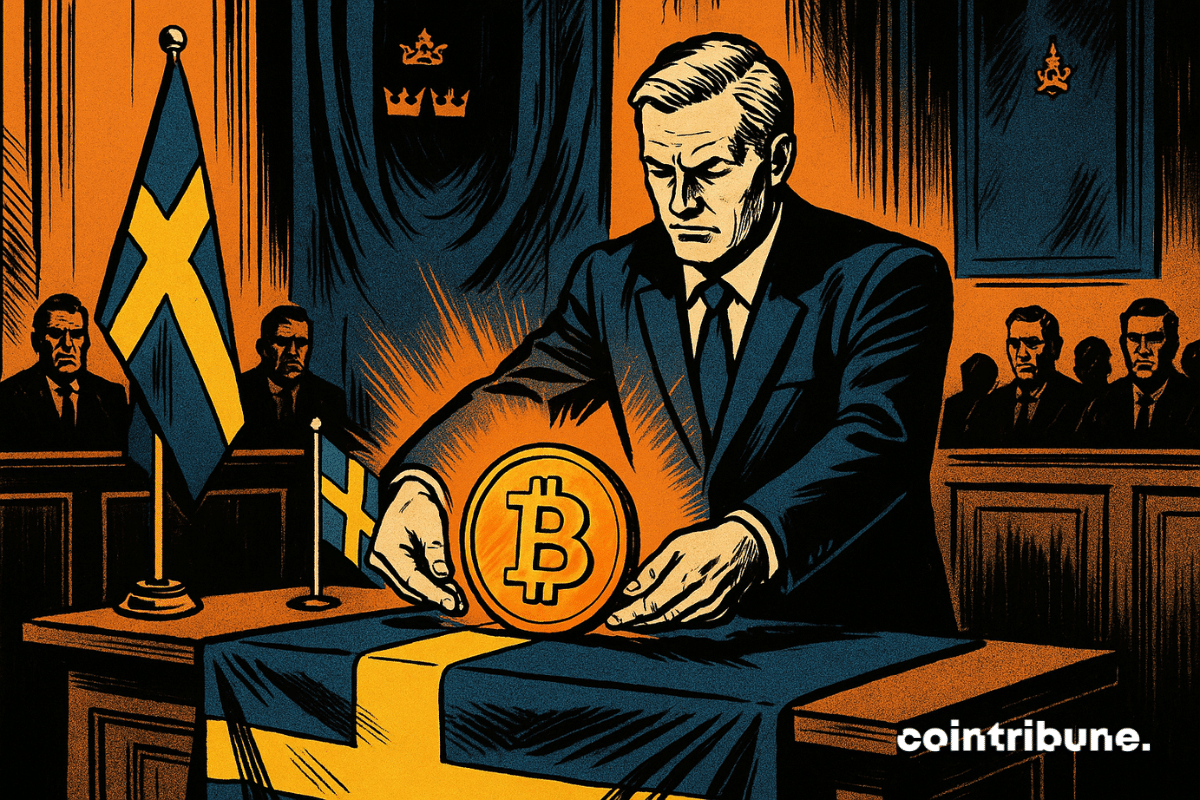
European lawmakers maintain an intriguing silence in the face of Donald Trump's executive order aimed at creating a strategic reserve of bitcoin in the United States. While this decision marks a major turning point in global monetary policy, the lack of response in Europe raises questions: mere indifference or a response in preparation?
A European stock market in full swing, investors overjoyed, and Wall Street wondering where its crown has gone... Is the stock market history now being written the European way?
Between the requisitioned Livret A, lightly tapped fortunes, and a starving military budget, Manu juggles: finding billions without upsetting anyone, this is an art worthy of the French budget circus.
The figure has startled the markets: inflation in the eurozone was set at 2.4% in February, according to Eurostat. A slight decrease, indeed, but enough to reignite the debate on the European Central Bank's (ECB) next moves. Between cautious optimism and geopolitical clouds, the euro wavers on a tightrope. Behind these percentages lie contrasting realities: declining energy, resilient services, and a Germany that holds firm. An analysis of a somewhat muted economic landscape.