Brussels unveils its gadget to protect children, then an expert almost whistles it apart. Durov smirks, tech coughs, and Europe still swears it is watching.
The great powers reveal themselves in crises, and BRICS may have just missed their moment. While the war involving Iran could have marked a turning point, the bloc remained silent, unable to display a common position. This silence raises questions about its real credibility in face of its global ambitions. Behind the image of a counter-power to the West, this sequence mainly exposes deep divisions and structural weaknesses that rhetoric is no longer enough to mask.
As digital uses evolve, a question arises at Paris Blockchain Week 2026: how to simplify value exchanges in a world where banking systems and blockchain infrastructures coexist? OZAPAY provides a concrete answer with a hybrid super app that aims to streamline payments, regardless of the system used. Between traditional finance and crypto, users still face unnecessary complexity: multiplicity of tools, fragmented experiences, dependence on intermediaries. This is precisely the area the Parisian fintech has chosen to invest in.
An Iranian announcement was enough to move two markets at once. On one side, oil fell sharply. On the other, bitcoin gained altitude, passing above 76,000 dollars with an intraday peak around 78,000 dollars on Friday.
Europe no longer wants to watch the stablecoin market from the sidelines. In Paris, French Finance Minister Roland Lescure clearly pushed for more stablecoins pegged to the euro, with a simple idea behind this signal: to reduce the continent's dependence on payment infrastructures dominated by the dollar and non-European actors.
The crypto market is going through a zone of severe turbulence. In the first quarter of 2026, trading volumes on centralized platforms plummeted by 39%, confirming what many feared: a well-established crypto winter. And the signals for the second quarter are hardly reassuring.
BlackRock restarts bitcoin accumulation with over 500 million dollars bought in 48 hours, confirming the return of institutional investors and reinforcing the hypothesis of a new bullish cycle in the crypto market.
Geopolitical tensions are already reshaping global financial circuits. In this unstable context, bitcoin could change dimension. According to Bitwise, BTC would no longer be just a reserve asset comparable to gold, but a monetary tool used in strategic exchanges between states. A shift fueled by concrete cases and valuation projections that revive a radical hypothesis: a bitcoin capable of exceeding one million dollars.
A statement from Beijing revives the debate about the origin of bitcoin. Educator Jiang Xueqin proposes a sensitive hypothesis: the first crypto could be linked to American intelligence agencies. This stance questions both the genesis of the protocol and the interests it might serve. In response to this theory, the crypto ecosystem presents technical arguments, reviving a subject as old as it is controversial.
The threat is no longer theoretical. The Ethereum Foundation claims to have helped identify about 100 IT workers linked to North Korea in 53 crypto projects in just six months, through its ETH Rangers program. This figure is striking because it shows that infiltration is no longer limited to spectacular hacks. It also involves hired profiles, integrated, then left as close as possible to sensitive accesses.
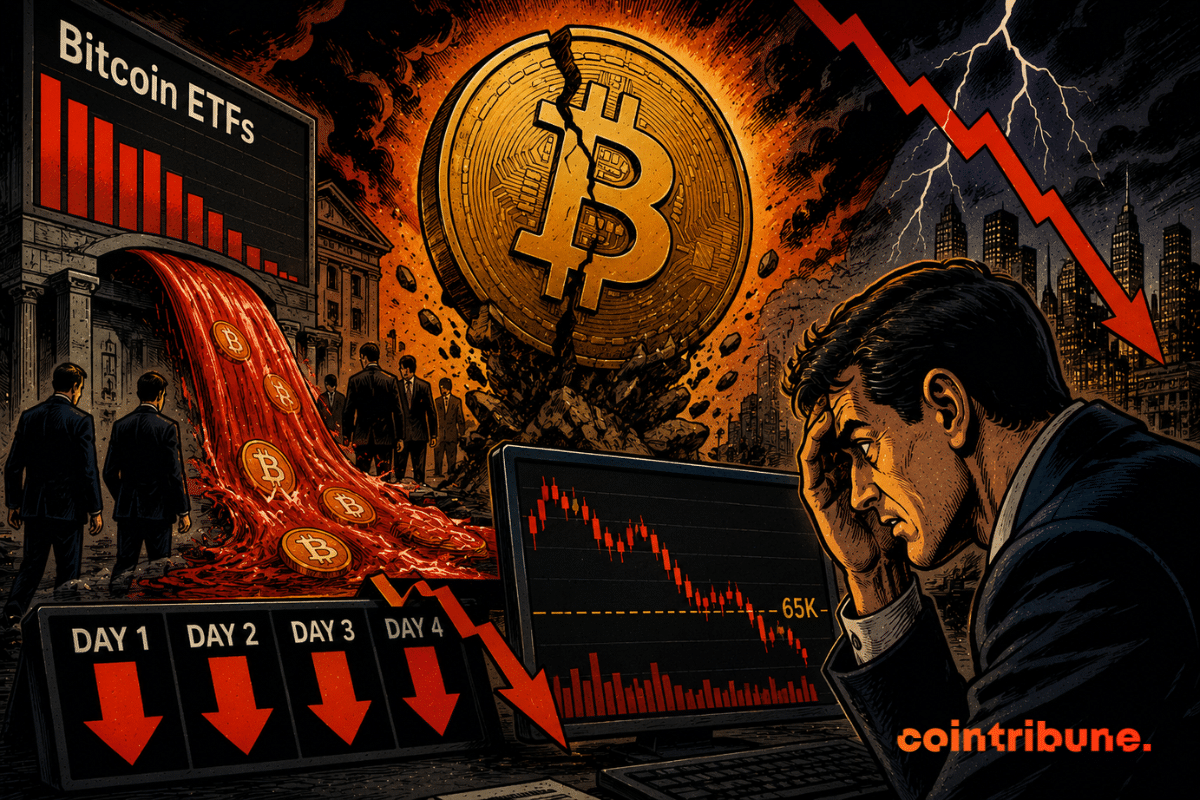
Bitcoin under pressure: the most vulnerable miners are massively liquidating their reserves. A worrying dynamic for the crypto market.
Wall Street had long sniffed crypto like a dubious cheese. Here comes Schwab finally laying the table, visible fees, and inviting 39 million clients to the well-mannered feast.
Bitwise launches the Avalanche ETF with Staking ($BAVA) which promises to boost AVAX demand in 2026 while offering passive returns to investors. With 2.5 million dollars in assets at launch and reduced fees, this product could well rewrite the rules of the crypto market.
The oil rebound could well be an illusion. While Brent recovers after its recent drop, market data reveals a much less reassuring signal. Behind the price increase, capital is withdrawing and participation is eroding. Volume is down, investors are fleeing, defensive positions: several indicators converge toward the same reading. The market does not seem to be strengthening, but it is emptying. This divergence could signal a much more brutal movement in the coming sessions.
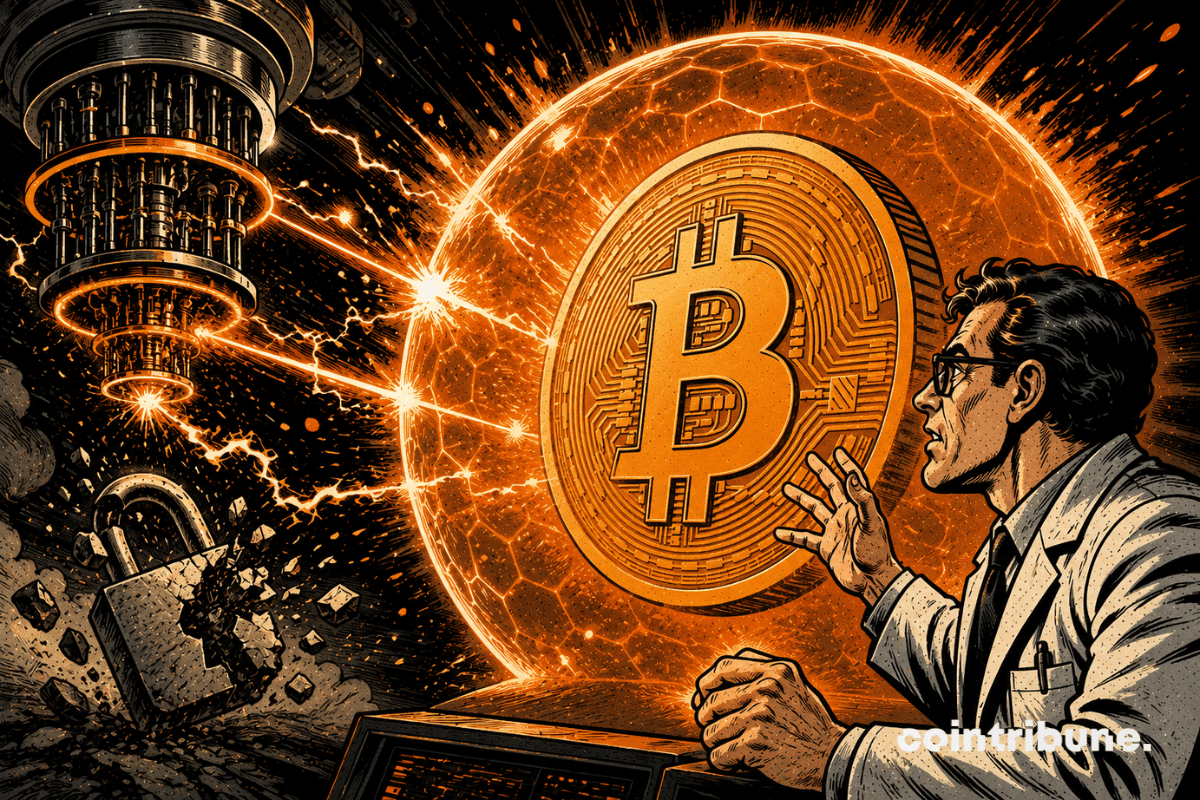
The quantum threat hangs over Bitcoin. It is still distant, but real enough for experts to sound the alarm. Adam Back, one of the most respected figures in the crypto ecosystem, believes it is time to act, carefully, but without delay.
France is preparing a security crackdown in response to kidnappings related to crypto. The issue is no longer just financial. It is becoming police, political, and almost industrial.
In a crypto market scarred by centralized exchange collapses from FTX to Celsius, one question keeps surfacing: do you really need to hand over your funds to a platform just to swap crypto? Since 2017, ChangeNOW has offered a definitive answer: no. This instant exchange service operates without registration, without user accounts, and most importantly, without ever taking custody of your assets. After 8 years of continuous operation, the platform claims over 8 million users and holds a 4.5/5 rating on Trustpilot based on more than 13,300 verified reviews.
Anthropic accelerates its strategy with the imminent launch of Claude Opus 4.7, a model accompanied by a tool capable of generating complete digital products from simple instructions. This advance marks a clear repositioning towards automated production platforms. In parallel, the existence of a more advanced internal model with sensitive capabilities raises questions about the uses and limits of these systems.
The American stock market regains a conquering mood. The S&P 500 has crossed a new high above 7,000 points, driven by the sudden return of risk appetite and Tesla's surge.
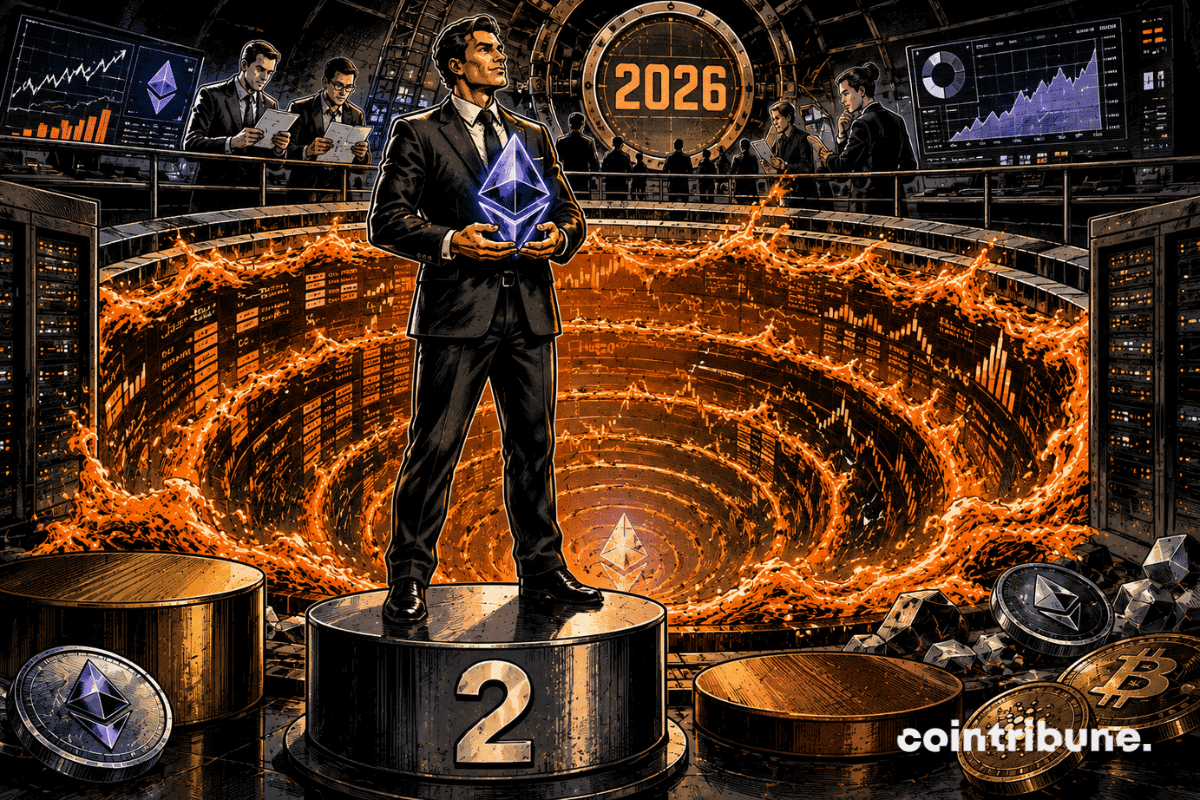
In Paris, during Blockchain Week 2026, Tom Lee delivered an analysis that contrasts with the prevailing sentiment. According to him, the recent bearish phase is already coming to an end. Even better, the analyst anticipates a marked reversal, notably driven by Ethereum. Between macroeconomic reading and ambitious projection, this position reignites expectations for the next phase of the crypto cycle.
Bitcoin is moving within a pivotal zone after crossing 74,000 dollars. Behind this rebound, CryptoQuant's on-chain data reveal a gradual increase in selling pressure, notably driven by whales' activity. Between major technical resistance, BTC inflows to exchanges, and rising profit-taking, the market could quickly shift into a correction phase, with a key threshold identified around 67,600 dollars in case of reversal.
Crypto news: Justin Sun calls the WLFI proposal a "governance scam." We provide you with all the details in this article.
At Tether, the stablecoin is no longer enough: bitcoin, gold, and now wallets are being stacked. At this pace, the vault almost starts to see itself as a State.
Since the advent of the crypto market, centralized exchanges (CEX) have played a key role in providing liquidity to both retail and institutional users. In 2025 alone, the top 12 CEXs processed nearly $21 trillion in volume across spot markets. As the industry matures, the focus has shifted toward the sustainability of spot trading activity and the health of the underlying reserves that support these massive volumes.
Denmark, a high-tech and innovative country, shows one of the lowest crypto adoption rates in Europe, with only 4%. Why this paradox? Between discouraging taxation, strict regulation, and prudent financial culture... The reasons for this delay are numerous, as are the opportunities.
Cybercriminals are not lacking in imagination. This time, they turned a simple note-taking app into a silent weapon to empty crypto wallets of their targets. And the worst part? The victim sees nothing coming.
The integration of cryptos into daily uses takes on a new dimension with the arrival of a heavyweight in e-commerce. In Japan, Rakuten is preparing to connect 44 million users to XRP by integrating it directly into its payment application. Behind this announcement, a concrete evolution emerges: crypto is no longer limited to investment, it is entering the real economy. Payment, trading, and loyalty programs now converge in a single environment, signaling a turning point in mainstream adoption.
Pakistan now allows its banks to open accounts for licensed crypto companies. It's a sharp turn after eight years of blockage. The State Bank of Pakistan does not legalize a digital Wild West. It rather opens a narrow, monitored, but decisive door.
Goldman Sachs accelerates on bitcoin. The American bank has filed an application to launch an ETF designed not to track the price of BTC, but to generate income from it. This product marks an evolution in the approach of financial institutions, which are now looking to exploit the volatility of the asset rather than its sole performance.
Valletta, Malta ‒ April 15, 2026 ‒ OKX, one of the world leaders in fintech and crypto trading, today announces the launch of X-Perps: MiFID regulated crypto derivatives, with a five-year maturity, offering leverage up to 10x to retail and institutional traders in Europe.