Tue 08 Sep 2026 ▪
6 min read
▪
by
Postponed to mid-October, Anthropic's IPO could become the biggest test in history for AI valuations. The details!
Postponed to mid-October, Anthropic's IPO could become the biggest test in history for AI valuations. The details!

Among declared institutional holders of XRP ETFs in the second quarter of the year, Goldman Sachs held first place. The banking institution thus showed an exposure of 87.45 million dollars as of June 30, far ahead of Jane Street and Millennium Management. In total, the identified banks held 183.5 million dollars in shares. These figures attest to the integration of XRP products on Wall Street, without necessarily showing that these companies directly anticipate a rise in the crypto.

Historically, the month of September represents the least favorable period for U.S. stocks. The S&P 500 undergoes an average correction of 0.7% and closes higher in only 44% of cases since 1950. This seasonality is associated with high bond yields, U.S. public debt exceeding 40 trillion dollars, and questions about the profitability of investments in artificial intelligence this year. However, history does not directly predict a decline.
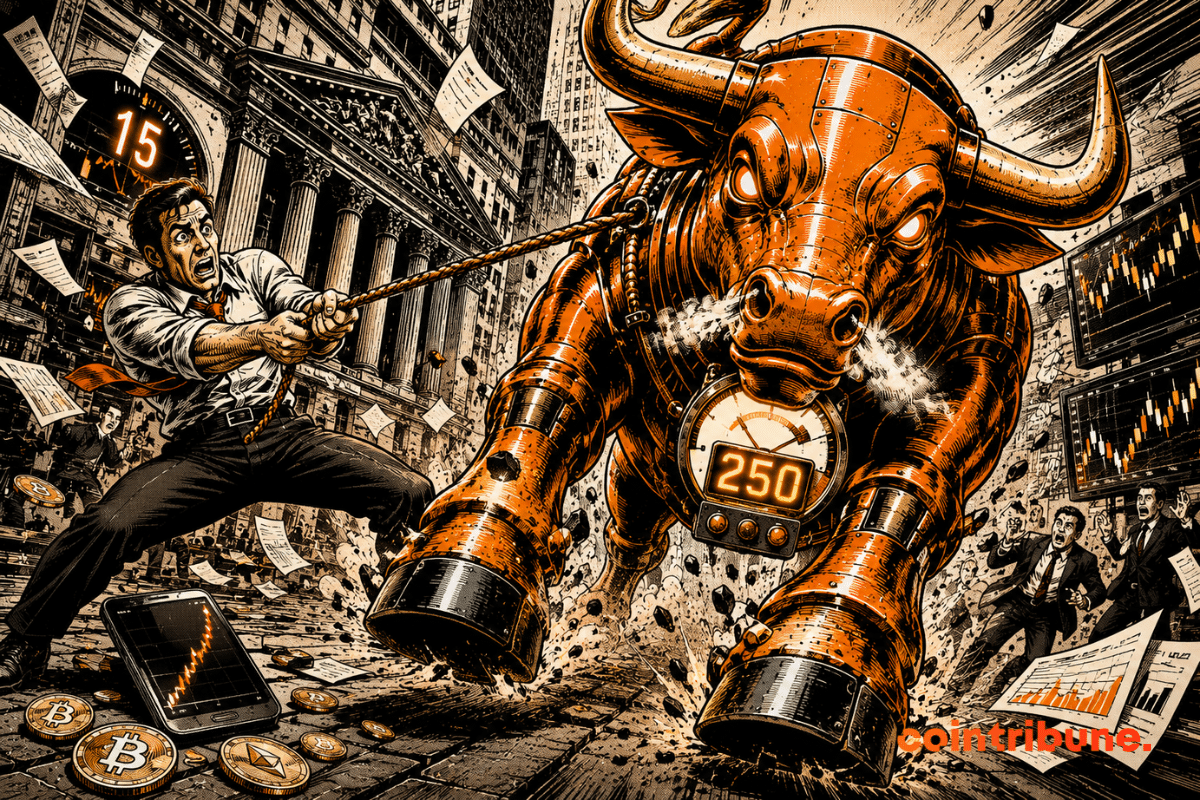
Crypto: perpetual stocks rise from 15 to 250 billion dollars in 3 months. Discover our complete and detailed analysis.
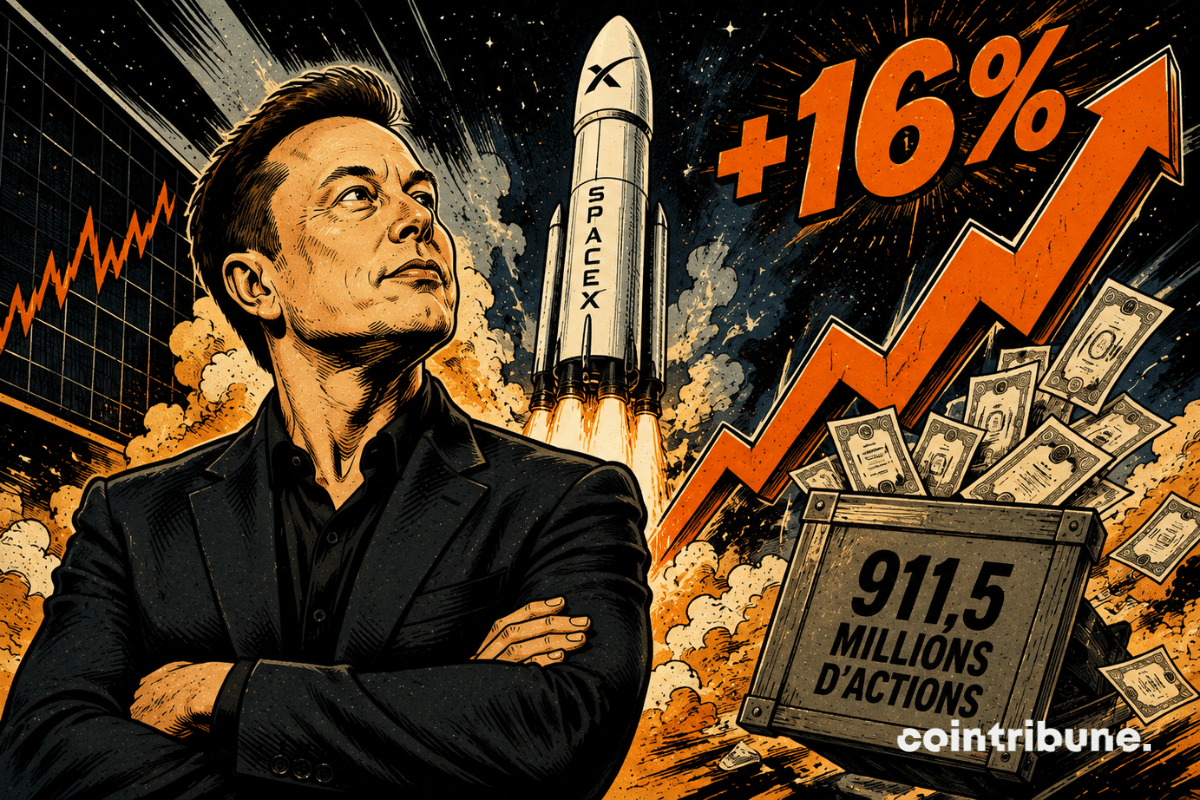
Have the markets just witnessed a shift between traditional finance and blockchain? As nearly one billion SpaceX shares became tradable, many anticipated massive selling pressure. The scenario did not occur. The stock rose 6.1% on August 6, while Web3 platforms recorded nearly 700 million dollars in volumes on tokenized shares in just 48 hours. This unexpected convergence reignites the debate on the role of Real World Assets (RWA) in the evolution of financial markets.
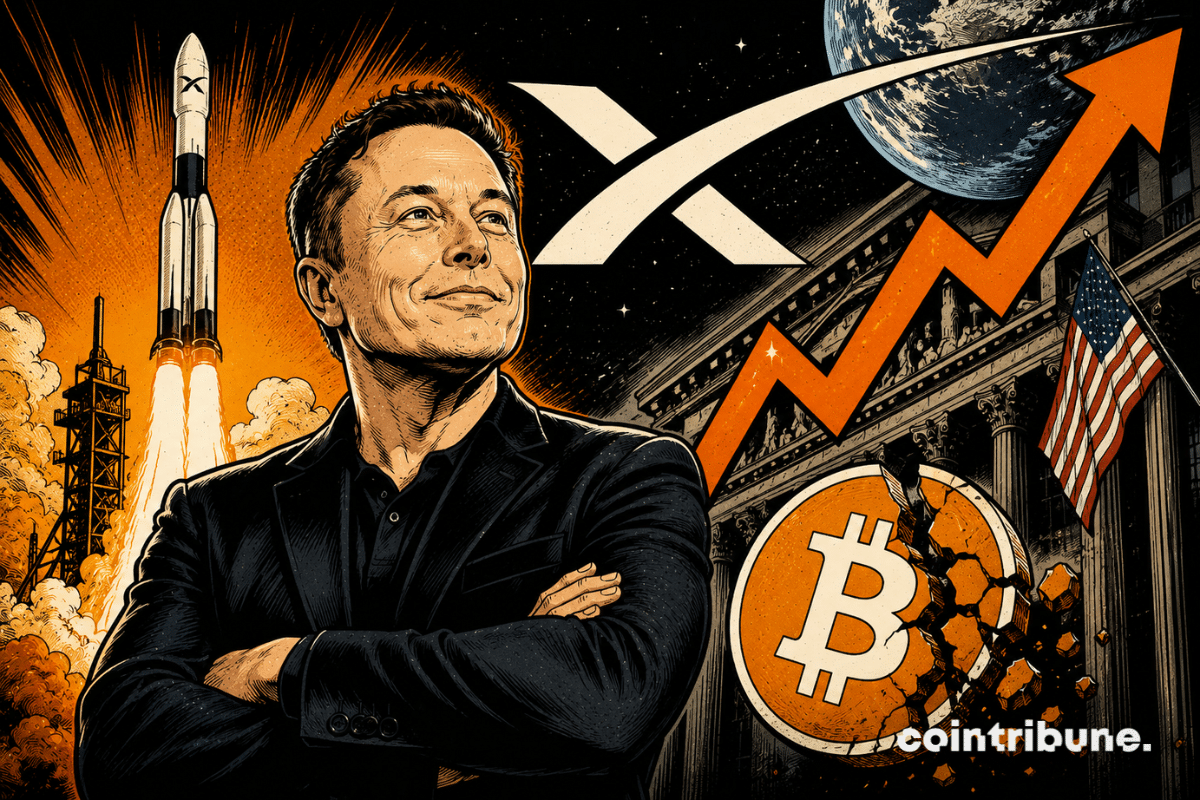
The first quarterly results of a listed company are always closely scrutinized. For SpaceX, this second quarter takes on a special significance. Beyond its financial performance, investors want to measure the impact of its strategy around bitcoin. At a time when companies holding cryptos are increasingly influencing markets, these accounts are a valuable indicator of the health of Elon Musk's group… and a signal likely to feed expectations about the future of strategic crypto reserves.

The month of July comes to an end for cryptos. While Wall Street stalls and Asian markets hold up, bitcoin sharply declines under the effect of renewed macroeconomic tensions. This divergence between traditional markets and alternative assets raises doubts about the strength of the summer rally.

The digital asset market is evolving rapidly due to the influence of professional investors. A new Wintermute report shows that crypto is entering a new phase, where institutions now occupy a central place in trading. Meanwhile, Wall Street increasingly influences liquidity, prices, and investment strategies. This evolution gradually changes the market structure, reduces volatility, and concentrates capital on a smaller number of assets.
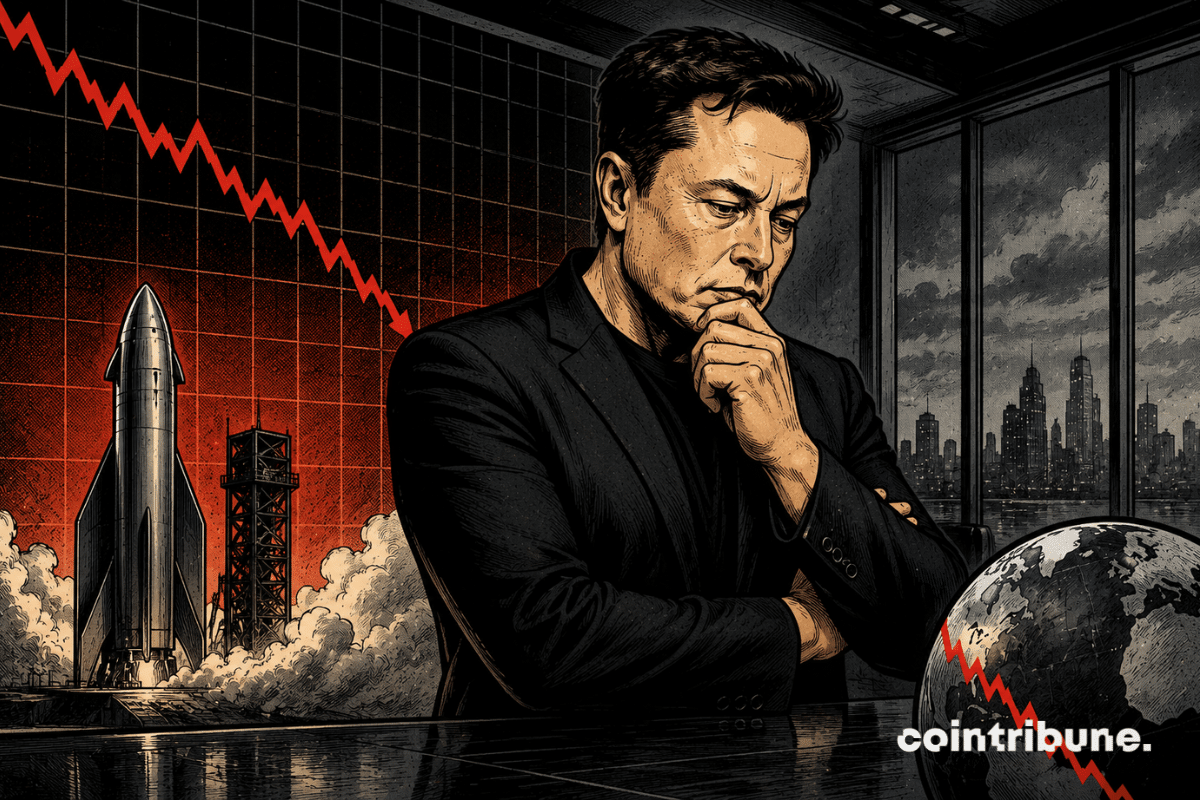
The euphoria around SpaceX gave way to a violent disillusionment. In a few weeks, the SPCX stock went from the status of the largest IPO in history to a correction that erased hundreds of billions of dollars in valuation. This drop not only affects shareholders. It also cuts Elon Musk's fortune and revives questions about the valuations of tech giants, several of which have made bitcoin a strategic asset on their balance sheets.

Bitcoin is experiencing a very difficult month of July. Indeed, institutional investors are massively withdrawing their capital from tech stocks and the military situation in the Middle East is deteriorating. This has a direct negative impact on the crypto market, which now suffers from strong risk aversion. Such macroeconomic pressure from both sides weakens Bitcoin's summer trend and pushes investors to reduce their investments. Today, every move in global markets can worsen Bitcoin's correction, increase volatility, or change forecasts for the rest of the cycle.

Tokenization is gradually establishing itself as one of the main axes of transformation in financial markets. After several years dedicated to experiments around blockchain, many institutions now seem to be preparing for a larger-scale deployment. A new survey conducted by Broadridge among 200 North American executives illustrates this evolution. The results show that financial players increasingly view tokenized assets as an element set to integrate into market infrastructures, rather than a mere innovation in the testing phase.

This Thursday, July 16, SpaceX, Elon Musk's aerospace company, suffered a major setback on the stock market, ending the euphoria surrounding its IPO. After igniting markets and attracting investors worldwide, its stock crossed a symbolic threshold that changes Wall Street's perspective. This break could mark a turning point for one of the most watched companies of the year.
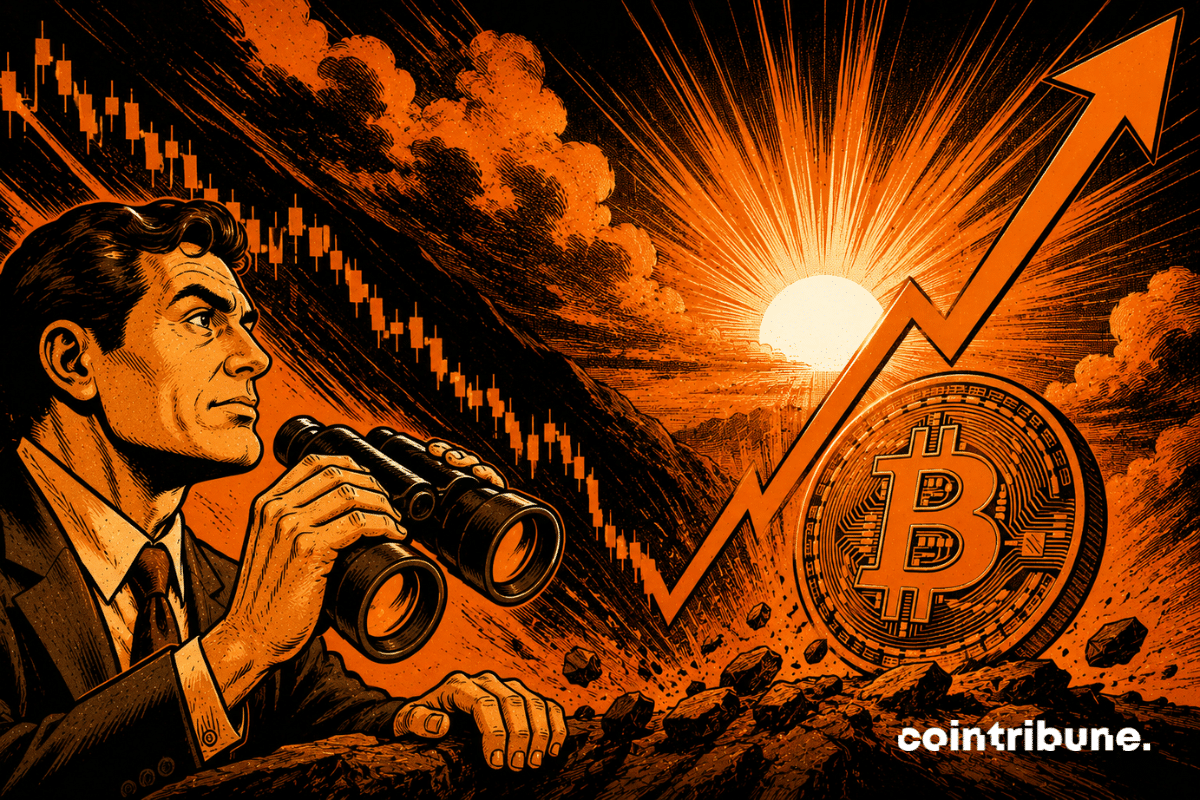
Crypto market cycles regularly impose an iron discipline on investors, turning the euphoria of peaks into long periods of uncertainty. The current environment of the digital financial industry is again suspended on the analyses of major Wall Street institutions, whose research notes guide capital flows worldwide. It is in this very volatile climate that the American investment bank Cantor Fitzgerald has just published a large-scale strategic report, stating that the bitcoin bear market is now about to end. This intervention comes at a pivotal moment when the price trend is seeking clear direction after months of continuous correction.

The evolution of global stock indices is often used as a barometer to measure the impact of technological and industrial waves that are redefining our century. Less than a month after a historic IPO, the aerospace company SpaceX will take a new decisive step on July 7, at market open, by joining the Nasdaq-100 index. This decision represents a major change for the valuation of Elon Musk's firm and for all capital flows on an international scale, marking the rapid convergence between major industrial powers and the automation mechanisms of passive investments.
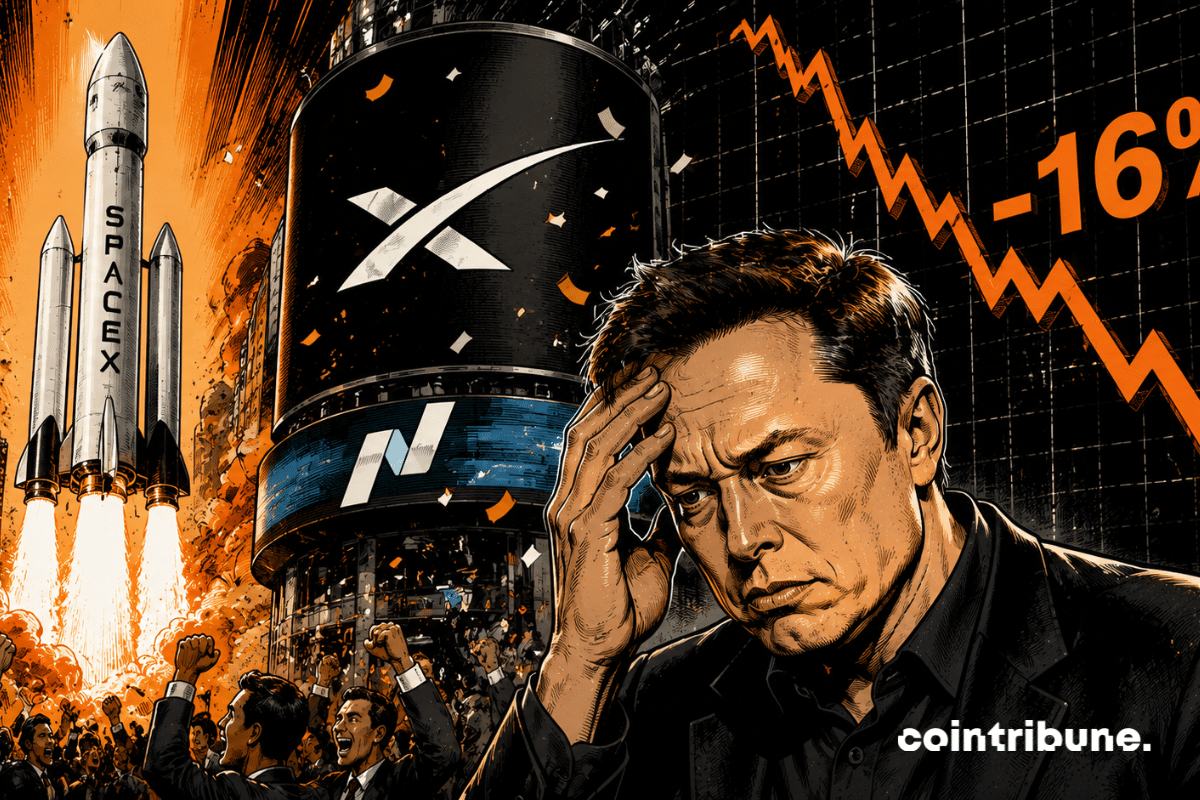
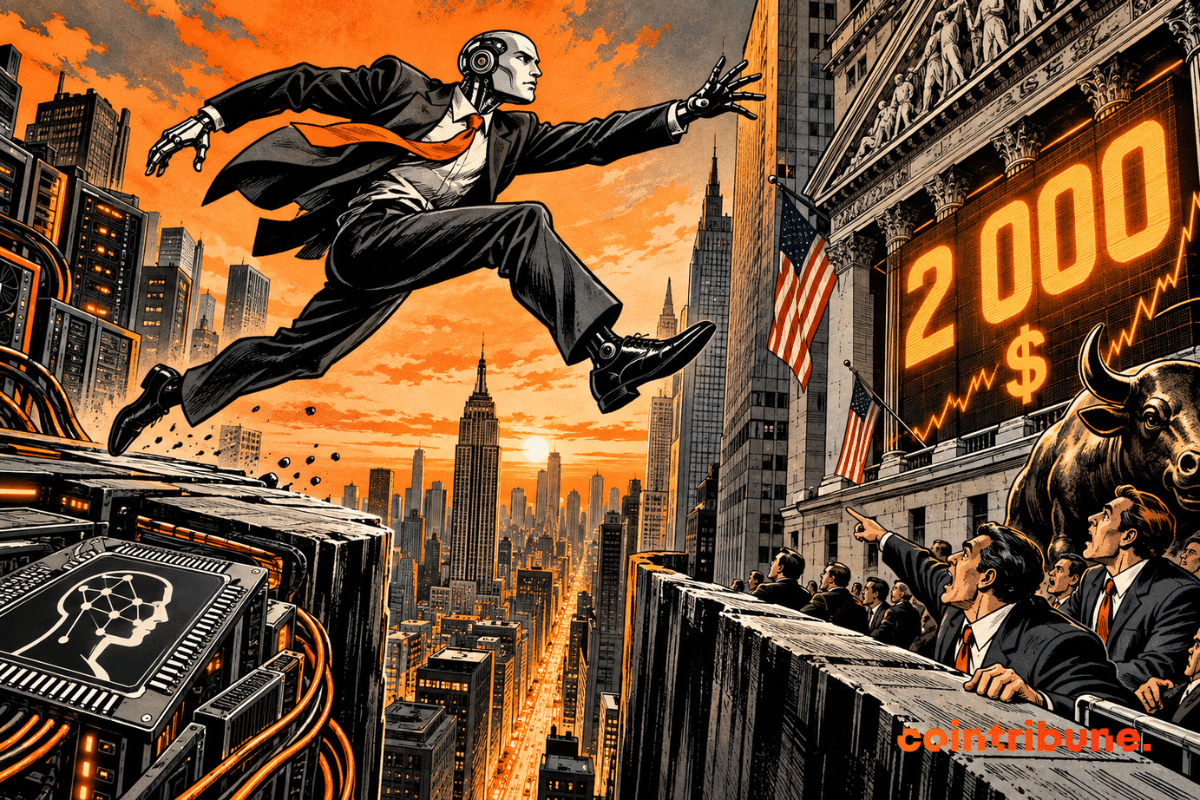
The euphoria only lasted a few days. SpaceX was propelled to a valuation of over $2,000 billion by a historic IPO. After this rapid rise, the stock of Elon Musk's group underwent a correction, reigniting questions about the sustainability of its stock surge. Behind the largest IPO of all time, Wall Street is looking to see if the company's fundamentals match its ambitions.

With the historic IPO of SpaceX, Elon Musk became the first individual to surpass 1,000 billion dollars of personal fortune, an unprecedented threshold that redefines the limits of wealth creation in the technological era. This case is much more than a stock market success. It traces the rapid rise of a company that has disrupted the global space industry and reveals the enthusiasm of the markets for new technological infrastructures.

SpaceX takes off on the stock market with 75 billion in the holds. BlackRock reserves its cabin for 5 billion. But does Musk's rocket really have the engines to go that high?

While the crypto market is going through a slowdown phase, one segment continues to break records in relative silence. According to Binance Research, tokenized real-world assets (RWA) have jumped by nearly 600%, driven by the explosion of tokenized stocks, digital gold, and blockchain real estate. Long presented as a technological promise, tokenization is now attracting institutional investors and major banks to the point of becoming one of the most strategic projects in global finance.

While Wall Street rolls out the red carpet, OpenAI arrives with a dizzying valuation. Behind the scenes, bankers, investors, and competitors are already counting their chips before the big game.

SpaceX burns billions, but Wall Street already rolls out an interstellar red carpet for it. Behind Musk's rockets, banks mainly sell an AI cathedral still on the drawing board.

Charles Schwab (with $10 trillion in assets under management) announces spot crypto trading for its financial advisors by mid-2027. When the Wall Street giants make this move, crypto will never be perceived the same way again.

Nearly 3 billion dollars have left U.S. Bitcoin ETFs in two weeks, fueling fears of a decline in institutional interest in cryptos. However, some observers believe the market is drawing conclusions too quickly. Behind these record outflows, Wall Street would continue to strengthen its presence in the crypto ecosystem. Enough to call into question one of the main indicators used to measure investors' appetite for bitcoin.

BNB enters the US spot ETF market. VanEck has launched the first crypto-backed fund from the Binance ecosystem, offering investors regulated exposure to one of the market's leading assets. This new listing marks a further step in Wall Street's opening to cryptos beyond bitcoin and ether.

American spot Bitcoin ETFs are experiencing their largest series of outflows since the beginning of the year. In six sessions, more than $1.55 billion have left these funds, greatly reducing their net flows for 2026. This reversal comes as several major Wall Street players are already reducing their exposure to bitcoin, a signal closely watched by the crypto market.

Blockchain.com quietly returns to knock on Wall Street's door, as bankers, regulators, and crypto veterans slowly bring out their old tokens still burning after several particularly painful IPOs.
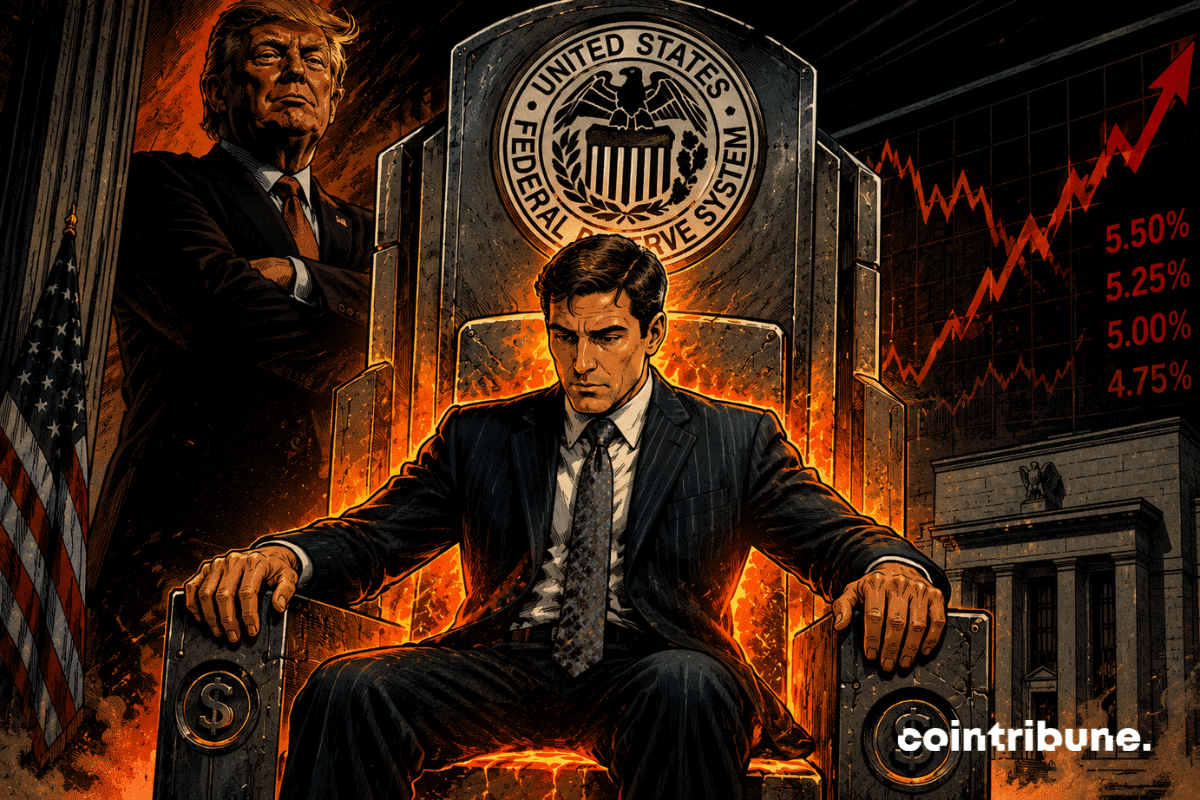
Trump imposes Kevin Warsh on the FED under political pressure, while markets and crypto already fear a violent monetary turbulence.

Ethereum was still parading under the neon lights of Wall Street. Then the ETFs emptied like a poorly guarded safe. Harvard drops its jewels, BlackRock grits its teeth, and crypto suddenly discovers much less romantic investors.

The American stock market is returning to valuation levels reminiscent of the final days of the internet bubble. Driven by artificial intelligence and the surge of tech giants, the American stock market is setting records while comparisons with the year 2000 resurface. Between real growth and speculative frenzy, the market now fuels an increasingly tense debate among investors.
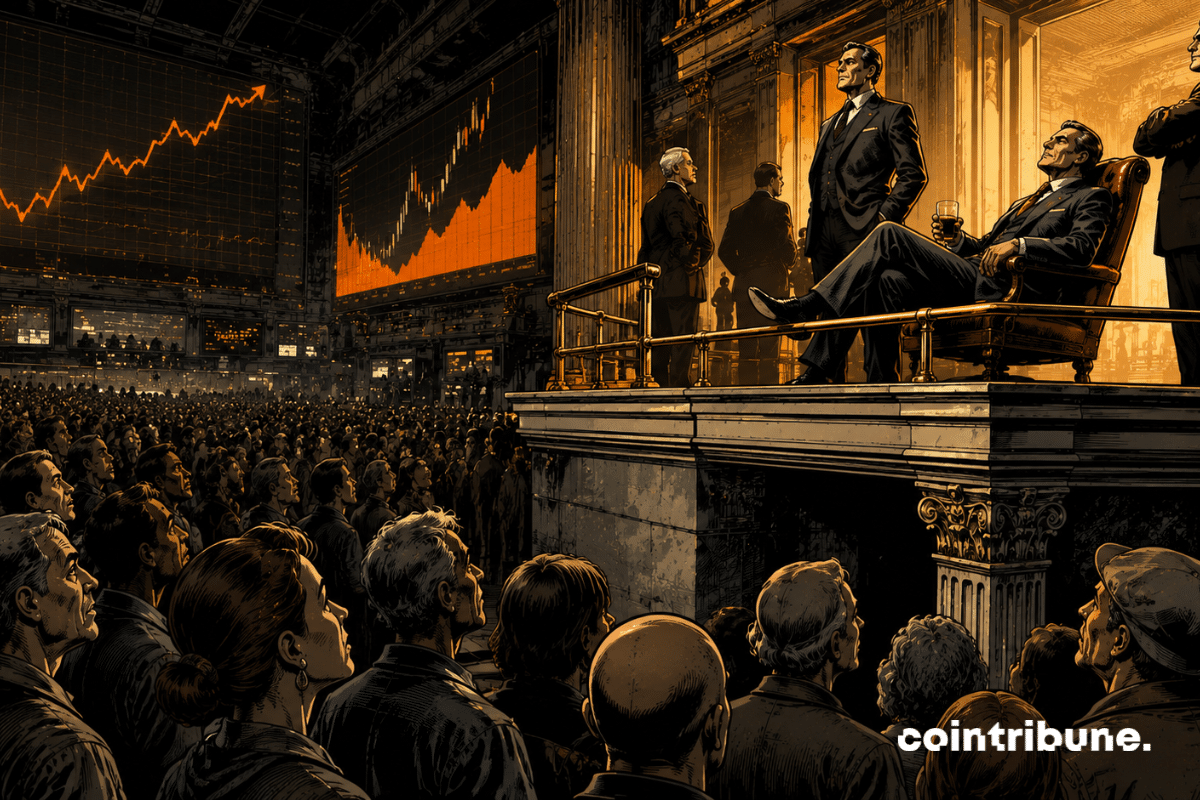
For nearly a century, American markets have produced 91 trillion dollars of wealth for shareholders. Yet, this value creation relies almost entirely on a handful of companies. A study conducted by economist Hendrik Bessembinder on nearly 30,000 listed stocks between 1926 and 2025 shows that only 46 companies concentrate half of the gains generated on Wall Street. Behind the historical performances of American indices, the market reality appears much more unbalanced than it seems.

The global money transfer giant no longer just watches the crypto revolution from afar; it is stepping in fully. Western Union is preparing to launch its own stablecoin, USDPT, built on the Solana blockchain, as soon as next month. A decision that could reshuffle the cards in the cross-border payments market.