Goldman Sachs has just revised its crypto positions and the signal sent to the market is already intriguing Wall Street. A simple adjustment... or the beginning of a new institutional cycle?
Trump imposes Kevin Warsh on the FED under political pressure, while markets and crypto already fear a violent monetary turbulence.
While Strategy sews up its debt with a financial blowtorch, Saylor calmly brings out his bitcoin net again. Retail investors applaud, skeptics already smell the scent of a dangerously speculative tide.
Ethereum was still parading under the neon lights of Wall Street. Then the ETFs emptied like a poorly guarded safe. Harvard drops its jewels, BlackRock grits its teeth, and crypto suddenly discovers much less romantic investors.
On June 11, SpaceX will set the price of its IPO, and this day could enter the history of financial markets. Between record valuation, direct exposure to bitcoin, and a rush of institutional investors, the operation orchestrated by Elon Musk is already causing rare excitement on Wall Street.
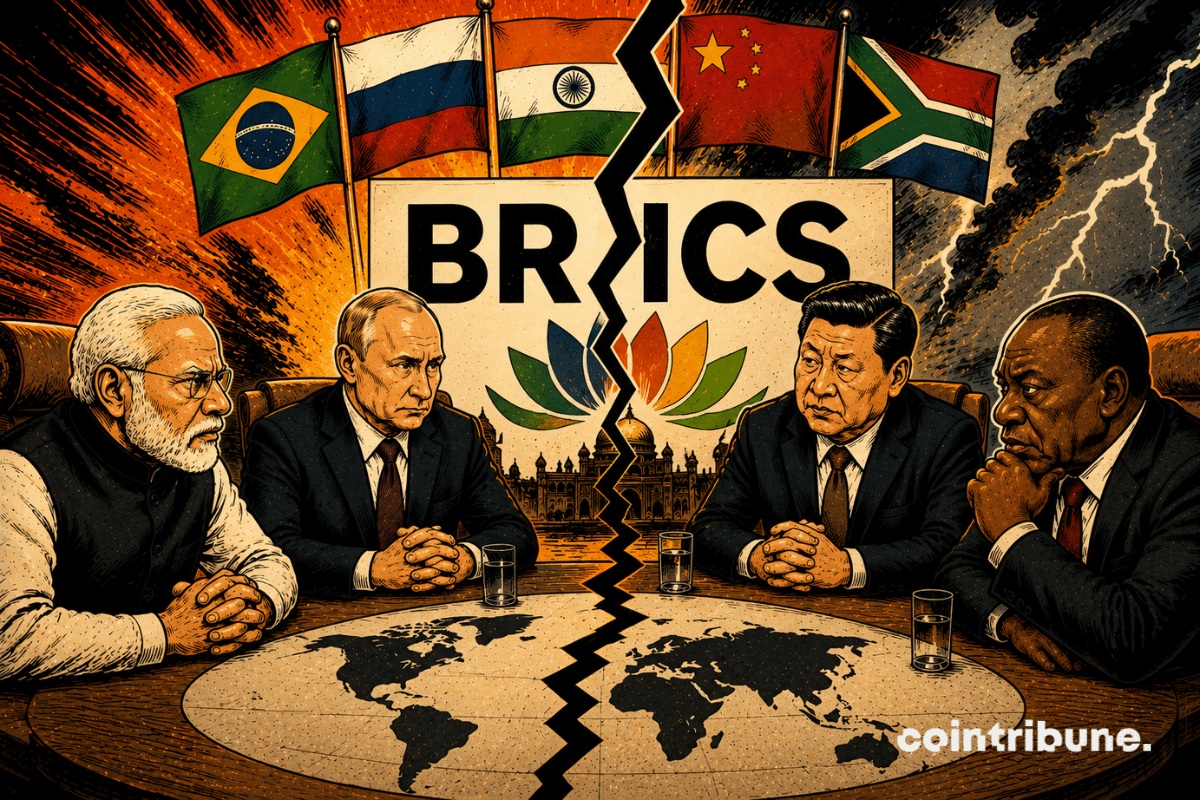
The dollar is losing ground where it ruled uncontested for decades. In March 2026, Russia and Iran settled $214 billion in trade in Chinese yuan, confirming the acceleration of dedollarization led by the BRICS. Behind this monetary shift lies a strategic battle between Washington and Beijing for control of global trade. Energy commerce, geopolitical tensions, and the rise of the "petroyuan": the great powers are quietly reshaping the rules of the international financial system.
The American stock market is returning to valuation levels reminiscent of the final days of the internet bubble. Driven by artificial intelligence and the surge of tech giants, the American stock market is setting records while comparisons with the year 2000 resurface. Between real growth and speculative frenzy, the market now fuels an increasingly tense debate among investors.
While Donald Trump sets foot in Beijing for a visit presented as "historic", another battle is being fought far from the cameras: that of global industrial control. In Brussels, the meeting between the American president and Xi Jinping fuels growing concern. Behind the diplomatic smiles, Europe fears an agreement capable of reshuffling the cards of trade, technologies, and critical materials. Rare earths, supply chains, economic warfare: the Sino-American summit could accelerate Europe's industrial decline.
While Kalshi swallows billions like an endgame boss, Polymarket now attracts much less innocent looks. Between troubling military bets, accounts appearing from nowhere, and speculative algorithms, predictive markets suddenly resemble a toxic mix between Wall Street, underground casino, and digital war room.
American inflation accelerates again. In April, the price increase reached 3.8% year-on-year, its highest level in three years. The surge in energy costs, fueled by tensions around Iran and disruptions in the Strait of Hormuz, is beginning to weigh on the American economy. This rise now complicates the outlook for Federal Reserve rate cuts and revives tensions in the financial markets.
The digital euro is no longer just a technological subject, as it becomes a battlefield for political confrontation at the summit of European institutions. By calling for increased private sector involvement in the tokenization of the euro, Denis Beau, Deputy Governor of the Bank of France, distances himself from Christine Lagarde and the cautious line of the ECB. Behind this disagreement lies a strategic battle over European monetary sovereignty, as dollar-backed stablecoins continue to dominate the global digital finance landscape.
For nearly a century, American markets have produced 91 trillion dollars of wealth for shareholders. Yet, this value creation relies almost entirely on a handful of companies. A study conducted by economist Hendrik Bessembinder on nearly 30,000 listed stocks between 1926 and 2025 shows that only 46 companies concentrate half of the gains generated on Wall Street. Behind the historical performances of American indices, the market reality appears much more unbalanced than it seems.
Donald Trump's rejection of an Iranian ceasefire proposal immediately shook global markets. Oil prices crossed the $100 mark, US futures fell, and tensions around the Strait of Hormuz returned to the forefront of concerns. In this nervous climate, Bitcoin nevertheless surprises by its stability around $81,000. Such behavior contrasts with previous geopolitical crises.
While investors were watching bitcoin, Nasdaq and oil, a completely unlikely asset posted the best performance of the month. In April, derivatives related to potatoes soared by 705%, benefiting from market nervousness amid geopolitical tensions around Iran. This spectacular rise reveals a global phenomenon: in a climate dominated by global uncertainty, speculative capital is now moving far beyond crypto and technology.
Trump Media & Technology Group starts the year with pressured accounts. Despite nearly $900,000 in revenue, the parent company of Truth Social reports a net loss of $405.9 million in the first quarter. The net loss is largely due to the impact of crypto on Trump Media’s balance sheet, even though Bitcoin remains a pillar of its financial strategy. This discrepancy illustrates the direct impact of digital assets on its results.
While Ethereum jealously guards its old digital hoard, Solana and Base are quietly nibbling at its pockets. Behind the crypto scenes, some are already nervously recounting the kingdom's tokens.
Kalshi has just raised $1 billion and doubled its valuation in barely five months. Everyone wants a share of the prediction market.
Kraken disrupts the rules of crypto trading. The platform has just launched in Europe a new category of futures contracts called Kraken TradFi Futures, allowing leveraged trading of stock indices, commodities, and forex pairs. An initiative that concretely brings the crypto and traditional finance worlds closer within a single interface. For Kraken Pro users, the experience expands considerably: in addition to the crypto perpetual contracts already available, derivative products modeled on traditional markets are now accessible within a regulated European framework.
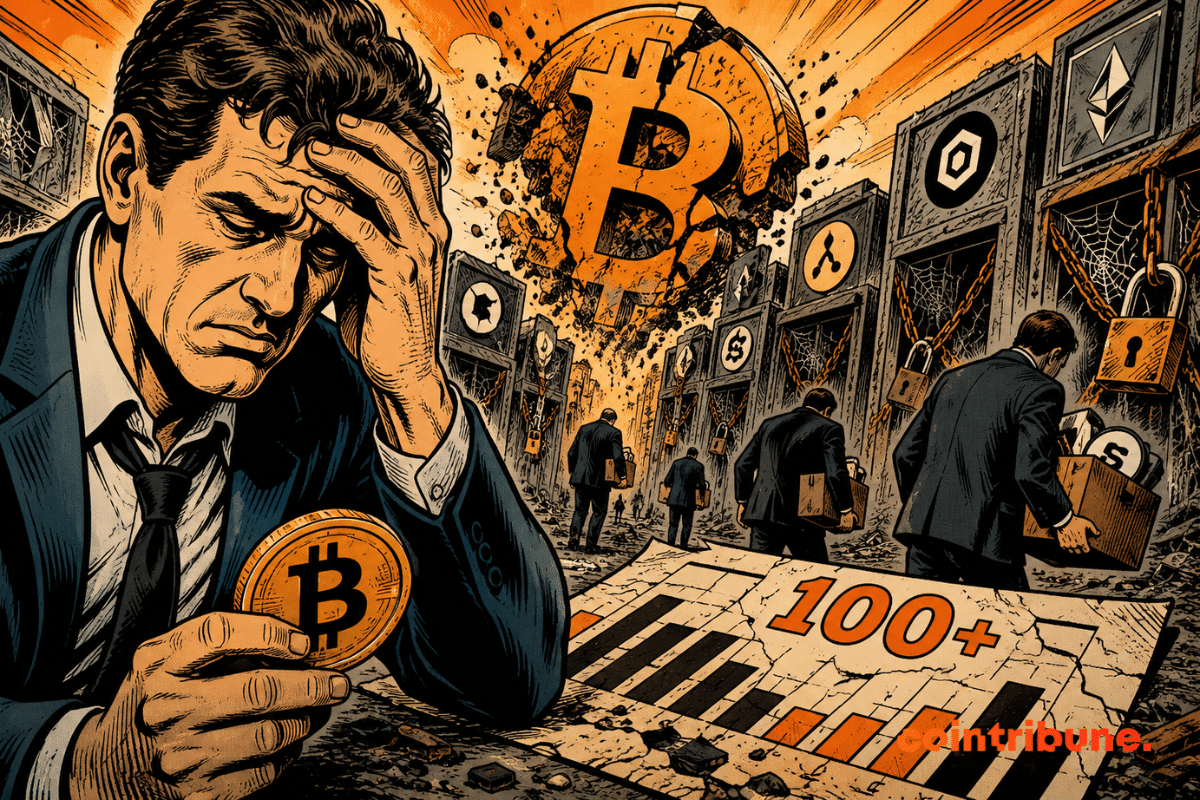
The prop trading sector has just endured one of the most brutal consolidations in its recent history. Between 2023 and 2024, more than 70 platforms shut down or were forced to cease operations under regulatory pressure, among them My Forex Funds, shut down by the CFTC in 2023, and The Funded Trader, liquidated the following year. Against this backdrop of widespread collapse, a handful of players not only survived but accelerated. Forex Capital3 is one of them, and its next bet is both logical and ambitious: integrating blockchain where traditional finance has shown its limits.
Sequans Communications liquidates half of its Bitcoin to cope with a drop in revenue, growing losses, and significant debt, questioning its long-term crypto strategy.
Only 2% of young Americans rate the American economy as "excellent." The figure is tiny, but it tells a larger divide: for a large part of 18-34 year olds, the promised growth does not show in bills, gasoline, or the grocery basket. According to Generation Lab, 52% of respondents describe the situation as bad and 29% as catastrophic.
The SEC has abruptly stopped the launch of 24 ETFs related to prediction markets. These revolutionary funds were expected this week. What is really happening?
A targeted strike on a Gulf oil hub was enough to instantly destabilize markets. The attack attributed to Iran on Fujairah, in the United Arab Emirates, propelled Brent beyond 120 dollars and put financial balances under pressure. Far from a simple geopolitical episode, this event reveals a growing tension between energy shock and investor reactions, in an environment where every supply disruption redefines global economic expectations.
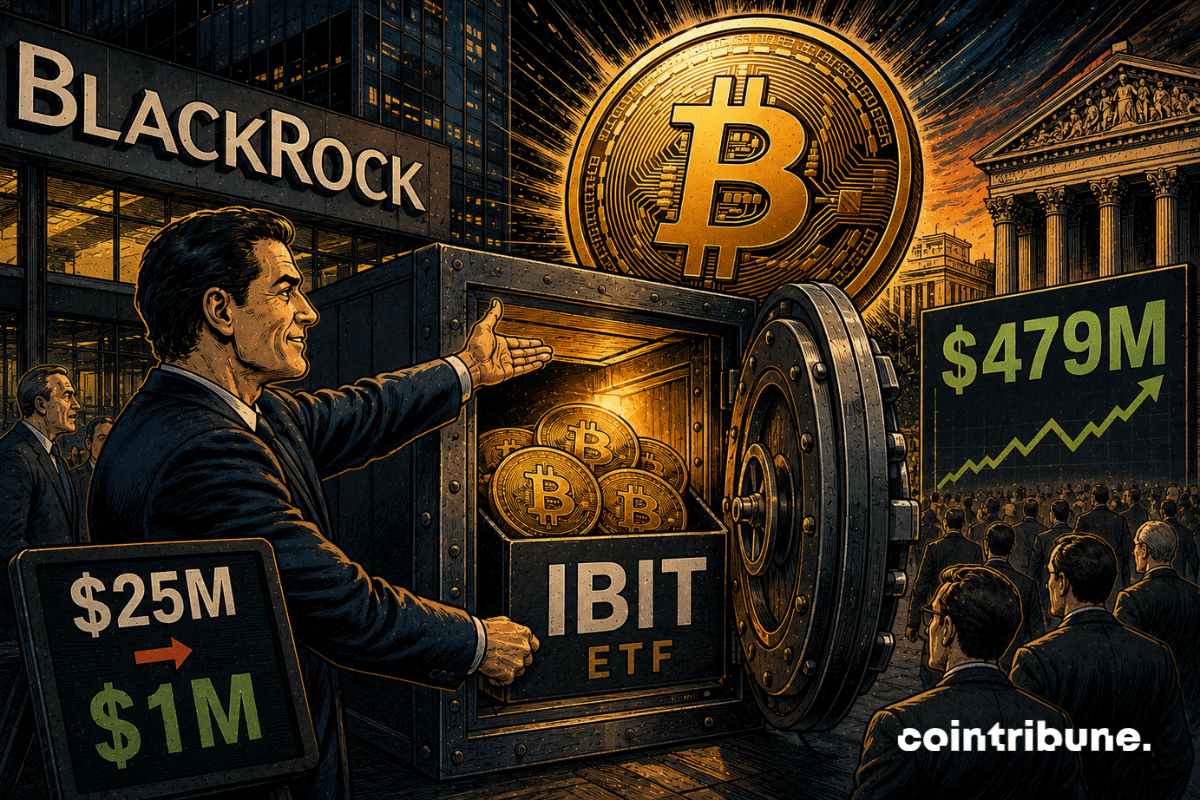
Bitcoin ETFs limp on Monday, breathe on Friday, then thank BlackRock. The crypto market, a caffeine-fueled chameleon, still hesitates between a true recovery and a balancing act.
The United States has just crossed a historic threshold. Indeed, their debt now exceeds the size of their economy. This shift fits into a sustainable trajectory marked by repeated deficits and postponed budget decisions. Despite these imbalances, market confidence remains intact, revealing growing tension between the perceived strength of the world's leading power and the reality of its public finances.
GameStop wants to buy eBay for $55.5 billion. The offer is spectacular, almost baffling, as it comes from a group much smaller than its target. The company proposes $125 per share, half in cash and half in stock, in a non-binding operation. It already claims to hold 5% of eBay through shares and derivatives.
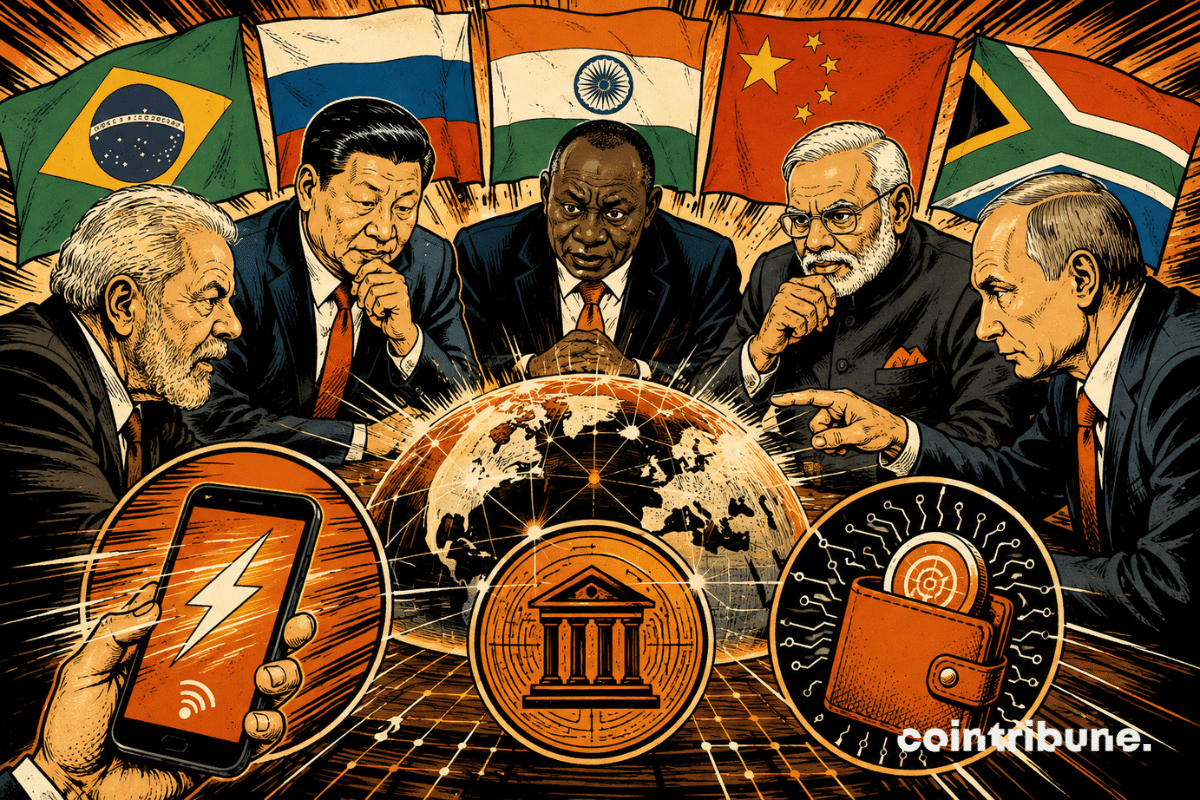
The dollar dominates international trade, but its monopoly is weakening. Amid geopolitical tensions and Western sanctions, the BRICS are accelerating their strategy to break free from it. The bloc is now working on a system of payments in local currencies, capable of profoundly transforming global trade flows. Behind this initiative lies a clear ambition: to reduce Western financial influence and reshape monetary balances on a global scale.
Bitcoin ETFs are leaking cash like a cracked safe, while crypto stiffens nervously, squeezed between expensive oil, jittery markets, and investors quietly switching horses mid-race without warning.
Visa is betting big on stablecoins with Polygon and Base. $7 billion at stake. A direct threat to traditional banks? Full analysis here.
Tensions are rising around the Strait of Hormuz after Trump refused to accept an Iranian proposal to reopen the maritime route before any progress is made on the nuclear issue. This position keeps pressure on Tehran and is already shaking global markets. Oil reacted sharply, jumping to nearly $120 per barrel, while Bitcoin and Ethereum fell in a constrained liquidity environment. Investors are now watching the impact of this crisis on energy, the dollar, and risk assets, including crypto.