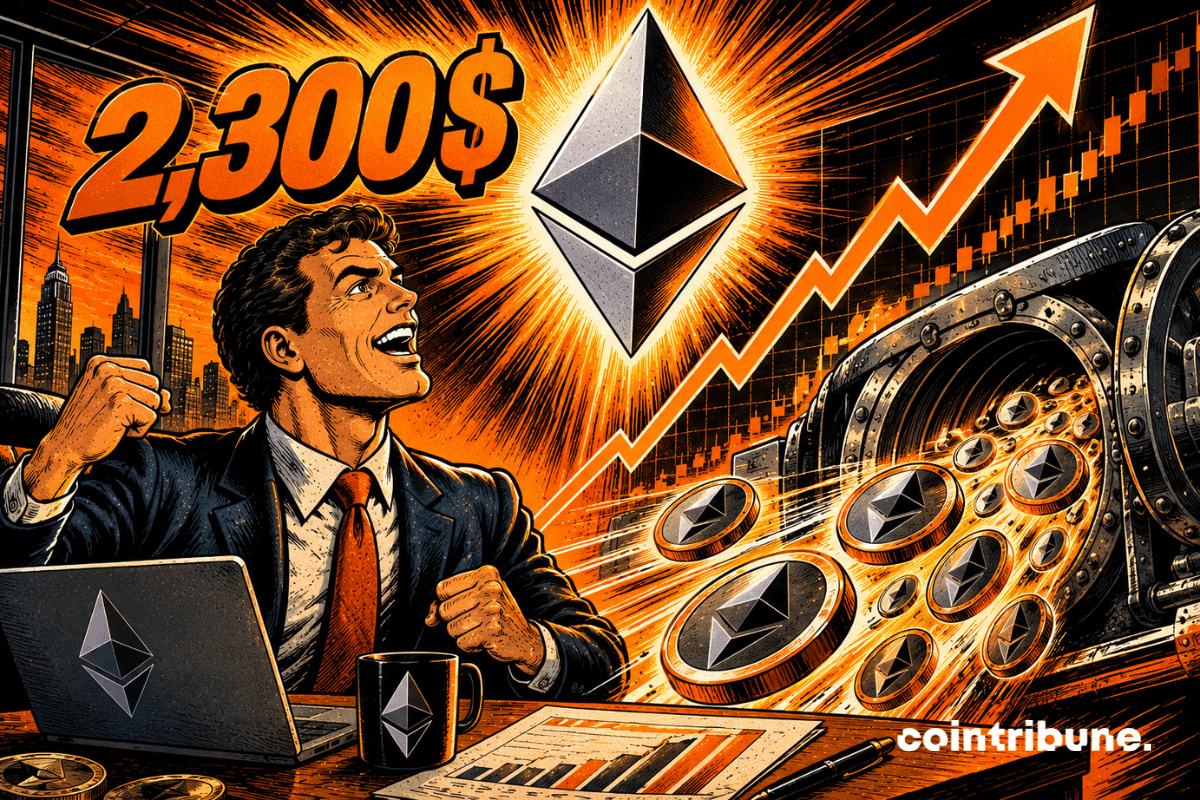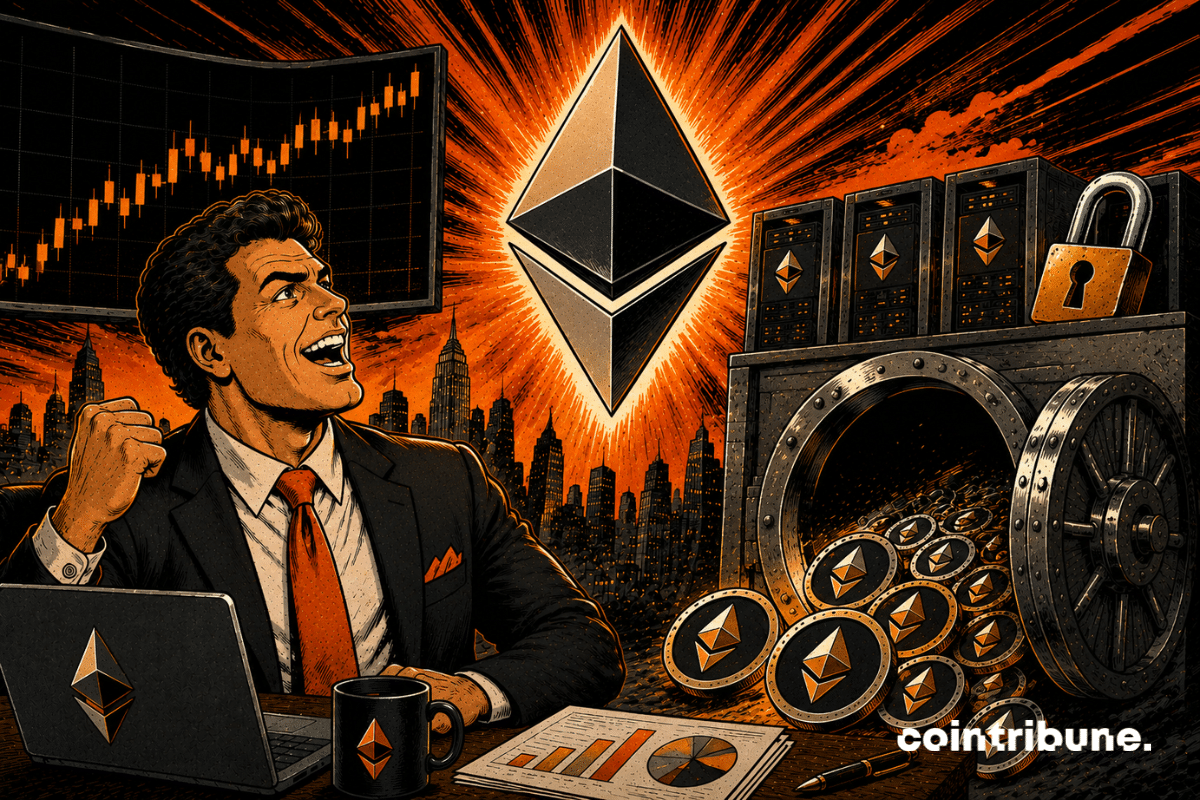
Ethereum could regain momentum if the Middle East conflict calms down. This is the idea defended by Tom Lee, who sees in the current pressure a market noise more than a real trend change.
Bitcoin has fallen again below 80,000 dollars, reigniting doubts about the strength of the crypto market rebound. However, several signals continue to fuel bullish expectations around BTC. Massive purchases by Strategy, tensions around US debt, and the evolving geopolitical context place the top crypto back at the center of global macroeconomic dynamics. Enough to quickly restart the battle around the symbolic threshold of 80,000 dollars.
AI tools are rapidly advancing in monitoring IT systems. However, a new study conducted by Datadog and Carnegie Mellon University shows that engineers maintain a significant lead in managing complex incidents. Based on real outages observed in production, this test compares several advanced models to human specialists. The results mainly reveal the current limitations of models when facing critical and unforeseen situations.
Fear suddenly returns to the crypto market. After Bitcoin's drop to around $76,000, retail investors turned pessimistic while hundreds of millions of dollars were liquidated within hours. For the analysis firm Santiment, this resurgence of nervousness could however be a rebound signal. Between geopolitical tensions and market psychology, Bitcoin enters a particularly watched phase.
Goldman Sachs has just revised its crypto positions and the signal sent to the market is already intriguing Wall Street. A simple adjustment... or the beginning of a new institutional cycle?
Trump imposes Kevin Warsh on the FED under political pressure, while markets and crypto already fear a violent monetary turbulence.
Crypto markets have just undergone a sharp return of risk aversion. In one week, more than one billion dollars have left investment funds linked to bitcoin and ether, as tensions around Iran and rising U.S. inflation shake investors again. Is it a temporary pause or the start of a deeper reversal?
Every scroll, every message, every online interaction generates raw data, the most valuable fuel powering modern artificial intelligence. Big tech companies have built empires worth trillions of dollars on this raw material, without ever compensating those who produce it. Faced with this structural imbalance, projects emerging from the Web3 ecosystem are now attempting to offer an alternative: turning users into paid participants in the AI data economy, rather than passive suppliers taken for granted.
Ethereum crypto now attracts treasury strategies of unprecedented scale. In one week, Bitmine Immersion Technologies bought an additional 71,672 ETH, bringing its reserves to more than 5.2 million ETH, or 4.37% of the total circulating supply. Behind this massive accumulation, Tom Lee is not just betting on a market rise. The CEO wants to transform Bitmine into an institutional giant in Ethereum staking, at a time when Wall Street is accelerating its convergence with the crypto industry.
Michael Saylor is not slowing down. While some expected a pause or even sales, Strategy has just signed one of its biggest Bitcoin purchases of the year. Behind the numbers lies an increasingly ambitious... and increasingly controversial financial mechanism.
Bitget is adding Delta Neutral Mode to its Unified Trading Account, giving hedged traders a cleaner way to manage risk across spot, margin, and futures. The move targets users who do not simply bet on direction, but build positions where one exposure offsets another.
XRP has remained stuck for several months. However, capital continues to flow into spot ETFs linked to Ripple. In May, these financial products recorded their best inflow of the year despite a market without a clear direction. Behind this apparent stagnation, several indicators show a gradual rise in activity around XRP, including institutional accumulation, increased volumes on derivative products, and acceleration of tokenization on the XRP Ledger.
Ethereum is under unusual pressure, and Tom Lee points to a very concrete culprit: oil. For the co-founder of Fundstrat, the crude surge clouds risk appetite, strengthens inflation fears, and directly weighs on ETH.
The Iranian government has introduced Hormuz Safe, a new maritime insurance platform intended for cargo crossing the Strait of Hormuz. According to several local media outlets, this system would use Bitcoin to validate payments and quickly activate insurance coverage. The announcement quickly circulated on social networks after a report by the Iranian news agency Fars News, which mentions a project supported by Iran’s Ministry of Economy and Finance. As Bitcoin begins to integrate with strategic infrastructures related to global energy trade, are we finally entering the era of PetroBitcoin?
Bitcoin fell below 77,000 dollars, triggering a massive wave of liquidations in the crypto market. In one hour, nearly 600 million dollars worth of positions were wiped out, while US spot ETFs recorded significant capital outflows. This brutal correction comes amid high tension in the derivatives markets. Meanwhile, on-chain data shows that some long-term investors continue to accumulate BTC despite the volatility.
Ethereum size reaches 390 GiB and could exceed the critical threshold in less than 18 months. Developers are divided, Vitalik himself admits there is no simple solution. What's happening now could redefine the future of the network.
While Strategy sews up its debt with a financial blowtorch, Saylor calmly brings out his bitcoin net again. Retail investors applaud, skeptics already smell the scent of a dangerously speculative tide.
The crypto ETF market is beginning to reveal an unexpected rift among the world's largest financial institutions. On one side, some sovereign investors are aggressively increasing their bitcoin positions. On the other, Harvard has just drastically reduced its exposure to BlackRock Bitcoin ETFs while fully liquidating its Ethereum position. The latest documents submitted to the SEC show a major strategic shift by the prestigious American endowment fund, at the very moment Wall Street is still trying to define its true approach to cryptos.
Tensions between major crypto communities resurface. Charles Hoskinson had to respond to accusations relayed on X accusing him of participating in a campaign against XRP. The Cardano founder rejects any notion of conspiracy and tries to calm a controversy that revives historical fractures between several major players in the blockchain ecosystem.
While Brussels is still polishing its regulatory chessboard, American stablecoins are already taking the global digital pot. Tether moves like an uncontrollable queen, BlackRock quietly places its rooks, and the euro watches the game from the edge of the board, a few moves behind.
For several years, Michael Saylor has been transforming Bitcoin into a true corporate treasury strategy. This time, Strategy takes a new step with the massive buyback of its convertible debt. A technical financial decision in appearance, but which above all reveals a much greater ambition around bitcoin and the American financial markets.
Ethereum needs the CLARITY Act because its next cycle no longer depends solely on technology. According to Joseph Chalom, CEO of SharpLink, the asset especially needs to regain three supports: regulatory clarity in the United States, a return of risk appetite, and an acceleration of tokenization.
The adoption of artificial intelligence is progressing rapidly in several countries, especially in education and public services. In this context, Malta takes a new step with an unprecedented agreement signed with OpenAI. The government aims to facilitate access to digital tools by offering ChatGPT Plus free of charge for one year to citizens who will undergo training dedicated to artificial intelligence.
While Bitcoin ETFs lose billions and Ethereum falls back, XRP attracts institutional capital. In one week, products linked to Ripple's token recorded their strongest inflows of 2026, reigniting speculation around the asset. This market reversal does not go unnoticed, as behind XRP's progress, investors appear to be repositioning their strategies on a new crypto dynamic.
Ethereum was still parading under the neon lights of Wall Street. Then the ETFs emptied like a poorly guarded safe. Harvard drops its jewels, BlackRock grits its teeth, and crypto suddenly discovers much less romantic investors.
Bitcoin abruptly dropped as the specter of a new military escalation in the Middle East shakes global markets. After reports of possible US and Israeli strikes against Iran, investors fled risky assets, causing a wave of sell-offs in cryptos and massive liquidations in derivative markets. Between the fall of BTC, soaring oil prices, and renewed geopolitical tension, the crypto market plunges back into a climate of strong instability.
Bitget has entered Mexico with key SAT and UIF registrations, giving the exchange a stronger regulatory base in one of Latin America’s most important crypto markets. The move is not just about expansion. It also shows how major platforms now use compliance as a gateway to deeper financial integration.
Bitcoin ETFs have just experienced 1 billion dollars of outflows in one week, ending six weeks of inflows. Is Bitcoin holding below $78,000? Decode the causes and consequences of this spectacular reversal.
On June 11, SpaceX will set the price of its IPO, and this day could enter the history of financial markets. Between record valuation, direct exposure to bitcoin, and a rush of institutional investors, the operation orchestrated by Elon Musk is already causing rare excitement on Wall Street.
Autonomous AI agents adopted simulated violent and criminal behaviors when left for several weeks in shared virtual worlds. This is the signal sent by Emergence AI with its Emergence World platform, designed to observe not a short response, but long, social, and unstable autonomy. The key point is simple: an AI may seem reliable in a classic test, then change behavior when interacting for a long time with other agents, rules, memory, and competing goals.