It's no longer a project, it's official: Tether is partnering directly with the government of Georgia to launch GELT, a state crypto stablecoin backed by the Lari. Failure or stroke of genius? Details here!


The European Central Bank toughens its stance against euro stablecoins. Meeting this week with European Union finance ministers, the ECB rejected several proposals aimed at promoting their development, considering that they could threaten the financial stability of the bloc. This position comes as dollar-backed stablecoins largely dominate the global market and increase pressure on Europe in the race for digital payments.
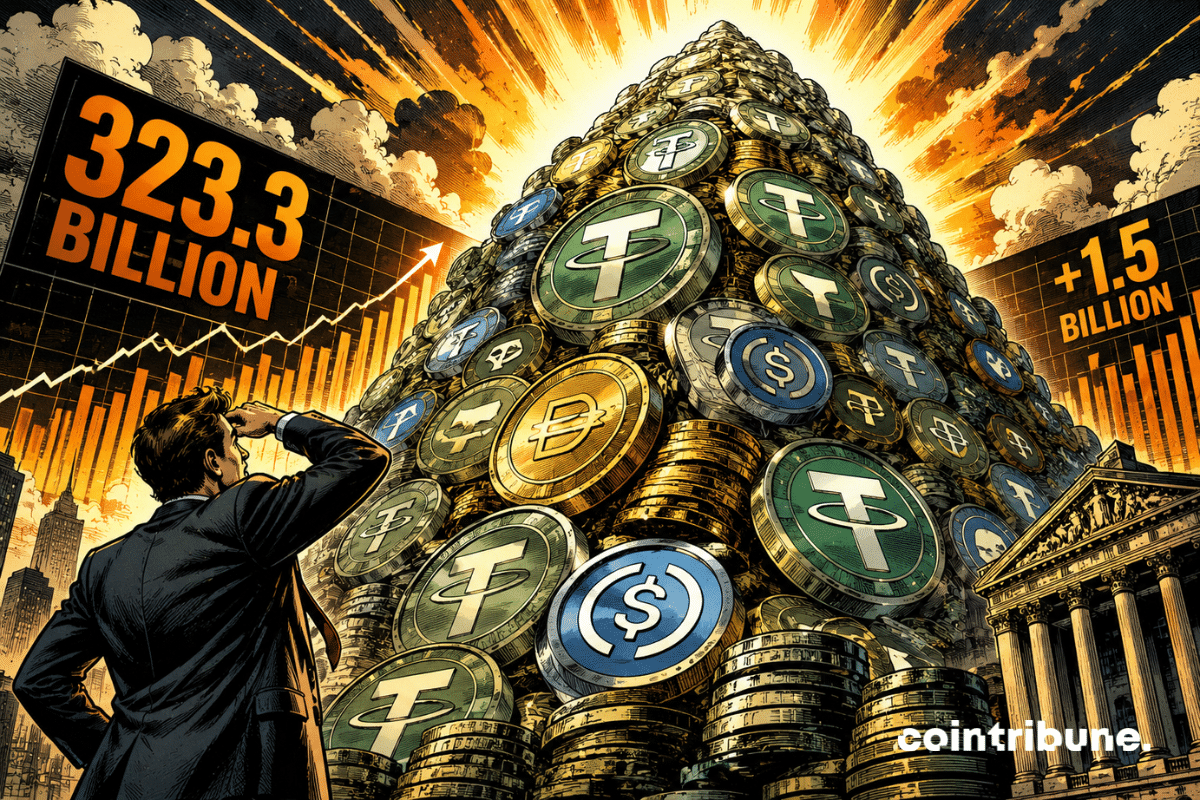
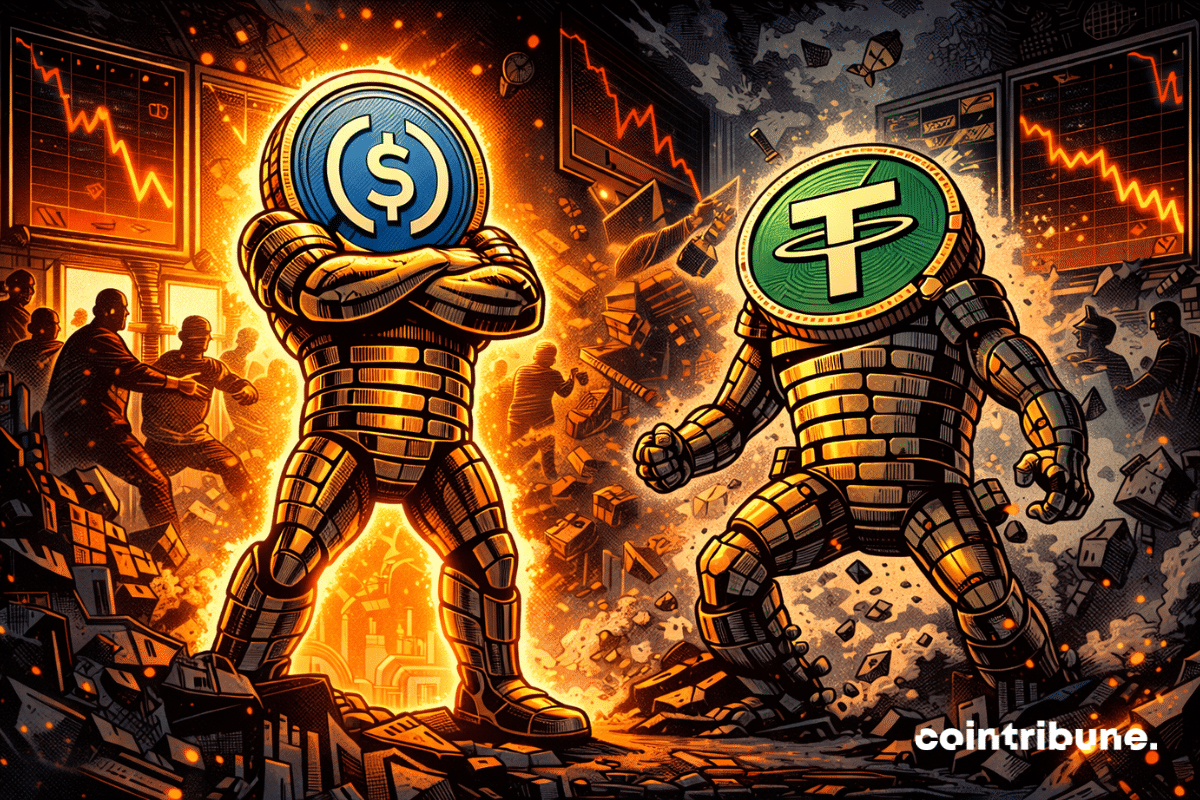
The stablecoin market enters a phase of brutal concentration. Tether absorbs almost all new flows, while its rivals take a hit. Between regulatory uncertainties and crypto market nervousness, investors now favor liquidity, size, and perceived security.
While Brussels is still polishing its regulatory chessboard, American stablecoins are already taking the global digital pot. Tether moves like an uncontrollable queen, BlackRock quietly places its rooks, and the euro watches the game from the edge of the board, a few moves behind.
Poland has just adopted its crypto law to comply with the European MiCA regulation. However, behind this compliance lies an explosive political battle, fueled by the Zondacrypto scandal and growing concerns about investor security.
The Bank of England is considering a comprehensive review of its regulatory framework on sterling stablecoins. Under pressure from the private sector, the institution is reconsidering rules deemed too restrictive, and potentially fatal for the UK's competitiveness against the United States and Europe.
Circle has just equipped AI agents with real USDC stablecoin wallets. They can now pay, transact, and manage funds without any human intervention. The autonomous economy has reached a major milestone.
The crypto market finds a foothold after a more active week on dollar-indexed assets. According to Defillama data, stablecoins attracted well over 2 billion dollars in seven days. In this context, USDT maintains a central place, while several competitors progress at different rates. The sector now shows a total capitalization of 322.74 billion dollars.
While bankers and regulators count their bolts, CZ is quietly preparing talkative machines fueled directly by global automated crypto payments, with Binance transformed into a giant algorithmic financial supermarket.
While some crypto market undertakers were already preparing the blockchain coffin, Polygon unleashes the "turbo low-latency" mode. Visa now watches the engine heat behind the glass, even though the POL token still limps like an old worn-out cyberpunk taxi after a night under neon lights.
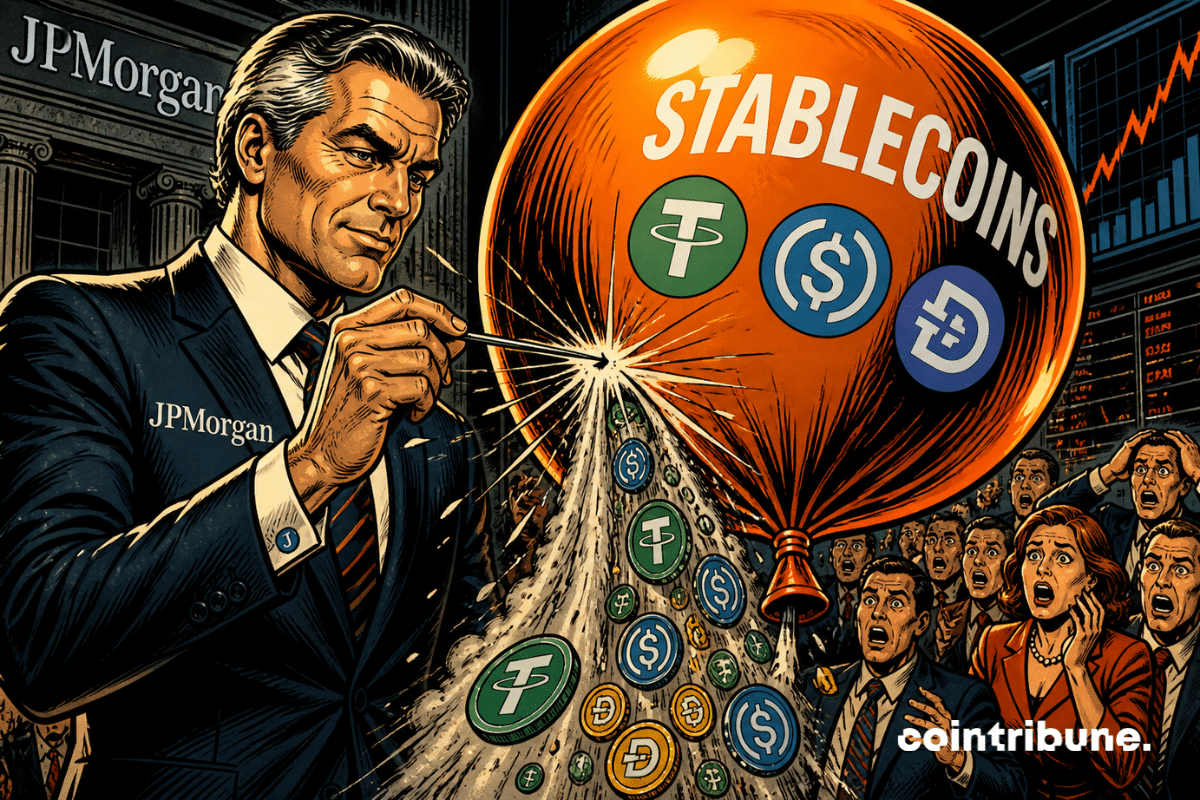
Stablecoins move trillions, but JPMorgan cools the champagne. Money spins faster than ever, and that promised jackpot might quietly stay locked behind the curtain.
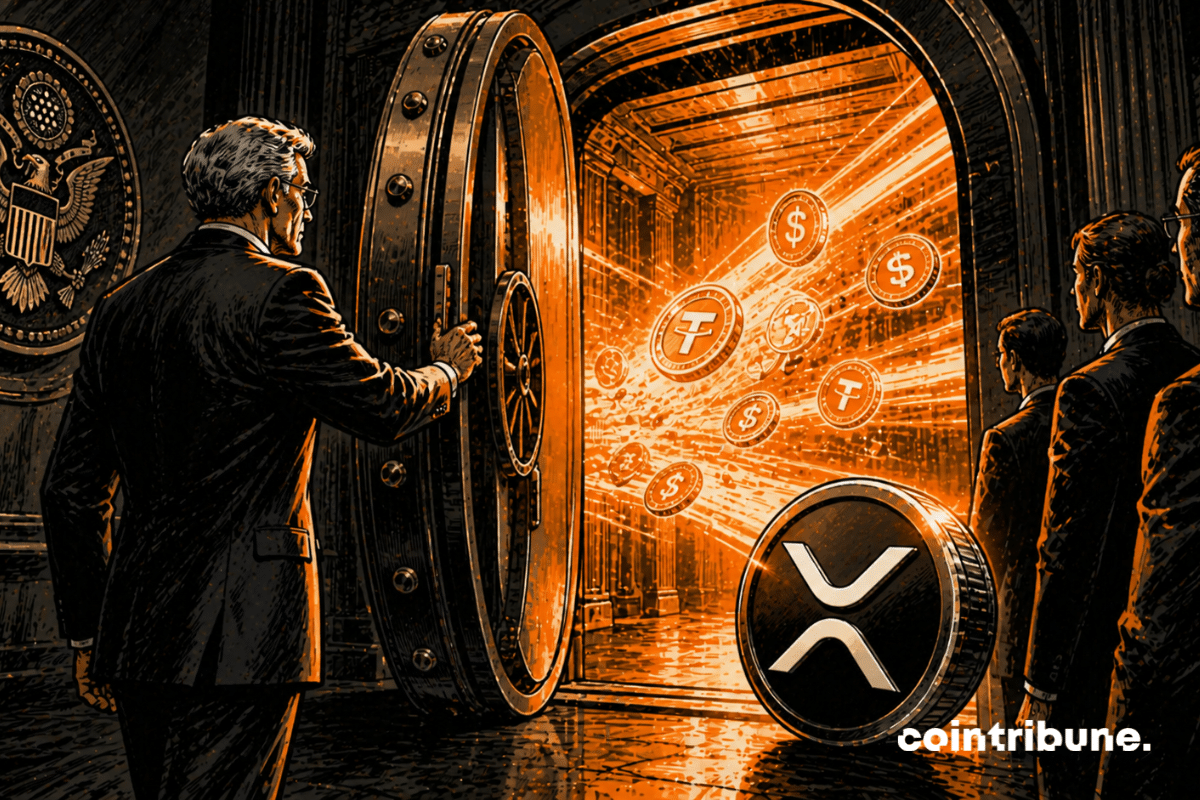
A seemingly minor technical reform could profoundly reshape dollar payments. In the United States, the idea of granting certain stablecoin issuers access to the Federal Reserve is disrupting the established balance between banks and fintechs. In this context, XRP is re-emerging with an unexpected promise: to become a key component in the circulation of monetary flows. Still hypothetical, this scenario fits into a broader transformation of the U.S. financial infrastructure.
Visa is betting big on stablecoins with Polygon and Base. $7 billion at stake. A direct threat to traditional banks? Full analysis here.
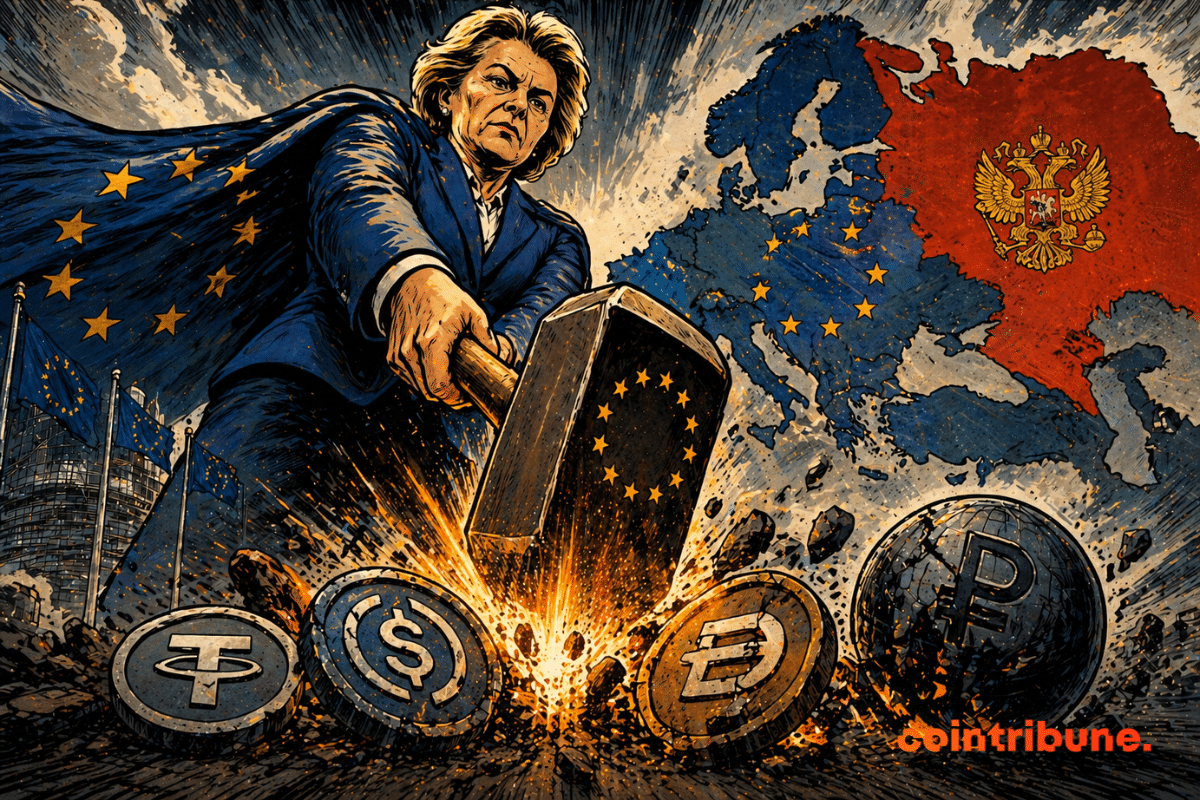
Brussels pulls out the big crypto lock: stablecoins, digital rouble, Russian platforms. While Moscow vows to hold firm, Europe counts the pipes, shuts the taps, and coldly smiles at the hurried fraudsters.
Europe thought it was laying the foundations for a safer crypto market. It may have actually hindered its own digital currency. Behind MiCA, presented as an exemplary framework, a reality sets in: euro stablecoins remain marginal compared to the dollar's hegemony. A recent report reveals this imbalance and revives a strategic debate. Between investor protection and global competitiveness, the European Union faces a dilemma that could weigh heavily on its place in digital finance.
The global money transfer giant no longer just watches the crypto revolution from afar; it is stepping in fully. Western Union is preparing to launch its own stablecoin, USDPT, built on the Solana blockchain, as soon as next month. A decision that could reshuffle the cards in the cross-border payments market.
Iran introduces bitcoin into its oil-related mechanisms. Under the effect of international sanctions, the country explores this asset as a strategic lever for its energy transactions. This direction marks a significant evolution, even if, in fact, flows still largely rely on other digital instruments, notably stablecoins. Between political display and operational constraints, a hybrid strategy is emerging.
Europe no longer wants to watch the stablecoin market from the sidelines. In Paris, French Finance Minister Roland Lescure clearly pushed for more stablecoins pegged to the euro, with a simple idea behind this signal: to reduce the continent's dependence on payment infrastructures dominated by the dollar and non-European actors.
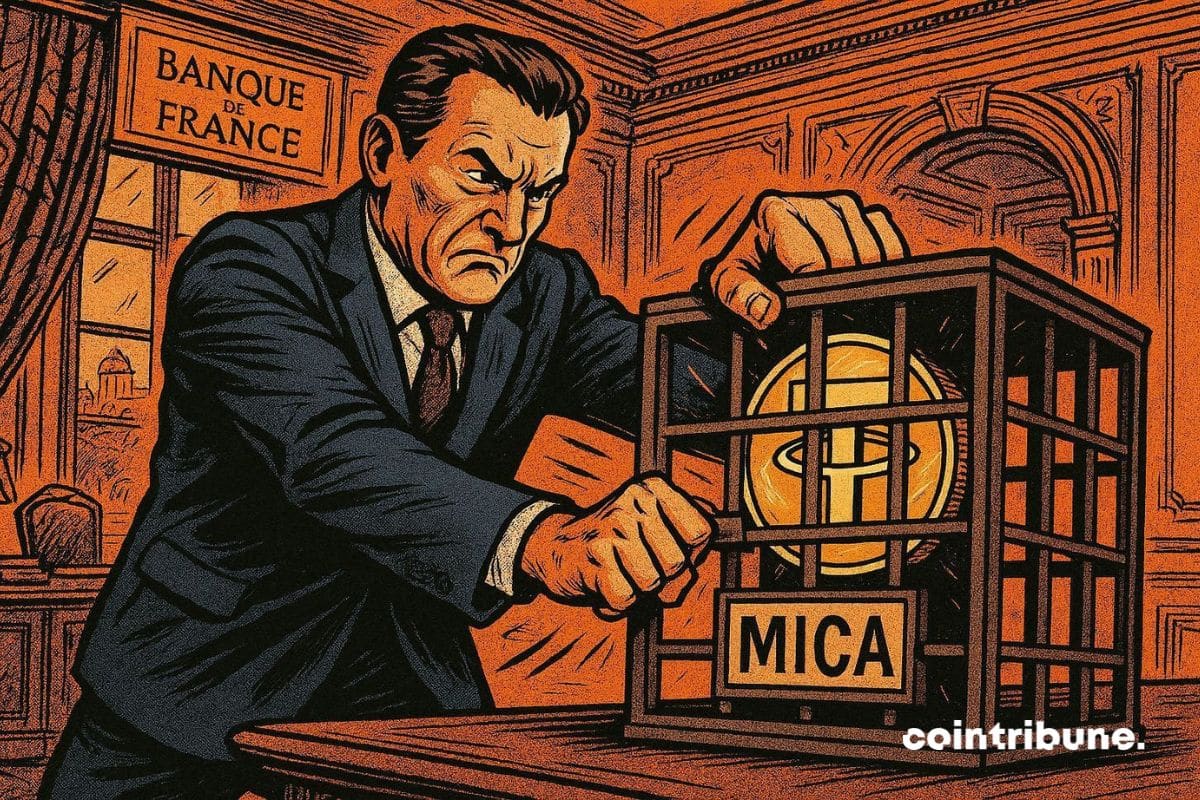
98% of stablecoins depend on the dollar, a threat to Europe. The Bank of France demands urgent tightening of MiCA rules. Why this decision? What risks for investors and markets? Analysis of the issues and proposed solutions.
Are stablecoins about to disrupt the global financial order? An industry projection puts forward a staggering figure: up to $1.5 quadrillion in volume by 2035. Long seen as tools of the crypto market, these assets could now establish themselves as key infrastructures for international payments. This rise directly challenges the dominance of traditional networks and reveals a profound transformation of financial flows on a global scale.
Tether, the issuer of the world's largest stablecoin, is playing a risky card. The company is trying to close a historic fundraising at a valuation of 500 billion dollars, but time is running out. Investors have two weeks to commit. After this period, the project could be purely and simply postponed.
While crypto coughs and retail pulls out its marbles, stablecoins swell driven by bots, boosted by yield, while tokenized dollar changes masters.
Stablecoins are advancing rapidly in Washington. The Federal Reserve, however, refuses to sign a blank check. Michael Barr, member of the Fed's Board of Governors, warns against too light regulation of assets that could, in a crisis, threaten the stability of the entire financial system.
Coinbase puts pressure back on Washington. The platform opposes once again the compromise on stablecoins, blocking the progress of a key text in the US Senate. On the surface, the debate concerns a technical detail: yield. In reality, it is a strategic battle between banks, exchanges, and political power, the outcome of which will reshape the digital dollar economy.
Despite a 22% drop on the stock market after tensions related to the CLARITY Act, Circle remains supported by the growth of the stablecoin market and the increasing institutional adoption of USDC in payments.
While crypto is booming, the ECB tightens the screws, refuses overly free stablecoins, and quietly prepares its own financial playground.
Tether is playing big. Long criticized for its opacity, the issuer of the USDT stablecoin finally announces a full audit of its reserves by a Big Four firm, a highly anticipated first by the market. Such progress could reshuffle the cards of trust around the world's largest stablecoin. However, the company refuses to reveal the identity of the firm in charge of this mission, casting doubt at the very moment it claims to want to increase its transparency.
Imagine an instant, secure payment system compliant with the strictest standards. Deloitte and Stablecorp team up to make QCAD the reference stablecoin in Canada. An innovation that could well redefine financial transactions as early as 2026.
Crypto: the SEC is moving its pieces. A major reform could impact traders, institutions, and investors. All details here!

In Washington, the SEC puts away the club, strokes crypto, and vows to love innovation; it remains to be seen if Congress follows the band or sabotages the score behind the scenes.