Morpho has just raised 175 million dollars and confirms its change of scale in crypto. The French unicorn now aims to establish itself as one of the major infrastructures of onchain credit.

Tim Draper, a historic investor known for his sharp predictions on Bitcoin, recently dismissed fears around quantum computing. According to him, traditional banks will fall under quantum blows well before the blockchain. Do BTC holders really have less to fear than bankers?
The European Union has just opened a new front against the American tech giants. In a decision that could set a precedent in the artificial intelligence sector, Brussels has ordered Meta to reopen WhatsApp to chatbots competing with Meta AI. For European regulators, Mark Zuckerberg's group cannot use its messaging dominance to steer the future of a strategic market. Behind this injunction lies a much larger battle: the control of future access points to artificial intelligence.
Competition is intensifying across the artificial intelligence sector, as companies seek to improve reasoning, programming, and complex data-processing capabilities. In this environment, new models are increasingly judged not only by their performance but also by their operating costs. It is within this context that Anthropic has introduced Claude Fable 5, a new-generation model designed to meet the needs of developers, researchers, and businesses.
The crypto market regularly experiences phases of euphoria and disappointment, but certain indicators help identify moments when investor sentiment truly breaks down. For XRP, the latest data published by Glassnode indicate that such a breaking point may be underway. The on-chain analysis company observes both an explosion in loss sales and a sharp contraction in network activity, reflecting a profound change in market dynamics.
Bitcoin loses billions in flows in 2026. Bernstein has just put the figures on the table. And they are conclusive. Decryption.
This is no longer science fiction! MetaMask has just given full control of DeFi to autonomous AI agents. Crypto trading is about to shift into a 100% algorithmic era.
Bitget is pushing tokenized equities into a more practical phase with Stocks 2.0, an upgraded spot product built to connect stock-linked tokens with real U.S. market liquidity. The launch marks another step in the exchange’s Universal Exchange strategy, where crypto, equities, ETFs, commodities and other assets move inside one trading environment.
While the crypto market is going through a slowdown phase, one segment continues to break records in relative silence. According to Binance Research, tokenized real-world assets (RWA) have jumped by nearly 600%, driven by the explosion of tokenized stocks, digital gold, and blockchain real estate. Long presented as a technological promise, tokenization is now attracting institutional investors and major banks to the point of becoming one of the most strategic projects in global finance.
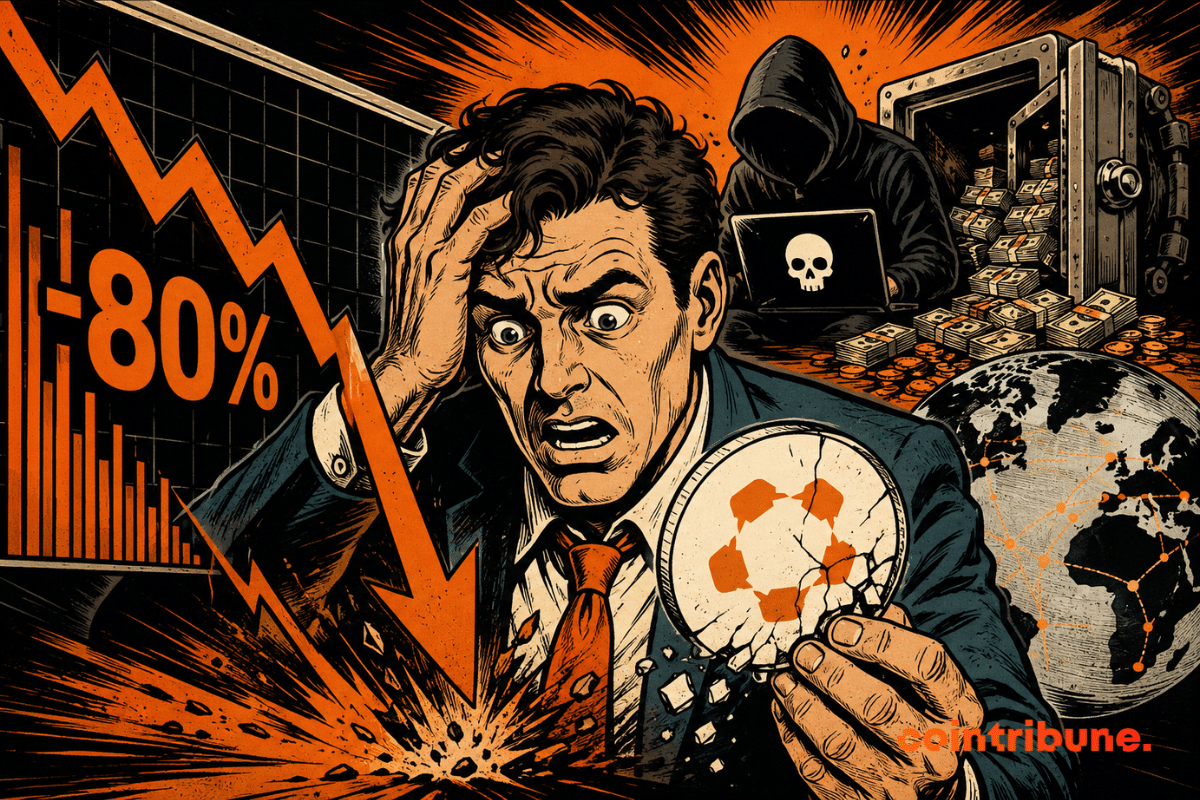
The cryptocurrency sector faces a new major security incident. Humanity Protocol, a project specializing in decentralized identity, has suffered a significant compromise leading to the theft of over $32 million. Following this attack, the H token lost more than 80% of its value within a few hours. The event once again highlights the risks related to private keys, now at the center of several major attacks observed this year.
While Trump plays the tough guy, BlackRock senses trouble. Oil, inflation, bitcoin: the trilogy that can blow everything up.
In April 2026, a flaw in KelpDAO's LayerZero bridge triggered $8.45 billion withdrawals on Aave in less than 48 hours, the biggest banking panic in DeFi history. Stani Kulechov, founder of Aave Labs, presented the episode as proof of the protocol's robustness at the Proof of Talk in Paris. However, the facts paint a much less flattering picture.
Russia wants to tax and regulate Western cryptocurrencies deemed "hostile." Behind this measure, Moscow is primarily seeking to regain control of a crypto market that has become strategic for its payments, exchanges, and financial sovereignty.
Ethereum has lost more than 65% since its August 2025 record. Bitmine already shows about 9 billion dollars in unrealized losses. And yet, Tom Lee's company has just made its biggest weekly ETH purchase of the entire year 2026. A conviction that demands respect, or raises concern.
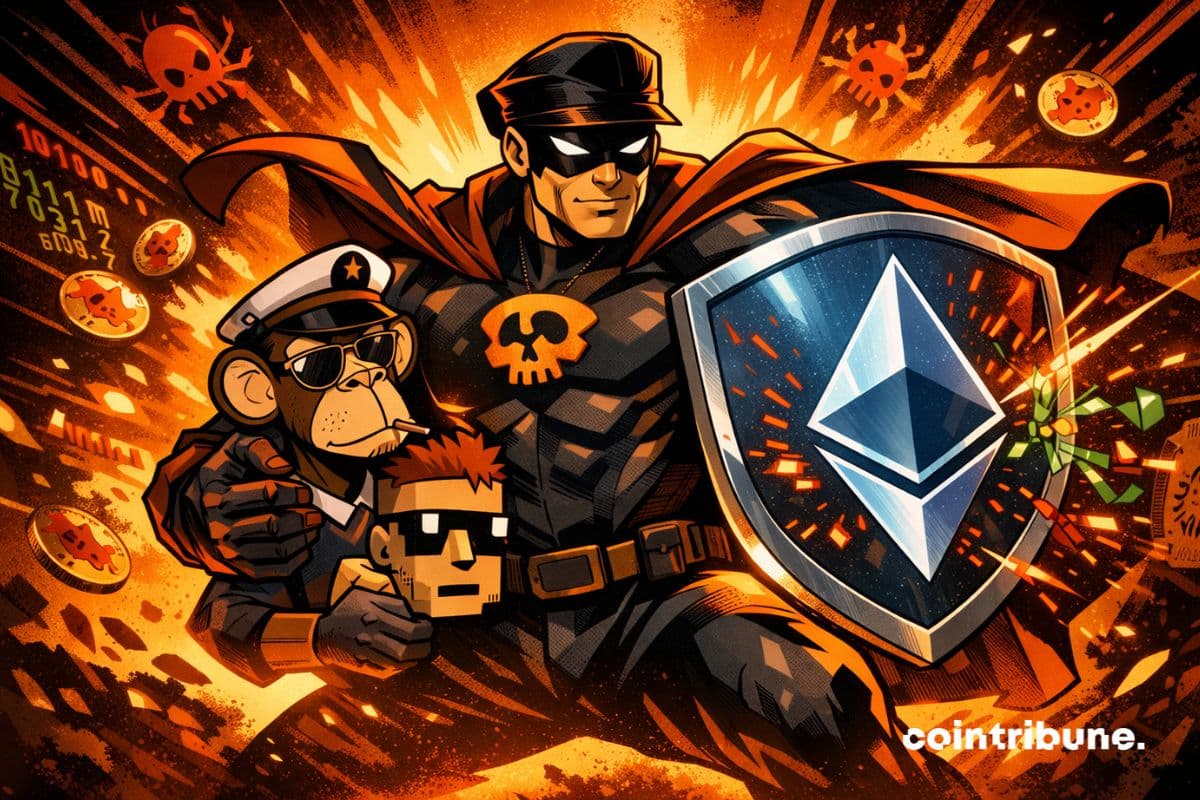
An exploit on Ethereum threatened the icons of the NFT market. Yuga Labs, creator of the Bored Apes, reacted as a hero, securing more than 60 NFTs worth $570,000. A whitehat operation that reignites the debate on the security and future of Ethereum NFTs.
While Wall Street rolls out the red carpet, OpenAI arrives with a dizzying valuation. Behind the scenes, bankers, investors, and competitors are already counting their chips before the big game.
A few days after fueling speculation with a rare bitcoin sale, Strategy is already back on the path of accumulation. The company led by Michael Saylor has just acquired 1,550 additional BTC while raising its cash reserve to one billion dollars. A dual operation that dispels doubts about its commitment to bitcoin and reveals a more discreet evolution of its financial strategy. Between strengthening its BTC reserves and consolidating its balance sheet, the company refines its model at a time when investors scrutinize every decision of the major institutional players in the market.
New twist in the FTX crypto case. Sam Bankman-Fried officially requests a presidential pardon from Donald Trump. A move that reignites debates around the biggest scandal in crypto history!
Why is bitcoin falling when no major bad news seems capable of justifying such a correction? This is the question troubling investors today after the collapse of more than 50% of the leading crypto since its peak of 126,000 dollars. For NYDIG, the explanation is not found in a single event, but in the accumulation of several rarely combined factors: enthusiasm for artificial intelligence, expectations around future tech IPOs, quantum-related fears, and unfavorable psychological signals. A combination that could shed light on the current market weakness.
Zcash wants to restore trust with Ironwood, a new shielded pool designed to fix the gray area left by the Orchard flaw. In an already nervous crypto market, the issue goes beyond a simple technical bug. It touches the heart of ZEC's promise: a private currency, but one whose supply must remain verifiable.
Bitcoin revives Kalshi's activity and propels its weekly open interest to a record level. Behind this figure, a trend is emerging: predictive markets are becoming a new thermometer for crypto sentiment. They do not replace traditional derivatives. But they now capture a visible part of the nervousness around BTC.
The week of June 8 subjects the crypto market to a particularly busy macro calendar, between the release of American inflation on Wednesday and the ECB decision on rates on Thursday. After nine months of correction, digital assets remain under pressure in a context of divergence with stock markets at their peak. Will bitcoin finally find a floor this week?
Since its launch, ChatGPT has evolved far beyond a simple conversational assistant. Now, OpenAI is preparing the most significant overhaul of its flagship product to transform it into a platform capable of centralizing multiple digital services. This evolution marks a new stage for ChatGPT, which aims to bring together productivity, development, and automation tools within a single environment.
Bitget polishes its digital armor while scammers raid every shiny corner of modern finance. Crypto, AI, tokenized stocks: the buffet grew larger, and the pickpockets arrived wearing smarter masks.
Criticism surrounding the Ethereum Foundation has been increasing for several weeks. Budget cuts, internal departures, and leadership changes are fueling debates within the blockchain community. However, Joe Lubin refuses to speak of a crisis. According to the network co-founder and CEO of ConsenSys, these adjustments rather reflect a necessary evolution of the foundation's role.
Cold spell for crypto in Washington! The CLARITY Act, a historic bill to regulate the U.S. market, sees its chances of adoption collapse according to Galaxy Digital. We explain why panic is looming among investors.
Since its peak in October 2025 at $126,000, Bitcoin has lost more than 40%. The Fear & Greed index is in the extreme fear zone, institutional ETFs are recording net outflows, and obituaries are blooming again. Yet, bitcoindeaths.com already counts 472 since 2010. They all appear at the same time: exactly this one.
Gold was supposed to shine under the bombs, silver was supposed to play the bodyguard. Failed: the Fed comes out with its club, markets sell everything, and bitcoin also takes a hit.
Michael Saylor has not finished confusing the crypto market. A few days after the exceptional sale of 32 BTC by Strategy, a first in several years, the company's co-founder rekindled speculation with an enigmatic message published on X. Behind this simple sentence lies a question that now agitates investors: is the largest bitcoin holding company in the world already preparing to resume its offensive on BTC?
In a crypto market dominated by capital outflows, XRP stands out as an exception. While investment products linked to Bitcoin and Ether experience withdrawals, funds backed by Ripple's token continue to attract new capital. This dynamic contrasts with the overall market sentiment and draws the attention of institutional investors.