
Thu 21 May 2026 ▪
17 min read
▪
by
Do crypto conferences actually drive traffic? We ran the stats so you don't have to.
Do crypto conferences actually drive traffic? We ran the stats so you don't have to.

While Nvidia builds cathedrals for artificial intelligence, bitcoin miners bring out their secret plans. Wall Street applauds weakly, then discreetly recounts the cracks under the global digital foundations.

It’s almost mid-2026 and yet Blockchain is trapped in a narrative of speculative mania and few practical real-world asset (RWA) applications in daily life. For years, the momentum behind the promise to dismantle centralization and democratize finance has been stagnant, but no longer.

Artificial intelligence is already transforming customer service, payments, and online commerce. But a new study reveals an unexpected blind spot: consumers lie much more easily to AI than to a human being. Without eye contact, without judgment, does the machine disinhibit bad tendencies?

AI tools are rapidly advancing in monitoring IT systems. However, a new study conducted by Datadog and Carnegie Mellon University shows that engineers maintain a significant lead in managing complex incidents. Based on real outages observed in production, this test compares several advanced models to human specialists. The results mainly reveal the current limitations of models when facing critical and unforeseen situations.

Every scroll, every message, every online interaction generates raw data, the most valuable fuel powering modern artificial intelligence. Big tech companies have built empires worth trillions of dollars on this raw material, without ever compensating those who produce it. Faced with this structural imbalance, projects emerging from the Web3 ecosystem are now attempting to offer an alternative: turning users into paid participants in the AI data economy, rather than passive suppliers taken for granted.

Ethereum size reaches 390 GiB and could exceed the critical threshold in less than 18 months. Developers are divided, Vitalik himself admits there is no simple solution. What's happening now could redefine the future of the network.

The adoption of artificial intelligence is progressing rapidly in several countries, especially in education and public services. In this context, Malta takes a new step with an unprecedented agreement signed with OpenAI. The government aims to facilitate access to digital tools by offering ChatGPT Plus free of charge for one year to citizens who will undergo training dedicated to artificial intelligence.

Autonomous AI agents adopted simulated violent and criminal behaviors when left for several weeks in shared virtual worlds. This is the signal sent by Emergence AI with its Emergence World platform, designed to observe not a short response, but long, social, and unstable autonomy. The key point is simple: an AI may seem reliable in a classic test, then change behavior when interacting for a long time with other agents, rules, memory, and competing goals.

Quantum computing may have just entered a new era. China claims to have developed a machine capable of performing in 25 microseconds operations that no classical supercomputer could replicate before a time beyond comprehension. Behind Jiuzhang 4.0, presented by the University of Science and Technology of China (USTC), an explosive issue is already emerging for the crypto industry: the future security of bitcoin in the face of accelerating quantum technologies. This breakthrough also reignites the strategic battle between Beijing and Washington in the global race for computing power.

An old bitcoin wallet quietly gathered dust since 2015 in the dusty basements of a university computer. Then Claude arrived with his forensic lamps and his reflexes of a digital flea market trader on amphetamines. Behind the viral euphoria, several experts nevertheless remind that no bitcoin safe has actually been cracked.

OpenAI has just changed the core of ChatGPT. The AI now analyzes the context of your conversations to spot distress signals.

While bitcoin plunges down the mountain like an old tired gondola, Marathon quietly sells its digital treasure to fuel its artificial intelligence dreams and avoid a nasty industrial slide now visible everywhere.

INFO ALERT: A Trojan horse has just been discovered at the heart of the Mistral AI ecosystem. Microsoft raises the alarm: are your AI models at risk?
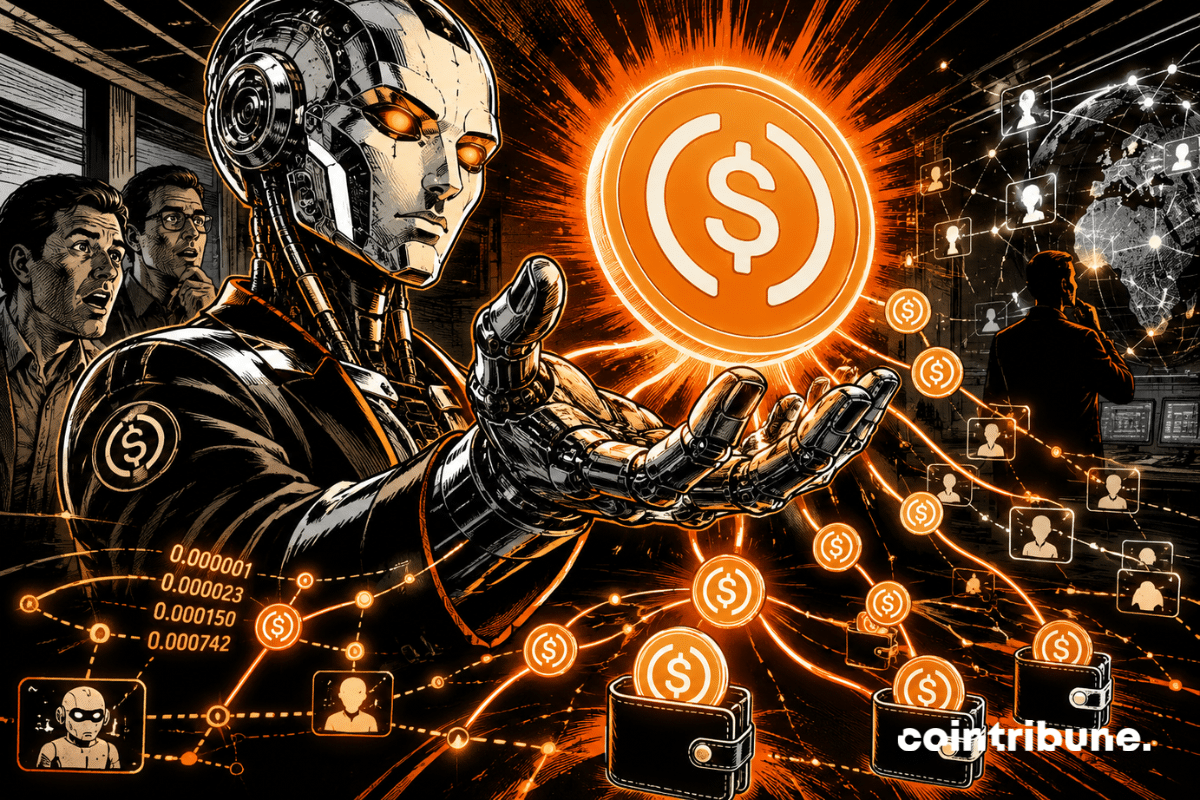
Circle has just equipped AI agents with real USDC stablecoin wallets. They can now pay, transact, and manage funds without any human intervention. The autonomous economy has reached a major milestone.

Sam Altman puts OpenAI's AI back in the spotlight with a double signal: Codex gains autonomy, while "Goblin" emerges as a joke that has become almost strategic. Behind the humor, a real topic appears: OpenAI wants to make its models agents capable of acting, not just responding.

The gravediggers of NFTs had already brought out the shovels and mocking tweets. Too bad: BAYC resurrects, CryptoPunks climbs, and some skeptics are now swallowing their digital stethoscope.

AI enters a new phase of financial excess. The American startup Anthropic is preparing a fundraising that could propel its valuation towards 1,000 billion dollars. A perspective still unimaginable two years ago, but which reflects the explosion of demand around generative artificial intelligence models. Anthropic now wants to directly compete with OpenAI on the financial and technological power front. The company behind Claude plans to raise up to 50 billion dollars this summer. If the operation succeeds, its valuation could approach 900 billion dollars, with the symbolic trillion threshold now in sight.
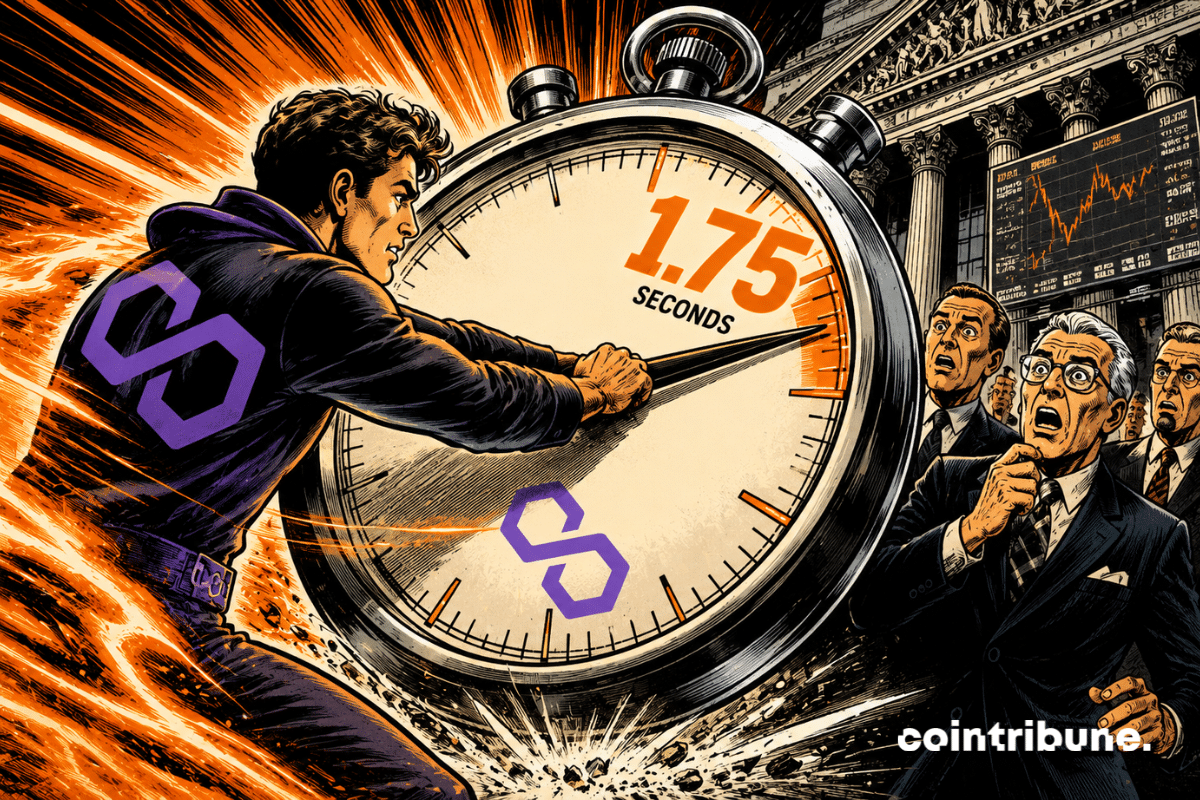
While some crypto market undertakers were already preparing the blockchain coffin, Polygon unleashes the "turbo low-latency" mode. Visa now watches the engine heat behind the glass, even though the POL token still limps like an old worn-out cyberpunk taxi after a night under neon lights.

Hut 8 reports a net loss of $253 million in Q1 2026, but its stock jumps by +33% thanks to an AI infrastructure contract. Details here!

For months, Elon Musk publicly attacked Anthropic. Today, however, the billionaire opens the doors of one of the most powerful supercomputers on the market to them. Behind this surprise agreement between SpaceXAI and the company behind Claude lies a reality that has become central in the AI war: dominance no longer depends only on models, but especially on access to GPUs, energy, and infrastructures capable of powering the next generation of artificial intelligences.

The Ethereum network is moving toward a new technical milestone with Glamsterdam. This evolution is drawing attention from developers, as it could reshape resource management and transaction costs. As work progresses, the network is preparing for a significant increase in capacity, with a clear goal: handle more activity without compromising its internal balance.

Crypto and AI flood Washington with cash, yet voters keep their distance. Money talks loudly, but trust whispers faintly, stuck somewhere between suspicion, fatigue, and a stubborn refusal to click “accept.”

AI is disrupting reproductive medicine by offering a new chance to infertile men. Developed by Columbia University, the Star method identifies rare sperm in patients with azoospermia. This technological breakthrough has already led to the confirmation of a first pregnancy.

Deals between American AI giants and the Pentagon are no longer just an ethical debate. They are becoming a matter of public trust, digital sovereignty and even international competition. Europe sees one more reason to accelerate its digital sovereignty.
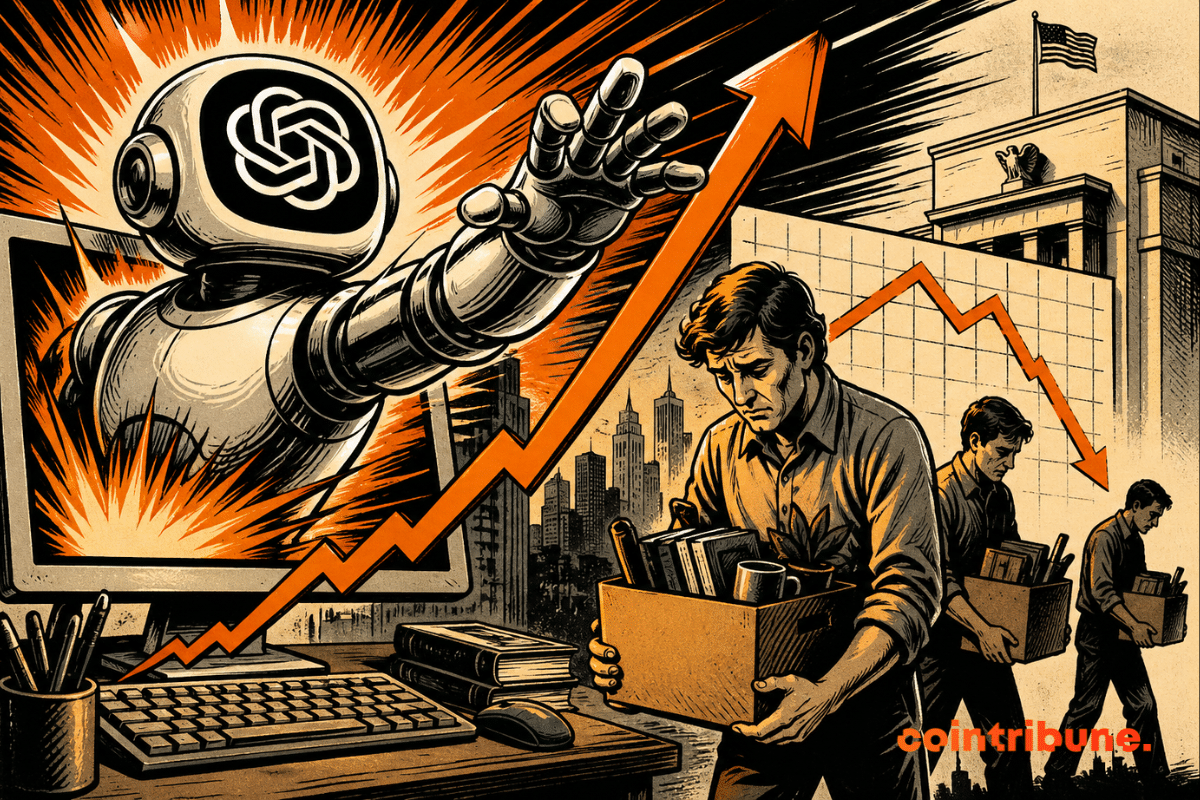
A preliminary study by the U.S. Federal Reserve reignites the debate about the impact of artificial intelligence on tech and the crypto ecosystem. According to economists Leland D. Crane and Paul E. Soto, the rise of ChatGPT after November 2022 coincides with a sharp slowdown in employment among developers in the United States. Over three years, this shortfall would represent about 500,000 jobs that probably would have existed without the rapid rise of large language models.

What if crypto was never made for you? Nikil Viswanathan, CEO of Alchemy, emphasizes: crypto was designed for AI agents, not for humans. Discover why traders could soon be replaced by algorithms…

DeepSeek launched its V4 models on April 24, 2026, optimized for Huawei Ascend chips and marking a major breakthrough in Chinese AI. With performance rivaling GPT-5.4 and Gemini, this open-source model could redefine global standards.

Medical AI crosses a threshold that is no longer just theoretical. OpenAI now claims that its ChatGPT model outperforms human doctors in certain clinical tasks, with supporting figures. With ChatGPT for Clinicians, the company tackles directly the heart of the healthcare system, between documentation, research, and decision support. Behind this announcement, a promise of productivity… but also questions about reliability and the methodology used. This advancement marks a turning point in the accelerated integration of artificial intelligence in medicine.

Artificial intelligence is revolutionizing bug bounty programs in crypto, but at what cost? With a 900% surge in submissions, security teams are overwhelmed. Discover how AI is redefining security challenges and why this wave could threaten protocol stability.