Wed 12 Aug 2026 ▪
8 min read
▪
by
MoneyGram officially launches Ramps on Solana and opens cash access in more than 170 countries. A major turning point for crypto adoption!
MoneyGram officially launches Ramps on Solana and opens cash access in more than 170 countries. A major turning point for crypto adoption!

The twelfth edition of the European Blockchain Convention takes place on September 16 and 17, 2026, in Barcelona. This year, the event is embracing its institutional shift more than ever: banks, asset managers and market infrastructures take center stage, with BlackRock, Swift, State Street and Citi on the program. Here is what to expect, how much admission costs, and the code reserved for the Cointribune community.

USDT lost nearly 4 billion dollars in market capitalization over 60 days. On paper, this is bad for Bitcoin: fewer stablecoins means less liquidity available to buy. Yet, CryptoQuant also sees a possible seller exhaustion signal. The market lacks fuel, but it might soon lack sellers.
The contraction of the crypto market no longer only affects investors. It now threatens the financial structure of the main trading platforms. eToro provided concrete evidence by publishing its quarterly results on August 11, 2026. Indeed, the decline in crypto trading volume contrasts with the increased interest in stocks and other more conventional investments. This transition forces the major FinTech company to quickly strengthen its diversification while revealing the new emerging power dynamics in the online brokerage field.
While ADA flirted with its recent highs, the large wallets quietly exited. Death cross, confirmed technical sell signal, and in the background a governance vote unlocking 120 million ADA at the worst possible time… Cardano ticks all the boxes of a market under pressure.

Meta no longer wants to reserve the power of artificial intelligence for states and tech giants. On August 10, 2026, Mark Zuckerberg unveiled a manifesto, "The Future is for Everyone", which redefines the group's ambition: to place part of this computing power in the hands of individuals. Behind this announcement lies a strategic break with major consequences for the crypto ecosystem, where AI and decentralized networks now converge around a single issue: control of tomorrow's digital infrastructure.

Russia takes a step in its approach to crypto. The central bank has just proposed a framework allowing individuals to access three cryptocurrencies on public markets. The project targets Bitcoin, Ethereum, and USDT, with an annual limit for non-qualified investors. This development marks a regulated crypto market opening, while the authorities want to limit exposure to price fluctuations. The system includes conditions for intermediaries and investors before any operation.

Cole Villemain, former co-founder of Pudgy Penguins, sold out the 44,444 NFTs of his new collection Spritehood Wisps on Robinhood Chain this Monday, August 11, for 1,282,852 dollars according to the on-chain count by Lookonchain. The sale was full within a few hours. Is a sellout enough to erase the liabilities of Pudgy Penguins?

For years, Strategy made "never sell a single satoshi" a true credo. In 2026, this promise shatters. Michael Saylor's company has already recorded more than 102 million dollars in realized losses by repeatedly selling bitcoins below their average purchase price. Behind these sales lies a more complex reality than simple accounting arbitrage: the growing pressure of institutional financing. These sales operations question the robustness of the model defended by the most famous publicly traded bitcoin holder.
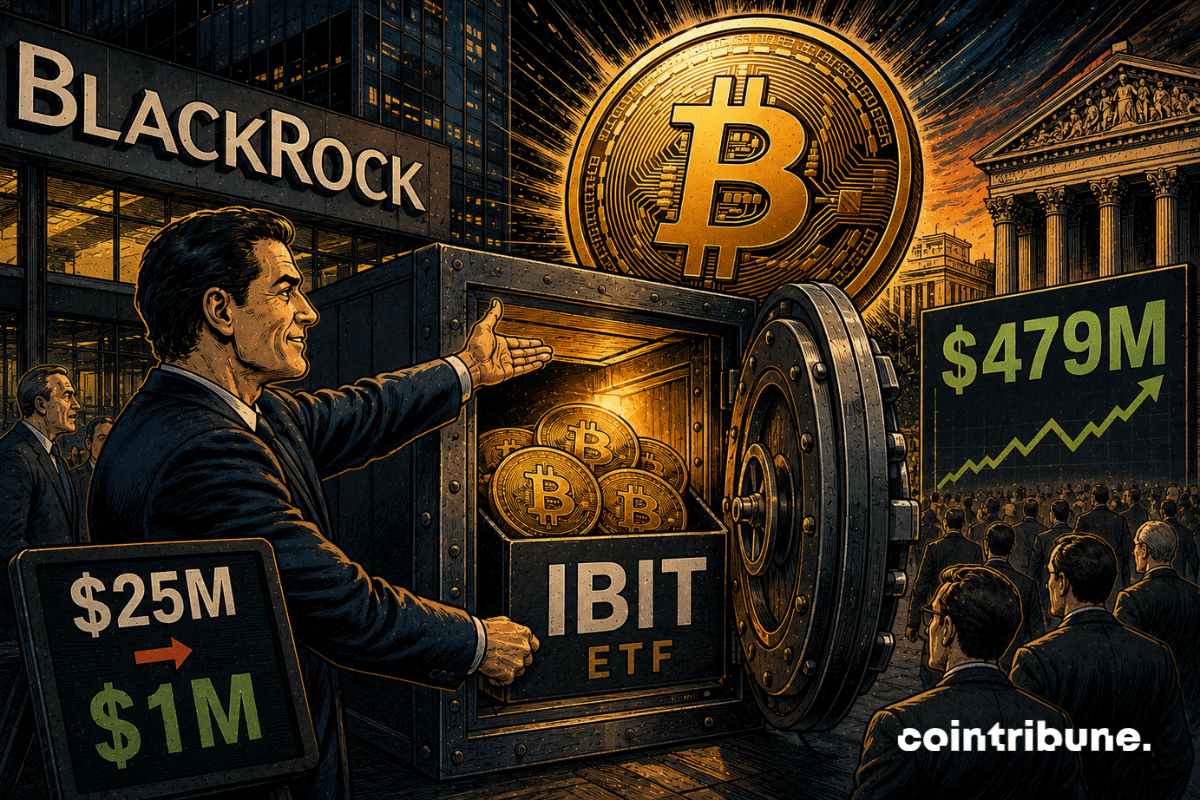
BlackRock opens the floodgates on its Bitcoin ETF. Twenty-five million? That was yesterday. Now one million will do. The whales are circling.

Riot Platforms has just changed dimension. The Bitcoin mining giant has signed a 9.1 billion dollar contract over twenty years to supply 191 megawatts to an artificial intelligence laboratory. According to Bloomberg, the client is Anthropic. The agreement especially confirms a rapid transformation of the mining sector, now sought after for its electricity as much as for its bitcoins.

As I indicated in my analysis last week, the bearish scenario on Bitcoin remained the most likely. The market has indeed continued its correction and is now approaching an important technical zone. At the same time, ETF flows remain too timid to speak of a real return of institutional conviction. Finally, on Ondo's side, the euphoria born after the SBI announcement attracted many retail investors, which encourages me to remain patient and disciplined on my entry points.
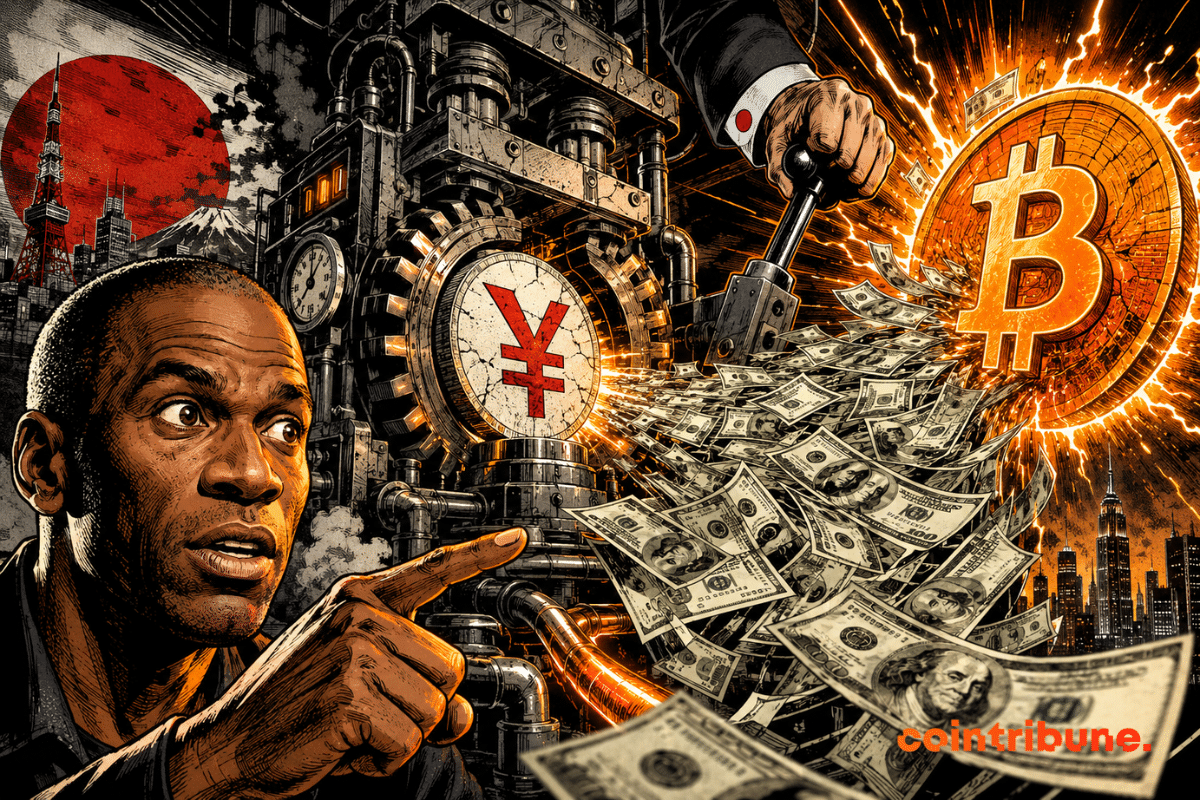
Will bitcoin benefit from a yen rescue? Arthur Hayes details a mechanism that could reshuffle the crypto market cards.
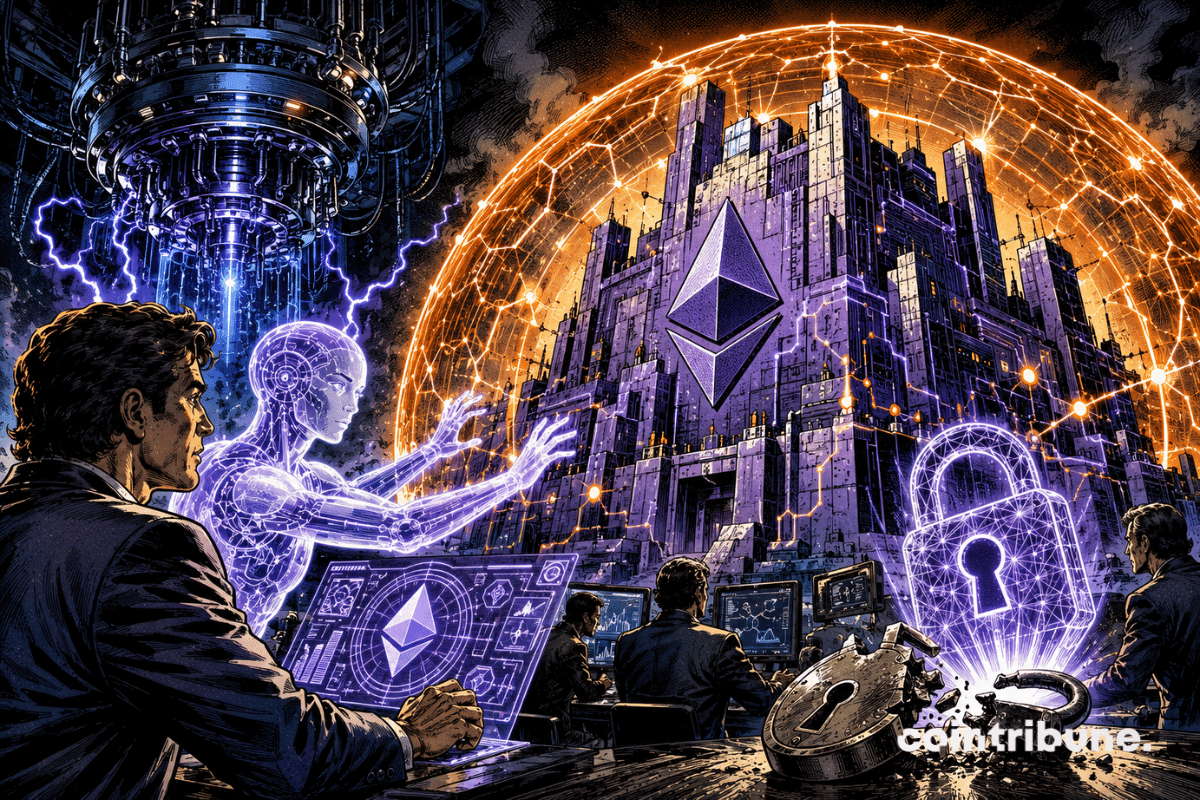
A quantum computer capable of breaking Ethereum's cryptography does not exist yet. But should we really wait for its arrival to prepare? For Vitalik Buterin, the answer is clearly no. Post-quantum security now occupies a central place in the network's projects. Alongside it are privacy and artificial intelligence. However, there is no question of entrusting the blockchain's controls to an AI. The goal is much more concrete: to help developers verify that the protocol does what it is supposed to do.

OpenAI has just suspended the internal development of Astra, its future artificial intelligence model. Indeed, its capabilities in offensive cybersecurity and code generation have crossed a threshold that teams no longer consider controllable. For the digital ecosystem, this decision sounds like a warning. At a time when financial infrastructures, blockchain, and decentralized protocols rely on the reliability of code, the AI race now progresses faster than the measures meant to regulate it.
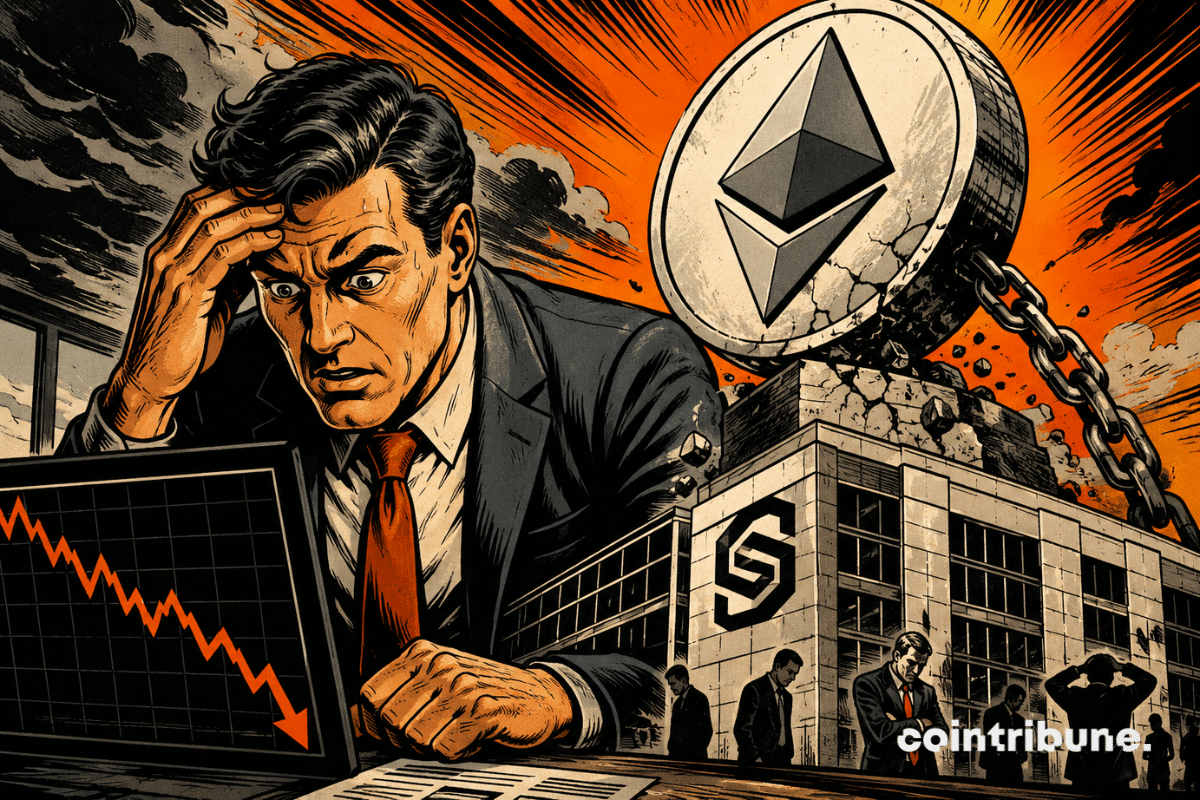
The second quarter of 2026 reveals the accounting cost of SharpLink's bet on Ethereum. Despite strong revenue growth, the company reported a net loss of $394.3 million. This underperformance mainly stems from the decline in the ETH price and its impact on the book value of held assets. However, revenues are increasing thanks to staking, despite this exposure to digital assets. The company also continues its Ether purchases and share buybacks.

Strategy no longer relies solely on bitcoin. While the company already holds nearly 840,000 BTC, or about 4% of the maximum supply, it has just announced the creation of a 4.75 billion dollar cash reserve. This choice contrasts with the image of a company entirely focused on accumulating bitcoin. Behind this decision lies an evolution in the cash management of major players in the sector, balancing yield seeking and prudential imperatives.

A major bank says Chainlink is heading to 200 dollars. Traditional finance wants a slice of the crypto pie. And traders are starting to pay attention.
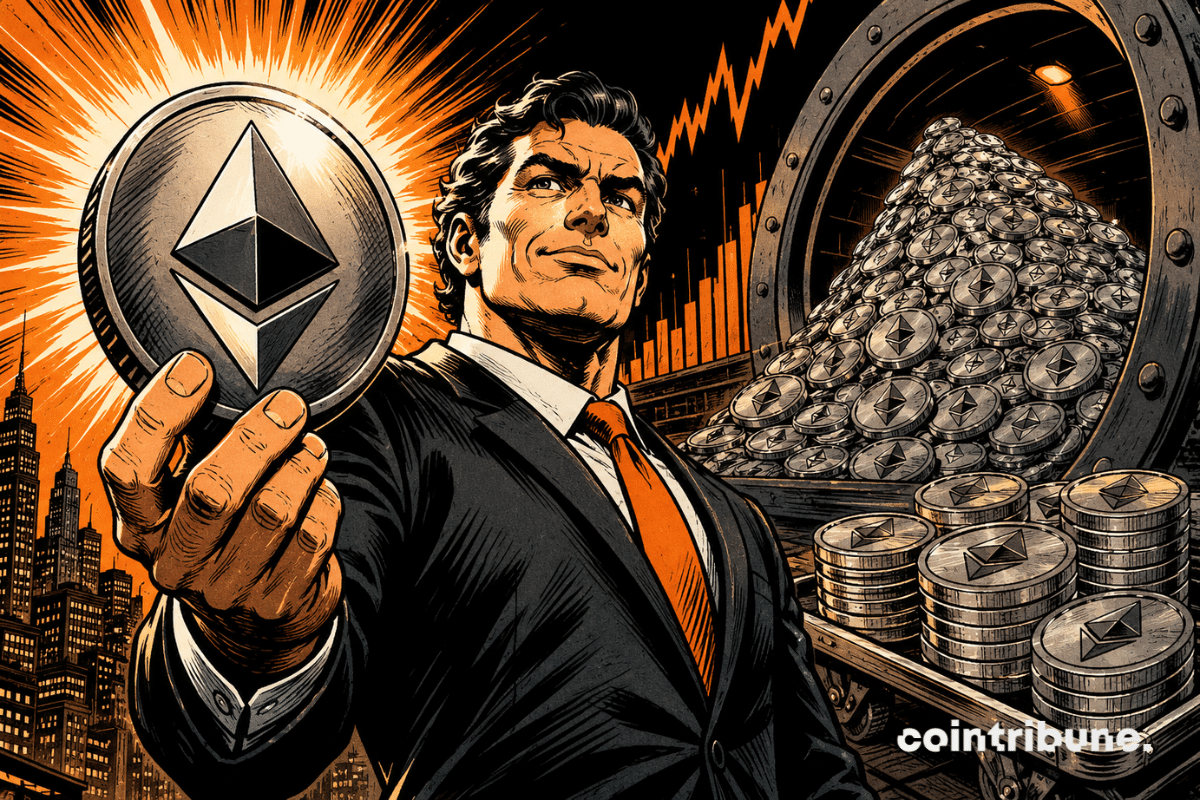
BitMine's crypto treasury company reaches a new milestone with the continuous accumulation of Ethereum. The company bought 7,391 ETH over the past week for about 14 million dollars. Its holdings now reach 5,805,238 ETH, after a new series of weekly purchases. This progress comes as the total value of its crypto assets, cash, and high-risk investments rises to 11.6 billion dollars. At the same time, its cash reserve continues to decline.

For years, Strategy embodied a simple conviction: buy bitcoin, again and again. Michael Saylor's company has just broken with this principle. In a document filed Monday, August 10, 2026, with the SEC, it announced having sold 1,690 bitcoins for a net proceeds of $108.6 million, to reorganize part of its debt. This unprecedented turnaround for the world’s largest institutional bitcoin holder reignites the debate on the role of BTC in the financial management of large companies.

The crypto market enters a highly tense week. On Wednesday, August 12, the United States will release its July inflation data. The consensus expects an annual CPI of 3.4%, down from 3.5% previously. A surprise of a few tenths could be enough to shake Bitcoin, Ethereum, and risky assets by abruptly changing expectations around the Fed.

Crypto ETF: Grayscale withdraws its Cardano, Hedera and Polkadot files in 190 seconds, without any explanation. Details here!

Bitget is seeing faster adoption of tokenized equities as rTokens move beyond their launch phase. Its July 2026 Transparency Report shows more than $114 million in assets under management, $671.37 million in cumulative trading volume and an 18-fold increase in daily trading-user penetration since launch. The figures suggest tokenized markets are beginning to attract repeat activity rather than one-off experimentation.
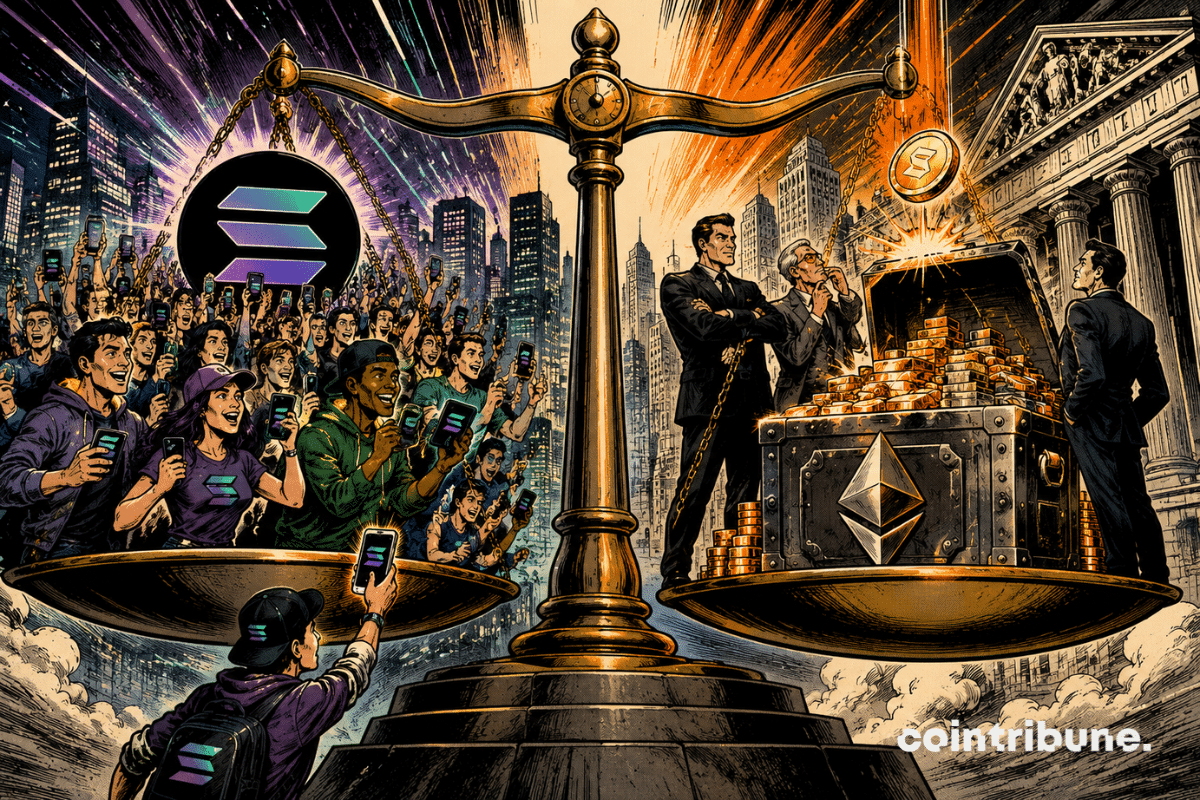
Ethereum still concentrates nearly 70% of the RWA deposits used in lending, while Solana strengthens its presence in spot trading of tokenized assets. The crypto battle is therefore no longer only about classic DeFi. It is shifting towards the tokenization of real financial assets, a market that is growing while several traditional segments of decentralized finance are slowing down.

The euro collapses while the dollar sweeps the board. In barely two years, stablecoins have gone from 15% to 84% of crypto card spending, while the EURe languishes at 2%. Between rapid growth, opaque figures and an all-powerful dollar, this shift tells much more than a simple stablecoin war.

A simple chart published by Michael Saylor is now enough to spark speculation in the bitcoin market. This Sunday, August 9, the executive chairman of Strategy once again fueled expectations by sharing on X his famous tracking of the company’s holdings. Indeed, this almost weekly appointment occurs during a period when Strategy is restructuring its capital and the cryptocurrency price remains under pressure. Enough to rekindle questions about an imminent new BTC purchase.

Three influential analysts believe that bitcoin has found its floor after falling below 60,000 dollars in July. The price returning around 65,000 dollars fuels their optimism. However, market history and the weight of leverage do not yet allow shouting victory.

The BRICS face a decisive summit in an unprecedented climate of tension. Gathered in New Delhi on September 12 and 13, 2026, the ten members of the bloc must present a common vision on strategic issues such as dedollarization and economic cooperation. The exercise promises to be delicate. Territorial rivalries between some partners, combined with commercial pressures from Washington, weaken the image of a united front. This meeting will determine whether the BRICS can still turn their ambitions into a real alternative to the dollar-dominated financial system.
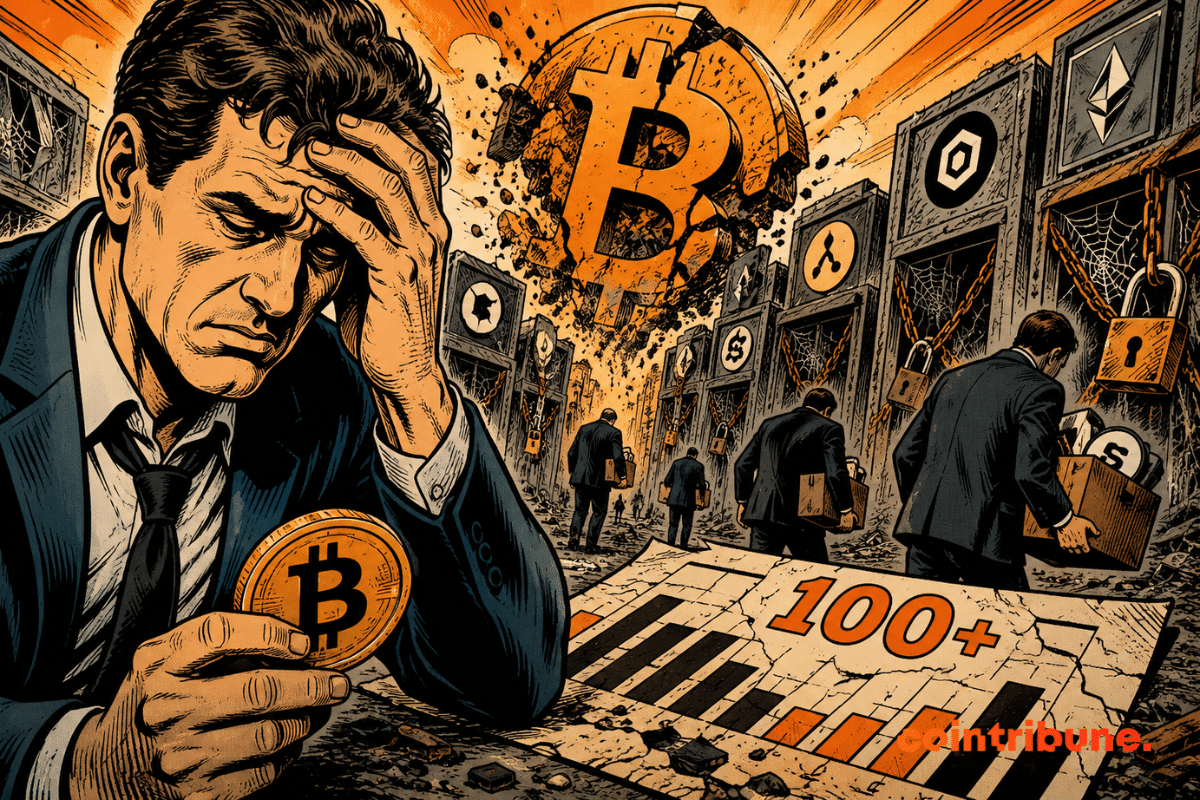
In 2026, more than 100 crypto projects have shut down, filed for bankruptcy, or ceased operations, according to RootData. This wave has affected exchanges, wallets, DeFi, NFTs, and some blockchains. In late July, BitMEX, BitMart, Movement Labs, and Storj Labs announced their closure or bankruptcy filings within a single week. Meanwhile, Moonbeam stopped producing blocks on July 31. The sector is therefore entering a broad and highly visible phase of consolidation.

Crypto: the court of appeals definitively confirms the 25-year sentence of Sam Bankman-Fried, the fallen ex-boss of FTX. Details!